I’ve never felt the importance of @traysartech mission more than I do today.
Trump signed this deal because he understood the alternative. If the real goal was to eliminate Iran’s military capabilities, it would have required far more than airstrikes. It would have meant boots on the ground and operations deep inside the vast subterranean networks where much of Iran’s nuclear infrastructure, missile production, and strategic assets can survive.
If you’re not willing to go all the way, it’s often better not to go halfway - especially against a regime willing to absorb enormous economic damage and loss of life while continuing to pursue its objectives.
This deal does not mean peace to me. Unfortunately, I believe we will be dealing with this threat again in the coming years. That is the nature of ideological movements driven by Muslim fundamentalism - they rarely abandon their long-term ambitions.
In the meantime, I believe it is our mission at Traysar, and hopefully the mission of many others, to work as hard and fast as possible so that the next time we face Iran or other adversaries we have technologies that can reach anywhere, access any underground stronghold, and turn subterranean infrastructure from a strategic advantage into a strategic weakness.
Godspeed.
Modern war be like sit next to a window for more than 20 seconds -> Dead
See the enemy penal b atalion moving in and open fire on them, you give away muzzle flash -> Dead
Walk out of the building for any reason outside of dusk -> Dead
Average survival time of a soldier in Bakhmut 3 to 5 hrs after deployment
The city looks completely deserted, all activity is underground lol
The midterms weren’t determined by what was started (Dodge, Iran war , legislative acts) but by a job half done and what was not ended .
Leading Americans to pay all the prices without seeing the fruit and outcomes
"Ukraine's forces have built a 6km underground tunnel in Donetsk Oblast...ensuring the uninterrupted movement of personnel and vehicles, the supply of ammunition and provisions, and medical evacuation." @PalmerLuckey@wolfejosh@asherdigs@traysartech#subterra https://t.co/VcJvVgwCvB
🇺🇦🙏 Bukovyna TRO soldiers spent 28 days digging an underground tunnel under Russian positions, working bent over in the pipe and on painkillers.
In June 2024, six soldiers worked in a former irrigation pipe with a diameter of 1.3 meters in the Pokrovsk direction.
They dug two exits near the Russian positions so that the Ukrainian military could sneak into the enemy’s rear undetected.
Due to the constant work bent over, the fighters had severe back pain, so they injected painkillers given by medics.
The Russians also dropped a gas grenade at the entrance to the pipe, but the soldiers were saved by gas masks and an additional exit for ventilation. Later, other Ukrainian soldiers used the tunnel.
Subterra is just getting started. When we set out to raise our seed round investors wanted “market risk” decreased. The discourse is now quickly changing from an “if the market will materialize” to a “when”.
Thankfully there’s no question for the “who”
Subterra DRPM 🔜
Traysar's Asher Katz explains why drones, Iran and hardened underground networks are forcing militaries to reframe warfighting around survival. https://t.co/sTtYdPh2w6
"Interview of Russian soldiers captured from the underground pipe in Ukraine." fascinating details from soldiers Ukraine captured in the pipes of the eastern front. Information contrary to many of the myths of Russian service (forced/financial/escape prison), ages, training (lack of), missions, life underground. (use subtitles). #subterra #undergroundwarfare @PalmerLuckey@wolfejosh@asherdigs@SapperGeologist https://t.co/8XCqAdocRA
Three years of war in Gaza, Lebanon, and Yemen have boosted tunnel warfare everywhere, including in peer-to-peer warfare. It goes beyond terrorism, beyond the Middle East, and beyond urban.
@SapperGeologist@JaysonGeroux@JacobStoil@SpencerGuard@asherdigs
1/35
Long, complex & updated🧵
A lot of posts being produced lately on the subterranean ("SubT") fighting in the Russo-Ukrainian War (2022-Present). These from @asherdigs@SpencerGuard@SapperGeologist@Zarelepotec:
https://t.co/rKiEG1kWNq
https://t.co/laGEuUZzh1
Insane footage of Operation Veles (god of the underworld) in Ukraine. Thousands of miles of pipes offered an underground world Ukraine is mastering/using to escaping the drone death zones to still maneuver/adapt. From underground guides, barricades for underground machine gun battles, tunnel vehicles for logistics/sped surrendering to the rear, toxic gas exposure, infiltration tactics. I've known members of the Khartiia Brigade for years, their innovations for training, robotics, now underground warfare, historic. @wolfejosh@SapperGeologist@traysartech@yadinsoffer@asherdigs https://t.co/XM1g8a1VyY
What @SpencerGuard@SapperGeologist@RichemondBarak@PalmerLuckey@traysartech have been saying for years is finally being seen on the battlefield. Subterra is a domain in itself, requiring expertise in many more elements than just tunnels: environment, hardware, personal equipment, maneuver, logistics, sensors, protection doctrine, and much more.
The Ukrainian and Russian armies are increasingly fighting underground, using old Soviet-era pipelines, The Wall Street Journal reports.
"Despite the danger and the pervasive sense of claustrophobia, Ukrainian soldiers told their officers that they often prefer these underground battles to fighting on the surface, where drones pose a constant threat," the article states.
According to Ukrainian military personnel, Russia is preparing entire units specializing in underground combat. Russian forces use underground pipes to covertly travel several kilometers, emerge behind Ukrainian Armed Forces lines, and launch drones from there.
Initially, Ukrainian forces tried to destroy the pipe exits with artillery and airstrikes, but the Russians simply cut new openings. The Ukrainian troops then began waging a full-scale war underground.
Inside the pipes, which are approximately 1.2 meters in diameter, Russian forces have set up machine-gun positions, sandbag barricades, and even living quarters where soldiers have spent months. The Ukrainians send in ground drones equipped with explosives and remotely operated machine guns.
The WSJ notes that similar fighting could spread to other sections of the front line, and that Soviet-era pipeline networks extend toward Poland and the Baltic states as well.
📹: Khartiia Brigade
What Asher won’t tell you is that he was on the front lines with the Khartiia corps just last week.
They are building machinery in form factors you can’t imagine. Not nuclear subterrenes, not dune sandworms, just the right tools strapped creatively together to win the new subterra battlefield.
Boots under ground!
Asymmetric breakthrough in the Kharkiv Region: Khartiia Corps conducts the subterranean counteroffensive Operation VELES, advancing 15 km underground.
Corps Commander General Ihor Obolenskyi explains a unique operation.
Коли поле бою стало прозорим, війна пішла під землю.
Корпус «Хартія» разом з іншими підрозділами Сил оборони проводить підземну операцію «Велес» – і тепер ми можемо вперше показати роботу наших побратимів у новому вимірі війни.
@DeltaClimbs Correct but it’s a function of time/speed more than simply distance
Can tell you first hand they go very far in some fronts that have been stagnant for a long time
People ask me if Subterra is relevant for battle while the 3 most relevant war zones (Israel / Gaza/ Lebanon - Iran - Ukraine- who are considered the future drone battle world ) are all being defined by the Subterra domain….
Ukraine’s front line has moved underground — and it’s changing what defense actually means in this war.
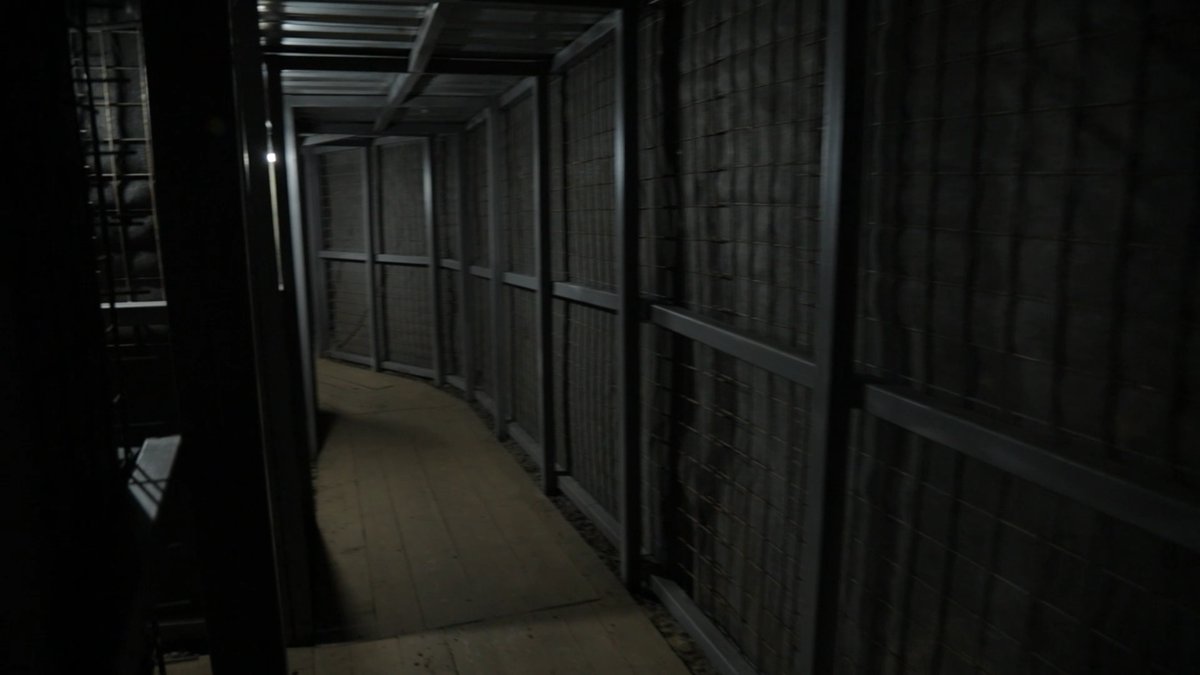
Near Kramatorsk, soldiers of the 93rd “Kholodnyi Yar” Brigade now travel between combat positions through tunnels, not just shelters to wait out shelling. Journalists have compared the growing network to a subway system: junctions, branch tunnels, multiple exits, rest stops for troops hauling heavy gear.
The shift happened because the old solutions stopped working. Anti-drone netting over roads used to buy some protection. It doesn’t anymore. So Ukrainian units found routes drones simply can’t watch — below ground.
“They’re building tunnels and underground fortifications specifically so the enemy can’t kill our soldiers with FPV drones,” said Colonel Vitaliy Sarantsev, spokesman for the 14th Army Corps. “This is genuinely important for the front today, and it’s one way of preserving personnel.”
President Volodymyr Zelenskyy @ZelenskyyUa recently visited one of these underground command posts — footage shows a fully built-out facility, not a dugout. Some sites go further still: truck access, parking, mess halls, sleeping quarters, even a drone-ammunition production line the troops call their “underground factory.”
The engineering has been tested. Sergiy, callsign “Marik,” commands an engineer-sapper platoon building strongpoints with corrugated steel and three layers of timber overhead.
“The guys took a direct hit from 152mm artillery. The shelter held. Then a guided bomb hit ten meters away. It held that too. Everyone survived.”
Training has moved underground as well. Odesa’s military academy built the country’s first underground training hub, designed so classes continue through air raid alerts. Troops even fly drones indoors as coursework.
What this actually means
It’s a structural answer to a battlefield that drones have made almost impossible to survive in the open. Military analyst Kostiantyn Mashovets put it plainly: tunnels let Ukrainian forces regroup, resupply, and rotate troops while staying largely invisible to the enemy, cutting off most of Russia’s tactical-level strike options before they can even be used.
Militaries have reached for underground infrastructure before whenever air power made the surface too dangerous to cross. The technology each time is different. The logic stays the same: when the sky becomes too dangerous to move through, armies stop trying, and build somewhere the enemy can’t follow.
“The battlefield is becoming more transparent and more dangerous,” said Colonel Ihor Obolenskyi of the “Khartiia” Corps. “Right now, underground, we’re more effective — both in spirit and technologically.”
Source: ArmyInform, October 19, 2026
#Ukraine #UAF #ModernWarfare #DroneWarfare #DefendingUkraine