Register for your session here:
🗓️ Session 1 – Tuesday, June 9 | 11:00 AM PT https://t.co/64JVtD1hi6
🗓️ Session 2 – Thursday, June 11 | 8:30 AM PT https://t.co/B5XOUMNUwZ
The partnership ecosystem has matured. The playbooks that worked three years ago aren't enough anymore.
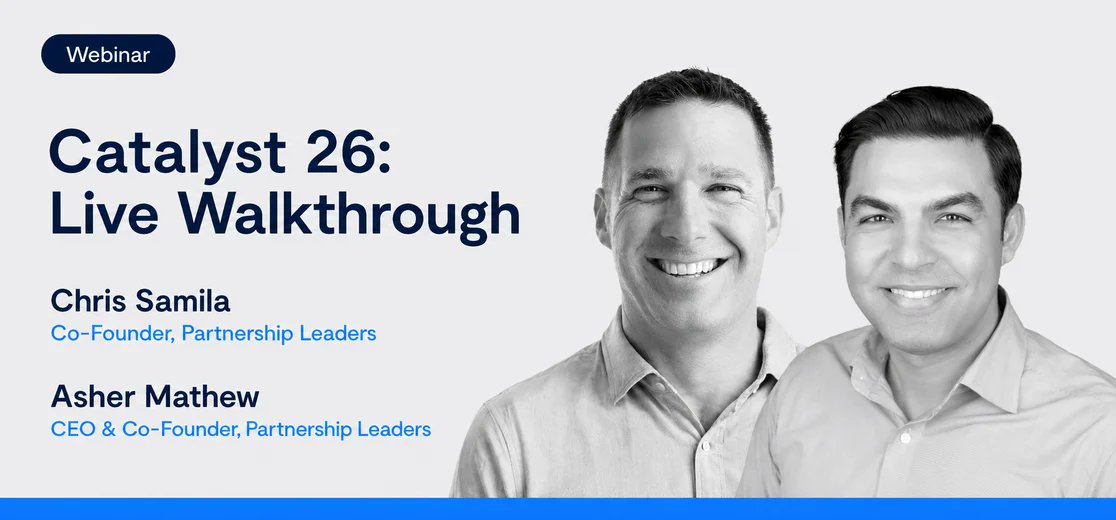
Catalyst 26 is built for where the industry is going, and Chris and I want to show you exactly what's inside before you commit.
We're hosting two free live walkthroughs next week. You'll get a look at the agenda, meet the speakers, and learn more about the SCOPE, JVP, and QBR certification courses running alongside the event.
More importantly, we'll explain how it all fits together and who will get the most value from the experience.
We'll also leave time for live Q&A.
Session 1 – Tuesday, June 9 | 11:00 AM PT
Session 2 –Thursday, June 11 | 8:30 AM PT
Registration links in the comments 👇
Ecosystem advantage does not come from better strategy. It comes from better intelligence.
The gap between partnership leaders who are winning and everyone else is not a strategy gap. It is a network gap. The ones pulling ahead are in better conversations, earlier. They know what is working before it becomes obvious because they are already in those conversations.
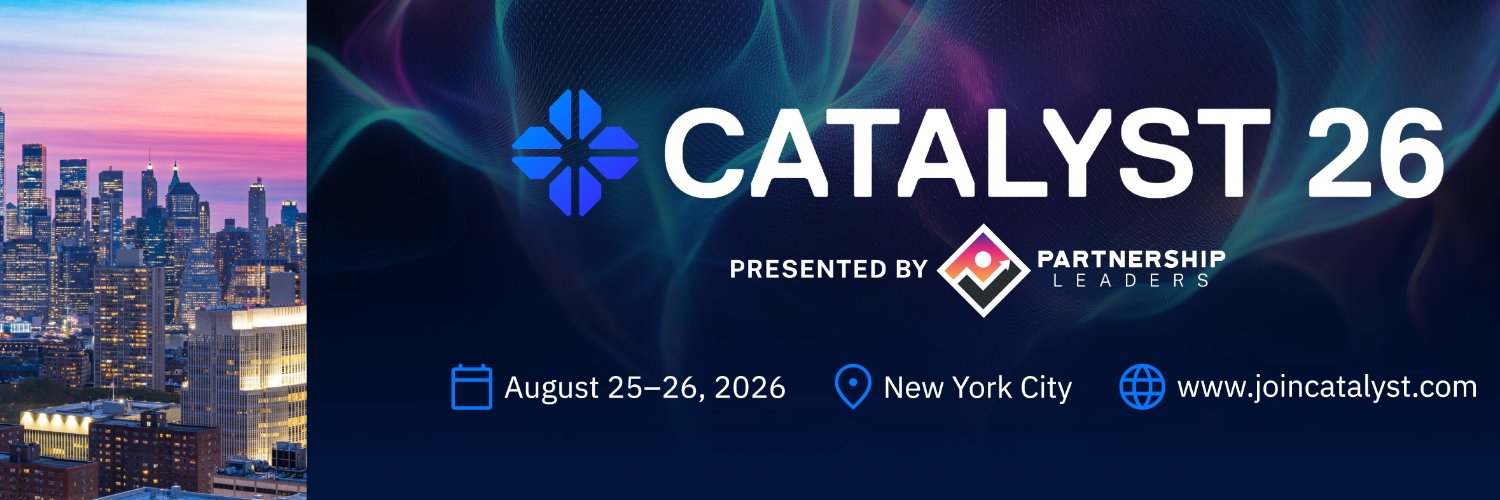
Partnership Leaders spent months traveling across North America and Europe running Catalyst Summits to surface the most innovative professionals in the industry. 30 of them take the stage in New York. 70 Power Circles. 12 workshops. Frameworks you can run the following week.
The agenda is live. The people you need to know will be there.
Tickets are $849. Prices go up in June.
👉 https://t.co/WRJEmfKzbl
New York City. August 25 and 26.
#Catalyst26 #Partnerships #AI #Ecosystems
Great partnerships have a lot in common with moms:
They tell you when you’re wrong, support you anyway, and somehow keep everything from falling apart.
This Mother’s Day, here’s to the women who mastered relationship management long before the rest of us made it a business strategy.
Happy Mother’s Day!
Many executives think ecosystems are the moat.
They are wrong.
The moat is the institution that can continuously regenerate the ecosystem.
(( Big difference 👀 ))
Because partnerships alone are easy to copy now.
Integrations get cloned.
Marketplace listings get replicated.
AI compresses product differentiation every quarter.
Everyone can announce partners.
Very few companies can sustain ecosystem gravity for decades.
Why?
Because ecosystems are not built on relationships alone.
They are built on aligned incentives, distributed authority, and organizational design.
That is why some ecosystems compound…
while others collapse under their own politics.
Look at the winners.
Microsoft.
AWS.
Salesforce.
Apple.
Shopify.
Their ecosystems became moats because thousands of companies could make money inside them.
Developers built careers there.
Partners built businesses there.
Consultants built service lines there.
Customers operationalized entire workflows around them.
The ecosystem worked because the institution underneath kept reinforcing the economics.
That is the real game.
And most companies still completely misunderstand it.
They say:
“Partnerships are strategic.”
Then:
underfund ecosystem teams
centralize decision making
separate partnerships from product
optimize for sourced revenue only
trap cross functional work in approvals
treat customer proximity as low status
Then they wonder why the ecosystem never compounds.
Here’s the truth:
You cannot build a durable ecosystem on top of a fragile institution.
And yes…
most partnership teams today are still optimized for optics instead of institutional leverage.
That is the uncomfortable part.
The best ecosystem leaders are not managing alliances.
They are designing systems that:
align incentives across companies
move customer intelligence into strategy
distribute trust at scale
reduce coordination costs
accelerate decision velocity
create economic gravity for partners
That is not relationship management.
That is institutional infrastructure.
This becomes even more important in AI.
Because the walls between:
product
distribution
infrastructure
partnerships
workflows
are collapsing in real time.
Ecosystem strategy is becoming company strategy.
The companies winning right now understand something critical:
The people closest to customers, partners, and workflow reality need more authority, not less.
Because the moat is no longer just software.
The moat is the institution’s ability to continuously reorganize around ecosystem feedback faster than competitors can copy it.
That is why partnership leaders should be getting:
bigger budgets
more strategic influence
tighter product alignment
stronger operational authority
Not because partnerships are “important.”
Because ecosystems are now operational infrastructure for how modern companies compound.
The ecosystem is visible.
The institution underneath is what compounds.
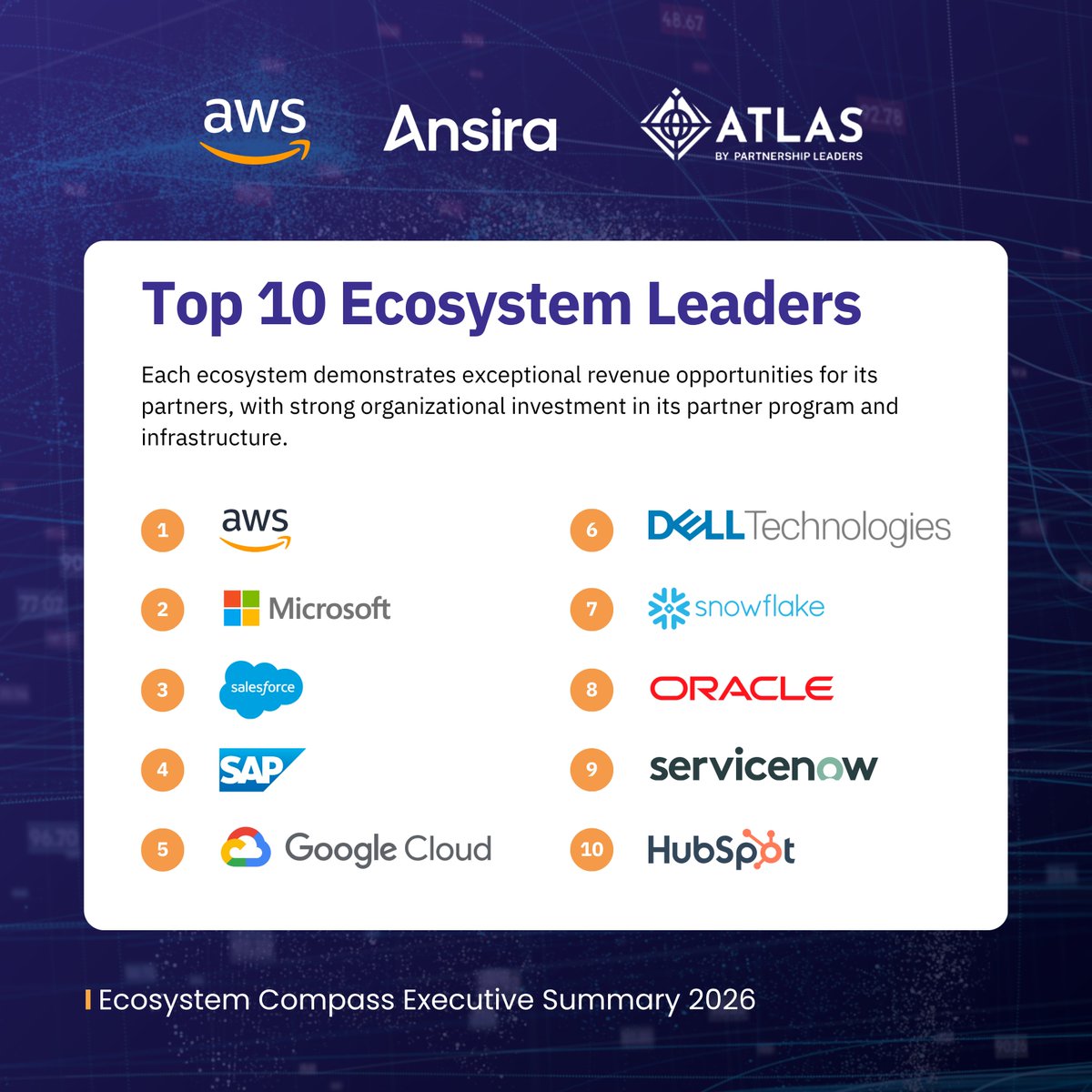
Our 2026 Ecosystem Compass webinar goes live in 2 days. Here's one thread from the data we're going to dig into.
The Top 10 list tells one clear story.
The companies leading the ecosystem space aren't winning because they have the biggest programs. They're winning because their executive teams treat partnerships as a core revenue strategy, not a side project.
Look at the names on this list. Every one of them has executive-level partnership ownership. Every one of them has a clear ecosystem narrative. Every one of them is building toward marketplace and AI-native plays.
The pattern isn't subtle.
If your partnership team is fighting for resources in 2026, this list is your case for change. 🚀
Sitting down with operators from @AWS , @Ansira, and @Okta this Thursday. Link in the comments. 👇