Official account of Ashoka University- a pioneer in providing an interdisciplinary higher education in India which is at par with the best in the world.
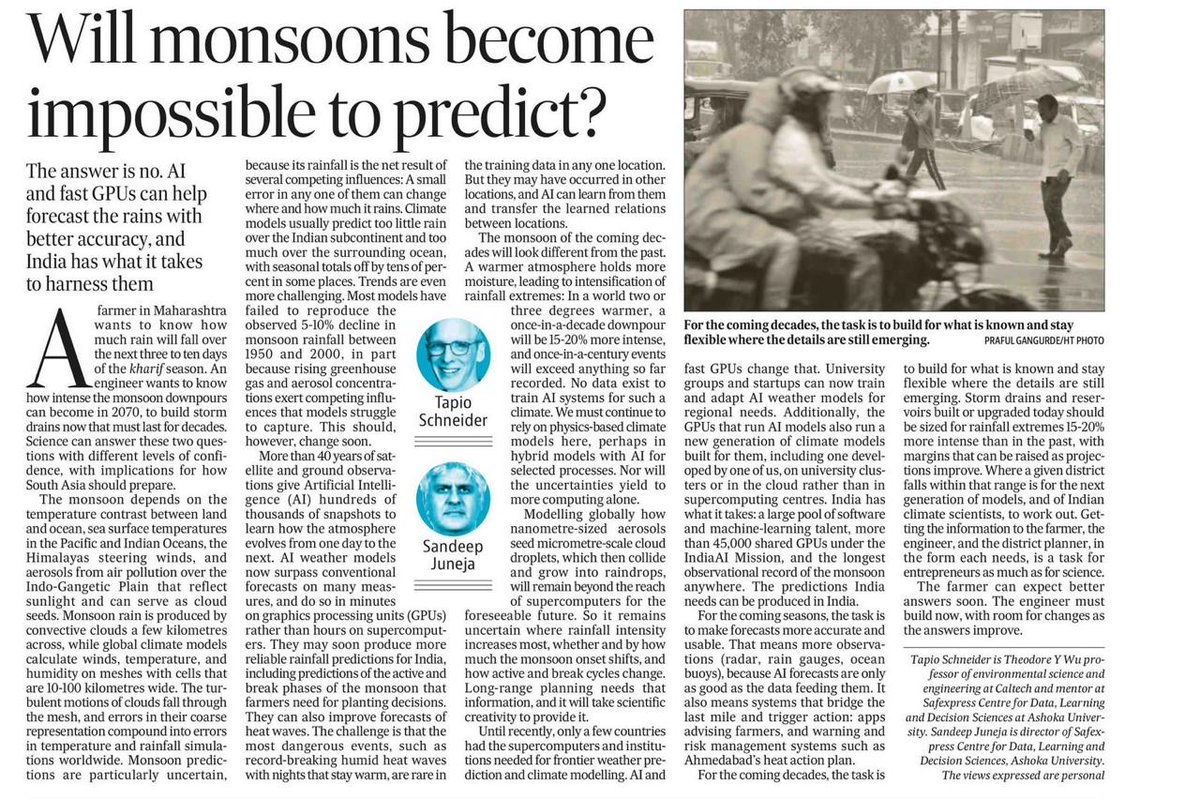
Will monsoons become impossible to predict?
Sandeep Juneja (@sandeepjuneja66), Director, Safexpress Centre for Data, Learning and Decision Sciences, Ashoka University, and Tapio Schneider, Theodore Y. Wu Professor of Environmental Science and Engineering at Caltech, explore how AI and fast GPUs could transform our understanding and prediction of India’s monsoons.
'Until recently, only a few countries had the supercomputers and institutions needed for frontier weather prediction and climate modelling. AI and fast GPUs change that. University groups and startups can now train and adapt AI weather models for regional needs,' write Professor Sandeep Juneja and Tapio Schneider.
(@scdlds_ashoka)
#AshokaUniversity
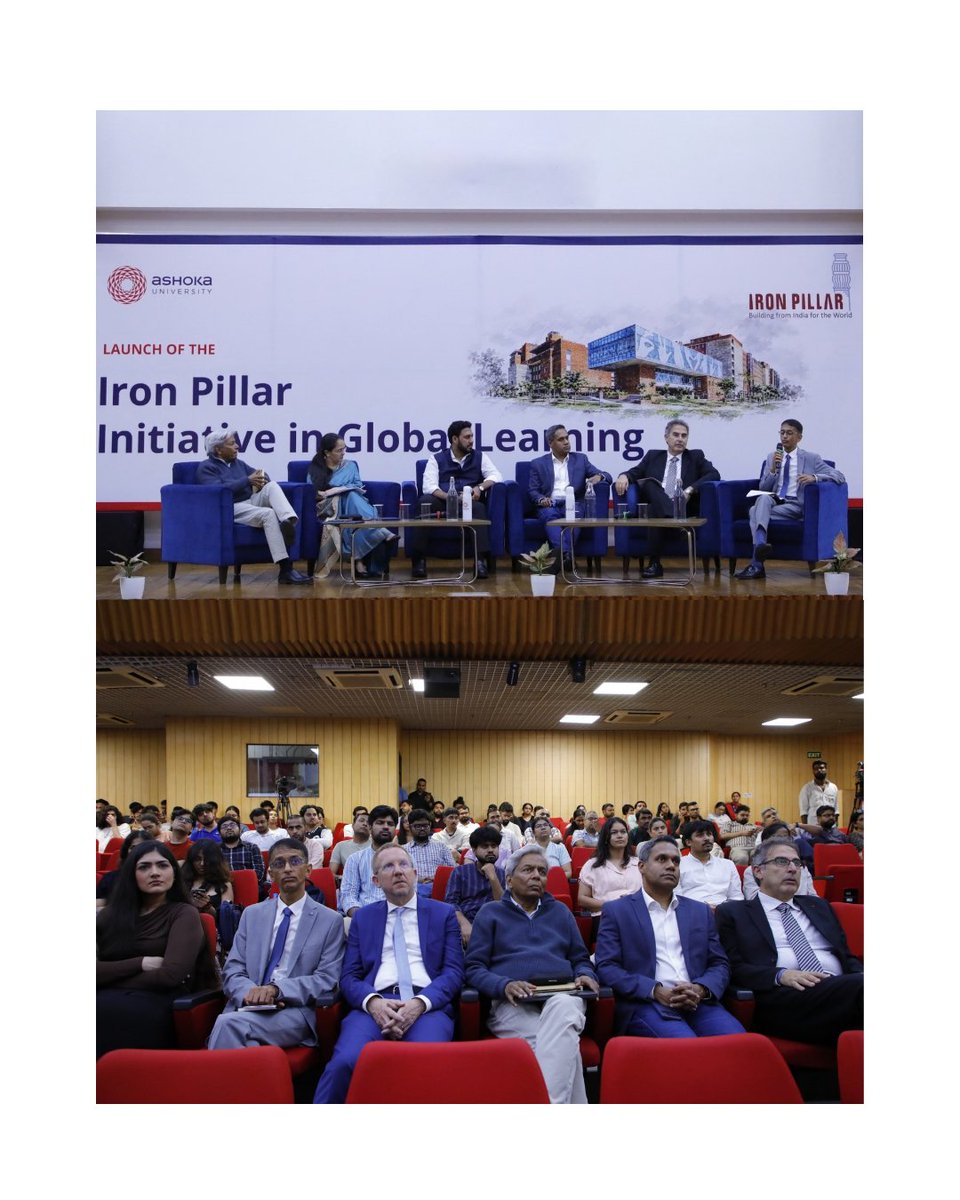
This was followed by a panel discussion on ‘Economics, Technology and Global Learning’, moderated by K. VijayRaghavan, and featuring Alain Bifani, Founder and Chair of the Board of Directors, Hemera; Anand Prasanna, Managing Partner, Iron Pillar; Sushant Palakurthi Rao, Managing Director, Global External Relations, Agility; Archish Mittal, Vice President, Iron Pillar and Co-Chair, IGL Advisory Council, Ashoka University; and Prachi Mishra, Dean, Rakesh Jhunjhunwala School of Economics and Finance and Professor of Economics at Ashoka University.
The initiative will build on Ashoka University’s existing portfolio of global internships, academic programmes, research opportunities, and public engagement initiatives, further expanding pathways for students to engage with international institutions, industry, policy, and emerging areas of knowledge.
(@PramathSinha, @AshishDhawanTCF, @rishikesha, @kvijayraghavan, @archishmittal, @Anand_IP, @PrinSciAdvOff, @GlobalAshoka)
#AshokaUniversity
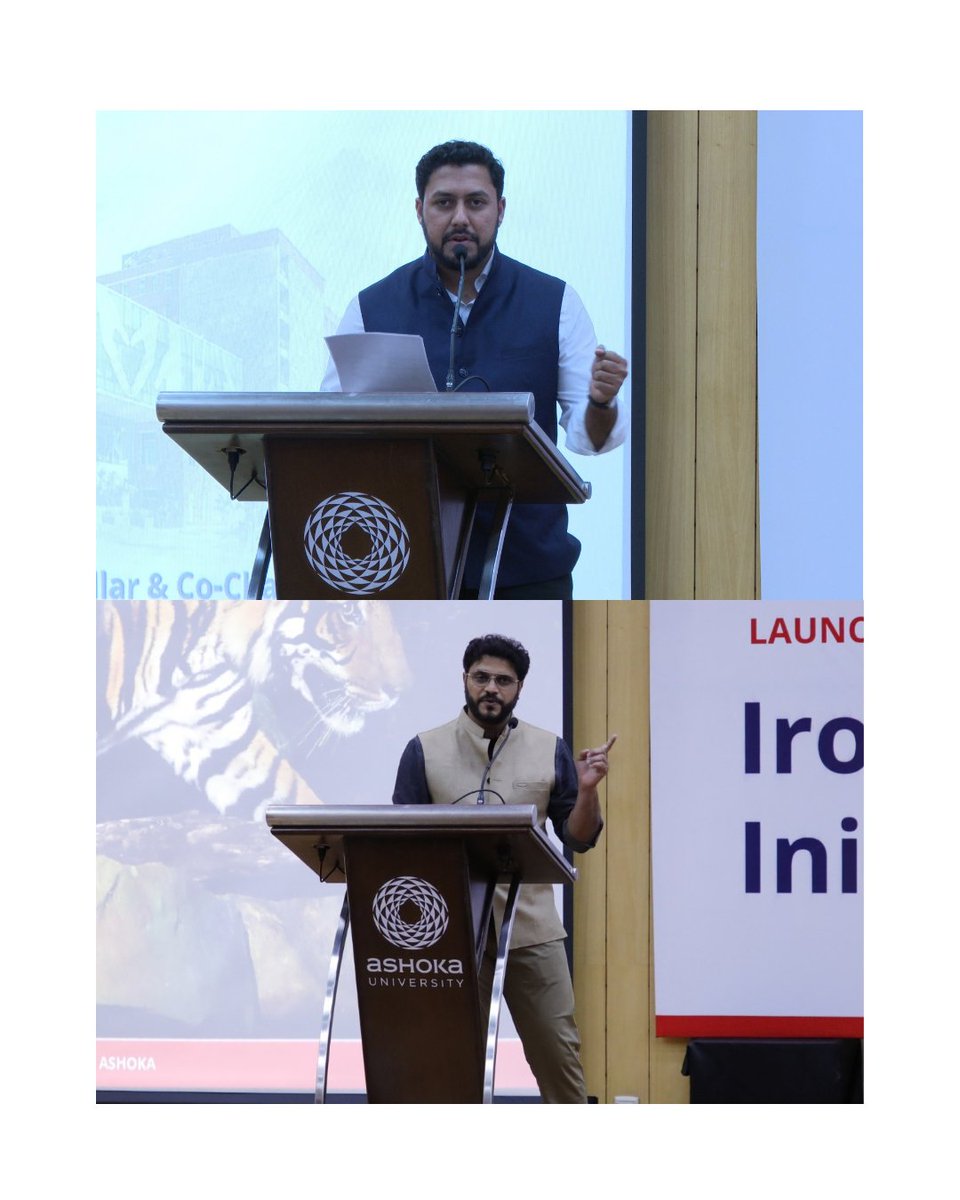
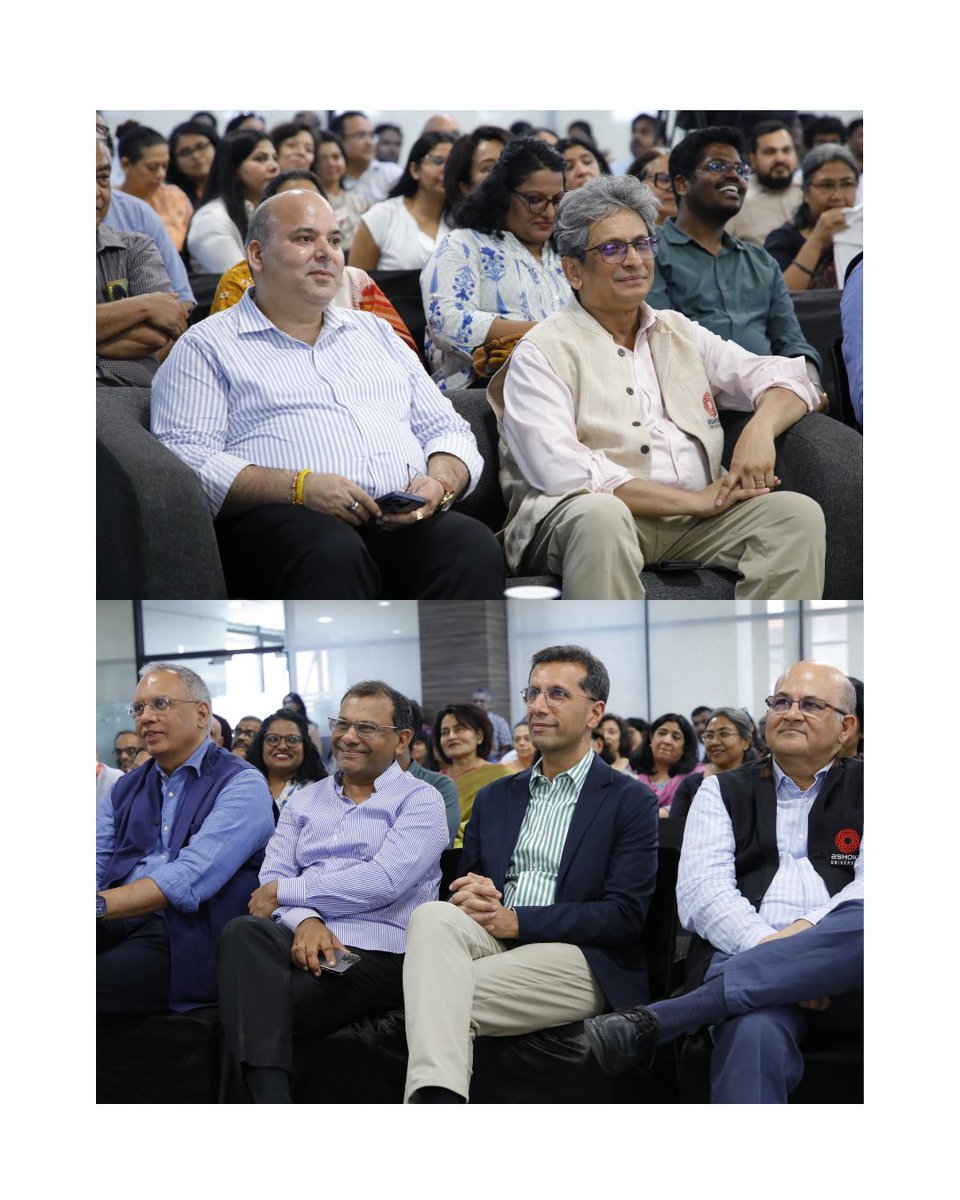
Ashoka University, in collaboration with Iron Pillar, launched the Iron Pillar Initiative in Global Learning (IGL), a joint initiative aimed at creating new pathways for international experiential learning, interdisciplinary education, research collaboration, and career development for students.
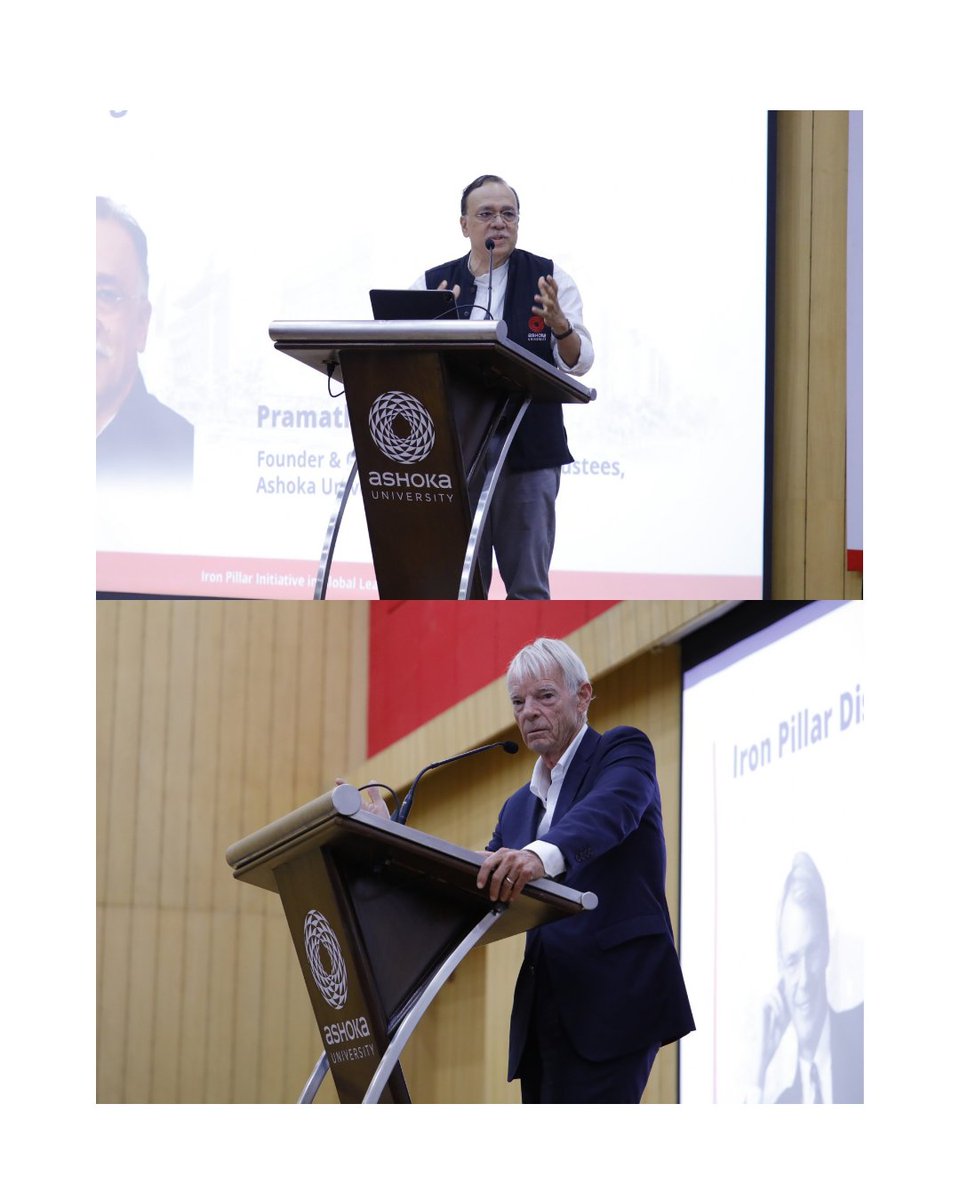
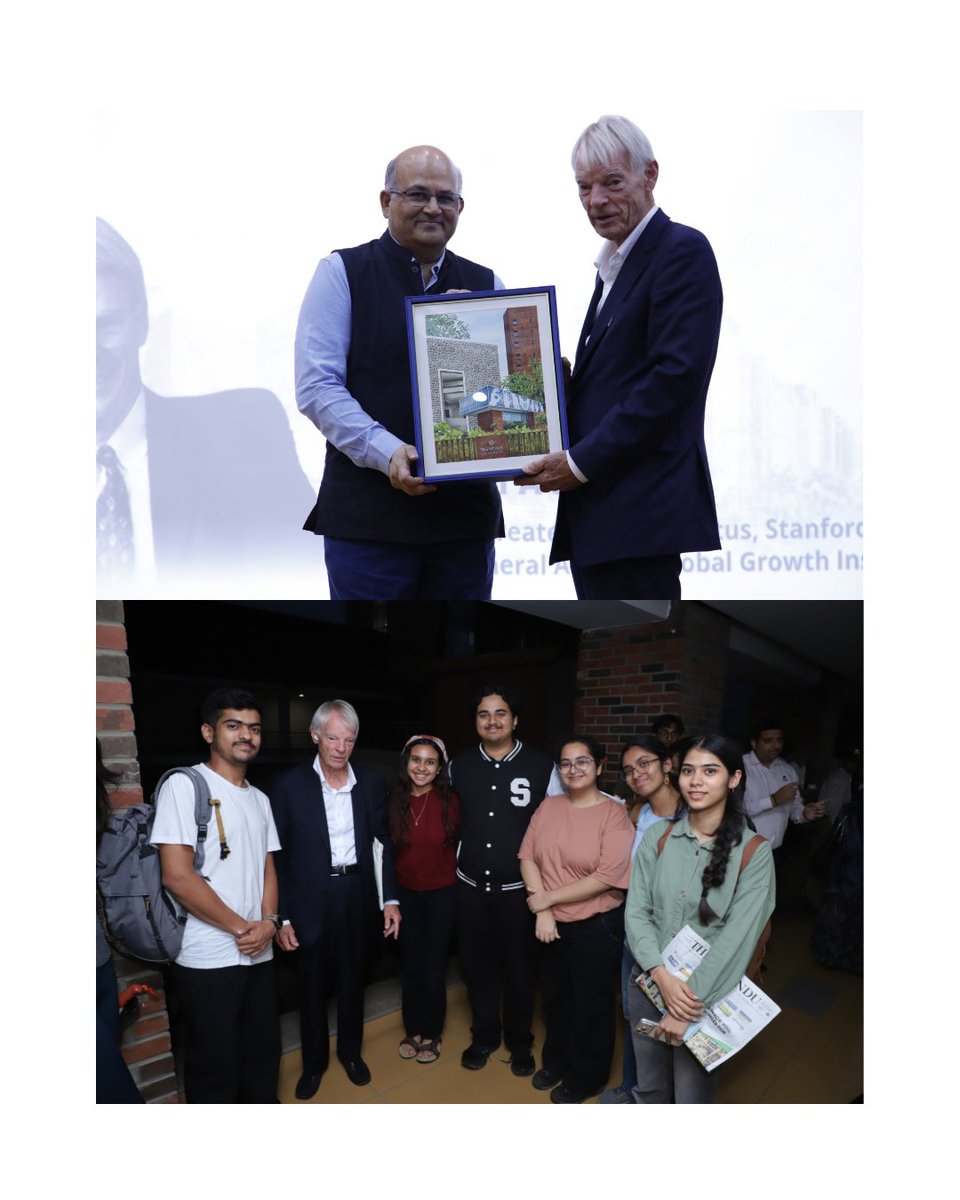
As part of the launch, Nobel Laureate Michael A. Spence delivered the Iron Pillar Distinguished Lecture, highlighting the importance of research and innovation in India’s evolving economic landscape and the need to create greater access to global opportunities for the next generation of talent.
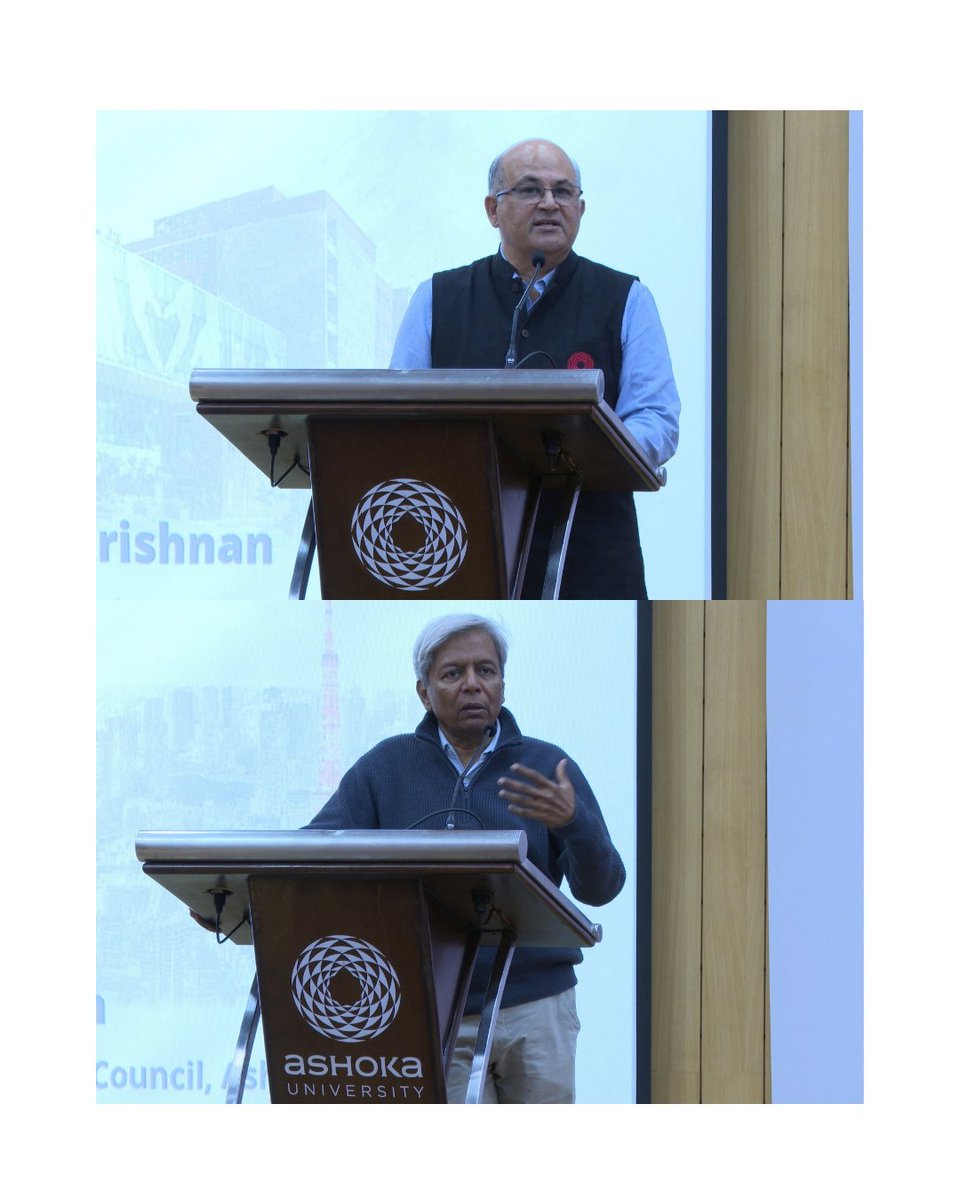
The event also featured an overview of the India-Japan Economic Corridor Report by K. VijayRaghavan, Chair, Science Advisory Council, Ashoka University.
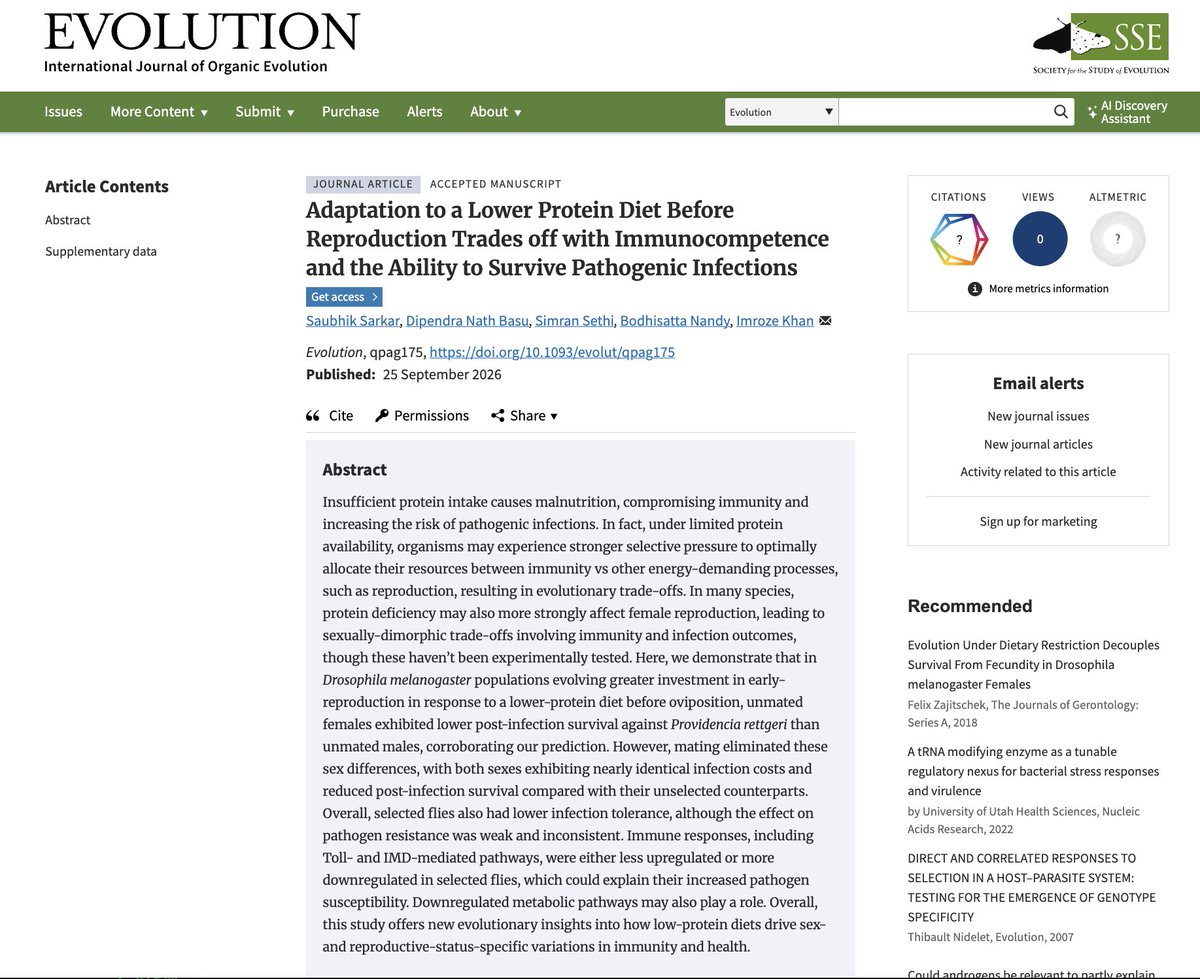
In our latest study published in @journal_evo, we show that prioritising reproduction over generations when nutrients are scarce suppresses the body's natural pathways to fight disease
@TSB_Ashoka@AshokaUniv@India_Alliance@india_evolution
https://t.co/G8ihALk4Ph
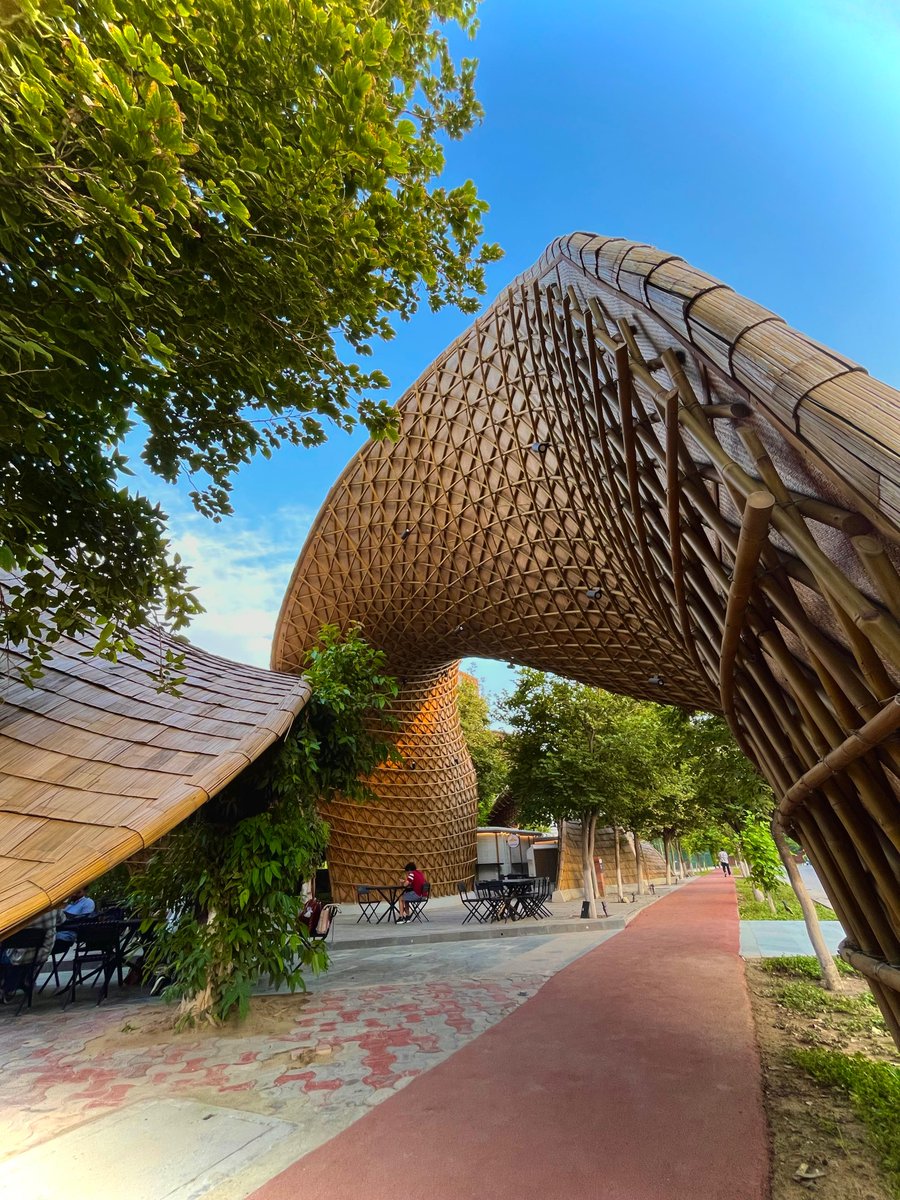
The Hungry Caterpillar at Ashoka University has been featured in Dezeen’s Top 50: Asia Pacific 2026.
The recognition places the project among the Top 50 projects, reflecting the diversity and creative excellence of this year’s entries from across the 91 countries represented in the Dezeen Awards.
This year's Top 50 APAC list features projects spanning architecture, interiors and design, from countries including Australia, India, Thailand, China, New Zealand and Vietnam.
(@dezeen)
#AshokaUniversity
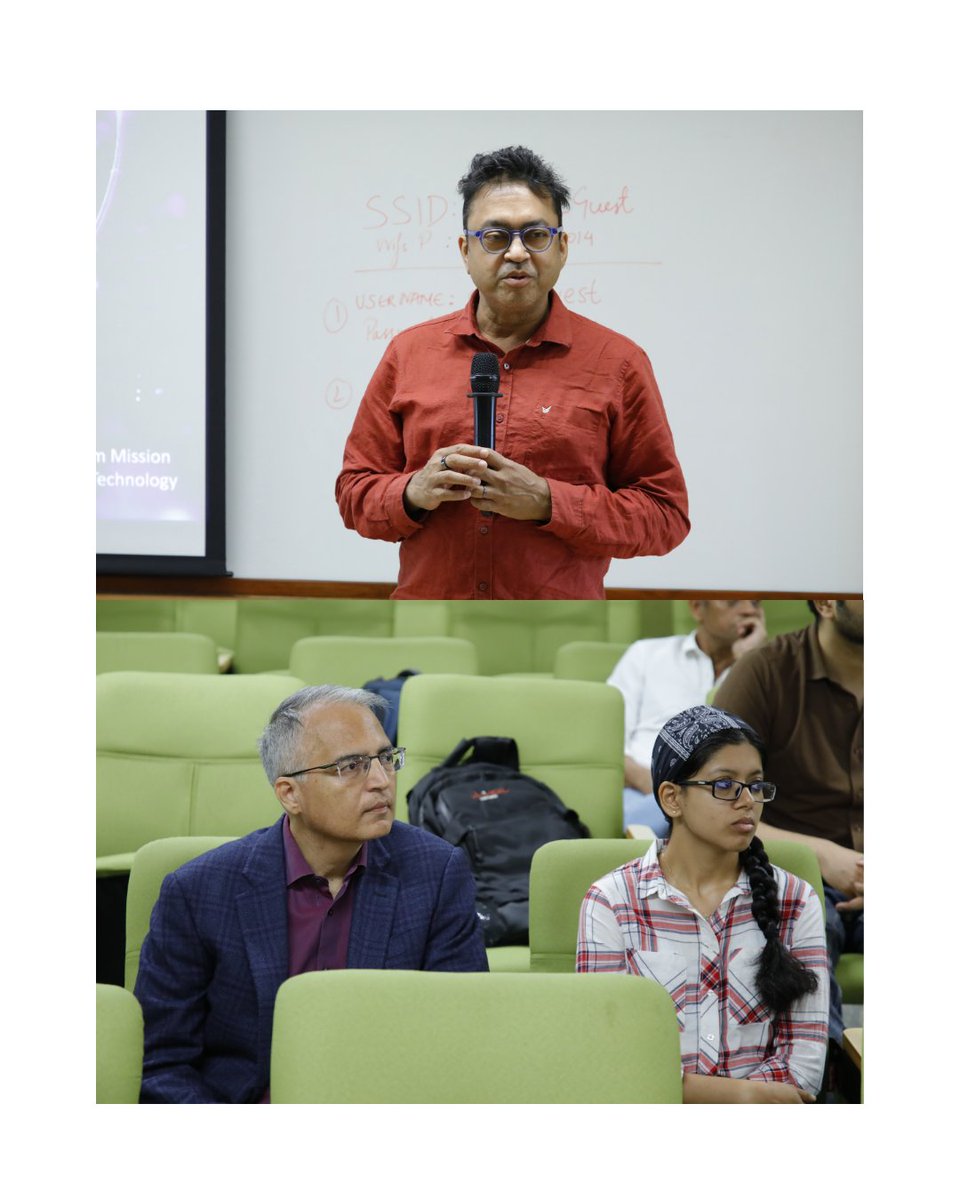
Ashoka University hosted the Industry-Academia Partnerships for India’s Emerging Quantum Ecosystem workshop, bringing together researchers, industry leaders, entrepreneurs and technology experts to discuss what it will take to build a strong and self-sustaining quantum ecosystem in India.
Key themes that emerged during the workshop included building stronger pathways between academic research and industry, developing shared infrastructure and indigenous capabilities, creating talent for experimental quantum technology and system integration, supporting startups and strengthening industry partnerships, improving mechanisms for funding, collaboration and access to facilities, and building a workforce that can ask open questions, solve problems and translate research into technology.
The workshop brought together perspectives on the need for companies, universities and institutions to work together to build the quantum ecosystem. India’s opportunity lies in bringing together its research strength, entrepreneurial energy, industrial capabilities and talent.
(@PramathSinha, @AjaiChowdhry, @kvijayraghavan, @RanaXAdhikari, @GlobalAshoka)
#AshokaUniversity
From the Pharmacy of the World to the Health-AI Laboratory of the World
Professor Anurag Agrawal (@AnuragAgrawalMD), Dean of Biosciences and Health Research at the Trivedi School of Biosciences, Ashoka University, looks at how AI can help transform healthcare in India, with a greater focus on prevention and accessible, large-scale digital health solutions.
‘India should aim to build not merely an AI industry serving healthcare, but a global digital-health innovation ecosystem. This needs partnerships among hospitals, start-ups, pharmaceutical and technology companies, universities, public-health institutions and government,’ writes Professor Agrawal.
Read More: https://t.co/uGOeylupW2
(@ETHealthWorld)
#AshokaUniversity
Harish and Bina Shah School of Humanities at Ashoka University invites you to 'Humanities Now: Perspectives in Conversation ’, a new series bringing together ideas, questions, and perspectives from across the humanities.
The inaugural edition, Other Words, Other Worlds, brings together perspectives on literature, translation, language and the worlds that emerge between words.
🗓️ 24 September 2026
📍 AC-02 LR-103, Ashoka University
Join us for an afternoon of ideas, questions and perspectives in conversation.
#AshokaUniversity
Professor Somak Raychaudhury (@somakrc) has been an integral part of Ashoka’s journey, bringing with him a deep commitment to research, teaching, and the pursuit of knowledge. During his tenure as Vice-Chancellor, he helped strengthen Ashoka’s research ecosystem and championed the growth of the sciences, while nurturing the University’s distinctive interdisciplinary spirit. His leadership and vision have helped shape Ashoka into a place where curiosity thrives, disciplines come together, and new ideas find room to grow.
We thank him for his warmth, vision, and leadership, and for all that he has contributed to the Ashoka community over the years. He will continue to be a part of Ashoka’s journey as a Professor of Physics and a valued member of our academic community.
#AshokaUniversity
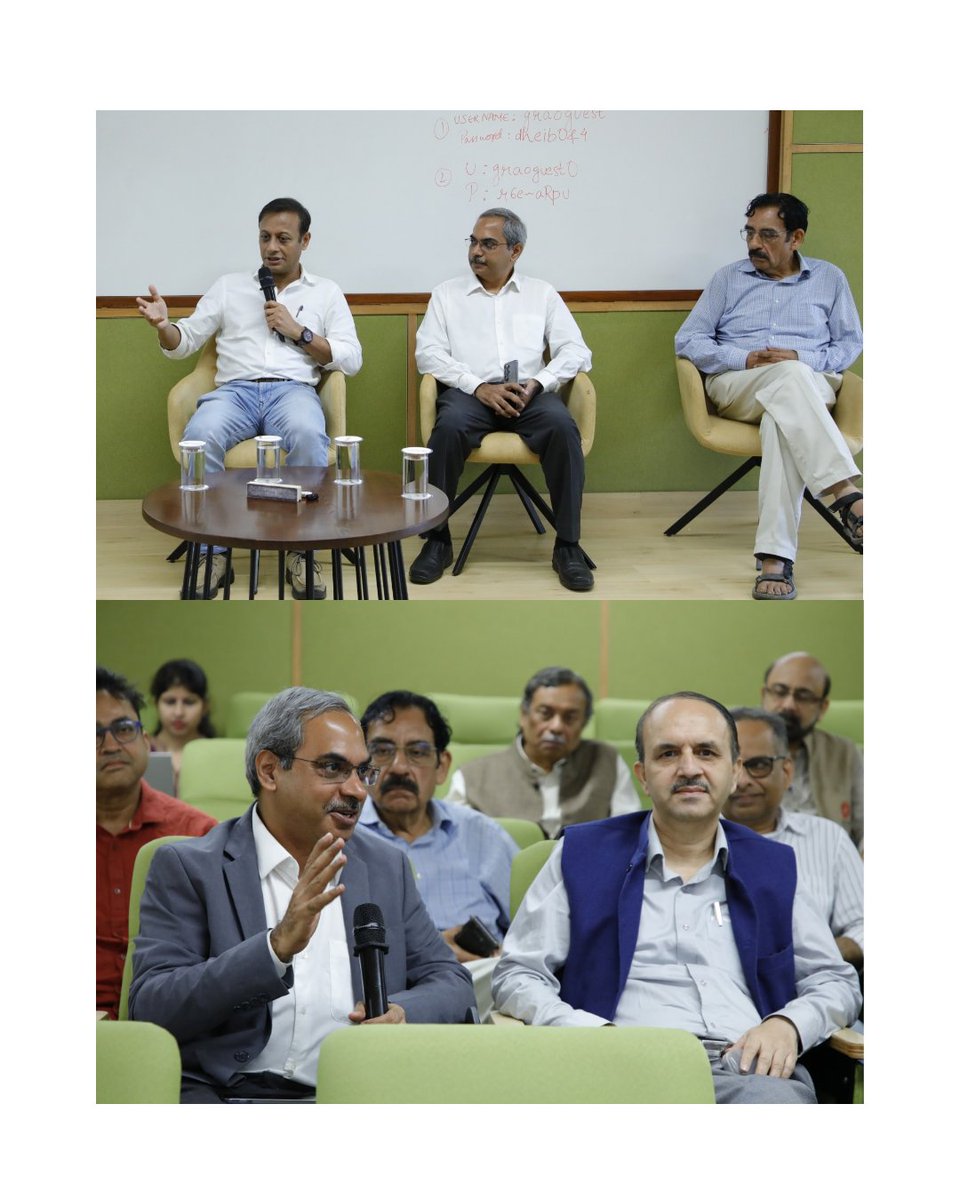
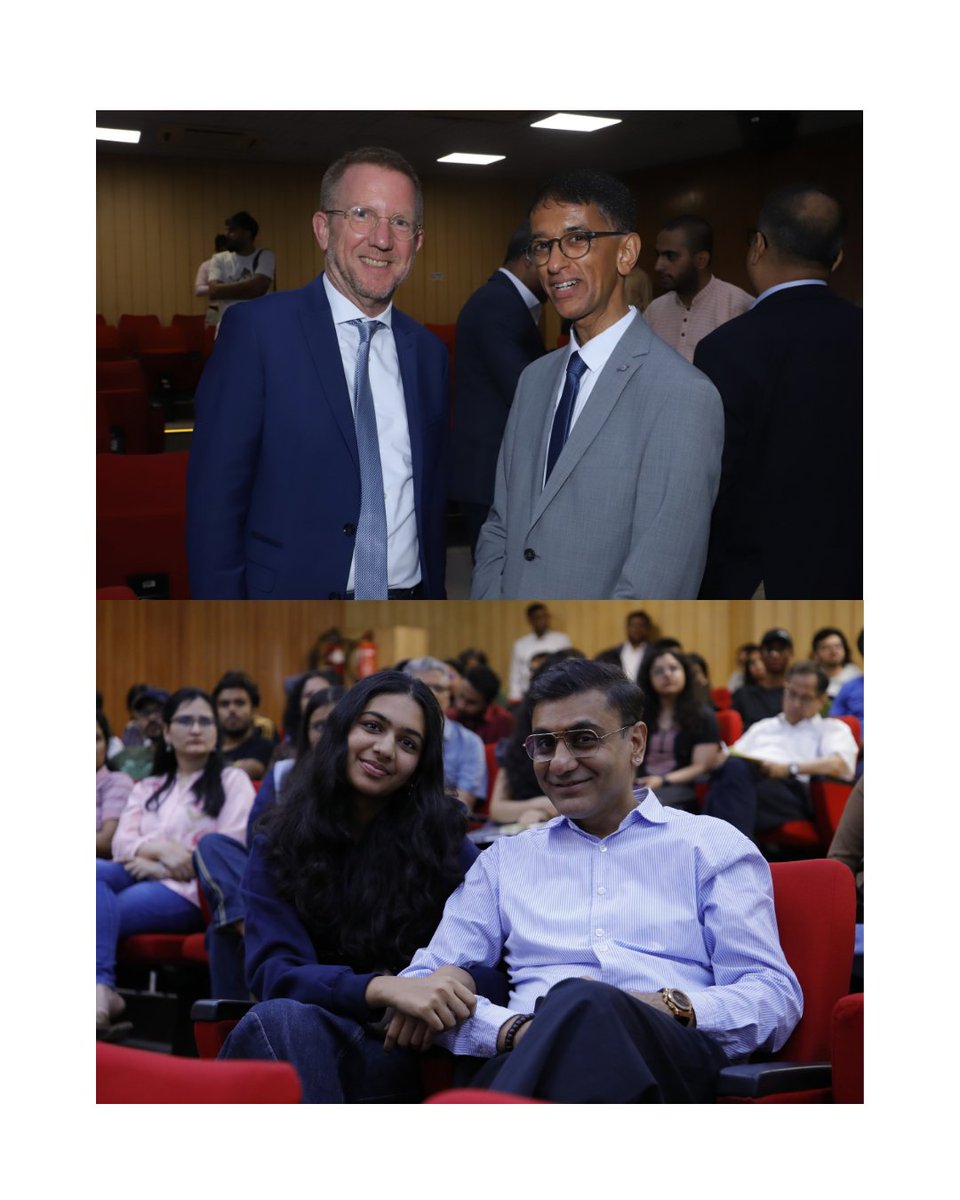
The Safexpress Centre for Data, Learning and Decision Sciences (@scdlds_ashoka), part of the Vachani School of Advanced Computing at Ashoka University, organised ‘Future of Climate: AI, Science and Society’ on 18 September 2026.
The event featured a keynote address by Tapio Schneider, Theodore Y. Wu Professor of Environmental Science and Engineering at Caltech (@Caltech), followed by a panel discussion featuring Dr M. Mohapatra, Director General of the India Meteorological Department (@Indiametdept); Anjali Bansal, Partner at Avaana Capital (@avaanacapital); William Boos (@BillBoos), Professor of Earth and Planetary Science at the University of California, Berkeley (@UCBerkeley); and Gautam Menon (@MenonBioPhysics), Professor of Physics and Biology at Ashoka University.
Professor Tapio Schneider noted that while AI has already transformed short-term weather forecasting, spanning days to weeks, predicting climate patterns several years or decades into the future remains a far greater scientific challenge. The panel discussion emphasised that India’s expanding data infrastructure and dynamic startup ecosystem could position the country to take a leading role in developing effective climate adaptation strategies.
#AshokaUniversity
UPI’s New Fee: Who bears the cost, and what does it achieve?
Yatish Arya (@YatishArya21), Assistant Professor of Economics at Ashoka University, examines the implications of the new 0.4% merchant discount rate on specified UPI transactions above ₹2,000. He explores who ultimately bears the cost, how merchants and consumers may respond, and whether the ₹2,000 threshold could influence payment behaviour.
'Consumers will not necessarily bear the whole fee. But their protection cannot be assumed simply because the rule assigns it to merchants,' writes Professor Arya.
Read More: https://t.co/ptl3cwlPlU
(@moneycontrolcom)
#AshokaUniversity
Dheeraj Sanghi (@DheerajSanghi), Dean of the Office of Academic Affairs and Dean of Student Affairs at Ashoka University, commemorated Teacher’s Day 2026 at Panjab University (@OfficialPU) by delivering a public lecture on 'Liberal Arts Education and the Ashoka Experiment.'
The lecture was organised by the PU Institute of Social Science Education and Research (ISSER), in association with the Society for Promotion of Science & Technology in India (SPSTI), PI-RAHI, Northern Science & Technology Cluster, and the Chandigarh chapters of INSA, NASI and INYAS.
(@htTweets)
#AshokaUniversity
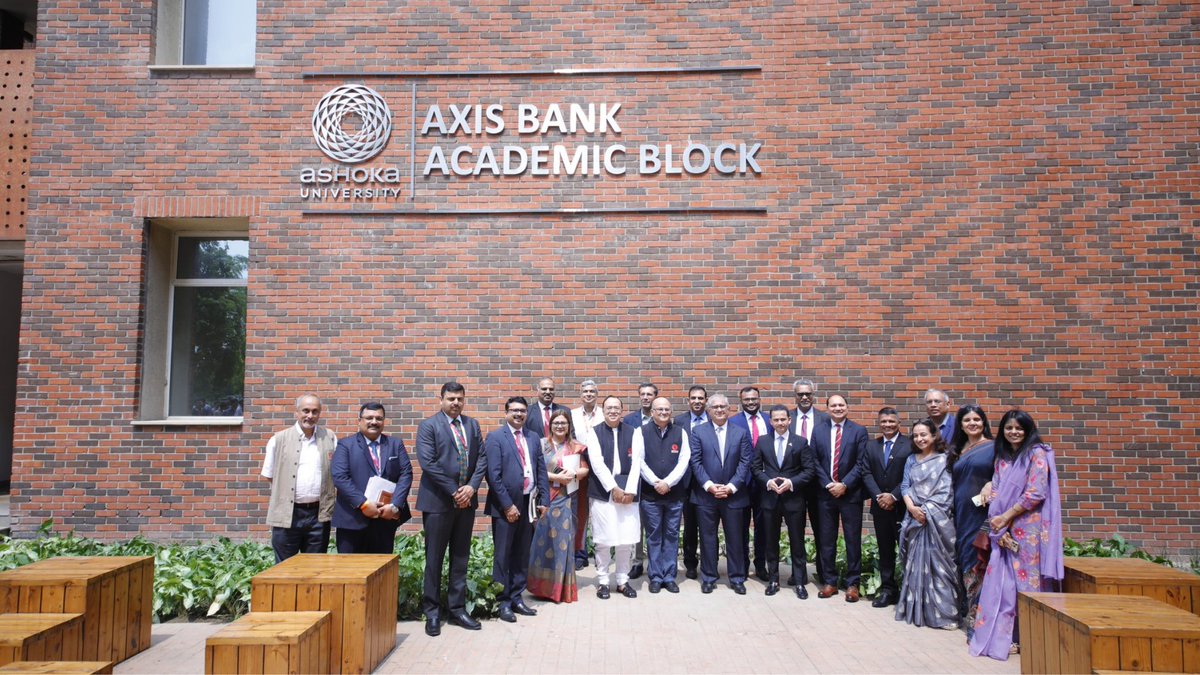
Ashoka University hosted Amitabh Chaudhry, MD & CEO, Axis Bank Ltd., and the senior leadership of Axis Bank (@AxisBank) for an engagement celebrating the continued strength of the partnership between the two institutions.
The visit included the unveiling of the Axis Bank signage at Ashoka University, marking another milestone in a longstanding partnership that has played an important role in strengthening the sciences and fostering a deeper, interdisciplinary, and inclusive culture of scientific learning.
Over the years, Axis Bank’s continued support has helped expand access to the sciences through scholarships; supported students, faculty, researchers, and scholars; and contributed to enhanced research infrastructure, laboratories, faculty-led research, scientific events, and PhD and postdoctoral programmes.
Together, these efforts have helped foster a more inclusive, research-driven, and future-ready environment for science at Ashoka.
#AshokaUniversity
India’s Next Higher Education Challenge Is Building Distinctive Universities
'India now needs a self-reinforcing ecosystem where talented students and faculty flow through strong institutions, where research informs teaching and industry, where infrastructure and technology accelerate innovation, and where policy frameworks reward quality and protect academic culture,’ writes Pramath Raj Sinha (@PramathSinha), Founder & Chairperson, Board of Trustees, Ashoka University,
Read More:
https://t.co/1F3o5PhENS
#AshokaUniversity
Beyond two weeks: How AI is transforming Indian monsoon forecasting
‘AI can complement conventional meteorology by combining global model output with observations and historical data. Its value lies in extracting additional predictive information and translating it into clearer extended-range guidance,’ write Sandeep Juneja (@sandeepjuneja66), Director, Safexpress Centre for Data, Learning and Decision Sciences, Ashoka University and Manmeet Singh, Academic Visitor, Safexpress Centre for Data, Learning and Decision Sciences, Ashoka University.
Read More: https://t.co/wNaUxvnRtJ
(@TheWeekLive, @scdlds_ashoka)
#AshokaUniversity
Ashoka University congratulates Sourav Pal (@SouravP32813910), Professor of Chemistry at Ashoka University, on joining the Royal Society of Chemistry Chemicals, Waste and Pollution Network (RSC CWP Network)
'I am delighted to join the Royal Society of Chemistry Chemicals, Waste and Pollution Network (RSC CWP). I have been working with the RSC Science Policy Panel for a few years, and this has transitioned to the CWP network. The network will bring together international experts from across the chemical sciences to help inform international policy on chemicals, waste, and pollution as the United Nations Intergovernmental Science-Policy Panel on Chemicals, Waste and Pollution (ISP-CWP) and Global Framework on Chemicals move into their next phase. I will be excited to bring the national perspective of Viksit Bharat to this important national forum,’ said Professor Pal.
#AshokaUniversity
Pramath Raj Sinha (@PramathSinha), Founder & Chairperson, Board of Trustees, Ashoka University, writes about how teaching can be a powerful form of leadership and how stepping into classrooms can help young Indians understand the country’s realities, challenges and aspirations more deeply.
'To teach is to lead. You lead with your preparation, your patience, and your willingness to show up. You help your students grow. You are the one holding the class together. You see a future in them that they cannot yet see for themselves,’ writes Pramath Raj Sinha.
Read More: https://t.co/xzOE1zYdr0
(@IndianExpress)
#AshokaUniversity
The purpose of education lives on in the teachers who encourage us to question, reflect and discover. Today, we celebrate those whose influence extends far beyond the classroom.
Happy Teachers’ Day!
#AshokaUniversity
'विद्यार्थी जितना शिक्षकों के शब्दों से सीखते हैं, उतना ही उनके आचरण से। जब शिक्षक विद्यार्थियों को एकाग्रता के साथ बेहतर करने और अच्छा भविष्य रचने की सीख देते हैं, तो उसका प्रभाव आगे चलकर समाज और देश पर पड़ता है।'
[@PramathSinha, @JagranNews]
Read More: https://t.co/3zwfjRjoFR
#AshokaUniversity
















![AshokaUniv's tweet photo. 'विद्यार्थी जितना शिक्षकों के शब्दों से सीखते हैं, उतना ही उनके आचरण से। जब शिक्षक विद्यार्थियों को एकाग्रता के साथ बेहतर करने और अच्छा भविष्य रचने की सीख देते हैं, तो उसका प्रभाव आगे चलकर समाज और देश पर पड़ता है।'
[@PramathSinha, @JagranNews]
Read More: https://t.co/3zwfjRjoFR
#AshokaUniversity](https://pbs.twimg.com/media/HRa_JnCagAAjI-l.jpg)





