Vehicle buyers pay huge upfront taxes, fees, and cesses. In return, they deserve the basic right to buy the exact fuel their vehicle engines were designed to run on.
If the govt wanted to "experiment" with E20 fuel, they should have done it responsibly by either buying a sample fleet of second-hand cars to test in a controlled settings or invite willing citizens to opt-in using subsidized fuel.
Forcing a mandatory policy onto everyone first and checking if it damages their engines later is outrageous. Treating the entire public as involuntary test subjects is a massive overreach.
My family runs a homestay in the hills of Darjeeling and it goes without saying that we have to deal with all kinds of people. However, we have noticed some things that seem to be uniform behaviour for all Indians:
a) They will dirty the room, and not spare even the pillows,
Wrong-side driving is on the rise; what it says about the future of India
'Most of our problems come from the same force that condones wrong side driving. The fire that broke out in a Delhi hotel a few days ago, killing 21, was caused by the same mindset that empowers people to take a 10-tonne vehicle out on the street, drive on the wrong side the whole day, and face no consequences, unless someone takes a video, posts it on social media and tags the police. Any officer in this country can just step out of his office, on to the road, and see wrong-side driving within five minutes, but they appear to notice it only on social media.'
My latest column in the Mint.
https://t.co/m7MwWemGpI
Those who are in power right now are playing with the future of India's next generation..
- There is plenty of land in Australia; still, they want to make data centres in India..
- Data centres don't create that much of a job; most of the process is automated.
- many European countries stopped the data centres on their mainland.
- it directly affects the Vegetation patterns and Rise in carbon footprint
-Similar patterns were seen in America; they started renting out the data center to the African country and some of the South American country
- Similar things are happening in Odisha too, but when I point them out, they start abusing me, and I'm being told I have nothing to do with Odisha.
.
.
.
Indians have the habit of eating the shit out of the white people,in 2010's they started dumping the E wasted and we india bought that kachra
The performative anxiety around Ravana being a Shiva Bhakta or having any virtues at all is the perfect illustration of what happens when the social becomes the dominant compass over spiritual knowledge core.
The Hindu mind abhors easy binarization because Dharma is sukshma and human nature is volatile.
It is to help us understand the essential human condition that the empathy of our rishis gave us our Itihasa and Purana - To make the eternal essence of the Vedic corpus relatable to everyone.
The spiritual principle explained through Ravana is that one might have great qualities but when they fail Dharma, they devolve. This is all the more critical for those who are extraordinary cause their fall is the swiftest and gravest.
Tradition is very clear on the extraordinary attributes of Ravana as it is on his fall. There is neither glorification nor obfuscation.
If you wish to understand the real lesson on Ravana that comes to us from Valmiki Ramayana, please go through this beautiful thread by @jamvasu garu
https://t.co/mc7jMNxJrd
Sample this excerpt from the thread:
अहो रूपमहो धैर्यमहो सत्त्वमहो द्युतिः। अहो राक्षसराजस्य सर्वलक्षणयुक्तता।।
"What form! What courage! What strength! What radiance! This king of rākṣasas is endowed with every great quality."
Hanumān is not praising an enemy. He is bearing witness to a truth: Rāvaṇa's greatness was real. rūpa. dhairya. sattva. dyuti. Sarvalakṣaṇayuktatā — the fullness of all great qualities. By any measure, he was extraordinary".
We can only hope that we don't cancel Hanuman ji in our social stupor since he praises Ravana on certain attributes.
"The ability to hold opposing ideas and be able to function is the hallmark of a first rate intelligence"
- Scott Fitzgerald.
This is what our Shastras equip us to do, as long we remain humble and not make them an instrument to serve our agenda.
2010, New Delhi, I was driving home late one night around 1 AM after a family gathering.
I stopped at a red traffic light in Green Park. There were no other vehicles around, just our car.
Suddenly, a BMW pulled up behind us and started honking aggressively, demanding that we drive through the red light.
I pointed to the signal and stayed put.
The driver got out, dressed in a suit, hurled abuses at me, and ordered me to move. When I refused, and picked up my phone, he banged on my window. Eventually he backed off, got back in his car, and sped away by cutting across in front of me. I drove off when the signal turned green.
This is the reality of India, even today: owning a big car, a big house, or having formal education is no guarantee of basic civility, class, or moral character.
This was just one of many road rage incidents in New Delhi/NCR, I experienced before I finally decided to pack my bags and leave the country.
A truly civilized society is one where people follow the law even when no one is watching, and do what is right without needing supervision.
When I moved to Singapore, this is exactly what I saw, people naturally did the right thing. The same held true when I later moved to Europe.
Regarding the recent dancing incident at the airport, many people defended it by saying, “The authorities didn’t have a problem, so why do you?” That’s exactly where they miss the point.
You never know who is sitting on the same flight, someone mourning the loss of a loved one, a person who just received a cancer diagnosis, a parent who lost a child, or someone who just lost their job. When you show such insensitivity in shared public spaces and don’t care about other people’s emotional state, that’s where a society fails.
People often abuse me for raising these issues and quickly brush them aside by saying, “Every country has problems.”
That’s true, every country does have its issues.
But the scale is vastly different. Other countries have 99% civility and 1% assholes. In India, it feels like 99% assholes and 1% civility.
Yes, I agree that no country is perfect, but the proportions make all the difference.
To those who defend such behavior and treat every public place like their personal living room: fuck off.
This 4,500-year-old terracotta dice from the Indus-Saraswati Civilization is a powerful reminder of India’s living heritage. Dicing is also mentioned as a popular game in Rig and Atharva Vedas (two of the four sacred Vedic scriptures).
From symbols and craftsmanship to rituals, yogic practices, and collective memory, numerous elements of ancient Indian civilization continue to thrive in the daily social and religious life of Indian society across regions and communities.
Civilizational inheritance is not just about geography or ruins, it is defined by living customs, symbols, rituals, and unbroken cultural consciousness. India is the enduring living continuity of the Indus-Saraswati Civilization.
#IndusSaraswatiCivilization #AncientIndianHeritage
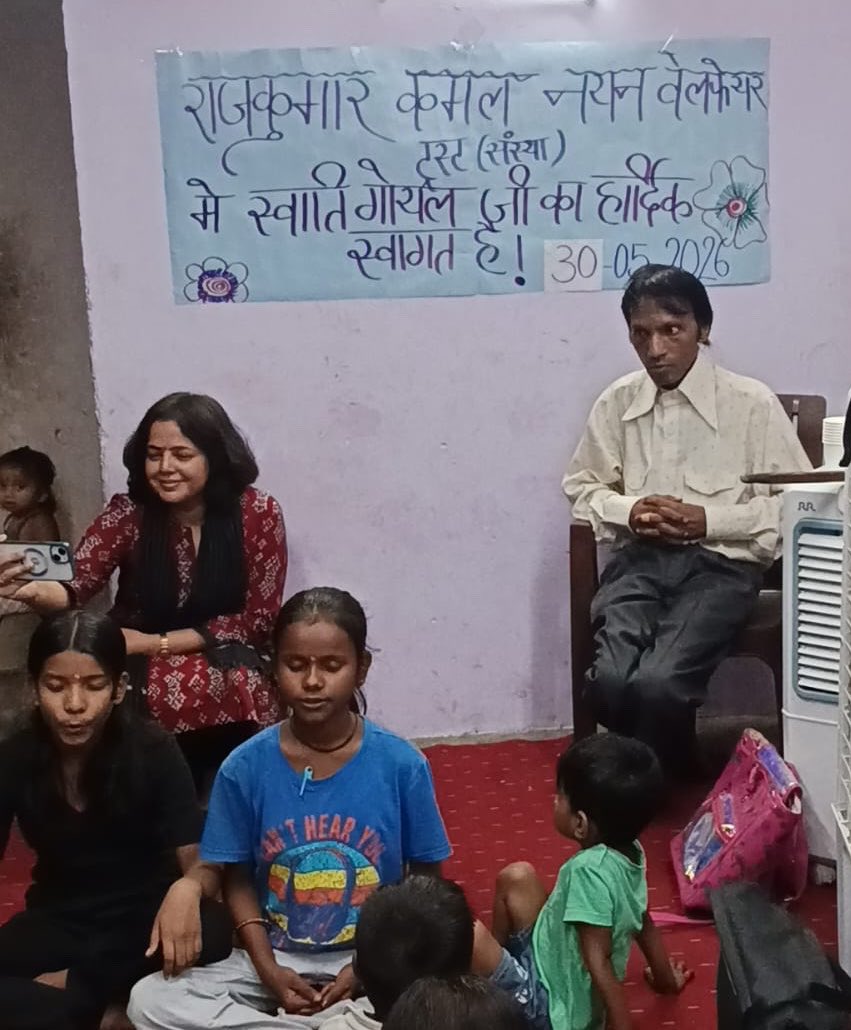
Rajkumar ji, sitting on the chair in the picture, is divyang. He is paralysed from waist down and walks with great difficulty
But last week, he sat at a police station till 2 am to get a paedophile Mohd Parvez (35) booked and arrested for assaulting a 12-year-old girl
The girl studies at Rajkumar ji’s free educational centre for underprivileged kids. After somehow escaping from Parvez, she ran straight to him and told him what happened. Rajkumar ji took lead and called police
I visited him and his centre in Delhi today
Around 100 children study here and also receive free meals. Classes begin with Gayatri Mantra and Om, and conclude with Hanuman Chalisa
Those who refuse to do these prayers, are not given admission
@sewanyaya has provided financial assistance to both the survivor and Rajkumar ji’s centre
Deeply moved by the courage of the little girl and the spirit of people like Rajkumar ji
Proto-Elamite?
The Pashupati seal has an elephant, a water buffalo and a rhinoceros. Ancient Elam was centred in southwestern Iran. Elephants, water buffalos and rhinoceroses are not native to ancient Elam. BTW, they are native to India. Also, the figure is seated in a Yogic posture. Is Yoga also Elamite now? Seriously?
Your profile says you are a professor. I don't mean to sound rude, but your students deserve a refund. And seriously, Western universities need to improve their hiring practices.
Marathi has two genders for its word for time, i.e., वेळ (vel)!
When used in the masculine gender, it denotes a time period, e.g., आज गाडीने कोल्हापूरला जायला खूप वेळ लागला. (Today it took a lot of time to reach Kolhapur by car.)
When used in the feminine gender, it denotes a specific point in time, e.g., गाडीची सुटायची वेळ काय आहे? (At what time does the train depart?)
Path to peace is not negotiations, but negotiations from such brute strength that the enemy fears the consequences of defying them.
History is littered with flourishing civilisations that believed prosperity and negotiation alone could secure peace, until they met an enemy that respected neither. The most glaring example is the Byzantine Empire. For centuries, it was one of the richest and most advanced centres of art, trade, law, and learning on Earth.
Peace was achieved through diplomacy. They managed their borders by bribing enemies, granting titles, and playing rival tribes against one another, while ignoring the importance of brute military deterrence.
In 1453, the Ottomans arrived at its gates. Negotiations did not save Constantinople. Appeals to reason did not save it. Culture, philosophy, and prosperity did not save it.
The idea that “the path to peace is negotiations” sounds noble, but negotiations only work when one or both sides fear the cost of conflict. In fact, the harsh truth of history is this: long periods of peace are usually built under the shadow of overwhelming force. The Pax Romana was enforced by Roman legions. The post-World War global order was secured by military alliances and deterrence. Even today, nations with the strongest militaries are rarely invaded, while weak states become battlegrounds for others’ ambitions.
The ancient wisdom wrote “भय बिनु होइ न प्रीत” for a reason.
@Dev_Fadnavis जनतेला options हवेत.. तुम्ही बंद करत चालला आहात...
Rickshaw lobby ला बळी पडू नका...🙏
खातं काढून घ्या सरनाईकांकडुन..
तसेच काही जण मीटर प्रमाणे पैसे उकळत आहेत ola uber वाले...
केंद्राकडे पाठपुरावा करून Bharat Taxi implement करून घेण्यात यावे...
जिस देश में, हिंदुत्ववादी पार्टी के राज्य और राज में, स्टेज पर कुछ बोलने के लिए कोई काजल घंटों में अरेस्ट हो जाती है, और मंदिर पर 10000 की हिंसक भीड़ भेजने वाले क्लिपकटुए या TCS में कन्वर्ज़न-रेप-ब्लैकमेल का रैकेट चलाने वाली निदा उसी हिदुत्ववादी पुलिस को मिलती नहीं है, यह उस देश की न्यायिक व्यवस्था, पुलिस और सत्तारूढ़ दल के बारे में बहुत कुछ कहती है।
बाक़ी त्रिशूल, त्रिपुंड आदि तो चलता ही रहेगा!
Whatever the final results, the first set of congratulations go to the Election Commission and the security personnel.
Regardless of who wins, the fight has to be fair. People, families and communities should not be threatened, raped or killed for their voting choices.
There is no point of having elections and democracy if people cannot vote freely and fairly.
There is zero shame in deploying all state power to ensure the integrity of the voting process is upheld - whether in Kashmir or in Bengal.
More power to everyone involved!
PUNE: The Pune police force is reeling from a major scandal after a female police officer was apprehended by the Anti-Corruption Bureau (ACB) while allegedly accepting a staggering bribe of ₹28 lakhs. The trap, which was executed following a specific complaint, has sent shockwaves through the department and created a significant stir among the local administration.
Details from the investigation suggest that the bribe was demanded in exchange for official favors, though the specific nature of the case is still being probed. This high-value arrest highlights the ACB's intensified crackdown on corruption within law enforcement agencies. Senior officials have indicated that a thorough inquiry is underway, and further arrests or disciplinary actions may follow as the investigation deepens into the officer's recent dealings.
#PunePolice #ACBIndia #PuneCrime
#CorruptionFreeIndia #BribeCase
When Kohinoor is mentioned, you think of Delhi sultanate, Babur, Nizam, Nadir shah, Afghans and British royal family and now Zohran Mamdani. Even now the Wikipedia entry is 99% all this.
There is never any mention of who mined it and where was it used. Because it goes against the agenda of our history writers.
It was mined by Kakatiyas.Kakatiya dynasty owned the only diamond mine in the world. Were insanely rich and ruled for 3 centuries as independent kings. They have proudly written in multiple inscriptions they were Shudra (what Shudras had kingdoms?). Proud Hindus they built amazing temples (like thousand pillar temple) and Kohinoor was also kept in a temple before it was looted by Islamic invaders. Under Kakatiyas any person of any Varna could become Nayak and some of their infra like water tanks etc are still in use after 800 years. They used Telugu, Sanskrit and Kannada.
None of this finds place in history or on Wikipedia. Only what Christians and Muslims do is history, Kafirs are just a footnote. So why write about great egalitarian technologically rich Hindu kingdoms ravaged and looted by Islamic and Christian barbarians, right? 1/2
Every year, the same story. The mountains are choking, the rivers are turning into dustbins, the temples are becoming stampede zones, and the government is still pretending this is “tourism growth.” Just look at Kedarnath. The shrine reopened and within days the visuals were already chaotic: overcrowding, barricades being jumped, common devotees crushed in the rush. This is not devotion being managed well. This is fragile mountain geography being pushed past its limit.
Then look at what is happening across the Himalayas. At Gangotri, waste and ritual material are being dumped into the Bhagirathi. In Himachal, viral videos have shown tourists drinking and throwing garbage into the stream at Lapas waterfall. Another video showed plastic waste littering a water body on the Manimahesh Yatra route at around 13,000 feet. We go to the mountains for peace, and then carry our filth, noise, plastic, traffic, and zero civic sense with us.
And let us stop blaming only “some bad tourists.” This is also a governance failure. Himachal’s own chief minister has admitted that over-tourism is straining roads in the state. The NGT has already had to scientifically fix carrying-capacity limits for places like the Kufri-Mahasu trail. So the problem is no longer hidden. Everybody knows it. The state knows it. The courts know it. The public knows it. But action still comes too little, too late.
There has to be a hard cap in peak season on how many people and how many vehicles can enter ecologically fragile hill zones in Uttarakhand, Himachal, and elsewhere. Tourism matters, yes. Local livelihoods matter, yes. But dead mountains will not sustain any economy. If we keep treating the Himalayas like an unlimited weekend parking lot and garbage yard, then one day we will wake up and realize we did not visit the mountains. We finished them.