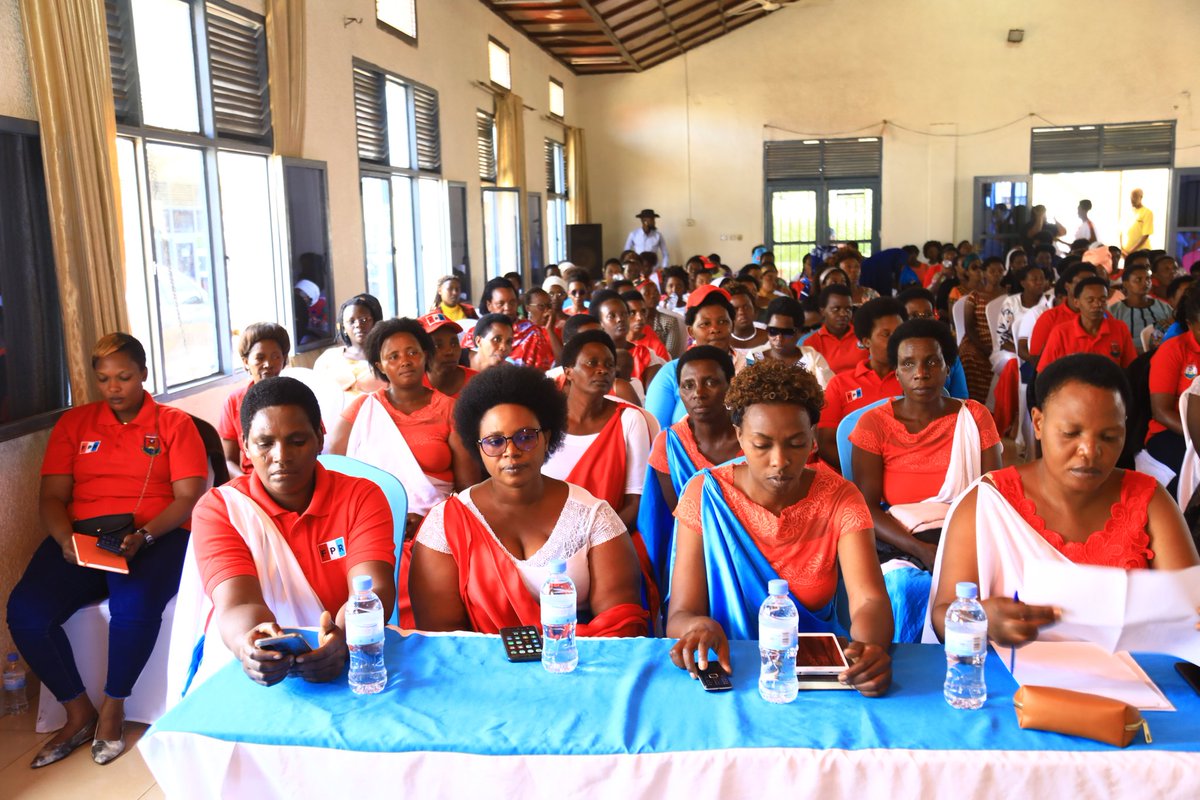
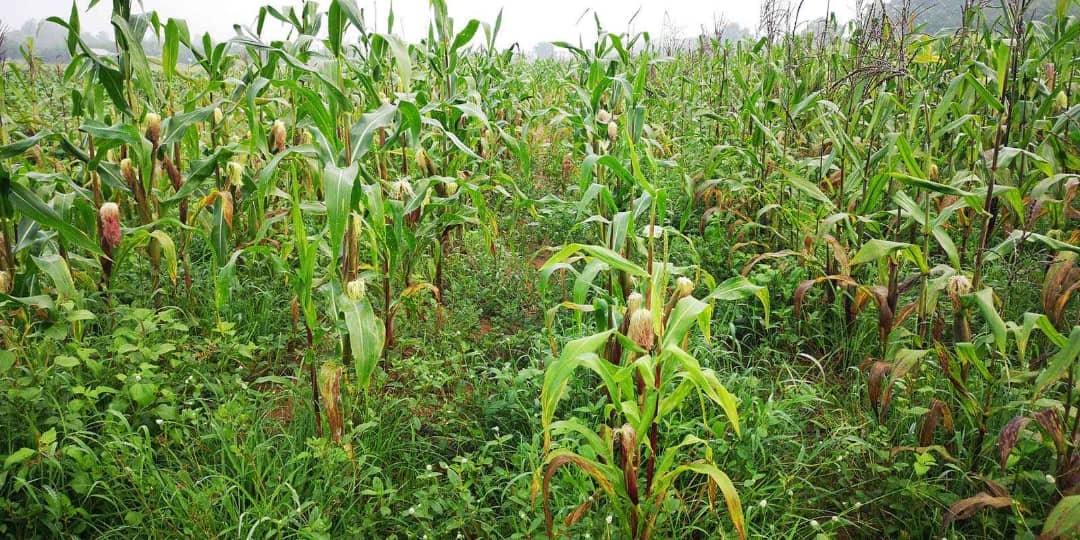
Seeds are not just inputs! They are the foundation of national transformation. The 3rd Rwanda National Seed Congress 2026 is coming July 20–21 in Kigali. Stay tuned for what's being built.
Register now: https://t.co/zK9emAmwPQ
CALL FOR APPLICATIONS - Foundation in Cold Chain Course
❄️ Strong cold-chains are essential for food security, public health, and resilient supply systems.
Are you a policymaker, NGO professional, development practitioner, consultant or sector stakeholder looking for basic cold-chain knowledge?
Join this in-person course to gain a core understanding of refrigeration, post-harvest management, and supply chain requirements.
🗓️22 – 26 June 2026 (5 days)
📍ACES Rubirizi Campus, Kigali
📝 Apply by email to [email protected] before 9 June 2026
🔗 Course details: https://t.co/I6vuwoki3y
The future of AI in agriculture starts with farm data.
There is a phrase every data scientist knows:
Garbage in. Garbage out.
In agriculture, that is not just a technical saying.
It is a daily operational reality.
An AI system trained on incomplete yield records will produce incomplete recommendations.
A precision application tool calibrated on incorrect soil maps will misapply inputs.
A decision-support model built on only two years of data will struggle to understand the variability that an experienced farmer has seen across ten seasons.
This is why the conversation about AI in agriculture must begin with data readiness.
Not the algorithm.
Not the dashboard.
Not the press release.
The data.
Because AI does not create truth from nothing.
It learns from the information we give it.
And in farming, that information is often messy, fragmented, inconsistent, and stored across different systems.
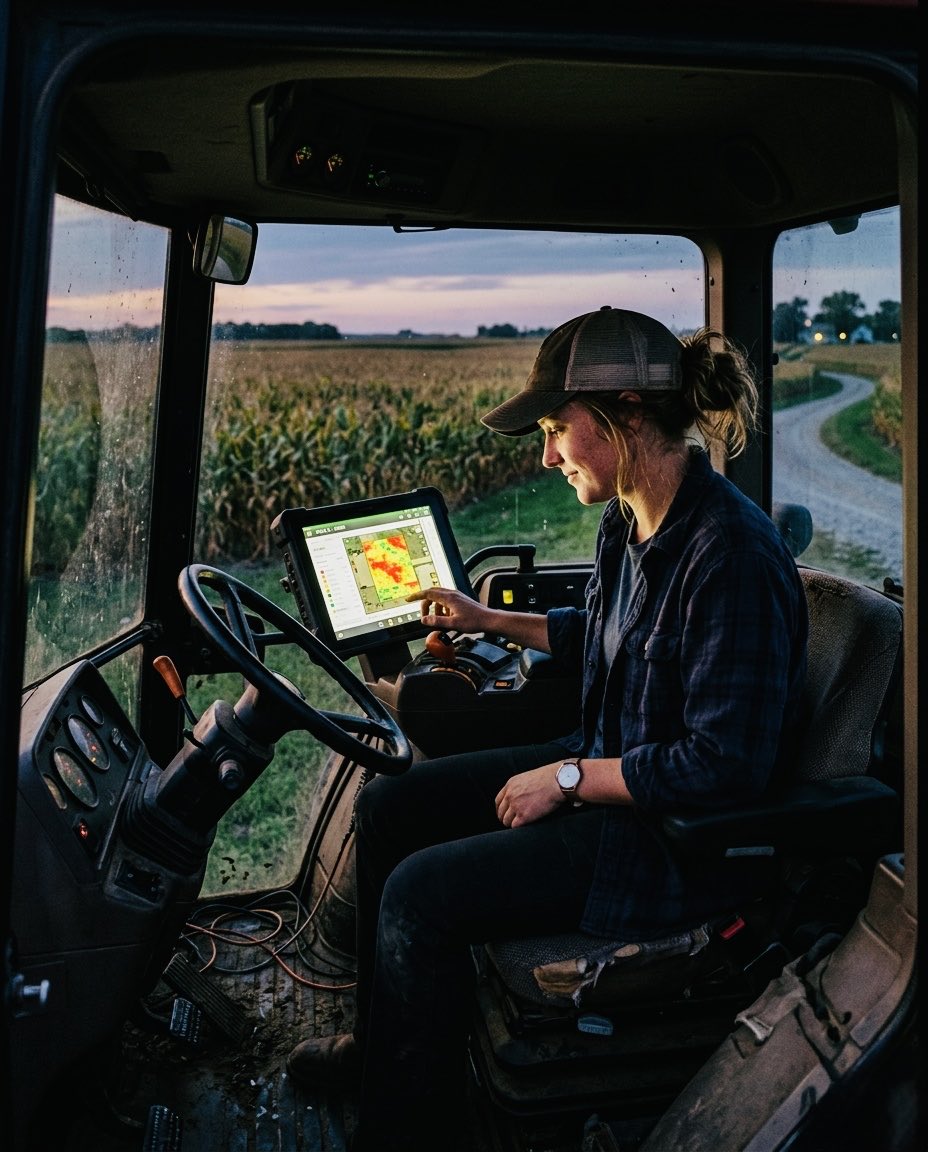
One field may have yield monitor data.
Another may have soil test results.
Another may have planting records.
Another may have spray records.
But those records may live in different platforms, different formats, and different equipment brands that do not always communicate with each other.
That is a serious challenge.
Farm data is powerful, but only when it can be organized, cleaned, connected, and translated into decisions that make sense on the ground.
Data readiness is not a technical footnote.
It is the foundation of agricultural AI.
Before we ask what AI can do for farmers, we need to ask whether the data systems behind it are ready.
Are the records consistent?
Are the field boundaries clean?
Are the yield files corrected for errors?
Are the soil maps reliable?
Can the software systems talk to each other?
Can the farmer actually understand and use the recommendation?
These questions matter because a bad recommendation in agriculture is not just a bad output.
It can affect input costs.
It can affect yields.
It can affect soil health.
It can affect trust.
And once trust is lost, technology adoption becomes much harder.
The USDA Economic Research Service has shown that adoption of yield maps, soil maps, and variable-rate technologies has grown on corn and soybean acreage, but it is still not universal.
The Government Accountability Office has also identified lack of interoperability, limited tools, and data challenges as barriers to wider precision agriculture adoption.
That should tell us something important.
The future of AI in agriculture will not be built only by better models.
It will be built by better data systems.
Better record keeping.
Better interoperability.
Better farmer support.
Better trust.
And better respect for the years of observation farmers already bring to every field.
Farmers who have been collecting good data are already closer to AI readiness than they may realize.
Because good AI recommendations do not begin with machines.
at #AFSForum2024 in a Legacy Program for Rwanda, Haile-Gabriel, Assistant DG @FAO RAF commended the Good Leadership of Rwanda as a key factor for all achievements realised in food systems. He recommended the Establishment of Leadership Academy in Rwanda to illuminate others
#BREAKING: President #Kagame has appointed Jean Claude Musabyimana as Minister of Local Government, replacing @gatjmv who had been in the position since March 2021.
Lesson learnt from Singapole: planting trees to mitigate Climate change. We can achieve so using fruit trees that will bring another advantage of Wealthy (economic aspect) & Health (nutrition aspect).@RwandaAgriBoard@RwandaAgri@RwandaForestry