My hunter-gatherer & farmer breakdown with qpAdm by @sapphiregnm
30.8% Zagros Neolithic Farmer
32.4% Anatolian Neolithic Farmer
15.5% EHG
10.8% CHG
6.5% Natufian
4% East Asian
Scandinavian is not only a regional label, it’s also an ethno-linguistic identity, rooted in a shared Norse ancestry. Maybe do your research before claiming stuff.
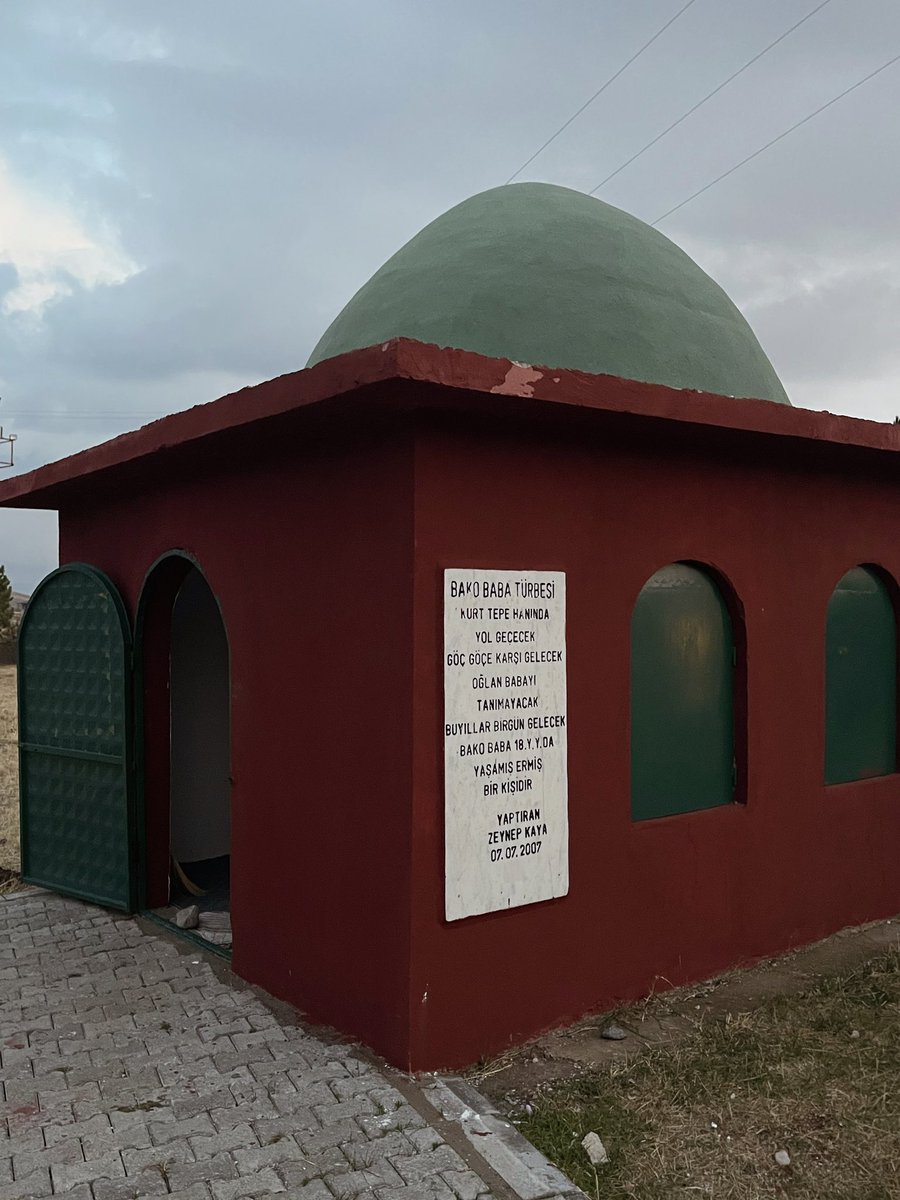
You can identify as a Yezidi, Arab or Turk. Or even as a tree. I don’t really care but just don’t invent stuff that is not based on facts such as being ancient Mesopotamians and having no connection to Kurds just to be edgy and woke. Or that the Kurdish ethnic identity formed in the 16th century (lmao) or whatever you guys claim.
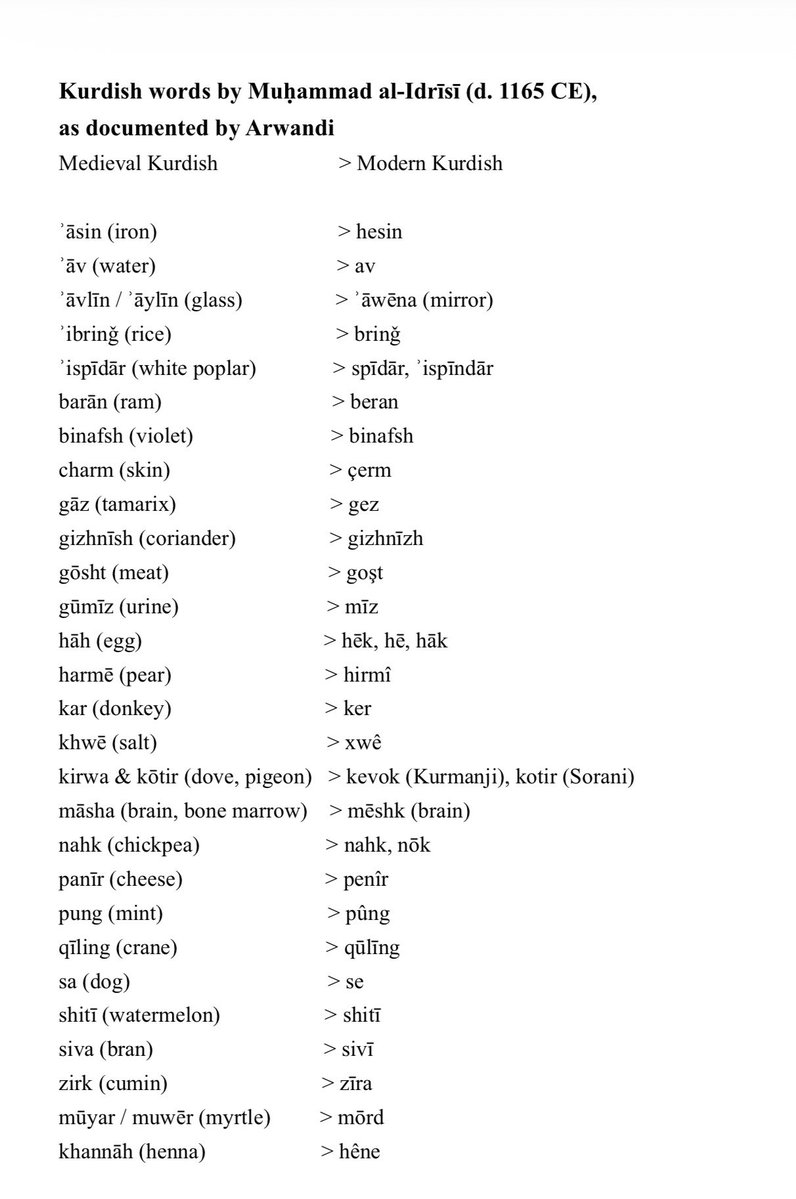
According to this, Western Kurmanji spoken in regions west of the Euphrates is closer to medieval Kurdish than Standard Kurmanji, which is based on the Botani dialect.
Hemdad has an important article containing Kurdish words from the 12th c. (al-Idrīsī's work, d. 1165 CE)
I compiled also some equivalents for comparison
@Geshti_Azadi@ShamsaniBaedri@HavinEdewi@ZGRSchr No offense but what you guys believe or don't believe holds no weight when it comes to historical accuracy. You do the same thing you acccuse them of.
Yezidis do not belong in that list being a Kurmanji-speaking subgroup of Kurds with only a different religion (which emerged from a religious heterodox order at that). Even Bavarians have more factual reasons to view themselves as a distinct group. Pashtuns being Eastern Iranics is also unfitting.
Anyways it‘s pointless to discuss this any further. Just don‘t do that „anshant Mezukutanian“ larp pls.
@SemireXalti@ZGRSchr Ingush and Chechens are Nakh. Croatians, Bosnians and Montenegrins are Jugoslavs. Danes and Norwegians are Scandinavians. Hindu, Muslim or Sikh Punjabis are still Punjabi by ethnicity, that’s the perfect and most fitting analogy for Yezidis. You guys are inventing stuff.
@ZGRSchr@SemireXalti Weird form of self-hate.
The truth is Yezidis are Kurds who are preserving Kurdish culture & language more than any other group of Kurds (alongside Yarsanis).
@SemireXalti@ZGRSchr Kurmanj and Soran are fairly new terms. The ethnonym Kurd is first attested in Sassanian period. Kurds as an ethnic group already existed prior to Islam & Kurds were a multi-religious ethnic group from the very beginning. Anything else is cope and historical revionism.
MAJOR development. After several years of on and off attempts, I have finally solved the etymology of the ethnonym Kurd, which currently has no solution in academia. It comes from Proto-Indo-European *kr̥t-í- “cut” → Proto-Indo-Iranian *kr̥ti- → Proto-Iranian *kr̥ti- → *kur(ə)ti- (“cut”, but also an outer “garment”) → *Kurt(i)- (adopted as a tribal name) → *Kurt → *Kurd (by the 3rd c. CE) → Kurd (from a tribal identity to an ethnonym).
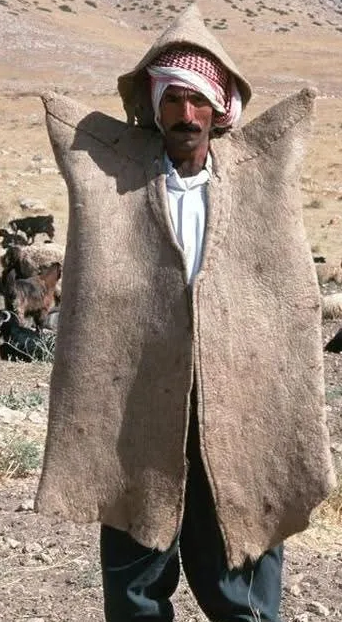
The first image, an etymological tree, sets out and justifies each sound change, if you want to see how the derivation is linguistically proven. It also contains the historical details on each form where attested. X reduces image resolution, so to read it clearly, expand the image and open it in a new tab. The second image shows the garment in question: the thick, tent-like traditional shepherd’s cloak made of dense felted wool, or wool mixed with goat hair.
Specifically, the name Kurd comes from this outer-garment sense, which was later adopted as a tribal name. Among Iranian languages, the garment word first appears in Avestan as kərəti-, in instructions on how Zoroastrians should wear it together with the sacred shirt and belt. In Parthian, kórt-ēn was the garment boys received as a coming-of-age gift when they reached manhood (which is linguistically a close match to the word Kurd, as the stem's predicted outcome of the Parthian would eventually become Kórd/Kurd since that gloss predates t > d). The word has cognates across the Iranian world, living and extinct, such as Khotanese, Ossetian, Sogdian and Bactrian.
There is historical evidence that Kurd still carried a secondary garment meaning in the early Islamic period, as the word was borrowed into Classical Arabic for a type of garment: kurdī, from the narrator Ibn Abī al-Zinād (d. 790 CE in Baghdad), in Abū Dāwūd 915 (before 889 CE), and kurdiyya in Ibn al-ʿArabī (d. 1148 CE), among others. The hadith reads: “…from ʿĀʾisha, with this report. He said: and he took a kurdī that belonged to Abū Jahm. It was said: O Messenger of God, the khamīṣa was better than the kurdī.” This is important because it shows the t > d form unlike Kurt-(ek), and other forms that passed through west Iranian languages later on via Sogdian. They are still from the same root however.
Tribal names and clans very often come from places, animals, objects and so on. The Kurdish tribe Sanjabi is named after the squirrel fur, Herki is named after a citadel, etc. Kurds are first attested in history specifically as a tribe by Eratosthenes, Strabo and others. The older reading of Kurd as “nomad” has no etymological basis in any Iranian language, and many Kurdologists/Iranologists today regard it as an anti-Kurdish narrative with no basis in the historical record (see Boris James). Some earlier academics unknowingly built on Arabic mistranslations and deliberate misreadings, which are now corrected. There were also at least 11 Iranian nomadic tribal organisations on the plateau before Islam with no Kurdish identification, and 5 Iranian tribal organisations on the plateau that never had a Kurdish tribal affiliation which completely contradicts this narrative.
The main sound-change question left open in my tree is how r̥ became ur, since it normally gives ar or ər. There are several resolutions, but it is not yet clear which one it is. The u-form *kur(ə)ti- may have spread by borrowing, as a garment from the East Iranian lands: ur is the usual outcome in Parachi, Sanglechi-Ishkashmi and Shughni (Clayton 2022), and Sogdian kurθ- probably passed into Persian kurta. Or it may be a regular change in some western dialect, as in Balochi kurt “did” < *kr̥ta- (Korn 2003).
Several scholars already tie the garment word to the root for “cut”. Abaev derives Ossetian kærc “fur coat” from Old Ossetian *karti-, which “corresponds perfectly” to Avestan kərəti- “garment” (that is, *kr̥ti-), perhaps from *(s)ker- “to cut”; he calls Ossetian kuræt a loan. Bailey derives Khotanese kīḍakyä “garment” from kart- “to cut, tailor”, comparing kərəti-. Henning took Sogdian kurθ- “garment” as the same word as kərəti-, and Benveniste linked Persian kurta to the Sogdian. Sims-Williams, publishing Bactrian kuratīg “shirt”, calls it “a word of unknown but probably non-Iranian origin”, which would leave room for a substrate source such as the BMAC (2007: 224). Although Sims-Williams did not gloss through the full extent of the Iranian forms, or look too deeply into it.
I have opted otherwise, and agree with the other scholars who do derive it through Iranian, because of the following reasons. Avestan kərəti-, Ossetian kærc and Khotanese kīḍ- show the regular outcomes of *kr̥ti- at opposite ends of the Iranian world. The root has an Indo-European etymology, *(s)ker-t- “cut”, shared with Vedic kṛtí- “dagger”, and the Pahlavi commentary renders kərəti- as kirrēnīdag “cut”. The forms Sims-Williams compares are the u-forms, and they can all be accounted for within Iranian. The Sogdian θ comes from the regular change ty > θy. Persian kurta, Arabic qurṭaq, Pashto kurta and Ossetian kuræt are loans. A word with a regular Iranian etymology doesn’t need a substrate source.
To clarify for anyone who doesn't know, the stem is important for derivation as it carries the evidence of descent, while the the suffixes don’t necessarily. A stem passes down through Iranian forms and goes through its regular sound changes, so kurt- with t, kurθ- with θ and kurd with d each show where a form sits on the tree. Suffixes are added afresh by each language and are often swapped or borrowed depending on the application and context.
Given this etymology, the identification of the Cyrtians with the Kurds is even stronger than it already was, as the forms are an exact match. Identifications with the Carduchi, Qardu, among other folk proposals have become even more improbable, both linguistically and historically, than they already were.
A preview of another forthcoming article of mine in the Journal of Indo-European Studies. The article re-examines the meaning of Avestan airiia- and investigates the geographical location of Airiianəm Vaējah, traditionally understood as the ‘Aryan homeland’. 1/10