NeurIPS acknowledges that the cultural generalization made by the keynote speaker today reinforces implicit biases by making generalisations about Chinese scholars. This is not what NeurIPS stands for. NeurIPS is dedicated to being a safe space for all of us. We want to address the comment made during the invited talk this afternoon, as it is something that NeurIPS does not condone and it doesn't align with our code of conduct. We are addressing this issue with the speaker directly.
NeurIPS is dedicated to being a diverse and inclusive place where everyone is treated equally.
🥁And the #cav24 Award goes to...🥁
Clark Barrett @Stanford, David Dill @Stanford, Kyle Julian @Wing, Guy Katz @CseHuji and Mykel Kochenderfer @aiprof_mykel@Stanford for their #cav17 paper “Reluplex: An Efficient SMT Solver for Verifying Deep Neural Networks”
Congratulations! 👏
Taylor Dohmen, Mateo Perez, Fabio Somenzi and Ashutosh Trivedi (@astrivedi) receive the #cav24 Distinguished Paper Award for their paper "Regular Reinforcement Learning" 👏
Make sure to catch the talk on Friday at 09:40!
Excited to present our (w/ @bechang and @astrivedi) paper "Selectively-Amortized Resource Bounding" at Static Analysis Symposium 2021! Check out the preprint at https://t.co/ZyHqN4NlBP or read on for a quick summary! (1/x)
Congratulations to the 21 recipients of the 2021 CAV Award! #21in21 🎉
The award recognizes their "pioneering contributions to the foundations of the theory and practice of satisfiability modulo theories (SMT)."
#cav21
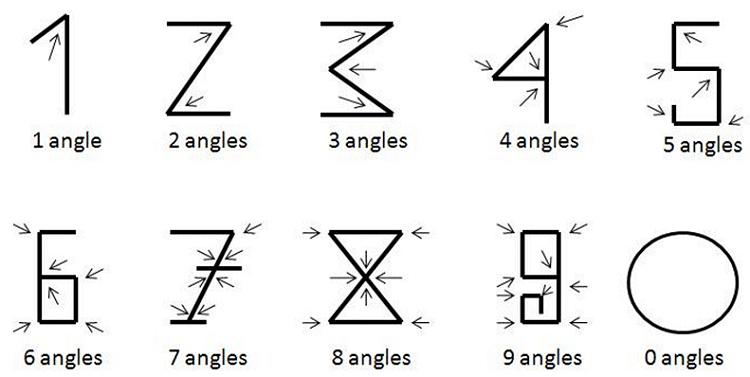
@MsPackyetti@TomBradley11 The numbers we use today are based on drawings done by Phoenician merchants. Many of them were illiterate, so they added angles to a straight line and counted them instead. This picture explains it nicely: