Welcome home Reid, Victor, Christina, and Jeremy! 🫶
The Artemis II astronauts have splashed down at 8:07pm ET (0007 UTC April 11), bringing their historic 10-day mission around the Moon to an end.
THE ARTEMIS II ECLIPSE.
April 6, 2026.
Totality, beyond Earth. From lunar orbit, the Moon eclipses the Sun, revealing a view few in human history have ever witnessed. Photo: NASA
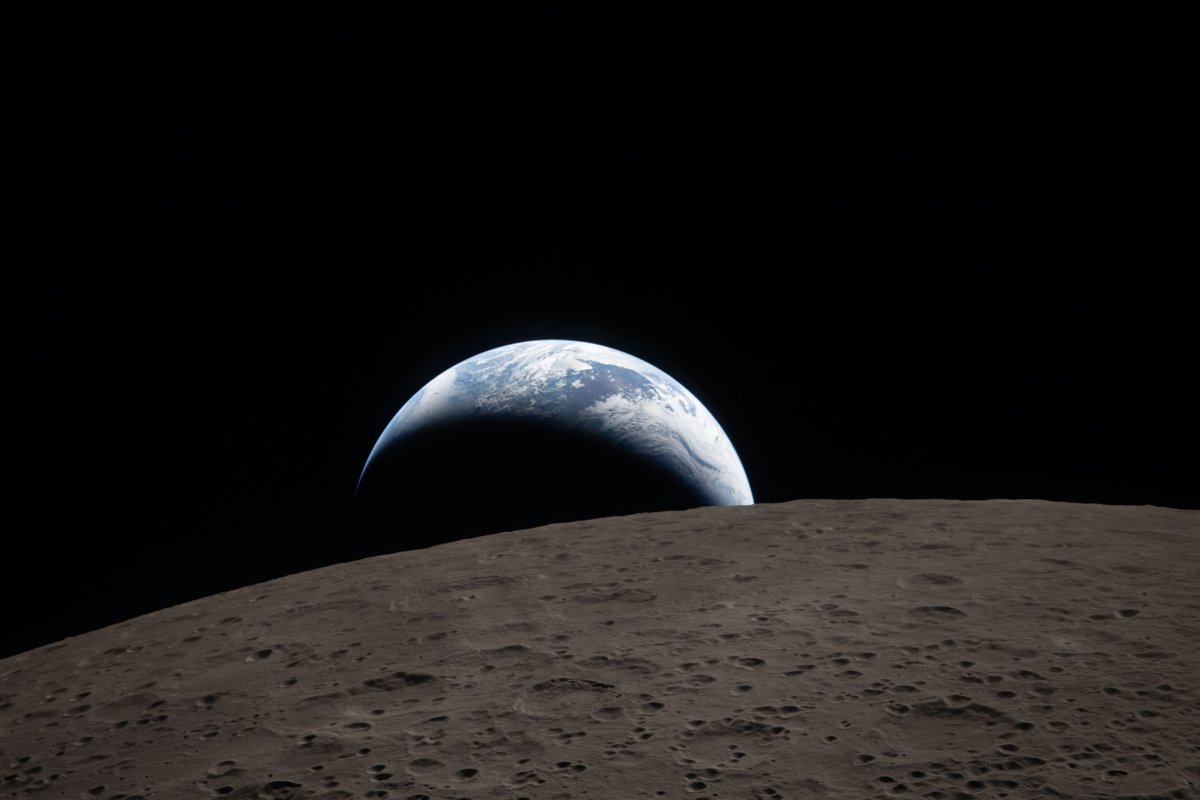
Earthset.
The Artemis II crew captured this view of an Earthset on April 6, 2026, as they flew around the Moon. The image is reminiscent of the iconic Earthrise image taken by astronaut Bill Anders 58 years earlier as the Apollo 8 crew flew around the Moon.
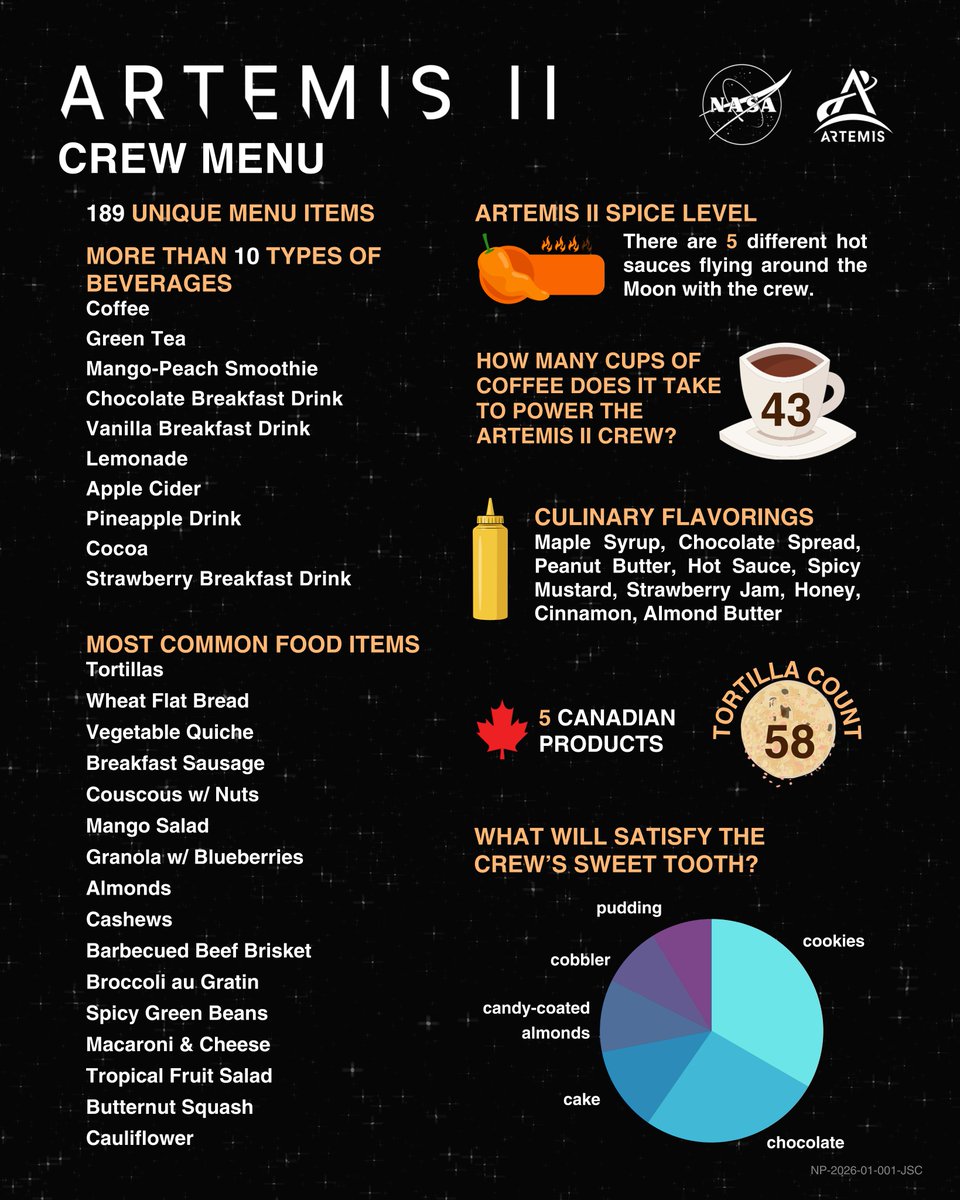
Who’s hungry? 🍽️
Planning for a 10-day Moon mission also means planning crew menus! Here’s everything flying aboard Orion with the Artemis II crew… though some of that’s been eaten already. What would you eat on the way to the Moon and back? https://t.co/DWMSCzfPjr
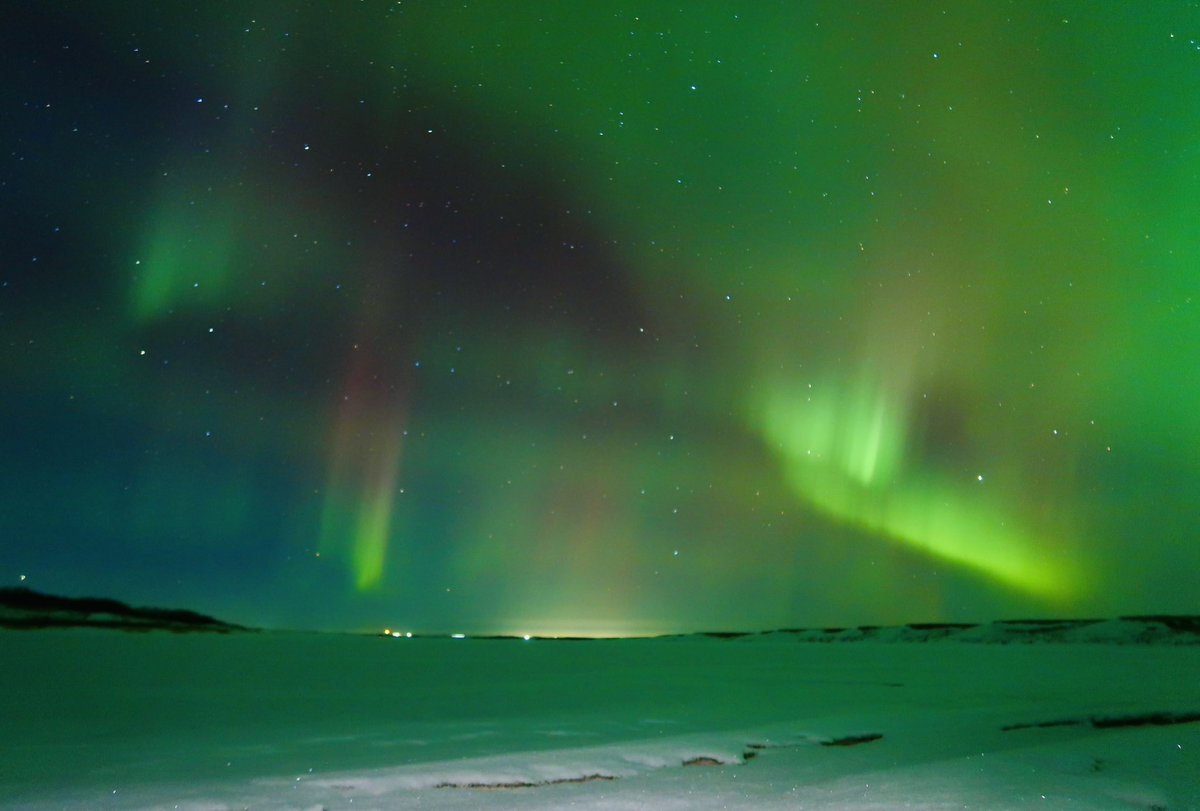
"Missing Out On Magnetic Midnight"
Jumping Pound West of Calgary 20260322T1145Z
This is one of the most colourful pulsating aurora timelapse that I have ever seen, the movement and colours are sublime. This is after magnetic midnight when the aurora goes into pulsating mode with the occasional pillar show, not in this case she's all pulsating aurora borealis northern lights, enjoy!
dance of the #darkside#moon throughout 2026 with the rock and wobble. every phase is inverted from the #nearside. a great way to visualize the edge craters and objects that rarely become visible on the nearside #lunarliberation 🌙
dance of our #moon is a gentle rock and wobble in the night sky where only one side faces #earth (a little bit more than one side because of the wobble). based upon #NASA dial-a-moon using simulated images for every hour of 2026. 🌙
Detalles del Sol en H-Alfa (13-03-2026)
Animación compuesta por 60 imágenes del limbo solar
Explore Scientific 127mm f7.5 carbon
Daystar Quark chromosphere
Player One Apollo-M Mini
Player One ERF S-Series
Svbony UV IR cut
If Pi Day's got you hungry for more than just math, grab a slice of Sun Pie!
This view of the Sun shows how monitoring different wavelengths of light allows us to peek underneath the "crust" and see changes like solar flares to better understand how they develop and change.
Moderate (G2) geomagnetic storm threshold reached at 23:40 UTC (March 13). Solar wind currently 600-700 km/s and Bz pointing south at times. https://t.co/aqK4Q6XdAY
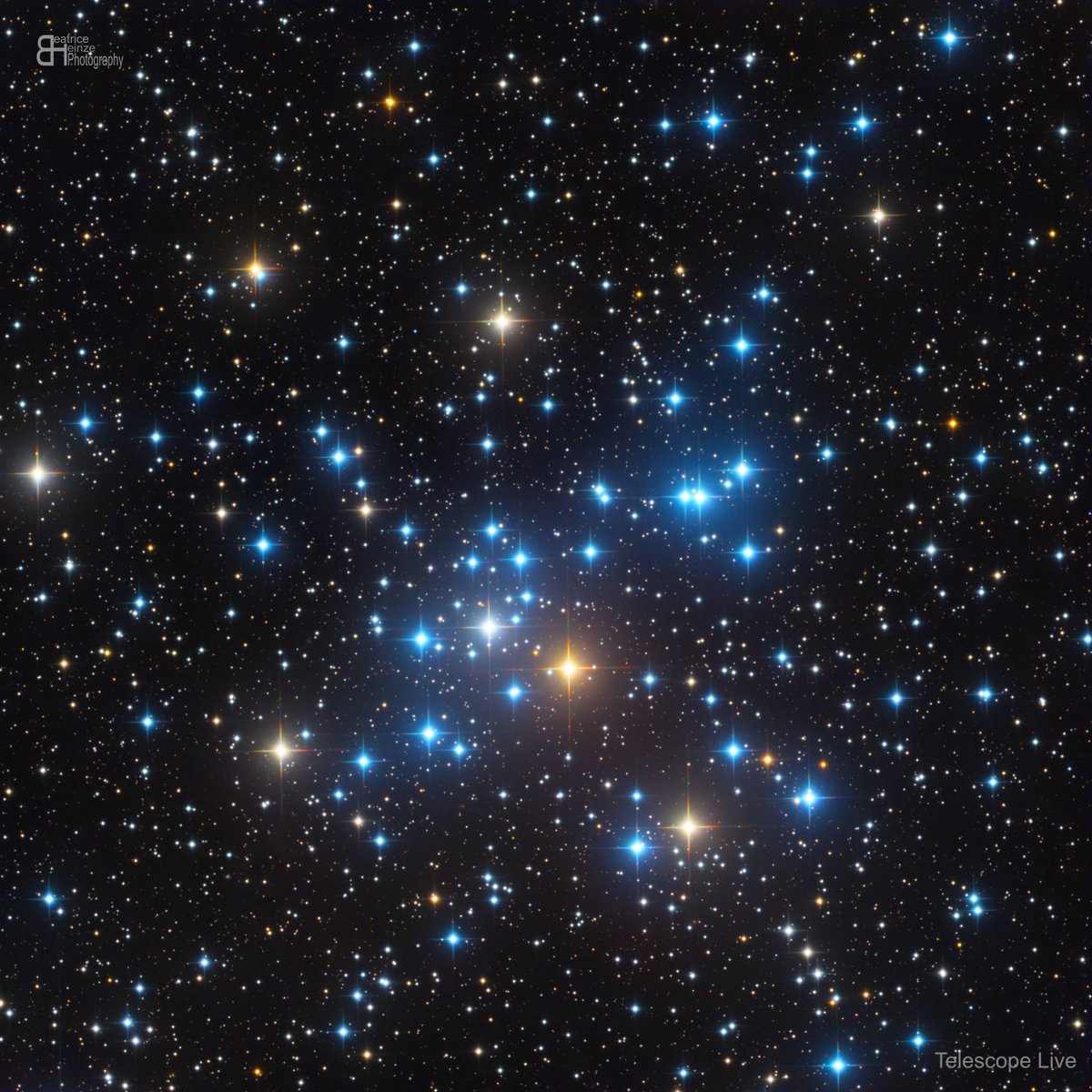
M41 Little Beehive Cluster (LRGB)
A beautiful open star cluster, also known as NGC 2287, located in the constellation Canis Major, displays its stars like precious jewels in the night sky.
Editing this star cluster was great fun. I also love viewing star clusters through a telescope or binoculars.
My workflow included: GraXpert, SPCC, BlurXT, NoiseXT, Curves Transformation and ImageBlend (to merge luminance and RGB).
Data: Telescope Live
Processing: Beatrice Heinze
Clear Skies!