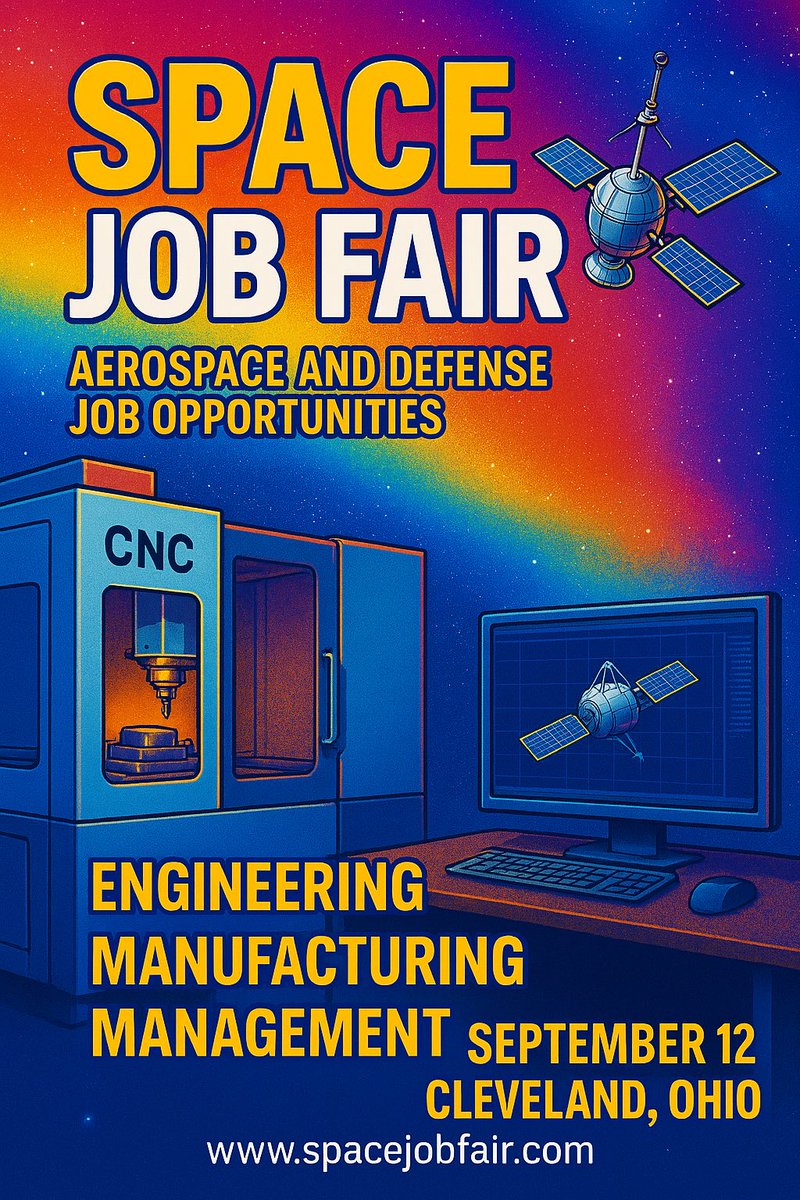
The relaunch and new website of @theSpaceCC is getting finalized. Signups are flowing in and it seems a career service for space is a great idea. #SpaceCareer
Guys … @YurisNight in LA is coming up. Amazing event with great people.
@LorettaWhtsides is pushing to bring people together and celebrate space!
Consider attending, it you are near LA—or check out the website and search for an event near you.
https://t.co/sITXT6p6O6
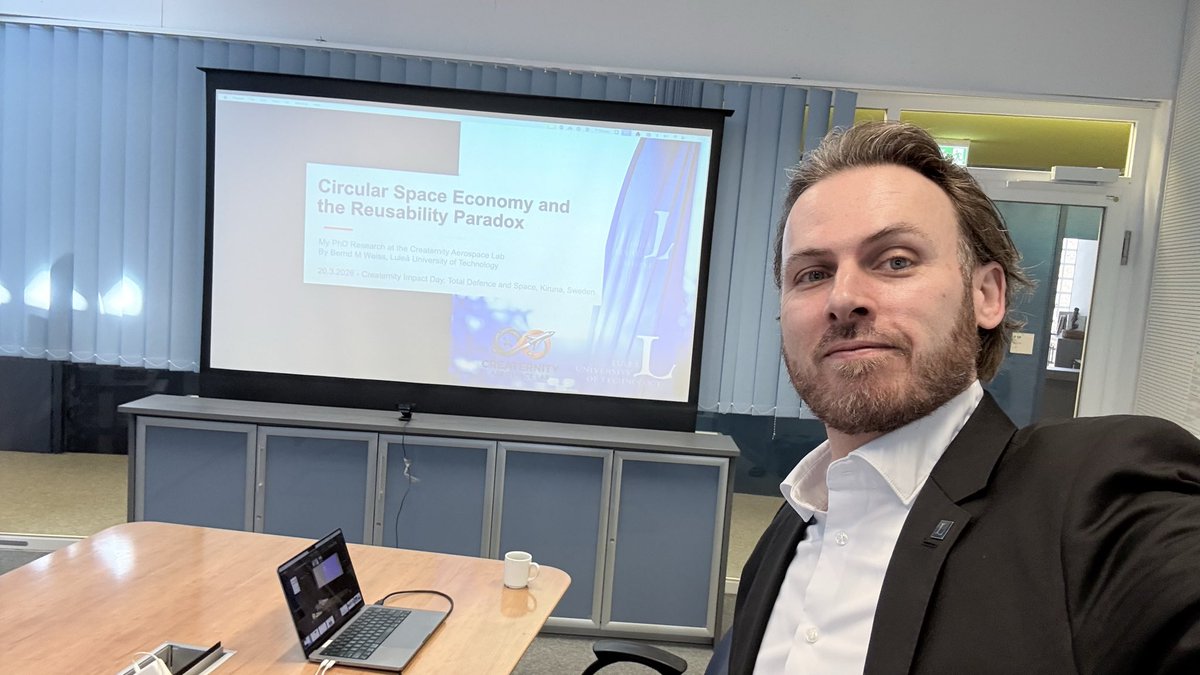
Representing @astromerge and @FIRELANDSspace at Creaternity Impact Days - Total Defence and Space.
I’ll be giving a talk on Circular Space Economy and the Reusability Paradox.
#AFutureInSpace
When you are in, you are all the way in.
It’s time.
Spacecraft Made in Ohio.
Design, Prototyping, Manufacturing, Assembly together with amazing people in Ohio - the birthplace of aviation.
Outer Space Systems @outersys
First designs will be arriving soon.
Circular Economy: From War Effort to National Security Imperative
When we talk about national security, we think of military strength, energy independence, and technological superiority. But there’s a blind spot: industrial resilience. The ability to produce, repair, and sustain critical infrastructure is as vital as any defense system. Yet, we’ve outsourced, offshored, and eroded our capacity to make and maintain. Circular economy is not just about climate change, it’s about national security.
The Forgotten Origins of Circular Economy
Today, circular economy is often framed as an environmental strategy. But its roots lie in survival and strategic resilience. During WWII, circularity wasn’t a choice—it was a necessity. Supply chains were disrupted, resources were scarce, and industries had to innovate. Old machinery was refurbished, spare parts were salvaged, and products were designed to last and be repaired.
After the war, this philosophy fueled industrial stability. The U.S. and Europe built strong manufacturing bases on the principles of reuse, repair, and resource efficiency, not to “go green,” but to ensure economic and national strength.
How We Lost Our Way
Somewhere along the way, circular economy was rebranded as a climate change response. While the environmental benefits are real, this shift stripped it of its economic and security significance. Manufacturing declined, reliance on fragile global supply chains increased, and repairability was abandoned in favor of disposable design.
Reframing Circular Economy: Security, Wealth, and Power
It’s time to take back the original intent. Circularity isn’t just about sustainability, it’s about self-sufficiency, economic strength, and geopolitical power. Countries that control their industrial base, materials, and repair capabilities are not just wealthier but more secure.
Instead of seeing circularity as a green sacrifice, we must recognize it as a goldmine of opportunity. Rebuilding our ability to repair, remanufacture, and reclaim materials is a direct path to job creation, industrial dominance, and true national security.
Forget the climate debate, circular economy is a national imperative. If we don’t act now, we’ll be at the mercy of those who control our supply chains. Will we reclaim our industrial power or continue our slow decline?
The Urgent Need for Climate Mitigation Strategies: A Call to Action
Climate change is an undeniable reality of our time. Whether driven by human activity or natural cycles, the fact remains that the Earth’s climate is undergoing significant and rapid transformations. The evidence is clear: temperatures are rising at an alarming rate, faster than many scientists had anticipated. This acceleration in global warming presents an existential threat, requiring immediate and decisive action to mitigate its effects.
The Evidence: Climate Change is Happening
For decades, scientists have warned about the consequences of a warming planet. Data from around the globe confirms that average temperatures are rising, ice caps are melting, and weather patterns are becoming increasingly erratic. These changes are not isolated incidents but part of a broader trend that points to a shifting climate system. The debate over whether humans are the primary drivers of this change should no longer distract from the pressing reality: climate change is happening, and its impacts are being felt worldwide.
Rising Temperatures: Exceeding Expectations
The rate of temperature increase has outpaced even the most dire predictions made by climate scientists. The past decade has seen unprecedented heatwaves, wildfires, and hurricanes, all linked to rising global temperatures. This rapid warming is not only melting polar ice but also contributing to rising sea levels, threatening coastal communities, and disrupting ecosystems. The speed of these changes suggests that the window for preventing catastrophic outcomes is rapidly closing.
Carbon Emissions: Falling Short of Targets
Despite global efforts to curb carbon emissions, progress has been frustratingly slow. International agreements like the Paris Accord have set ambitious goals, but many countries are struggling to meet their commitments. Emissions continue to rise in many regions, and the transition to renewable energy sources is happening too slowly to offset the damage being done. The gap between current emissions and what is needed to stabilize the climate is widening, making the need for immediate action even more urgent.
The Imperative for Mitigation Strategies
Given the current trajectory, it is clear that we can no longer afford to wait. While efforts to reduce emissions must continue, we must also focus on strategies to mitigate the effects of climate change that are already inevitable. This includes investing in resilient infrastructure, protecting vulnerable ecosystems, and developing technologies to remove carbon from the atmosphere. These measures are not optional but essential to safeguarding our future.
A Call to Action
The reality of climate change demands a shift in focus from debate to action. The science is clear: temperatures are rising faster than anticipated, and current efforts to reduce emissions are insufficient. To avoid the worst impacts of climate change, we must act now to implement mitigation strategies. The time for complacency has passed; the future of our planet depends on the decisions we make today. It is not too late to make a difference, but only if we act with the urgency that this crisis demands.
@astromerge we use AI, space and green tech to build a resilient and sustainable future in space and on Earth. We initiated @Circulate360 to support ideas leveraging circular economy based strategies for new business and to enhance products and manufacturing processes.
Mitigation strategies are needed NOW.
Accelerating Climate Mitigation Through Sustainable Space Technology
As the global community grapples with the urgent need to mitigate the impacts of climate change, one of the most promising frontiers for innovative solutions lies beyond our atmosphere. The space industry, often seen as the domain of exploration and communication, holds significant potential to accelerate climate mitigation efforts here on Earth. By applying space technology in a sustainable manner, we can enhance our ability to monitor, manage, and ultimately mitigate the effects of a rapidly warming planet. To harness this potential fully, it is imperative that we accelerate the development and deployment of space-based technologies.
The Role of Space Technology in Climate Monitoring
One of the most critical tools in the fight against climate change is accurate, real-time data. Satellites orbiting the Earth provide an unparalleled vantage point for monitoring our planet’s climate systems. These satellites track everything from deforestation and ice melt to greenhouse gas emissions and ocean temperatures. The data they collect is vital for understanding the current state of the climate and predicting future changes. Without these insights, our ability to plan effective mitigation strategies would be severely compromised.
Enhancing Climate Models with Space-Based Data
Space technology also plays a crucial role in refining climate models, which are essential for predicting the future impacts of climate change. The accuracy of these models depends heavily on the quality and quantity of data available. By accelerating the deployment of advanced satellites equipped with cutting-edge sensors, we can improve the precision of climate predictions. This, in turn, enables governments, businesses, and communities to make more informed decisions about how to mitigate and adapt to climate change.
Sustainable Space Operations: A Prerequisite for Climate Success
While the potential benefits of space technology for climate mitigation are immense, it is crucial that these efforts are pursued sustainably. The space industry must take care to minimize its own environmental impact, both in terms of the carbon footprint of launches and the long-term issue of space debris. By adopting green technologies, such as reusable rockets and cleaner propulsion systems, the space sector can contribute to climate goals without exacerbating the problem.
Accelerating the Space Industry: A Global Imperative
Given the urgent need for effective climate mitigation strategies, the acceleration of the space industry should be a global priority. Governments and private companies alike must invest in the development of space technologies that can support climate goals. This includes not only enhancing current capabilities but also exploring new and innovative applications of space-based systems. Collaboration across borders and sectors will be essential to realize the full potential of space technology in the fight against climate change.
The Time to Accelerate Space is Now
Climate change is one of the most pressing challenges of our time, and the clock is ticking. To meet this challenge, we must leverage every tool at our disposal, including the immense potential of space technology. By accelerating the development and deployment of sustainable space-based solutions, we can significantly enhance our ability to mitigate the impacts of climate change. The space industry is not just about exploring new frontiers; it is about securing the future of our planet. Now is the time to act, to invest, and to innovate���both on Earth and in space—for the sake of generations to come.
@astromerge is dedicated to support a sustainable transformation of the space industry.
space/acc is the path forward.
#eacc #spaceacc #afutureinspace
We need traceability in all products.
We need to know what in them.
We need to know how we can optimize them.
For satellites, @Astromerge partners with @outersys to develop a bulletproof system for satellites and spacecraft.
This system will be used to create a real economy in space.
#outerspace #afutureinspace
Why We Must Accelerate the Space Industry: A Vision for the Future
The space industry is not just about exploring distant planets or dreaming of life beyond Earth—it’s about revolutionizing life on our own planet. As we look to the stars, we must recognize the urgent need to accelerate advancements in space technology. Here’s why:
1.Enabling Life on Earth: Space technology is already an integral part of our daily lives. From the satellites that power global communication networks to the remote sensing systems that monitor our climate and manage natural disasters, these innovations are critical to maintaining and enhancing our quality of life. Without the advancements driven by the space industry, many of the technologies we take for granted would be impossible.
2.Unleashing Human Potential: The challenges of space exploration push the boundaries of what’s possible, driving innovation in ways that directly benefit humanity. Technologies developed for space missions—from advanced materials to life support systems—often find their way into everyday applications on Earth. These breakthroughs can revolutionize industries, improve public health, and elevate our standard of living.
3.Accelerating Sustainability on Earth: Long-term space missions demand the development of circular systems for water, waste, food, and even clothing. These self-sustaining systems are not just essential for space exploration; they offer powerful solutions for sustainability challenges here on Earth. Additionally, the need for advanced health maintenance and management in space will lead to innovations that can enhance healthcare for everyone.
In summary, accelerating the space industry is not just about reaching new frontiers; it’s about safeguarding our future on Earth. By driving progress in space technology, we can create a more sustainable, resilient, and prosperous world. The time to invest in this future is now.
#afutureinspace @astromerge #spaceacc #eacc #spaceforsdg #spaceforall
Only a tiny part of Elons follower will ever understand the power of what he said.
We have to go into further into space and explore how human life can be and use the technology and knowledge to further advance space exploration and human life.
It’s an upward spiral: we learn how to do space, apply to make life’s better, explore more, make lifes ,….
This is the sole mission of @astromerge.
Support this spiral, with training billions of people on how to leverage this upward spiral effect for a sustainable and healthy human future - on Earth, in spaceships, and on celestial bodies or planets.
The future is bright, and a future in space.
Decoupling the talent value chain is the key to accelerate industrial production and transformation.
@astromerge is on the forefront of developing new value capturing technologies in space and green tech.
The team is building the @theSpaceCC to kill the man in the middle of talent operations in the space industry.
Recruiting with external providers is broken but especially small companies need support and help building a talent pipeline.
That’s where the #SpaceCareerCenter comes in the game.
Our AI enhanced pre-vetting will combine real live with hybrid events, building a global platform for everything related to careers in space tech.
We put 10+ years of experience from @spacejobfair’s and connect it to the newest LLM.
This will empower hiring and building talent pipeline in all companies, from 1 person entrepreneurs, small startups before and after initial funding, up to SME and primes.
Stay tuned; we are in the final stage for the launch.
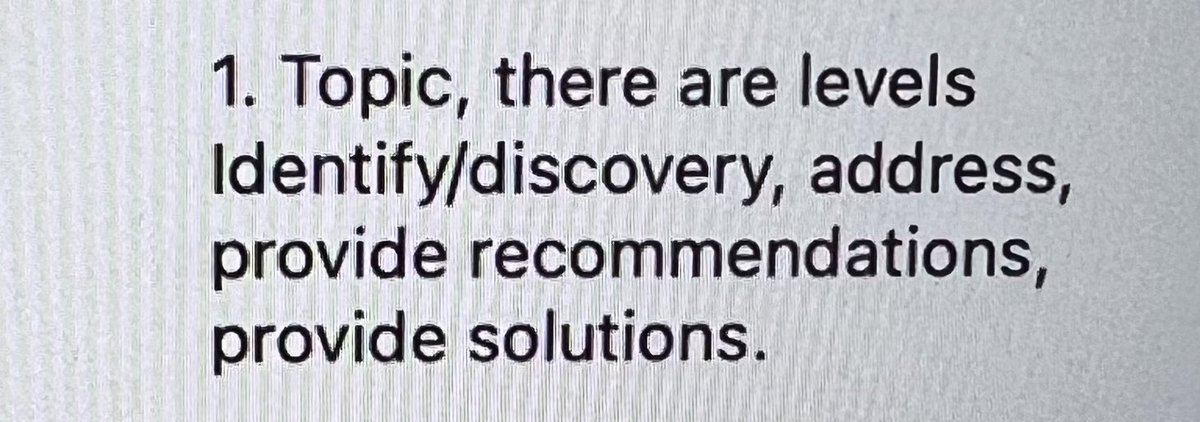
Levels of Knowledge Sharing / Problem Solving in academia:
1️⃣ Identification/Discovery
2️⃣ Adress
3️⃣ Provide Recommendations
4️⃣ Provide Solutions
Every level has distinct in-/output to consider, and methods to use.
Applies to industry!
Amazing. Cheapest hotel was the one of the Famous 7 … how is this even possible?
Today more meetings, but the ambiance is way better as I used to have :)
#CocoaBeach#SpaceCoast#ToSpaceOrDieTrying https://t.co/n7qfE4CK7J
New paper alert: SPACE PRODUCT DEVELOPMENT PROCESS: INTEGRATING A SUSTAINABILITY PERSPECTIVE IN DESIGN AND PRODUCTION OF SPACECRAFT
In this paper we investigated the integration of a sustainability perspective during product desig…https://t.co/fwACTKWbDB https://t.co/1VhFBO6p21
The team of #Prodktion2030 reached out to me to share my points and experience regarding the Produktion2030 Graduate School.
The article has now been published in the new edition of "MAGASIN OM HÅLLBAR PRODUKTION I SVERIGE – INSATSER, AKTIVITETER & MÄNN…https://t.co/ws4k5AthnB
The green transition and a circular economy might not be the answer on all challenges but at least to many!
Proud to be a part of this and work to solve the challenges of spacecraft reusability and to bring the circular economy to outer space.
(Link t…https://t.co/BlZHjRI28u
Fly less, is what you hear in many media, while the industry is proposing planes that are transferred into huge RV’s for pleasure trips of single digit passengers.
Think about this for a moment.
Yes, it seems counterintuitive.…https://t.co/M68jvawYiR https://t.co/qD7bxadulU