SemiAnalysis는 올해 연초부터 같은 패턴을 반복하고 있다.
1. Micron HBM4 배제론
연초에는 Micron이 NVIDIA Rubin HBM4에서 사실상 배제됐다는 식의 이야기가 돌았다.
시장은 “Micron은 차세대 NVIDIA HBM 경쟁에서 밀렸다”로 받아들였다.
그런데 이후 Micron은 Vera Rubin용 HBM4 출하를 발표했고, NVIDIA가 SK하이닉스·삼성전자·Micron을 모두 Vera Rubin HBM4 공급사로 인증했다는 보도까지 나왔다.
최소한 이건 너무 단정적으로 전달됐거나, 후속 현실과 맞지 않았다.
2. SOCAMM 수요 붕괴론
그다음은 Vera Rubin rack의 CPU-side SOCAMM 메모리 축소 이슈였다.
55TB에서 28TB로 줄었다는 이야기가 나오자 시장은 바로 “AI memory demand가 식는다”로 받아들였다.
Micron은 급락했다.
그런데 이 역시 단순한 수요 붕괴로 보기 어려웠다.
오히려 공급 제약 때문에 realistic configuration으로 조정됐다는 반론이 나왔다.
수요가 꺾인 게 아니라, 병목과 공급부족 때문에 구성이 조정됐을 가능성도 있었던 것이다.
3. CPO·800VDC 지연론
그다음이 CPO와 800VDC였다.
SemiAnalysis 리포트 이후 optical 관련주가 한꺼번에 박살났다.
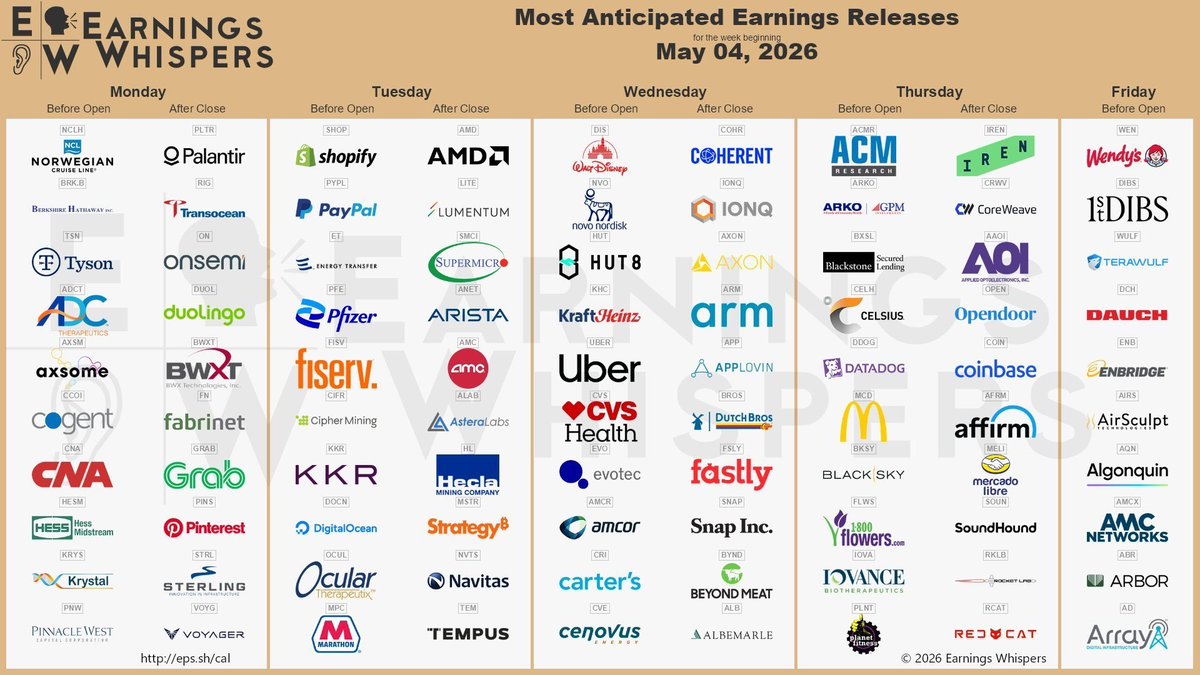
AAOI, COHR, LITE, CIEN, MRVL 같은 이름들이 동시에 맞았다.
논리는 CPO 대량 양산이 2028~2029년으로 밀릴 수 있고, 800VDC ramp도 늦어질 수 있다는 것이었다.
기술적으로 어려운 건 맞다.
CPO는 yield, serviceability, optical engine failure, ASIC integration 문제가 있다.
800VDC도 전력 구조 전환, 부품 신뢰성, rack architecture 난이도가 있다.
하지만 “어렵다”와 “끝났다”는 다른 말이다.
CPO adoption이 느려질 수 있다는 말과 optical interconnect chain 전체가 무너진다는 말도 전혀 다르다.
CPO가 늦어진다고 AI 데이터센터의 optical 수요가 사라지는 게 아니다.
오히려 NPO, LPO, pluggable, ELS, laser source 같은 중간 경로가 더 오래 살아남을 수도 있다.
4. Kyber NVL144 지연론
그리고 이번엔 Kyber NVL144다.
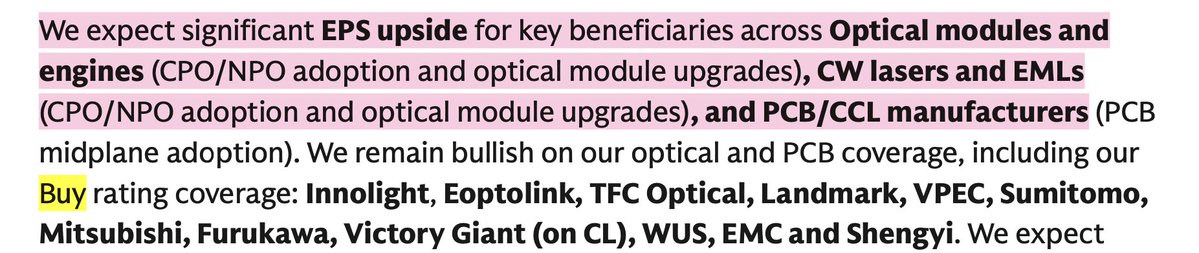
SemiAnalysis는 NVIDIA Kyber NVL144 rack architecture가 78-layer PCB midplane 제조 난이도 때문에 2028년으로 12개월 이상 지연됐다고 주장했다.
여기에 NVL72x2 취소, NVL576 저물량 가능성, Rubin Ultra scale-up domain 제한, AMD·Google 기회론까지 붙었다.
즉 이번에도 단순 제조 리스크가 아니라 NVIDIA 차세대 rack-scale roadmap 전체를 흔드는 narrative가 만들어졌다.
문제는 아직 NVIDIA 공식 확인이 아닌데도 시장은 또 “NVIDIA roadmap 차질”로 바로 소비한다는 점이다.
5. 진짜 문제는 반복 패턴��다
올해 흐름을 보면 계속 같다.
강한 단정.
시장 충격.
후속 반론.
그리고 시간이 지나면 실제 산업 흐름은 훨씬 복잡했다.
Micron HBM4 배제론.
SOCAMM 수요 붕괴론.
CPO 지연론.
800VDC 지연론.
Kyber NVL144 지연론.
하나하나 기술적 논점은 있을 수 있다.
하지만 매번 결론이 너무 자극적이다.
복잡한 제조 리스크가 수요 붕괴처럼 소비되고,
타임라인 조정이 사이클 종료처럼 소비되고,
특정 architecture의 병목이 밸류체인 전체 악재처럼 소비된다.
이 정도면 SemiAnalysis를 단순한 기술 리서치로 보면 안 된다.
지속적으로 이런 식의 교묘한 시장 흔들기성 리포트를 내는 것처럼 보인다면, 리서치 기관의 본질인 “리서치 신뢰도”는 사실상 0에 가깝게 봐야 한다.
리서치 기관의 핵심 자산은 예측력이 아니라 신뢰다.
틀릴 수는 있다.
하지만 계속 강한 단��으로 시장을 흔들고, 나중에 보면 실제 산업 흐름과 맞지 않거나 훨씬 복잡했던 사례가 반복된다면 그건 단순 오판이 아니다.
리서치 품질의 문제이고,
표현 방식의 문제이고,
시장 영향력에 ��한 책임의 문제다.
누군가는 이미 SEC에 제보했어도 이상하지 않은 사안이다.
핵심은 리포트가 틀렸냐 맞았냐가 아니다.
market-moving 리서치가 반복적으로 섹터 가격을 흔들었고,
그 과정에서 이해상충, 선행 배포, 포지션 노출, 파생상품 거래 여부가 불투명하다면,
규제기관이 들여다볼 영역이 된다.
특히 SemiAnalysis는 AI 반도체, 데이터센터, 네트워킹 모델을 팔고,
기관용 리서치와 컨설팅을 팔고,
이제는 메모리·포토닉스 ETF 파트너십까지 하는 유료 정보사업자다.
그런 주체가 리포트 하나로 섹터 밸류에이션을 흔들 수 있다면 시장은 당연히 물어야 한다.
사실관계는 충분히 검증됐는가?
기술 리스크가 과장돼 전달된 건 아닌가?
기관 고객 배포 구조와 시장 반응 사이에 이해상충은 없는가?
작성자나 관련 주체의 포지션, 파생상품 노출, 거래 패턴은 ���명한가?
부정적 리서치는 필요하다.
NVIDIA roadmap에도 리스크는 있다.
CPO도 ���렵다.
800VDC도 어렵다.
Kyber도 쉽지 않다.
하지만 어려운 것과 망한 것은 다르다.
지연 가능성과 수요 붕괴도 다르다.
제조 병목과 산업 thesis 훼손도 다르다.
SemiAnalysis 리포트는 기술 자료로 참고할 수 있다.
하지만 그대로 믿고 매매하면 안 된다.
반드시 NVIDIA, Micron, Broadcom, Marvell, GF, Jabil, Coherent, Lumentum, Sivers 같은 primary source와 대조해야 한다.
올해 SemiAnalysis가 보여준 건 기술 통찰만이 아니다.
시장 narrative가 어떻게 만들어지고,
그 narrative가 어떻게 주가를 때리고,
그 과정에서 nuance가 얼마나 쉽게 사라지는지도 보여줬다.
리서치가 시장을 움직이는 순간,
그건 단순한 의견이 아니다.
검증받아야 할 권력이 된다.
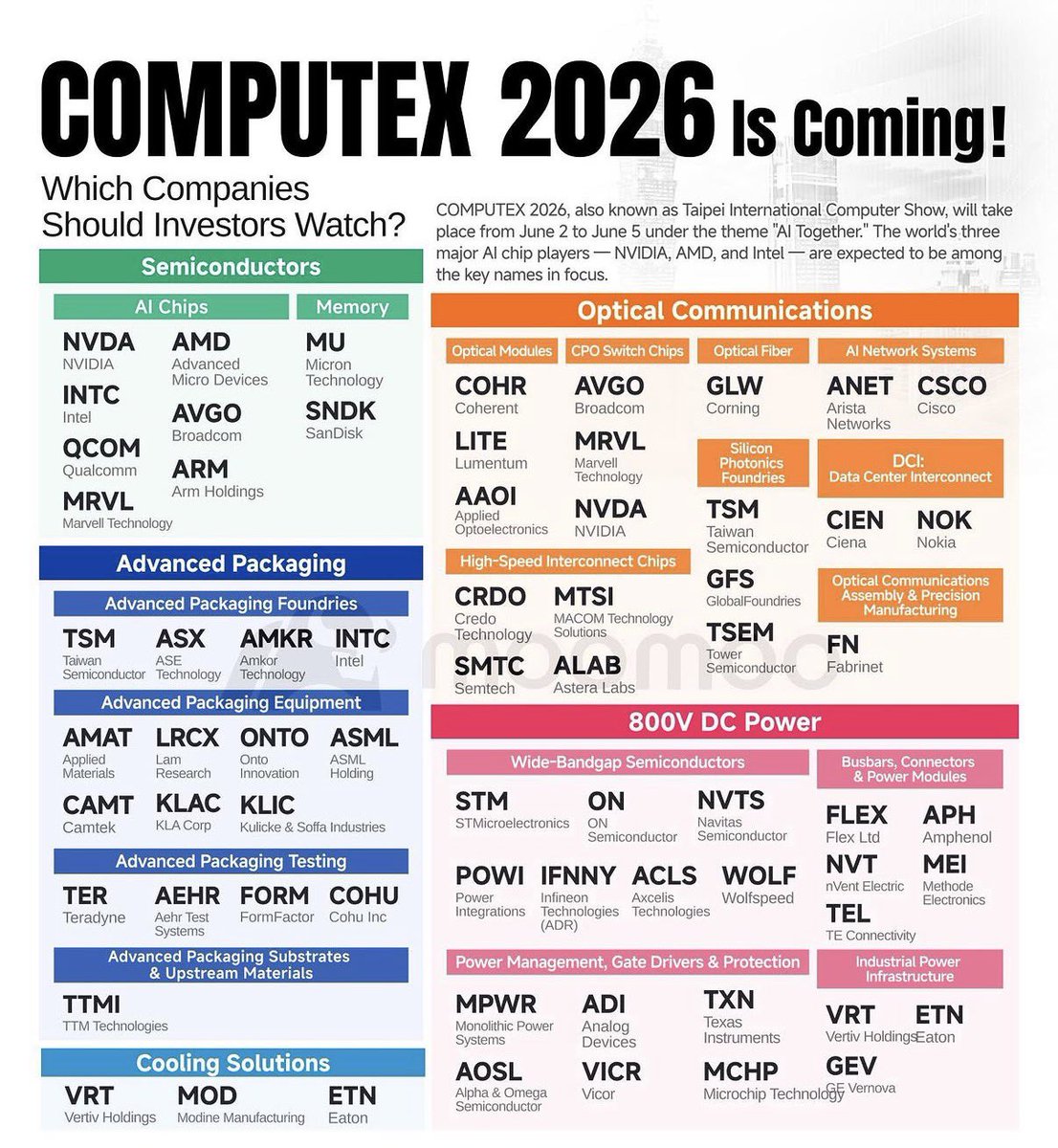
10 stocks to watch during Computex 2026. These are key data centre related stocks :
$MU — HBM4 36GB delivering 2.6x inference throughput; memory bull case just got louder. 
$MRVL — Jensen called Marvell the next trillion-dollar company; CPO chips confirmed future.
$VRT — Rack power hitting 180kW; Vertiv’s power and thermal management demand accelerating fast. 
$LITE — Named as relevant across optical modules and fiber alongside Coherent; CPO wave rising. 
$ARM — RTX Spark is Windows on Arm; Nvidia just validated Arm’s PC architecture ambitions hard. 
$AAOI — Makes optical networking components (lasers, transceivers) for data centers and telecom.
$AOSL — Designs power semiconductors (MOSFETs, gate drivers) for consumer electronics and EVs.
$POWI — Makes energy-efficient power conversion ICs for appliances, IoT, and industrial use.
$GLW — NVIDIA partnership locks Corning into AI factory fiber supply; 10x US manufacturing capacity. 
$ANET — Capturing majority of 800G and 1.6T switch upgrades as AI clusters shift to open Ethernet-over-Fiber. 
$ON — No direct Computex presence found. ON Semi is a Computex spectator, not a headliner.
[한국 주식 주도주 정리 - $IBKR 외국인 친���들을 위한 가이드 🇰🇷]
1. 반도체
$MU 가 PER 20배 넘어가는데 SK하이닉스($000660.KS) 아직 12배? 13배정도 되었나 이제?
같은 HBM 칩 만드는데 우편번호만 다름.
Korean = NO.1 반도체. 그냥 사면 됨.
- SK하이닉스 $000660.KS - HBM 세계 1위, 엔비디아 최대 공급사. 설명 끝.
- 삼성전자 $005930.KS - 폰+칩+가전을 $MU 밸류에이션으로 살 수 있음. 이게 말이 됨?
- SK스퀘어 $402340.KS - SK하이닉스 지분 들고 있는 지주사. 하이닉스 고베타픽. 할인된 가격에 하이닉스 사는 느낌.
소형잡주도 좀 적어보자면
- 파두 $440110.KQ - SSD 컨트롤러 만드는데 스페이스X 공급망에 엮여있음. 소형주 로켓.
- 인텍플러스 $064290.KQ - 반도체 외관검사 장비. 인텔 공급망 노출. 곡괭이 삽 플레이.
2. 금융주
$IBKR 이 한국 주식을 전 세계에 열어줬음.
그 통행료 받는 게 누구냐? 한국 증권사들임. $IBKR 이 얘네 대신 돈 벌어주는 구조.
- 삼성증권 $016360.KS - $IBKR 유일한 공식 중개 브로커. 독점임. 끝.
- 유안타증권 $003470.KS - 그 다음 IBKR ���혜주. 대만계 모회사라 글로벌 브릿지.
- 미래에셋증권 $006800.KS - 스페이스X 지분 직접 투자까지 함. 호재 덩어리.
- 키움증권 $039490.KS - 한국 개인투자자 거래량 1위. 한국판 로빈후드인데 수익은 진짜 남.(토스증권이 찐이긴하지만...비상장)
- 추가로 4대 금융지주(KB금융 $105560.KS, 신한지주 $055550.KS, 하나금융지주 $086790.KS, 우리금융지주 $316140.KS, 메리츠금융지주 $138040.KS)도 밸류업 정책 수혜로 결국 좋은 소식 올 것 같음.
3. 광통신
$CPO $LITE $CIEN 좋아하는 너네들 들어봐.
걔네 공급망에 한국 애들이 엮여있는데 아직 아무도 모름.
- 대한광통신 $010170.KQ - 이름이 직관적. Korea Fiber Optics. 더 설명 필요함?
- 오이솔루션 $138080.KQ - OI = Optical Interconnect. 한국어로 읽으면 오이(🥒)임.
- RF머트리얼즈 $327260.KQ - RF/광학 소재 만드는 회사. 재료 파는 ���이라 마진 좋음.
4. 유리기판
AI 칩이 고도화될수록 실리콘 기판이 한계에 부딪힘.
유리기판이 그 다음 세대인데 한국이 이걸 먼저 잡았음.
코스닥이 이미 난리났고 우리는 아직 초입임.
- SKC $011790.KS - 한국 유리기판 대장주. 이 섹터 얘기할 때 빠지면 안 됨.
- 필옵틱스 $161580.KQ - 유리기판 가공 장비. 삼성 DS 부문이랑 합동 제안서 낸 사이.
- 켐트로닉스 $357780.KQ - 유리 인터포저 소재. 필옵틱스랑 세트로 묶어서 보면 됨.
- 기가비스 $420770.KQ - 유리기판 검사 장비. 칩 하나 만들 때마다 얘 매출 나옴.
5. 반도체 소부장 (소재·부품·장비)
- 한국 소부장 = 아무도 얘기 안 하는 Tier-1 공급사들.
K-반도체 골드러시의 곡괭이랑 삽 파는 애들.
- 테스 $095610.KQ - PECVD/CVD 장비. 삼성전자·SK하이닉스랑 차세대 장비 공동개발 중.
- ISC $095340.KQ - 반도체 테스트 소켓. 칩 만들�� 무조건 테스트해야 함. 반복 매출 구조.
6. 지주사 플레이 (밸류업)
한국 정부가 지금 상장사들한테 자사주 소각하고 주주환원 하라고 드라이브 엄청 걸고 있음.
지주사들 NAV 대비 40~60% 할인된 채로 거래되는 애들 많음. 정책이 먹히면 그냥 공짜 수익임.
반도체 + 지주사 1타2피 픽:
- 두산 $000150.KS - 지주사인데 반도체/에너지 사업 리스트럭처링 중. 가치 unlock 기대.
- LS $006260.KS - 지주사인데 LS일렉트릭(전력 인프라) + 소재 사업까지 엮임. 요즘 핫.
전통 지주사 밸류업 후보:
- SK Inc. $034730.KS
- 한화 $000880.KS
- CJ $001040.KS
이정도? 요새 코스피가 난리인데, 한국 주식시장이 외국형들한테 열리는것 같아서 좋은 기회라 생각해서 정리해봤어.
한국 시장에 대해서 관심 있거나 궁금한 주식, 정보, 기업 등 있으면 팔로우 하고 소통하자구.
웰컴 😍
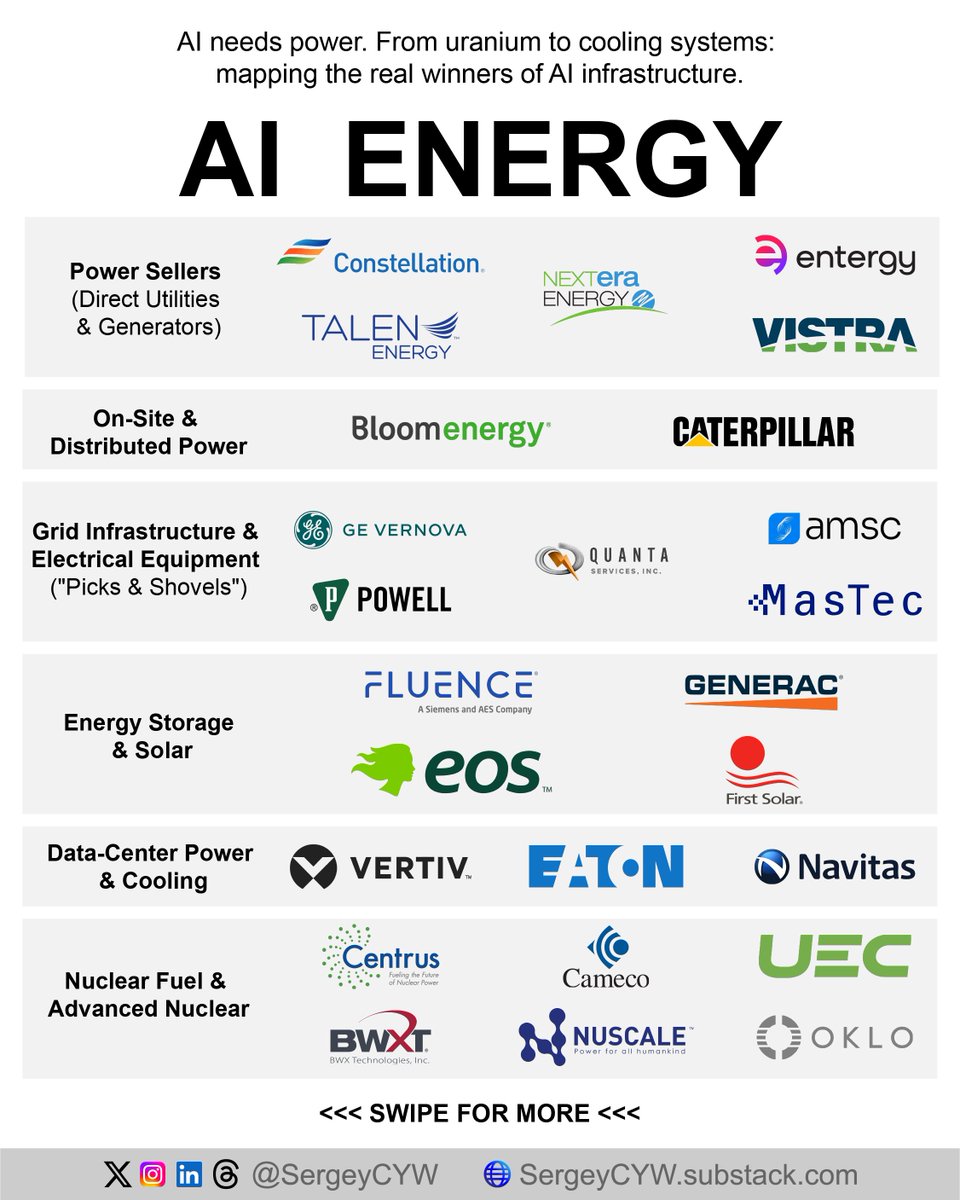
AI Needs Energy. From Uranium to Cooling: The Power Stack Behind AI 🧵
Goldman Sachs now sees data-center power demand rising 220% by 2030 vs. 2023, adding 905 TWh. Morgan Stanley sees U.S. data-center demand reaching 74 GW by 2028, with a 49 GW power-access gap.
AI energy map: $CEG $VST $GEV $VRT $ETN $NEE $SMR $OKLO $BE $PWR. 👇
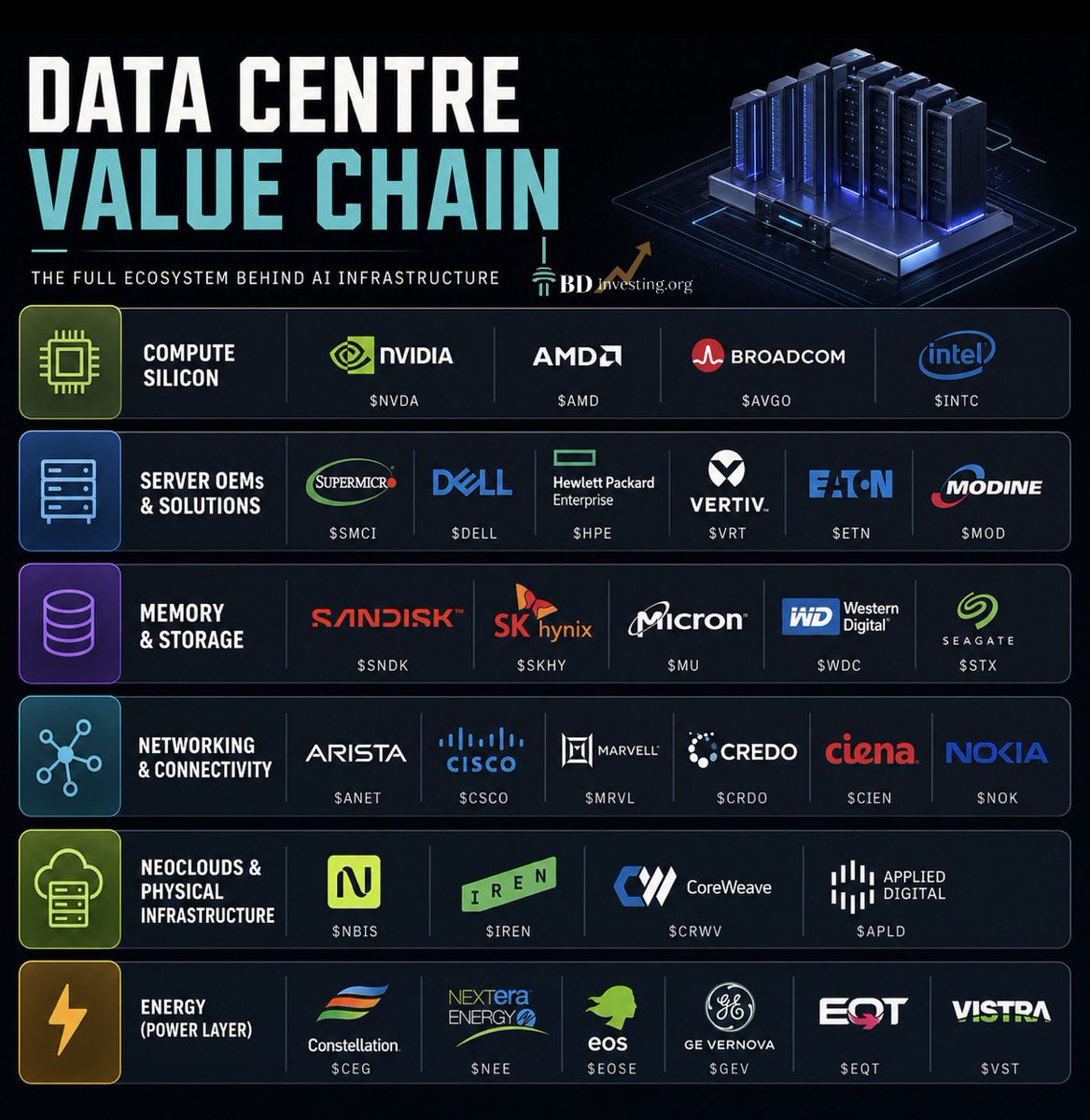
Key stocks in the data centre value chain. Ai can’t run without them
$AMD — CPU compute for AI training and inference
$VRT — Cooling and power delivery for dense GPU clusters.
$MU — HBM memory; feeds data to GPUs at speed.
$SNDK — NAND flash storage for datasets and model checkpoints.
$ANET — High-speed ethernet switching between servers and GPUs.
$NBIS — Deploys and operates GPU clusters as a service.
$IREN — Cheap-power GPU hosting; miner pivoting to AI compute.
$VST — Grid-level power generation feeding data centre demand.
CPU vs GPU vs TPU vs NPU vs LPU, explained visually:
5 hardware architectures power AI today.
Each one makes a fundamentally different tradeoff between flexibility, parallelism, and memory access.
> CPU
It is built for general-purpose computing. A few powerful cores handle complex logic, branching, and system-level tasks.
It has deep cache hierarchies and off-chip main memory (DRAM). It's great for operating systems, databases, and decision-heavy code, but not that great for repetitive math like matrix multiplications.
> GPU
Instead of a few powerful cores, GPUs spread work across thousands of smaller cores that all execute the same instruction on different data.
This is why GPUs dominate AI training. The parallelism maps directly to the kind of math neural networks need.
> TPU
They go one step further with specialization.
The core compute unit is a grid of multiply-accumulate (MAC) units where data flows through in a wave pattern.
Weights enter from one side, activations from the other, and partial results propagate without going back to memory each time.
The entire execution is compiler-controlled, not hardware-scheduled. Google designed TPUs specifically for neural network workloads.
> NPU
This is an edge-optimized variant.
The architecture is built around a Neural Compute Engine packed with MAC arrays and on-chip SRAM, but instead of high-bandwidth memory (HBM), NPUs use low-power system memory.
The design goal is to run inference at single-digit watt power budgets, like smartphones, wearables, and IoT devices.
Apple Neural Engine and Intel's NPU follow this pattern.
> LPU (Language Processing Unit)
This is the newest entrant, by Groq.
The architecture removes off-chip memory from the critical path entirely. All weight storage lives in on-chip SRAM.
Execution is fully deterministic and compiler-scheduled, which means zero cache misses and zero runtime scheduling overhead.
The tradeoff is that it provides limited memory per chip, which means you need hundreds of chips linked together to serve a single large model. But the latency advantage is real.
AI compute has evolved from general-purpose flexibility (CPU) to extreme specialization (LPU). Each step trades some level of generality for efficiency.
The visual below maps the internal architecture of all five side by side.
👉 Over to you: Which of these 5 have you actually worked with or deployed on?