Tech jobs didn’t vanish.
The door just got narrower.
If you’re a fresher right now, it feels like the jobs disappeared.
They didn’t. The industry just stopped needing as many of us.
India’s IT industry almost doubled revenue in 10 years (+98%).
Headcount only grew 57%.
Companies got better at doing more with fewer people. Automation + higher utilisation = growth without mass hiring.
Meanwhile, more graduates keep coming out every year.
The entry gate got smaller while the crowd got bigger.
And here’s the uncomfortable part:
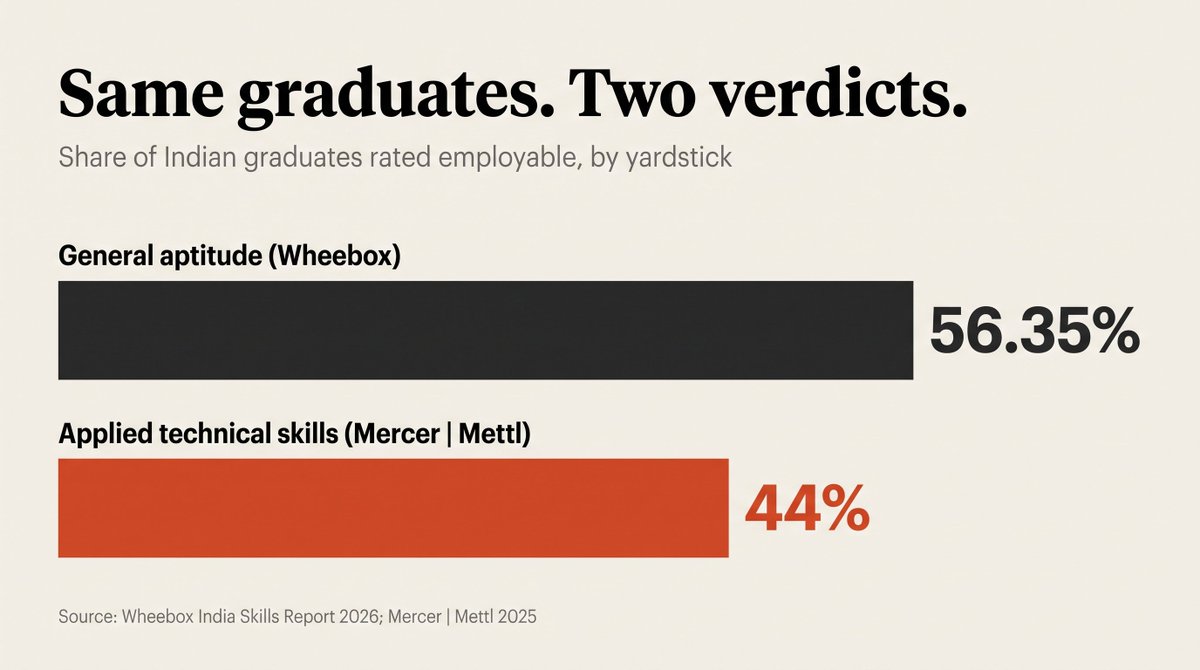
56% of graduates are “employable” on paper.
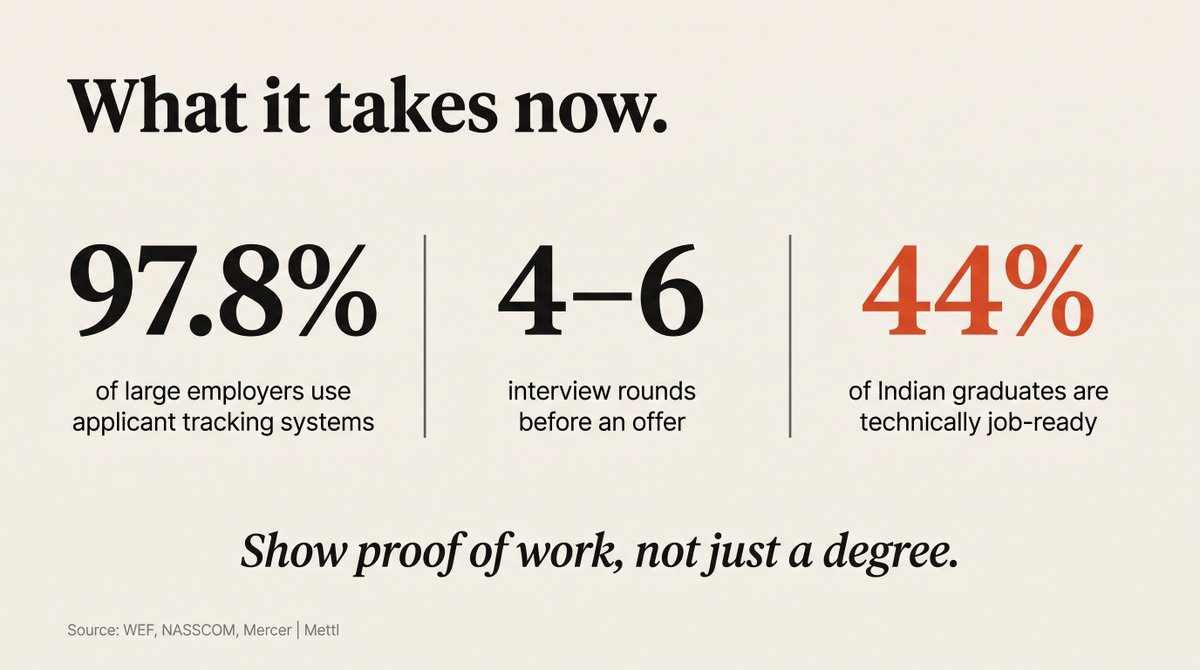
Only 44% are actually job-ready on technical skills.
Employers care about the second number.
The process itself got brutal too:
• 97.8% of big companies use ATS.
• 4–6 interview rounds is normal.
• Internships + PPOs decide most full-time offers.
What actually works now:
• Ship real projects (not just college assignments)
• Get internships early
• Learn how to use AI tools and still understand your own code
• Stop assuming a degree = job
The mass campus hiring conveyor belt is broken.
But tech itself isn’t.
The bar just moved from “I have a degree” to “I can prove I can do the work.”
Those who adapt early still have a real shot.
Old songs have a special way of lifting our mood. That feeling is something AI still struggles to truly understand.
When we generate music with AI, the most important part is matching the vibe. But AI does not feel vibe the way humans do.
It works by looking at patterns from the data it has learned. It predicts what should come next based on what it has seen before. It does not experience the music.
Humans also create from past experiences. But there is a clear difference. Human creativity is more open and spontaneous. It is not fixed.
A machine follows set patterns and probabilities.
Humans do not work with fixed values when creating something.
For humans, the process is different.
We listen to the music.
We feel the vibe.
Then we create something that matches that feeling.
AI works the other way around. It generates music from patterns first. The vibe is not something it actually feels.
That is why even when we tell AI “match this vibe” or “the vibe is not right,” it still struggles. It can change the music based on the words we use, but it cannot truly understand the feeling behind those words.
I have mainly tried this with Indian languages like Hindi, Marathi, and some Sanskrit. Based on that experience, this is my current view.
I have not used it much with English, so I cannot say anything about how it works in English.
I have also not tried every genre or style. Things like rap and many other types of music are still outside what I have tested.
This is simply my opinion from the languages and music I have actually worked with so far.
The biggest difference I see is this:
Humans can genuinely feel the vibe before creating. AI cannot.