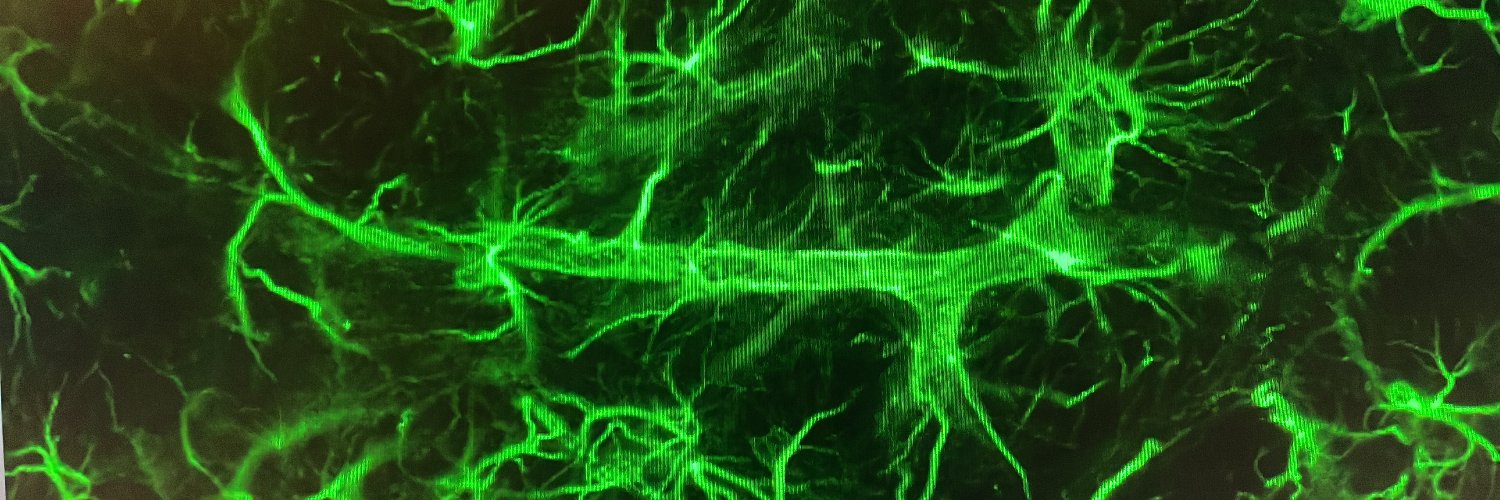
Discover our new TRISCO method, which enables 3D RNA analysis at cellular resolution in intact brains. Explore a 3D rendering that reveals the deep brain expression pattern of the Parvalbumin gene, implicated in schizophrenia.
@ScienceMagazine.
https://t.co/tqysZ36zRz
A little bit into the python API weeds but here is a 2 part video on how to deal with a tough multiscale segmentation problem with Cellpose: part 1 https://t.co/3HeQijfxqX and part 2 https://t.co/GCSBAPmTl2
4. The Science of Uncertainty and Data
Topics:
• Probabilistic Calculations
• Basics of Probabilistic Models
• Introduction to Inference Method
• Random Variables and Their Distributions
https://t.co/5hyIjrK2nH
5. Startup Success: How to Launch a Technology Company in 6 Steps
Topics covered:
• Assess product ideas
• Understand the start-up team
• Prepare and evaluate strategies and more
https://t.co/06XoEWyp8n
6. Data Analysis: Statistical Modeling
A hands-on introduction to the interplay between statistics and computation for real data analysis.
Learn models, form hypotheses, and perform statistical analysis on real data.
https://t.co/U6tdZy2Oli
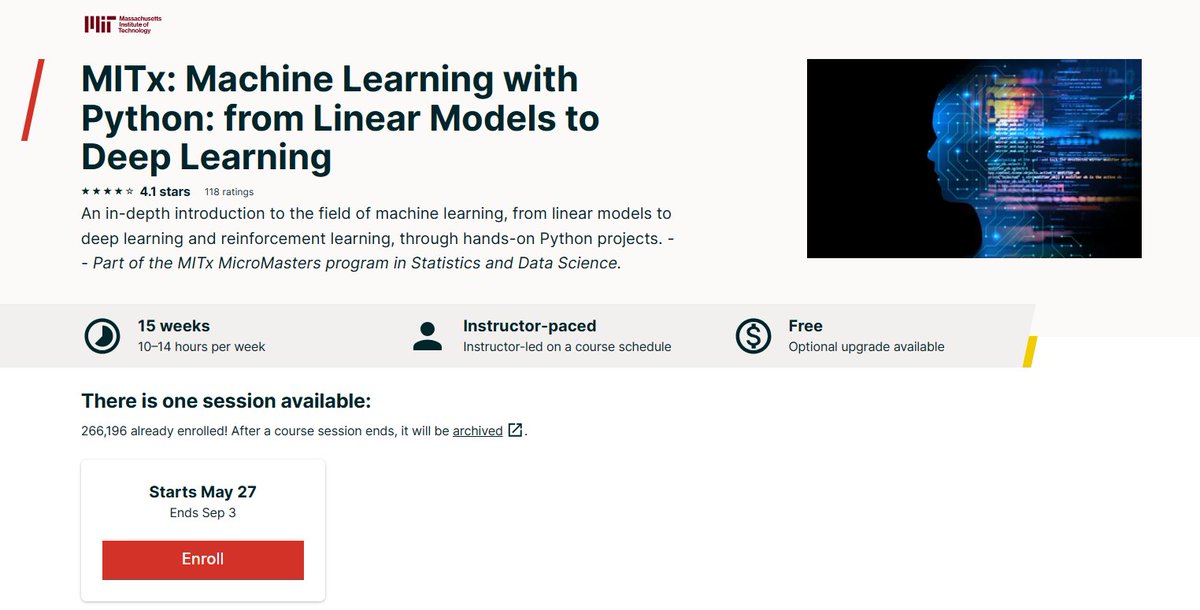
3. Machine Learning with Python
Topics:
• Model Selection
• ML Project Execution
• Model Implementation & Analysis
• Training, Validation, Tuning, Features
https://t.co/V5Ri8HWjKe
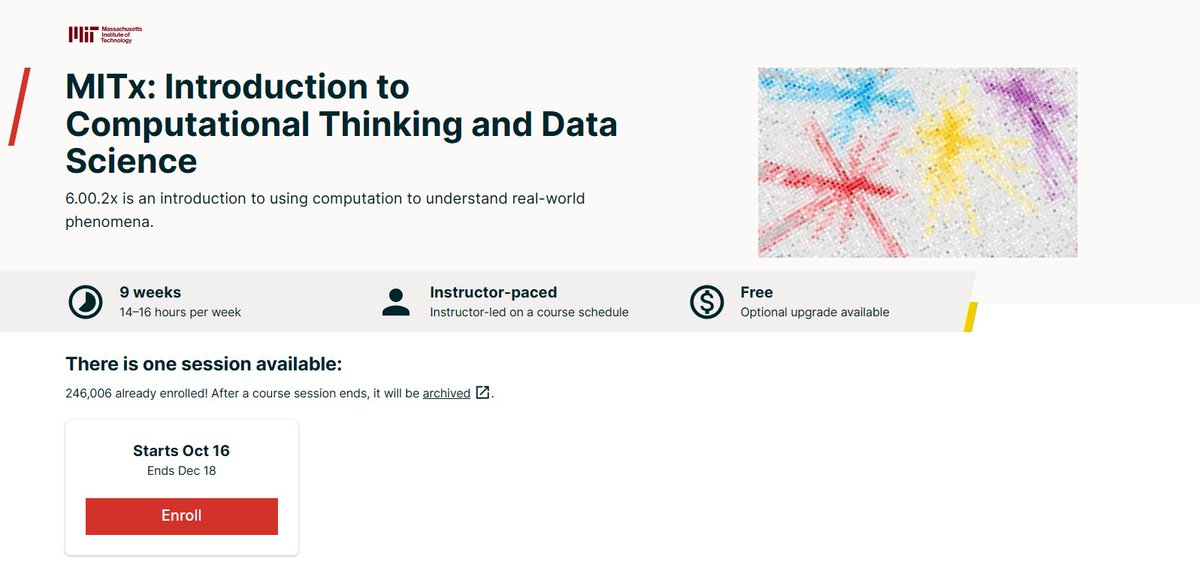
2. Introduction to Computational Thinking and Data Science.
Topics:
• Monte Carlo simulations
• Plotting with pylab
• Stochastic programming
• Statistical thinking
https://t.co/cxgRvngf33
Really proud to publish this fascinating paper on receptors responsible for sexual touch. It's easy to get prudish and Victorian on this sort of work, but sexual and reproductive health is extremely important
https://t.co/Dmfma4Aj70
1. Introduction to Computer Science and Programming Using Python
What you'll learn:
- A Notion of computation
- The Python programming language
- Testing and debugging
- An informal introduction to algorithmic complexity
- Data structures
https://t.co/x1B9cm0jVJ
2. Introduction to Computational Thinking and Data Science
What you'll learn:
- Plotting with the pylab package
- Stochastic programming and statistical thinking
- Monte Carlo simulations
https://t.co/RW20pQjH6f
3. Machine Learning with Python
What you'll learn:
- Machine learning problem principles
- Implement and analyze models
- Choosing suitable models for different applications
- Implement and organize ML projects
https://t.co/JXLPegsrSu
It took me 10 years to master all 24 of these statistics concepts. In the next 24 days, I'll teach them to you one by one (with examples of how I've used them in business cases). Here's what's coming:
1. Probability Distribution
2. Regression
3. Hypothesis Testing
4. Central Tendency
5. Bayesian Statistics
6. Descriptive Statistics
7. Distribution
8. Sampling
9. Confidence Interval
10. Correlation
11. Covariance
12. Dimensionality Reduction
13. Central Limit Theorem
14. Normal Distribution
15. Population and Sample
16. Skewness
17. Variance
18. Data Types
19. Probability
20. Conditional Probability
21. P Values and Level of Significance
22. Variability
23. Over and Under-Sampling
24. Estimation
There you have it-- My top 24 stats concepts every data scientist should know!
But the next problem you’ll face is how to apply data science to business.
I'd like to help.
I’ve spent 100 hours consolidating my learnings into a free 5-day course, How to Solve Business Problems with Data Science. It comes with:
300+ lines of R and Python code
5 bonus trainings
2 systematic frameworks
1 complete roadmap to avoid mistakes and start solving business problems with data science, TODAY.
👉 Here it is for free: https://t.co/YXG4pL97ZN