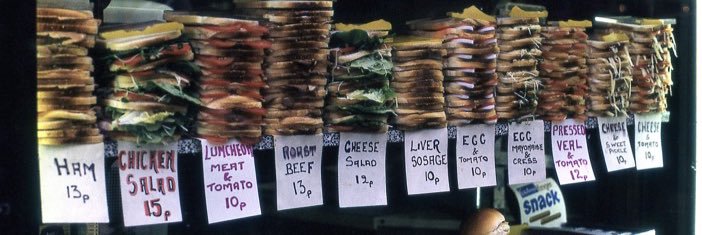
I had not realised before that the Bronze Age Collapse was literally *caused* by iron.
Bronze age powers like the Egyptians, Hittites and Babylonians used bronze weapons, made by combining copper and tin. Tin was so scarce that only the richest and most powerful groups could access it and the bronze weapons it allowed. (Tin was so rare that it was being transported from Cornwall to the Middle East more than 1000 years BC.) The scarcity of tin gave these empires a near-monopoly on violence.
Iron weapons are not actually any better than bronze ones – they're not stronger or easier to work with, as I'd assumed. They're just much, much easier to mass produce once you have bloomeries, which are the first furnaces that were hot enough to melt iron in a way that made them useable for weapons.
Bloomeries meant that iron ore, which was widespread, could be used to make weapons anywhere. That led to warlords, bandits and city-states rising in a massive decentralization of military power, which the Bronze Age empires were unable to resist.
After the invention of the bloomery, skeletons show a measurable increase in weapon-inflicted injuries. 'Destruction layers' with bones and signs of burning have been found from this time at archaeological sites including Troy. Ancient writers – including Herodotus, Ovid, and the writers of the Old Testament – believed the invention of iron had unleashed a new age of violence.
New at Works in Progress, WEAPONS OF MASS DECENTRALIZATION: how iron itself brought about the Bronze Age Collapse. And what technologies could do the same today?
https://t.co/Ni4DfPYBhr
It was a witch hunt - one that focused on a vulnerable man.
The volume of articles from the right wing press in the last few weeks has been utterly disproportionate.
Nothing has been learned from Caroline Flack.
Heartbreaking and shameful.
@JamesCleverly@JohnOSullivanNR Serious question James, do you think his /Cambridge’s situation deserved so much press interest? Even after he resigned?
andy burnham is running the government like a decent software team.
everyone knows the big stuff is complicated and takes years, and while you’re heads down on it people start asking what you’re even doing.
so you ship quick wins. small, visible, annoying bugs that are cheap to fix. garish shopfronts, vape shops, bookies. things people walk past every day.
say what you want about the politics, it’s competent product management
People need to step back and understand what they are seeing. After a few months of war, the USA is running out of munitions and options fighting a country with no air force, no navy and a damaged infrastructure.
US decline is real and self-inflicted.
Seeing some of the embarrassingly hateful reactions to Starmer's resignation today, I thought it was worth resharing this.
The level of personal hostility directed at Keir Starmer deserves scrutiny in its own right. Not because he should be immune from criticism, but because the tone and intensity of the attacks tell us something unhealthy about the state of democratic politics.
Starmer is a conventional political figure. Cautious, legalistic, incremental. He frustrates people precisely because he is managerial rather than messianic. Yet the reaction to him often goes far beyond disagreement, tipping into visceral hatred more commonly reserved for authoritarians or demagogues.
Much of this hostility is disconnected from concrete policy. It is not about specific votes, proposals or outcomes, but about projection. A belief that Starmer embodies betrayal, bad faith or hidden malice. That kind of politics runs on suspicion rather than evidence.
This matters because democracy depends on the assumption of good faith among opponents. You can think a leader is wrong, timid, or misguided without believing they are fundamentally illegitimate. Once politics becomes moralised to the point of demonisation, compromise is reframed as treachery and pluralism as weakness.
The pattern is familiar. In fragmented, polarised systems, anger concentrates not on extremists, whose intentions are clear, but on moderates, who disappoint maximalists on all sides. The centre becomes the lightning rod precisely because it resists totalising narratives.
There is also a media and online dynamic at work. Incentives reward outrage, not proportionality. Algorithms favour contempt over analysis. Over time, this creates a political culture in which relentless personal attack feels normal, even virtuous, rather than disgusting.
None of this is a defence of Starmer’s decisions, instincts or record. Those should be argued over robustly as you do in a democracy. The problem is the substitution of critique with hostility and the quiet erosion of democratic norms that follows when political opponents are treated as enemies rather than rivals.
A democracy cannot function if every election is framed as an existential struggle against internal evil. At some point, the target may change, but the damage to trust, restraint and culture remains.
China fields a military where 70-80% of soldiers are only children. Every battlefield death risks extinguishing a family line. This demographic reality shapes Xi's strategic calculus in ways Western analysis should pay more attention to. My new piece explores this. 1/5 🧵https://t.co/Hky4DWPkrK
Asked Claude to model what would happen if every single adult on Earth could freely vote in elections to a 10,000 seat Parliament.
The factions, largest to smallest:
Islamic democratic (1,806): Muslim-world voters supporting religiously-inflected electoral politics: AKP, PTI, PKB/NU, Ennahda, PJD. Socially conservative, economically interventionist, sovereigntist. Largest single bloc on Earth.
Hindutva/Indian nationalist (1,366): BJP voters and the broader Hindu-nationalist tradition. Religious-traditionalist, economically developmentalist, civilisational. One country produces the second-largest faction in the parliament.
Lulaist/social-democratic (1,220): Global South social democrats. PT, Morena, ANC centre, PDI-P, moderate Peronism. Redistributionist, anti-imperial in rhetoric, democratic, socially moderate.
CCP/Chinese-statist (1,025): Chinese voters who'd back a CCP-aligned faction in a free election. Statist, developmentalist, anti-liberal.
African Christian/Pentecostal (800): Africa's booming Christian majority. Socially very conservative, economically interventionist, pan-Africanist without being anti-colonial hardline. Nigerian, Kenyan, Ghanaian, Ugandan political mainstream.
Western left-liberal (664): The entire Democratic Party, European social democrats, UK Labour, Canadian Liberals, Australian Labor, Greens-adjacent progressives combined. 6.6% of a global parliament.
Catholic social-teaching/Christian Democrat (508): Latin American and Filipino Catholic voters. Socially conservative, economically left, pro-family, pro-labour. Distinct from both Pentecostalism and Lulaism. Bigger than the entire Western liberal-left.
Western strongman/nationalist-populist (488): Trump, Meloni, Le Pen, AfD, Reform, Orbán, PiS. The entire populist global right.
Anti-colonial/Pan-African (429): Burkinabé-style sovereigntists, Sankara tradition, radical pan-Africanism, third-worldism. Distinct from Lulaism in being anti-capitalist and rhetorically revolutionary.
Secular nationalist/developmentalist (371): Kemalists, Sisi-ism, Nasserism's heirs, Vietnamese state, pre-Erdoğan Turkey. Authoritarian-modernist tradition. Not religious, not communist, not liberal. Large in MENA and SE Asia.
Orthodox civilisational conservative (254): Putinism, Russian Orthodoxy, Serbia, Georgia, Greek conservative-Orthodox strand. Traditionalist anti-Western civilisational project. Distinct from both MAGA and fascism.
Green/climate justice (215): European Greens, Australian Greens, Latin American ecological movements.
Latin American/Caribbean populist-right (176): Bolsonaro, Milei's social-conservative flank, Bukele, Kast. Socially Catholic-traditionalist, economically mixed, anti-crime authoritarian.
Buddhist-nationalist (166): Thai, Sri Lankan, Myanmar, Bhutanese, Mongolian Buddhist traditionalism. Ethno-religious, exclusionary.
Feminist/gender-rights primary (156): Women's movements as primary political identity: Iranian women's movement, Ni Una Menos, Indian feminist currents. Transnational but diffuse.
Communist/hard-left (107): Actual communists, not social democrats: KKE, Indian CPI(M-L), various Latin American Marxist factions. The 20th century's dominant left tradition is a rump.
Apolitical/technocratic/localist (88): "None of the above" voters who'd pick a technocrat over any faction.
Libertarian/market radical (73): Mileism, Austrian-school globally, Hong Kong democrats, some Indian market liberals.
Chinese liberal/pro-democracy (49): Chinese voters who'd support a liberal-democratic alternative in a free election. Real, but structurally suppressed.
Indigenous/first-nations sovereignty (39): MAS base in Bolivia, CONAIE, Māori, Aboriginal, Sámi, Amerindian sovereignty movements.
The governing coalition this parliament produces is not liberal, communist, or fascist. It is religious-traditionalist plus Global South redistributionist. Socially conservative, economically left, sovereigntist, anti-Western-hegemonic.
Likeliest first measure: Super-majority passage of laws to ensure the wealthiest 20% of countries transfer 2% of GDP annually to the poorest 50%.
Possible Governing Coalitions:
Coalition I: The Devout-Development Pact (~5,400 seats). Islamic + Hindutva + African Christian + Catholic + Buddhist-nationalist + Lulaist on social-cover-for-redistribution terms. The bargain: socially conservative governance at home (religious liberty, traditional family, sovereignty over social policy) in exchange for redistribution, debt relief, and climate finance from rich countries. Modi's actual foreign policy is basically this coalition in miniature.
Coalition II: The Bandung Redistributionist Front (~5,500 seats). Lulaist + Islamic on material terms + anti-colonial + African Christian + Catholic + Communist + Indigenous + Green on climate-justice framing. Holds together on economics and foreign policy; fractures on social issues. Could govern if the agenda is restricted to material questions — UN Security Council reform, IMF/World Bank reform, climate finance, debt cancellation, reparations, Palestine, arms-export controls.
Coalition III: The Sovereign Authoritarians' Coalition (~4,200 seats). CCP + Secular nationalist + Orthodox + Hindutva + Western strongman + Latin American populist-right + Islamic on non-interference terms. A "Westphalian restoration" coalition built around sovereignty, non-interference, strong states, and rejection of universalist liberalism.
Genuinely insightful exchange here, shaking up the normal Europoor-Amerifat discourse:
Britain is actually really good at the hardest parts of being a developed country (frontier industries & capabilities) but total crap at the "easy" parts: Permitting houses, energy & trains
visits the pope → pope dies
leads Iran negotiations → talks collapse
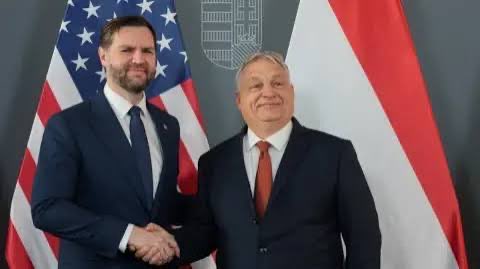
flies to Hungary to prop up Orbán → Orbán loses in a landslide
Man’s got a streak.