@maheshklandge Congratulations. Similarly, can you pls propose Pune-Dighi port expressway.
Currently, there is no direct express way or highway to connect Pune to the Kokan region.
These 2 are 63 years old and the difference is not just genetic, it's the habits.
These are the habits that will keep you young, fit, and sexy.
1. Always breathe through your nose.
I'll admit this might sound odd coming from me, maybe even clichéd. But it's something I've been sitting with for a while, so here goes.
When I started out, like most people, I had a simple wealth goal. I'd actually written it down: hit ₹5 crore, retire in Goa, beach shack, done. That was the dream.
After the Zerodha journey, I find myself on a very different side of that equation, and the dark inequalities of wealth and opportunity are harder to ignore than ever. We all know the numbers on inequality. The concentration of wealth among the top 1% is severe and getting worse, and it's even starker among the top 0.1%. The post-2008 era of rising asset prices has likely made this worse, because the people who hold financial assets are, by definition, people who already have money.
This isn't unique to India. Barring a few exceptions, it's a global phenomenon.
I'm cautious about attributing every socio-political problem we face today to inequality, but it's hard to deny the role it's played in the political upheavals we're seeing across the world. History rarely shows that sustained, extreme inequality ends well. To me, it increasingly feels like sitting in a car with the brakes cut, watching a cliff approach. Btw, all of this even before AI, which has a non-trivial probability of making things worse.
I'll stop short of prescribing solutions. It's too easy to reach for simple answers to complicated problems, and that's a separate conversation entirely. But I think we need to collectively acknowledge this: wealth that just sits in financial assets whose value keeps compounding upward doesn't do much good for anyone beyond those who already have it. And if that wealth isn't in motion, if it isn't doing some social good, the fabric that holds us together will only continue to fray and lead to cynicism, resentment, and worse yet, nihilism. We're already seeing all of it.
What I am saying is that even if a portion of that wealth were channelled into things that could materially improve lives, that seems worth doing. Hoarding wealth, in the grand scheme of things, doesn't really help anyone.
I am saying this again, India is no longer a country for free and fair business, nor a land of creative freedom.
You invest your hard-earned money to build something from scratch, and suddenly 2-rupee Bajrang Dal goons show up at your doorstep to shut it down, just because you try to create a neutral space or say something that doesn’t fit their politics.
The attacks on Piyush Bansal and Namita Thapar will push a whole generation of entrepreneurs to leave India. Economic growth depends on a strong ecosystem, and when people don’t feel safe to build or speak, why would anyone stay?
On one side, Hindutva goons. On the other, what does the government offer? High taxes, constant Income Tax and ED notices, harassment of the very people trying to create jobs and value.
And let’s be clear, this doesn’t happen without political patronage. BJP cannot deny that these mobs are part of the ecosystem that benefits them.
You build something, and one day 100 unemployed goons can walk in and destroy it.
Is this the environment we want for business and innovation?
An 850-member Parliament will be even more ineffective than the current 543-member House. MPs are legislators, not administrative executives. Simply adding more of them does not—and cannot—improve constituency administration, because MPs are not the administrative heads of their constituencies.
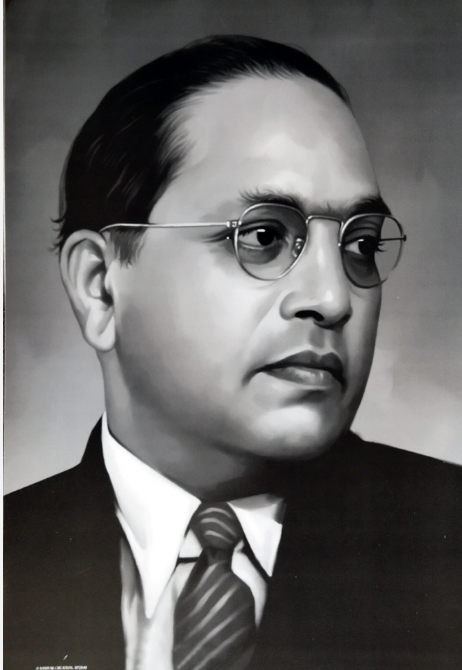
Bhimrao Ambedkar sat on a gunny sack at school & had to wait for the peon to give him water as being an untouchable he could not touch the tap or surai.
When he passed the 4th standard in school his Mahar community wanted to organize a feast as no one had studied that far.
He was the first Indian to obtain a Doctorate in Economics from abroad. His work ' Waiting for a Visa' was a textbook in his alma mater, Columbia University. He was a prolific reader, with a personal library of over 50,000 books even though he lost a whole lot when the ship bringing his books from his Columbia days was torpedoed.
His work, 'The Problem Of The Rupee : Its Origin And Its Solution' and his presentation to the Hilton Young Commission is regarded as one of the primary inspirations behind the creation of the RBI
He led the team that drafted our constitution. He opposed Article 370, wanted a uniform civil code & resigned when his Hindu Code bill demanding equal share for women in inheritance & equal status in marriage was stalled in parliament.
On B R Ambedkar's birth anniversary, remembering a giant.
I was in class last week. One of my students raised their hand mid-lecture and asked something that stopped me for a second.
"Why is every AI tool built on Python? C++ is faster. Rust is faster. Even Java is faster. So why Python?"
Honestly it’s a fair question. And the answer reveals something really interesting about how the AI industry actually works.
Let me explain this properly. 🧵
छत्रपती शिवाजी महाराजांनी कुंभमेळ्यात स्नान केले का?
खूप शोध घेतला; त्यांनी तेथे स्नान केल्याचा संदर्भ मिळाला नाही.
त्यांनी कुंभमेळ्यासाठी खर्च केला का?
संदर्भ मिळाला नाही!
त्यांनी ५०–६० किल्ले बांधले आणि ताब्यातील ३००–३५० किल्ल्यांचा विस्तार किंवा विकास केला.
त्यासाठी त्यांनी मुहूर्त पाहिला का?
पायाभरणी आणि उद्घाटन समारंभांवर वेळ व पैसा खर्च करून प्रसिद्धी मिळवली का?
संदर्भ मिळाला नाही!
त्यांनी पुतळे उभारले का?
संदर्भ मिळाला नाही!
दरवर्षी धार्मिक उत्सवांत समाज गुरफटून राहावा, म्हणून सार्वजनिक समारंभांचे अवडंबर व्हावे, अशा वातावरणाला त्यांनी प्रोत्साहन दिले का?
संदर्भ मिळाला नाही!
त्यांनी स्वराज्याचा कणा असलेल्या शेतीवर लक्ष केंद्रित केले का?
होय, केले!
आदर्श आणि सर्वसमावेशक, न्याय्य प्रशासन दिले का?
होय, दिले!
अपराध्यांची गय केली का?
नाही, केली!
आपण त्यांचे वारसदार आहोत का?
होय, आहोत!
मग त्यांच्या पावलावर पाऊल टाकून मार्गक्रमण करत आहोत का?
अंतर्मुख व्हा. जागे व्हा!
-महेश झगडे
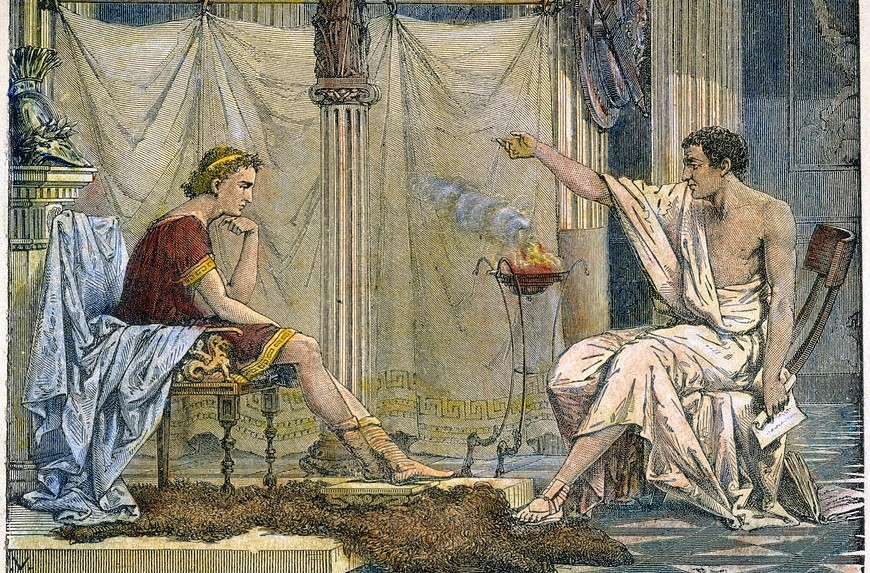
Alexander the Great conquered the known world by age 32.
He did it by asking one question that no general before him had ever thought to ask.
Not "how do I match their strength?" But "where is the gap?"
Aristotle taught him the difference. It is called first principles thinking, and it is the reason Alexander never lost a single battle in his entire life.
At Gaugamela, Alexander faced a Persian force that outnumbered his by a ratio of five to one. Some historians put it higher. Every military commander on the field was running the same template: more soldiers means more force, more force means you spread your line wide, defend against encirclement, engage across the full front.
This was not a tactical opinion. It was the accumulated logic of every battle anyone had ever studied.
Alexander looked at the same situation and asked a different question.
Not how do I survive this, but what is actually true here at the most fundamental level. He studied Darius's formation until he found it. A gap. Small, temporary, the kind that only exists for a moment in the chaos of a shifting line. He reorganized his entire cavalry around that single point. Then he rode directly at it himself, at full speed, with everything he had.
Darius fled the field. The Persian Empire ended that afternoon.
Here is what Aristotle actually taught him.
There are two ways to think about any problem.
The first is reasoning by analogy. You look at what is in front of you, search for the closest thing you have already seen, and apply that template forward. This is not a failure. It is extraordinarily efficient. It is how you learned your profession, how you function at speed, how civilization scales without having to rediscover fire every generation. Without analogical reasoning you would spend your entire life solving problems that were solved a thousand years ago.
The second is reasoning from first principles. You ignore the template entirely. You ask what is actually true at the most fundamental level, strip away every assumption that is only true because someone decided it was, and rebuild your understanding from that ground up. You arrive at conclusions the template would never have generated.
The insight is not that one mode is better. It is that they fail in opposite situations.
Analogical reasoning works perfectly inside a stable system where the template still matches reality. It fails catastrophically at the frontier, because the frontier is exactly where the existing templates are wrong. When you apply a map to a territory it was not designed to describe, the map does not warn you.
It just leads you somewhere incorrect with complete confidence.
This is why every major disruption follows the same pattern. The people who get disrupted are not stupid. They are the most sophisticated analogical reasoners in the field, applying the best available templates with perfect internal logic. And those templates, built entirely from the history of the existing system, are structurally blind to what a genuinely new thing actually is.
Kodak invented the digital camera in 1975 and shelved it. Every framework they had said it would destroy their film business. They were correct about the analogy and completely wrong about the conclusion, because the analogy assumed photography was a film business rather than a memory business.
The template was so embedded they could not see past it while holding the invention that would replace them.
Elon Musk wanted to buy a rocket in 2002. The cheapest price he found was $65 million. So he asked a different question. Not what do rockets cost, but what are rockets made of. Aluminum. Titanium. Carbon fiber. Copper. He priced the raw materials. They came to roughly 2% of the market price. The gap between 2% and 100% was not engineering. It was assumption. Decades of convention and unchallenged procurement logic, passed forward so many times it had started to feel like physics.
SpaceX was born in that gap.
The reason almost nobody actually uses first principles thinking is not that it is hard to understand. Aristotle wrote it down clearly in the fourth century BC. It has been available to anyone who wanted it ever since.
The reason is what it costs.
It is slow. It requires you to put down the confidence that comes from convention and sit with genuine uncertainty long enough to reach something real. The brain resists this completely, because the analogical template is faster, cheaper, and almost always good enough.
The pull toward the familiar pattern is not laziness. It is the most efficient cognitive system ever built doing exactly what it was designed to do.
First principles thinking only becomes worth the cost at the moments where the template has quietly stopped matching reality. Where everyone in the room is agreeing on something that feels like an established fact but is actually just an unchallenged assumption that has been passed forward long enough to seem permanent.
Alexander did not beat armies that were five times his size by being braver than every general who came before him.
He beat them by asking the question nobody else had thought to ask.
The most dangerous thing in any room is not the problem everyone is arguing about.
It is the assumption nobody noticed they were all making.
A billionaire walked into a five-star hotel and asked for the cheapest room they had.
The receptionist blinked, confused.
“Sir, our presidential suite has a full city view…”
Final interview.
They ask: "Tell me about a time you had to work with a low-performing teammate."
Your mind blanks.
You say: "I just took over their tasks so we could hit the deadline."
Interview ends. No offer.
Here is what they actually want...
You think you’re drinking Fruit Juice? THINK AGAIN.
Big food brands are selling sugar water with shiny ‘fresh fruit’ pictures on the front. And hiding the truth in tiny fine print at the back of packet which reads ‘Pictures for marketing purposes only’. SERIOUSLY?
Today in Parliament, I called this out.
Because these misleading branding and false advertisement are pushing millions, especially kids, into diabetes and lifestyle diseases.
Time to expose the truth behind your juice box.
डॉ. श्रीराम लागूंच्या एका भाषणातील अगदी दोन मिनिटांचा हा अंश. आवर्जून ऐका. बुद्धिप्रामाण्यवाद म्हणजे काय, यावर अगदी सोप्या शब्दात सांगितलंय. आजच्या महाराष्ट्राला या शब्दांची प्रचंड गरज आहे.
पकडला गेला की भोंदू नाहीतर महाराज, स्वामी, बापू, परमपुज्य आणि बरंच काही… हेच होत आलंय…
अंधश्रद्धा घालवायला काही कठोर नियम करावे लागतील! नाहीतर कोपऱ्या कोपऱ्यावर असे कॅप्टन जन्म घेत राहतील आणि लोक त्यांच्या काळ्या (मनोविकारी) विद्येवर विश्वास ठेवत राहतील! अंधश्रद्धेला (मनोविकाराला) गाडायलाच हवं!
महाराष्ट्रात या भोंदू प्रवृत्तीला थारा नाही,
हा छत्रपती शिवरायांचा महाराष्ट्र आहे…
भोंदू बाबांचा नाही…
#खरातवर_ठेवापरात
Indian weddings are not celebrations. They are insecurity dressed up as culture. Indian middle-class parents are ready to burn 5-6 years of income on one wedding night.
Indian parents are not obsessed with weddings. They are obsessed with looking rich for one night. That’s it.
The truth is you’re pretending to be rich. No one’s fooled. They just won’t say it to your face.
They don’t want a good wedding. They just want validation. They want that one moment where people say ‘wah, kya shaadi thi’ And they’re ready to go broke for it.
I’ve seen this very closely - People earning 10-20 lakh a year are burning 30-50 lakh on weddings. Some take loans. EMI for marriage. Think about how stupid that is.
You go to office every day. For years. Deal with stress, pressure, bosses, targets. And then you burn all that money in 1-2 days.
For what? Just to play Nakali Raja for one day (Ghodi, mukut, talwar) or For People who come and secretly comparing, not celebrating.
You’re not celebrating your wedding. You’re acting for society. This is insecurity disguised as culture.
Reality is Indian parents are obsessed with image. Status in family, status in society. Even when they can’t afford it, they will stretch, borrow, exhaust everything just to look rich for one night.
That’s the real problem - Not weddings. But spending way beyond your reality to satisfy ego. That’s not celebration. That’s financial self-destruction. Not because they wanted to… because they felt they had to prove something.
If you’re earning 1 crore and spending 10-20 lakh, that’s reasonable. Spending 400% or 500% is stupidity.
And worst part… people don’t even question it.
₹19,000 crore.
That is what Banks collected in last 3 years just for not maintaining ‘Minimum Account Balance.’
Not from the rich. Not from big borrowers.
From the poorest accounts in the system.
Their crime? They didn’t have enough money.
A farmer misses the minimum balance - Penalty.
A pensioner withdraws money for medicine - Penalty.
A daily wage worker falls short by a few hundred rupees - Penalty.
The poor keep money in banks for safety. Not to be quietly fined for being poor.
Financial inclusion should protect small savings, not punish small balances.
In Parliament today I proposed ending minimum balance penalties so the banking system stops charging people for their poverty.
A student asked a Zen master,
“Why do intelligent people still ruin their lives?”
The master lit a candle and placed it before the student.
Then he suddenly blew it out. The room went dark.
The student asked, “Why did you do that?”
The master replied,
“Knowledge is the flame.
Emotion is the wind.
Without learning to manage the wind,
even a bright flame cannot stay lit.”
............
Intelligence opens doors.
But success depends on the ability to manage emotions.
You can be brilliant and still struggle in life
because you cannot handle frustration, rejection, criticism, or uncertainty.
Anger ruins relationships.
Fear avoids opportunities.
We spend years teaching children mathematics, science, and language.
But almost no one teaches them how to calm anger, tolerate disappointment, handle criticism, or sit with uncertainty.
So people grow up educated in many subjects, but uneducated in their own emotions.
And that quietly sabotages careers, marriages, and health.
#Wisdom
My Grandparents Were Married For 60 Years.
One Day I Asked My Grandfather:
“What’s The Secret To Loving The Same Woman For A Lifetime?”
He didn’t laugh.
He didn’t say “communication.”
He didn’t say “date nights.”
He looked at my grandmother, who was in the kitchen, and said:
“You don’t love the same woman.”
That confused me.
He said, “She changes every few years. And if you don’t update the way you love her, you lose her.”
He told me the girl he married at 22 wasn’t the same woman at 30.
Motherhood changed her.
Loss changed her.
Time changed her.
“At 40,” he said, “she needed respect more than romance.
At 50, she needed partnership more than passion.
At 60, she needed presence more than promises.”
And every time she changed, he had a choice:
Complain that she’s “not like she used to be.”
Or learn her again.
He said the biggest mistake men make is this:
They fall in love once.
Then stop paying attention.
“Loving a woman for a lifetime,” he told me,
“is deciding to stay curious about her.”
Not assuming you know her.
Not freezing her in the version you met.
He leaned back and said something I’ll never forget:
“If you stop studying her, someone else eventually will.”
Sixty years.
Not because it was easy.
Because he kept relearning her.