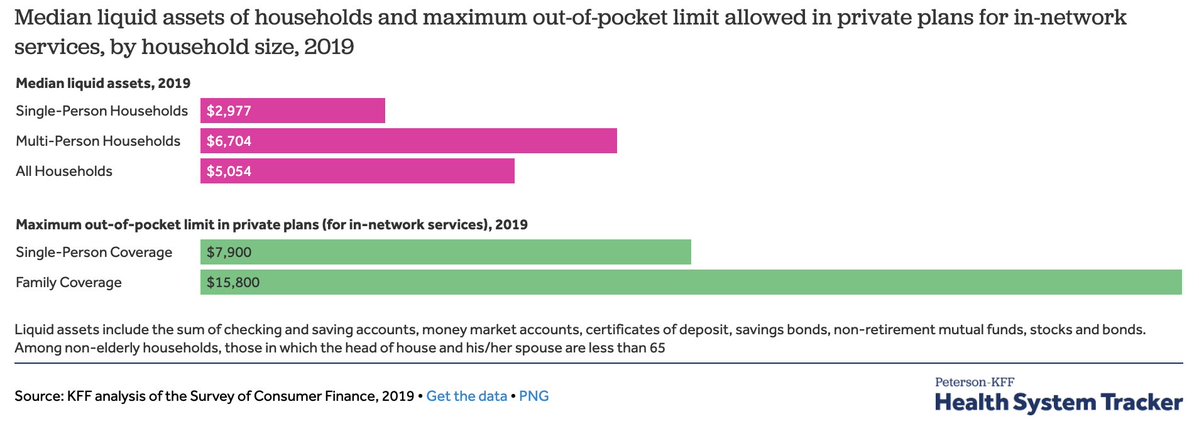
What happens when you lack sufficient savings to cover your private health insurance OOP costs?
For many people in the U.S., this is reality.
The chart says it all ⬇️
@KFF https://t.co/v5Q59Sse6q
Newer neurologic meds with similar benefits to older drugs are used by fewer than 20% of patients due to high costs + unpredictable OOP according to @GreenJournal
Huge spread between most expensive drugs - from $91/mo to $713/mo. https://t.co/msXgstwrqx
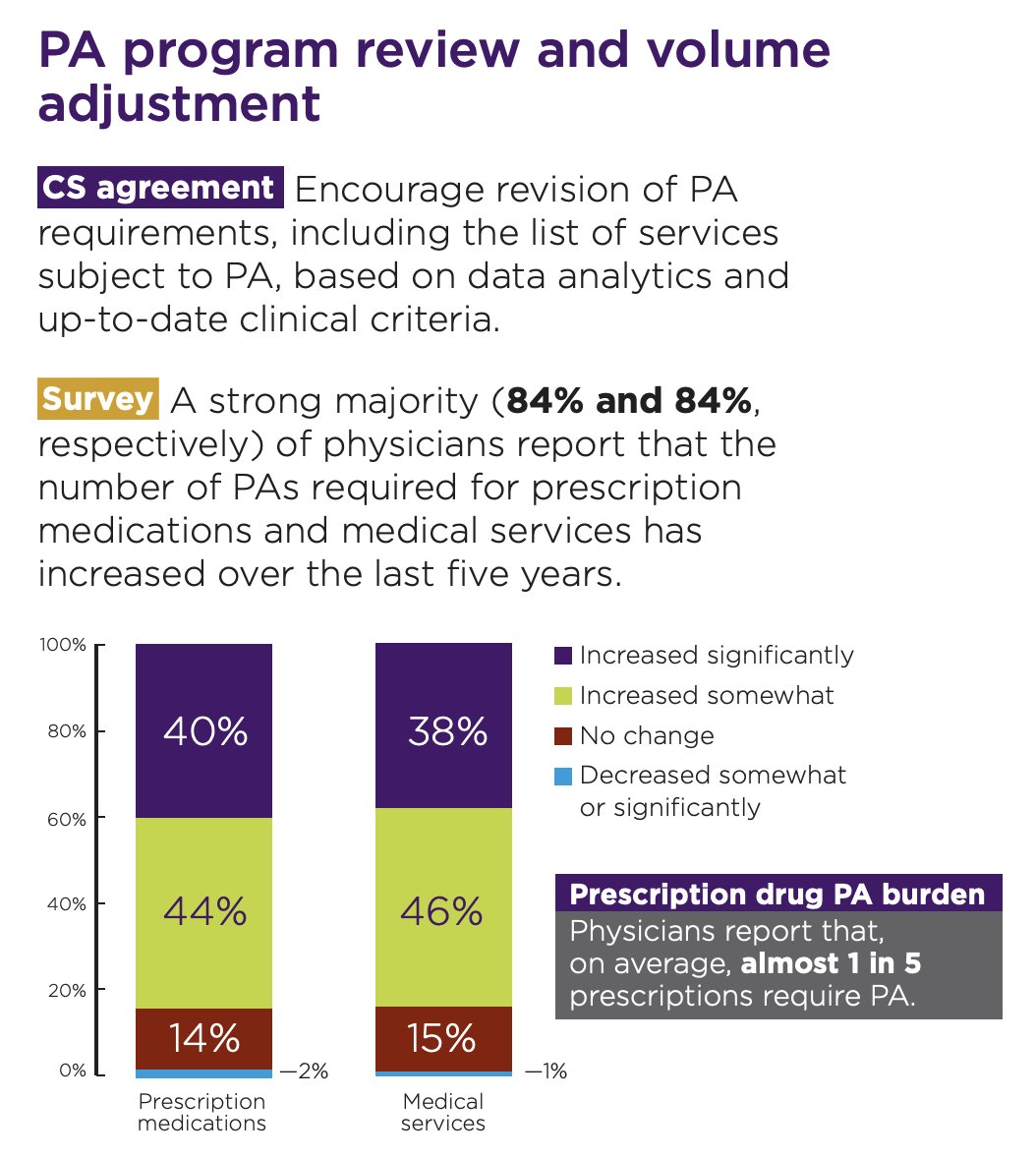
Disappointing, not surprising: insurer promises to reform prior authorization in 2018 = #fail
Majority of physicians (~85%) reported that PAs have actually INCREASED in past 5 years
Changes unlikely w/o accountability
@AmerMedicalAssn https://t.co/he7QfOLN5G
Rare diseases are undercounted according to new report from @RARE_X_
The research counts up to 10,867 (!) rare diseases
Better understanding & counting means more investment, research, and treatments for patients
Full report: https://t.co/NCv86wQ0Hi
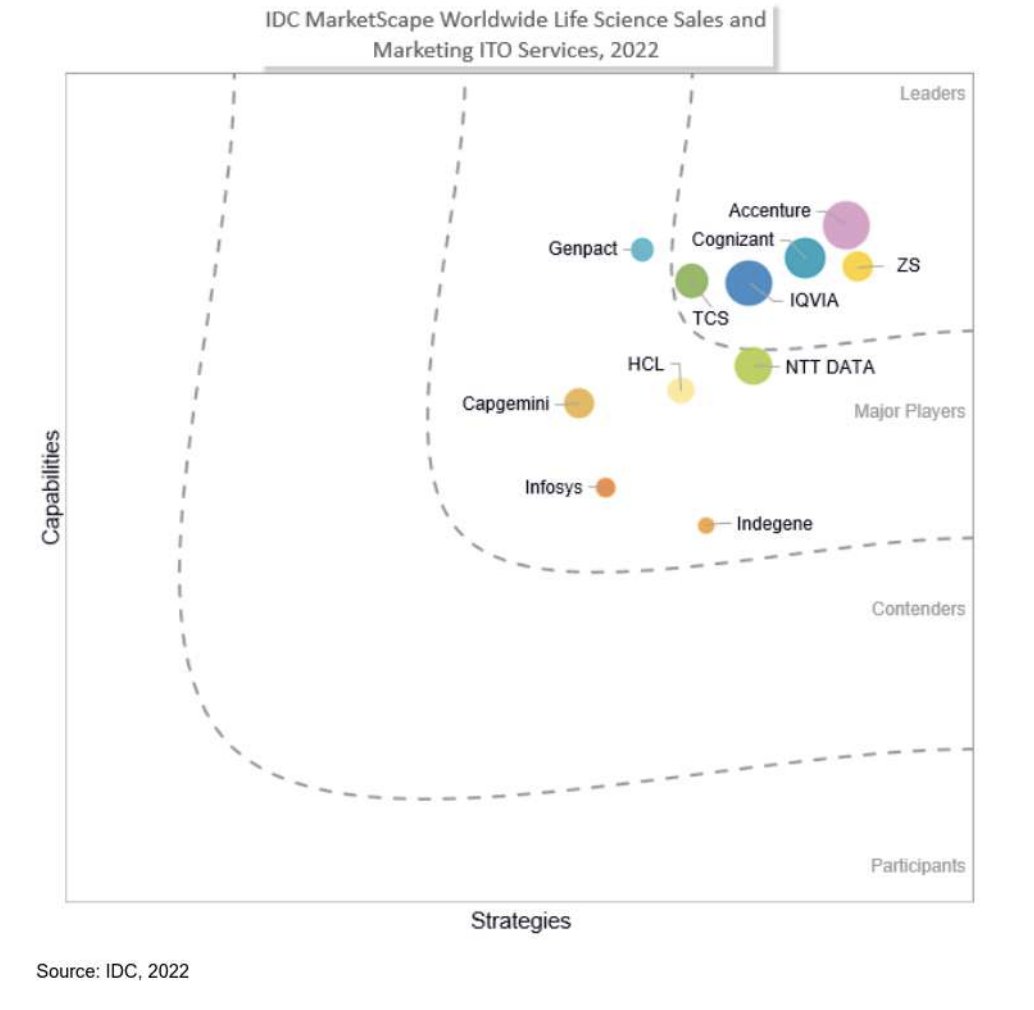
This year @Accenture was recognized by @IDC as a leader in #lifesciences sales and marketing #IT outsourcing services
Our clients understand the end-to-end value of our business: from industry expertise to technical capabilities https://t.co/7dbzOKFt9S
Interesting perception vs. reality for prescription drugs: the public says costs are unreasonable, while the majority people taking prescriptions find them affordable
#foodforthought
via @KFF https://t.co/1BmwpT6ZhT
“Value-based price for value-based access" model from @Novartis:
+makes patient access easier
+lowers cost-sharing
+reduces admin burden
More innovative concepts needed to decrease reliance on high list price/high rebate model
@Accenture@PharmaCommerce https://t.co/TEyG6oi8pe
Changing policy tides: in the past year 38 (!) states expanded coverage for #telehealth.
These policies increased access to care & might be a sign #telehealth is here to stay.
Will the last 12 states follow suit?
From @avalerehealth '22 outlook. https://t.co/TDUPBYcDgp
What do patients think of #biosimilars?
Turns out:
-most patients have limited knowledge
-switching does not reduce satisfaction
-AND the # of switches does not reduce satisfaction
Interesting study from @ACRheum https://t.co/eqTHqMj6o0
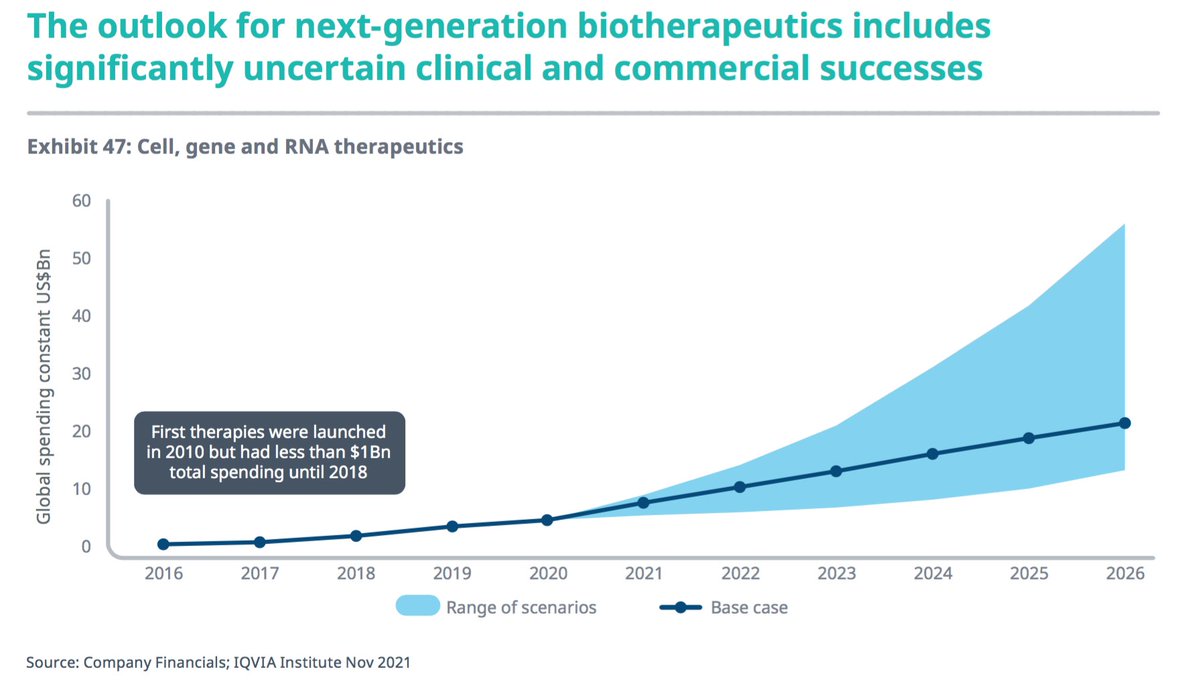
Lots of cell & gene therapies on the horizon, but @IQVIA_global has a mixed outlook for commercial success. https://t.co/CtasGxbUfJ
Therapies have high costs, small patient pops, and are expected to be <10% of spending on new drugs in the next 5 yrs.
Expect payer resistance...
From @IQVIA_global: specialty meds are expected to encompass ~45% of global drug spending in the next 5 yrs. https://t.co/CtasGxbUfJ
Notable that the growth rate is higher in developed countries with better access.
Context: these medications treat around 2-3% of patients.
Another example of #digitalhealth improving access to treatment: @GetWithinHealth
Eating disorder patients have direct communication with their care team anywhere, anytime, and from their homes. https://t.co/PorujpXDpW
Why do some patients give up on cancer treatment?
Study from @IQVIA_US paints an ugly picture: some #breastcancer patients did not initiate treatment b/c of a formulary exclusion.
Instead they opted for symptom management, chemo or other products. Sad. https://t.co/PGPxtrlsQQ
More pressure on state governments to ban copay #accumulator programs.
Latest: Massachussets.
Last week advocates from patient orgs across the state testified in front of the Joint Committee on Financial Services to pass legislation https://t.co/ScgUyg589N
Hospitals receive more $$$ than physician offices for infused #cancer drugs.
Payers then try to shift care to non-hospital settings to reduce exposure to higher prices...
Patient impact: potentially higher cost-sharing burden. @Health_Affairs https://t.co/AjyAS8AlAv
People at risk of HIV continue to face unnecessary coverage barriers for PrEP.
The ACA requires plans to cover PrEP with no cost-sharing, but several insurers are noncompliant.
Worthwhile opinion from @statnews brings this issue to light @HIVHep https://t.co/pCDVHBeitw
Patient experiences / experience data have become an important part of drug R&D and regulatory reviews.
Latest example: @US_FDA PDUFA VII commitment letter calls for a "patient focused drug development meeting" to understand perspectives on #cellandgene https://t.co/nO8gUwFzDE
According to new @Accenture survey, younger people experience more access barriers than older people.
Over half surveyed aged 57-74 claimed to have never experienced and issue affording medical care.
Hypothesis: higher millennial enrollment in HDHPs? https://t.co/wUgLvHcMQi
@bgurley@CastlightHealth@healthcaredive Not saying price should be hidden! My point was that transparency is needed for additional metrics that would be helpful for patients in selecting a provider - network, ratings, safety, quality, etc. Patients often (wrongfully) assume higher price = better care
It's no surprise that the No Surprises Act will be hard to implement.
Good summary of some reasons why in @healthcaredive.
One point I liked: the Act focuses too much on cost when cost is just one of many factors patients consider
https://t.co/Q5munQYkef @CastlightHealth