On cold winter nights you'll find me in graveyards happily reading weathered headstones, surrounded by history and people who are unlikely to disturb my peace.
Workers expanding a quarry in the Scottish Highlands uncovered a ring of stone.
Inside it, archaeologists found a woman who had apparently been lying there for roughly 2,000 years.
The discovery at Evelix, near Dornoch, was strange from the beginning. The structure was so carefully constructed that archaeologists initially wondered whether it might be modern.
It wasn’t.
The sunken pit measures about 10 feet long and 6.5 feet wide, with fitted stone walls, a slabbed floor and steps descending into it. Clay had been packed into parts of the structure, apparently helping it hold liquid.
Then, tucked into one section, they found the skeleton.
She appears to be an adult woman. Nearby were animal bones, charcoal and part of a soapstone vessel. Around the site are traces of possible Iron Age roundhouses. (Jacaranda FM)
But nobody can yet say exactly what this structure was.
One archaeologist jokingly suggested an “Iron Age hot tub,” an irresistible headline, but emphasized that the idea was speculative. The official archaeological record offers another possibility: some kind of ritualized well. (Need To Know)
And the way the structure was abandoned may be the strangest part.
The woman appears to have been laid at the bottom. Animal bones were deposited above her, followed by charcoal-rich material. The steps into the pit seem to have been deliberately blocked.
Archaeologists cautiously suggest this could represent a ceremonial closing of the structure. (Highland Historic Environment Record)
No Iron Age princess has been discovered. No sacrifice has been proven.
We don’t even know how this woman died.
Her remains are now being studied for clues about her age, health and death.
For now, the most fascinating answer is the one archaeology doesn’t often get to give:
We found her.
We still don’t know why she was there.
#drthehistories
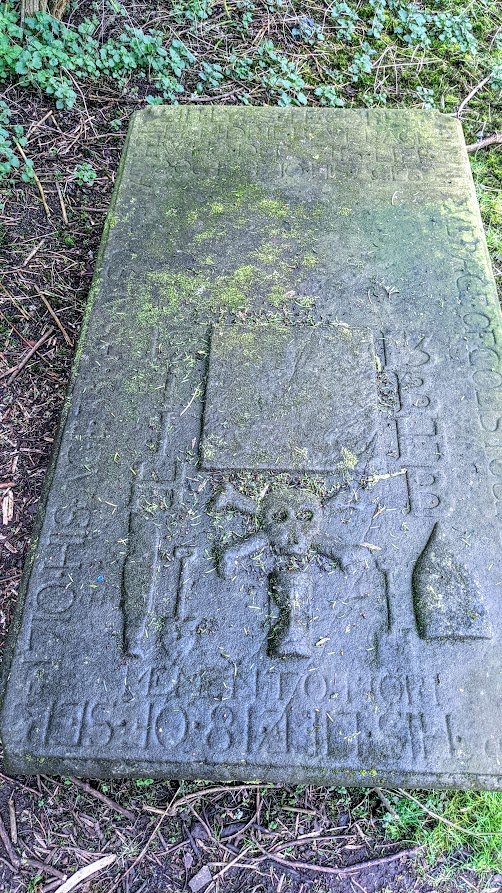
The extremely worn memorial stone to Lieutenant Robert Cordon of the 12th Regiment of Foot, who fell in the Battle of Quatre Bras on 16 June 1815. The stone is located in the now ruined church of St Peter in Duffus, Scotland.
A skull and crossbones on a tombstone such as this, serve as a universal language for people to contemplate the brevity of life.
#graveyard#tombstone#skull#crossbones
The Faichney monument carved by mason John Faichney in 1707 after the death of his wife.
Individual carvings of ten of their children flank a coat of arms, which is located below a large depiction of the couple.
https://t.co/D3BGIbcdVa
A horse-drawn float prepared by the Bridgeness Pottery of C.W. McNay & Sons for one of the annual Bo’ness Children’s Fairs in the 1920s.
The mantel dog, bottom left, is very probably an example of the model shown in the second image.
#boness#pottery#ceramic#figure#wally#dog
This formidable chap is inspired by the snuff-taking 19th Staffordshire Toby Jugs you might come across online or in antique shops.
The noticeable difference is of course his spout, which has turned him into a teapot. He measures 9 inches.
#staffordshire#tobyjug#teapot#antique
@WFASouthScot Really enjoyed the talk, a fascinating topic and an interesting comparison which stimulated so many questions. Had a quick walk along to Dalry Cemetery to visit some @CWGC casualties before catching the train back across the bridge to the Kingdom of Fife. A lovely afternoon.
The table tombs are neatly executed, many replete with #mementomori symbols, giving testimony to the wealthy parishioners who once regularly attended this lost rural church.
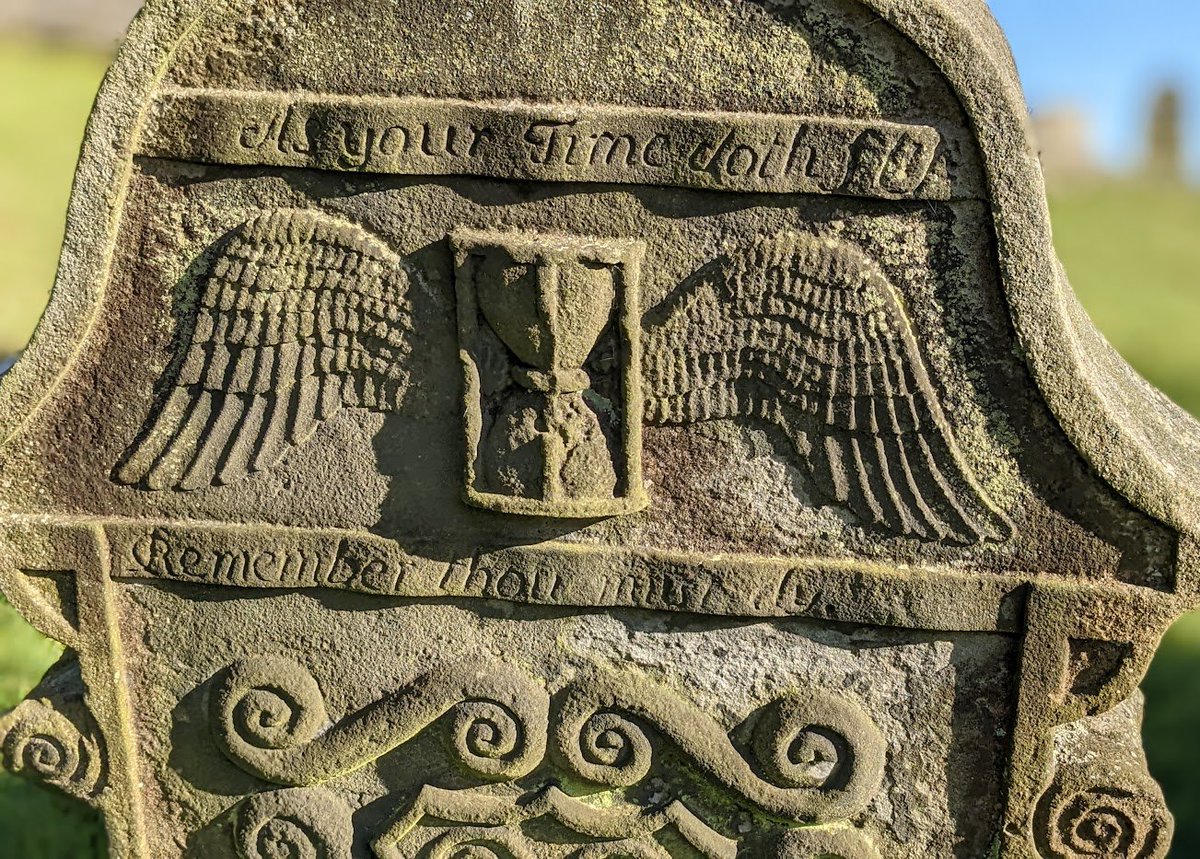
"As your Time doth fly,
Remember thou must dy..."
Ironically, moments after spotting this INCREDIBLE #MementoMori laden headstone in Portmoak Kirkyard today, I went flying over a nearby Victorian lair marker and almost tested my own mortality!
💀⌛🪦