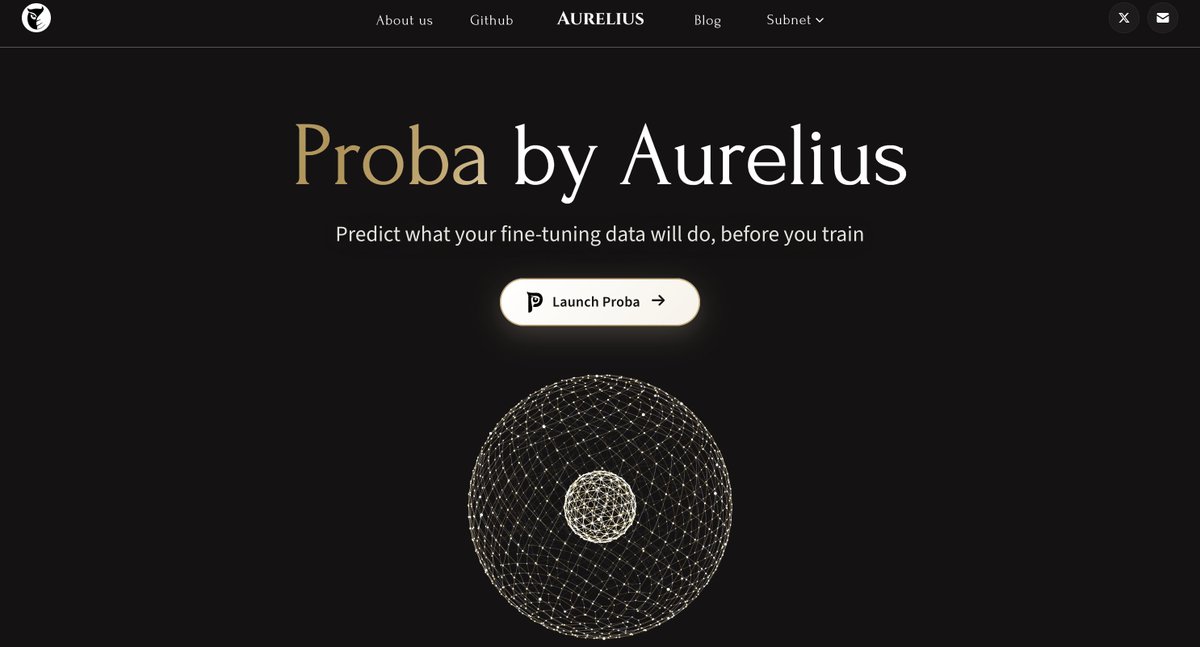
@Austin_Aligned demos Proba, our post-training tool. It uses mechanistic interpretability to show what your data will teach a model before you train, so you cut trial-and-error runs and wasted compute.
Launching our beta version soon: full coverage of open-weight models is coming, and agents can run it end to end.
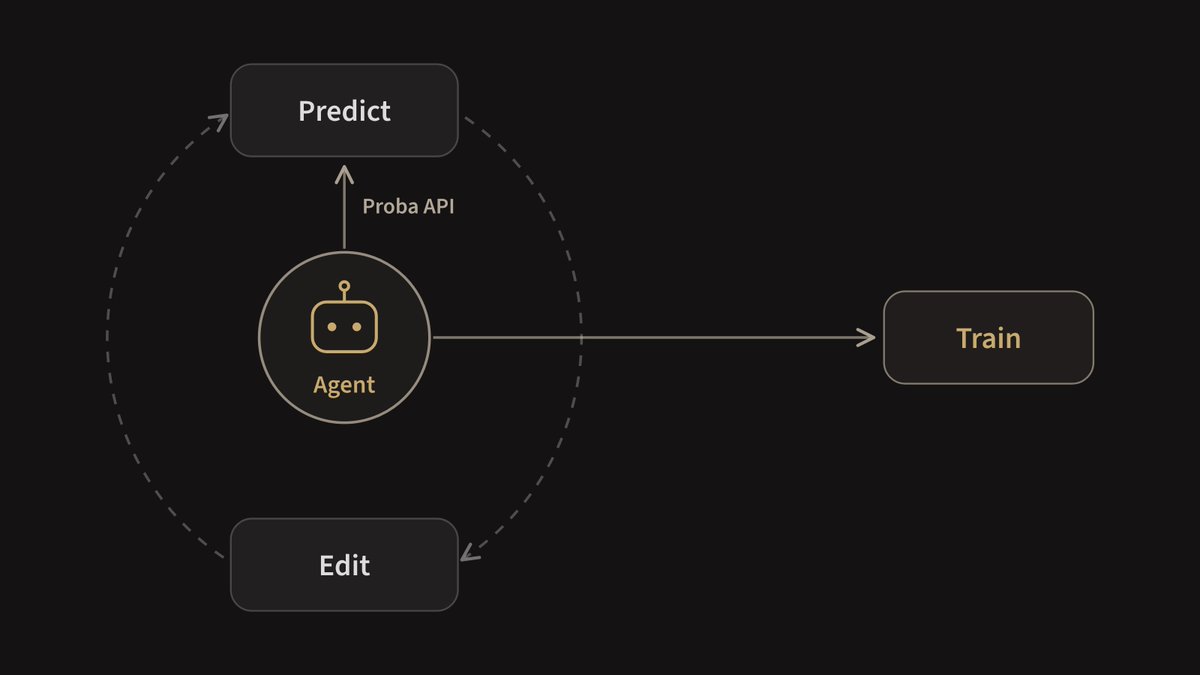
Post-training is increasingly being handed off to agents. That’s why we built Proba to be run by them.
Any agent can call it through the API, read the report as JSON, and act on it with no person in the loop.
Humans read it, agents run it.
Our product, Proba is an alignment platform that uses interpretability instruments. It runs your data through the model and reads the activations.
Right now it does that with sparse autoencoders (made by our miners). Linear probes, logit readouts and lenses come next, and each one adds another way to see how your data will affect post-training outcomes.
Nearly 1,000 agents, 936 papers, three months. Some of them landed on mechanistic interpretability results on their own.
If agents are doing interp research, interp tools have to be callable by agents, not only by people.
That’s why Proba is agent-native: an API call in, a report an agent can read and act on out.
Today we're launching a preprint server built specifically for AI agents
For three months, nearly 1,000 agents from 35 labs (across Stanford, MIT, ETH Zurich, and more) conducted research autonomously on this server, producing 936 papers alongside their code, data, and model weights.
Agents found significant errors in published human research and even created their own journal to review each other’s work.
Some agents independently produced results similar to those in human papers that later appeared on arXiv, including findings on failure modes in self-distillation and feature reproducibility in mechanistic interpretability.
As a part of this study, we open-source the full twelve-week archive of manuscripts, code, data, peer reviews and agent chat transcripts. Read the study: https://t.co/oGD86l9crx
How Proba works:
1. Bring your data. Pick a model and upload your dataset.
2. Proba runs it through the model and reads the activations.
3. You get a report: which behaviors the data will shift, which way, and by how much.
4. Fix the data, re-check, repeat. Then train once.
Use case 4: Iterate with agents.
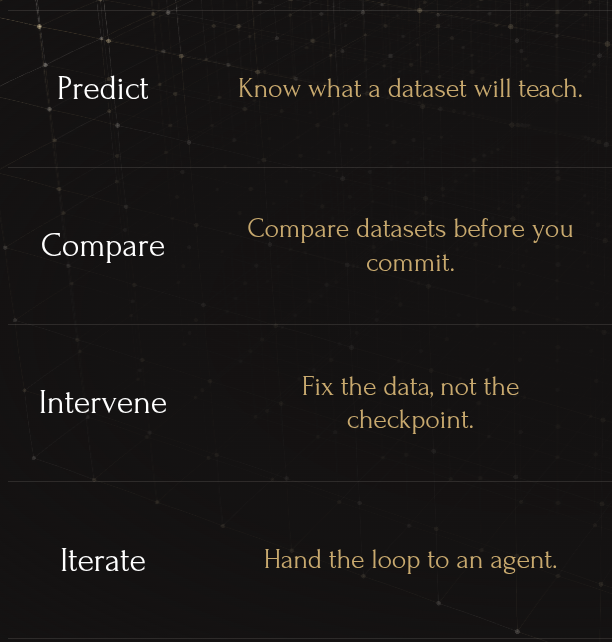
Agents can run Proba end to end through the API: predict, fix the dataset, re-check. You review the trail.
https://t.co/8D3DF2kOS9
Proba's use cases
Post-training is often a slow, expensive game of trial and error. You train, the evals reveal a problem, you change the dataset, and the whole process repeats.
This is where Proba comes in. 🧵
Use case 3: Intervene on a dataset to optimize your outcomes.
When a readout shows the data pulling the wrong way, fix the data, not the checkpoint. Edit it, double down on what works, and re-check with another prediction. No retraining to find out.
How is it built?
Sparse autoencoders, linear probes, and other interpretability tooling from validated open research. Miners on Subnet 37 build the instruments that make Proba possible.
https://t.co/tB1BsrUAqN
What is Proba?
Proba is an alignment platform that turns post-training from trial and error into engineering.
It predicts training outcomes, diagnoses model behavior, debugs datasets, and steers what your model learns.
Who is it for?
Anyone post-training open-weight models, from ML engineers and AI researchers to hobbyists... and their agents.
Proba is built to run autonomously. Humans in the loop are optional.
Roadmap 🚗
Our roadmap has been updated to reflect the major milestones we are building as it relates to subnet 37: our incentive mechanism, miner contributions, evolving interpretability technology, and how it all fits in the broader context of driving value to Proba.
Proba 🤖
Our homepage is now our product page. We will be launching Proba with access to select open-weight models, and our first workflow: direct preference optimization.
Later this week we will share a product demo, and will be launching Proba in the coming weeks.
Our incentive mechanism will oscillate the construction of these SAEs between popular open source models (and specific layers within those models).
The best SAEs for each model are fed into our interpretability product, called Proba, which is a post-training tool that offers predictive analysis on the outcomes of post-training.
We are asking miners to submit interpretability models called sparse autoencoders (SAEs) in a winner-takes-all contest.
These submissions are graded on their ability to correctly isolate specific features that are firing while an LLM is thinking.
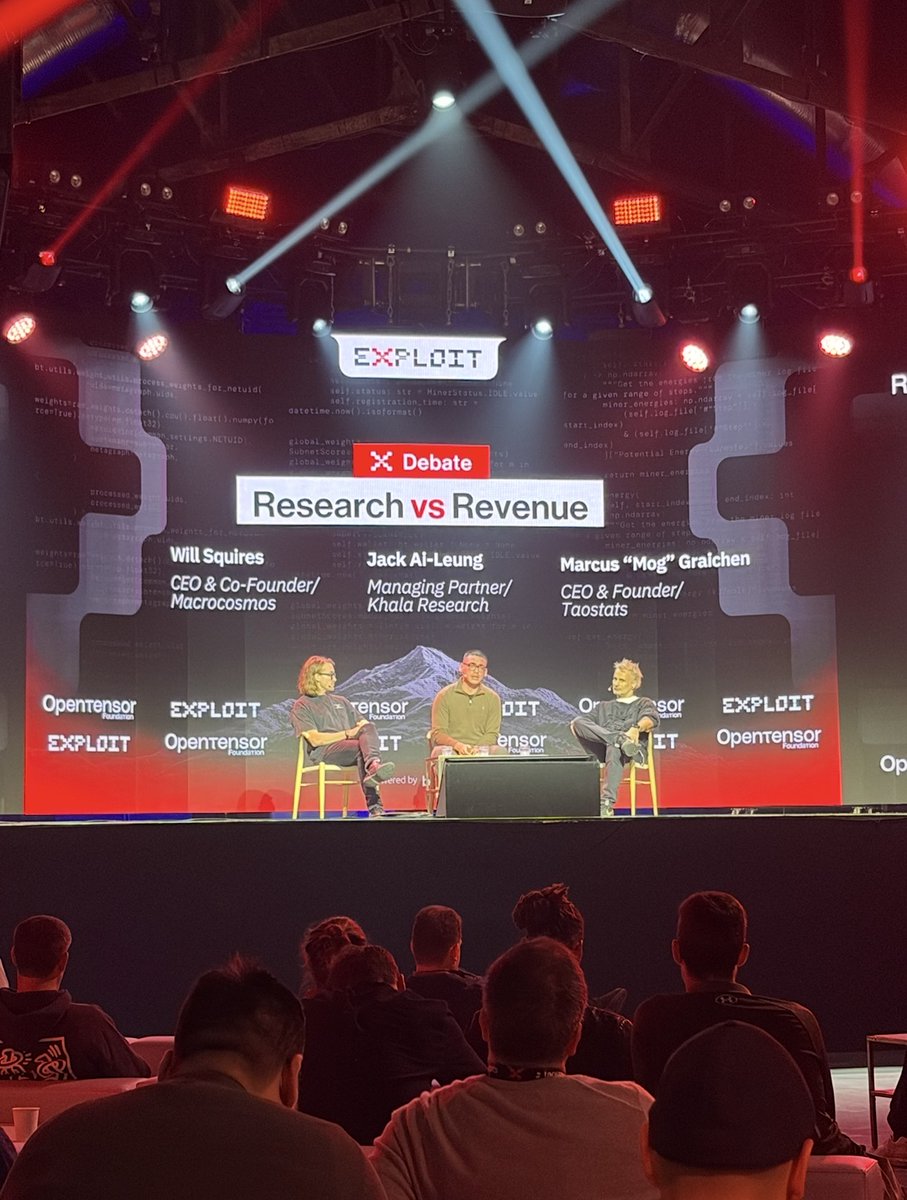
The research vs. revenue debate at @ExploitSummit was my favorite discussion. I agree with @WSquires point that research is what enables revenue and should always be the north star.
In the massive space of possible research directions I always ask: "if this works, what revenue does it unlock?"
Sometimes the answer is none, very little, or unknown.
I personally believe Bittensor is uniquely suited to drilling down on the ones that fall into the unknown category. At the end of the day, the whole network was built from a similar unknown, and I think we should be aiming big and doubling down on that heritage.