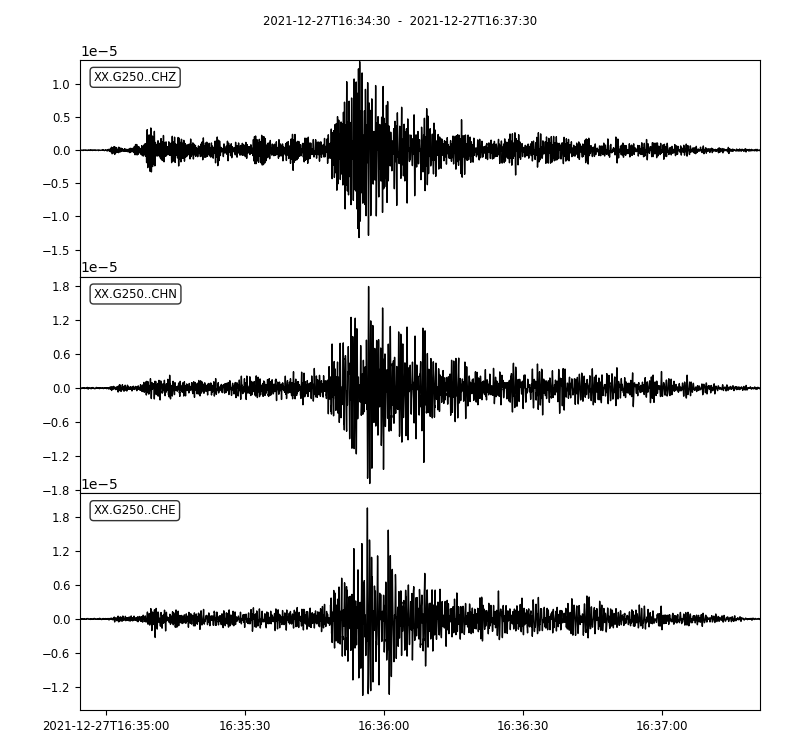
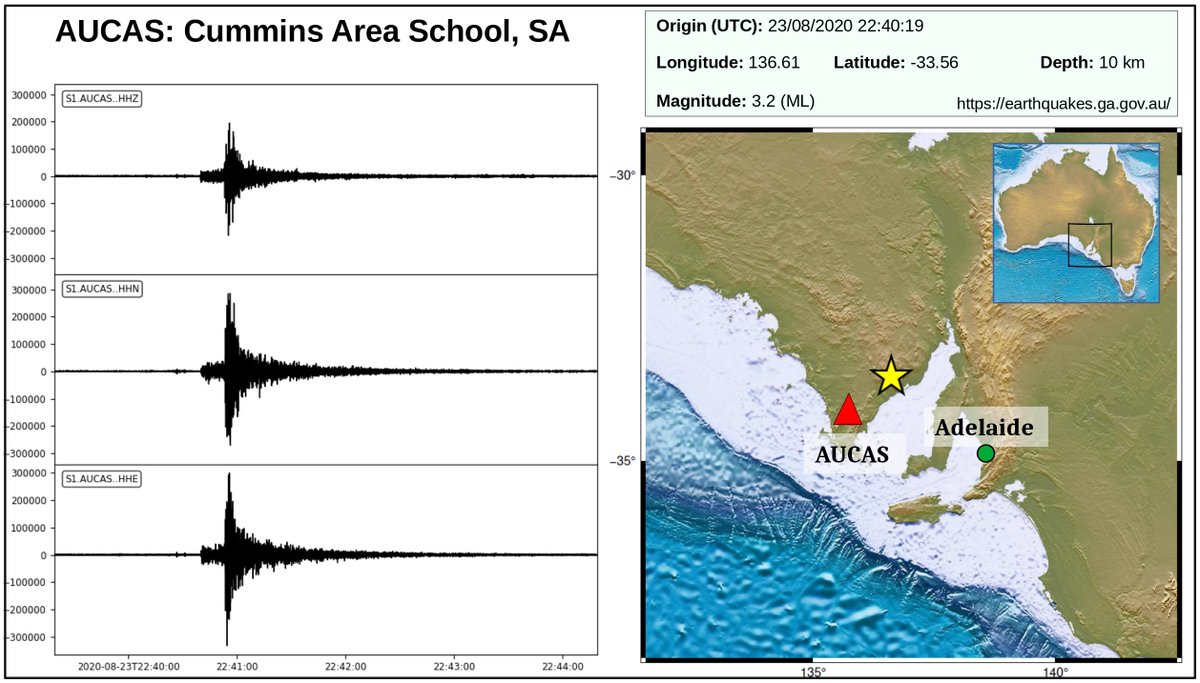
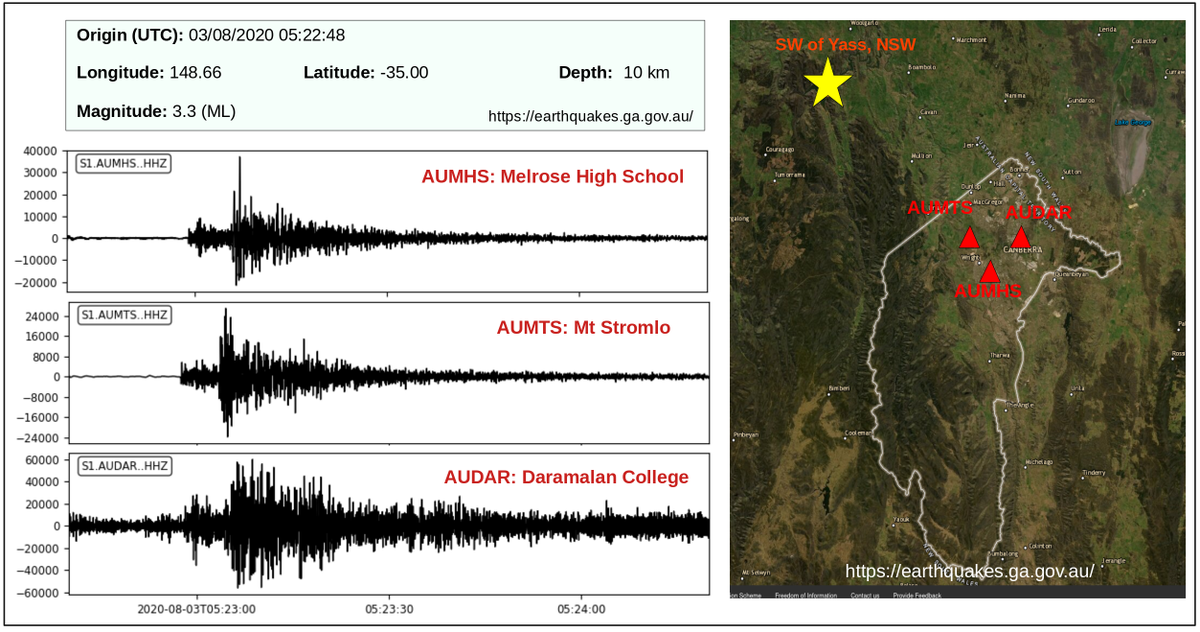
Doing a bit of fun-time holiday instrument response calibration in the garage using this morning's M3.4 in Muswellbrook, NSW. We've just replaced all the geophones in our 3DLites and they're looking pretty spot on (RP)
We've managed to resurrect the "lost" data for S1.AUKSC for the Mw5.9 Mansfield earthquake. It is our nearest AUSIS site at ~117 km @ azimuth 242.5 (and looks like it may clipped the sensor??) Available now on our FDSN server: https://t.co/WjITR9lEYe
Interesting article on the state of Earth Sciences in Australia https://t.co/iEOOJpi6Ch. One would think a country that relies on Earth Sciences for more than 10% of its ouput (RBA numbers 21 July 2021) there would be more input to the sectors education.
The earth shook around Lilydale in Tassie on 23/6 as local students jumped into an AuSIS (@AusisEdu) workshop with Dr Sima Mousavi (@Sima_Mousavi) from The ANU (@anuearthscience). The focus: checking in with the #NCRIS enabled #seismometer down the hall:
https://t.co/thoaXIWbho
As part of our commitment to reconciliation we are working towards acknowledgements to the local first nations people in all our seismic data. Starting with the SWAN array which is located on the traditional lands of the Noongar and Kaalamaya people.
42 degrees and out in the desert. Armando Arcidiaco's last trip with us into the Eyre Basin to look at #earthquakes in the area and how the basin has formed.
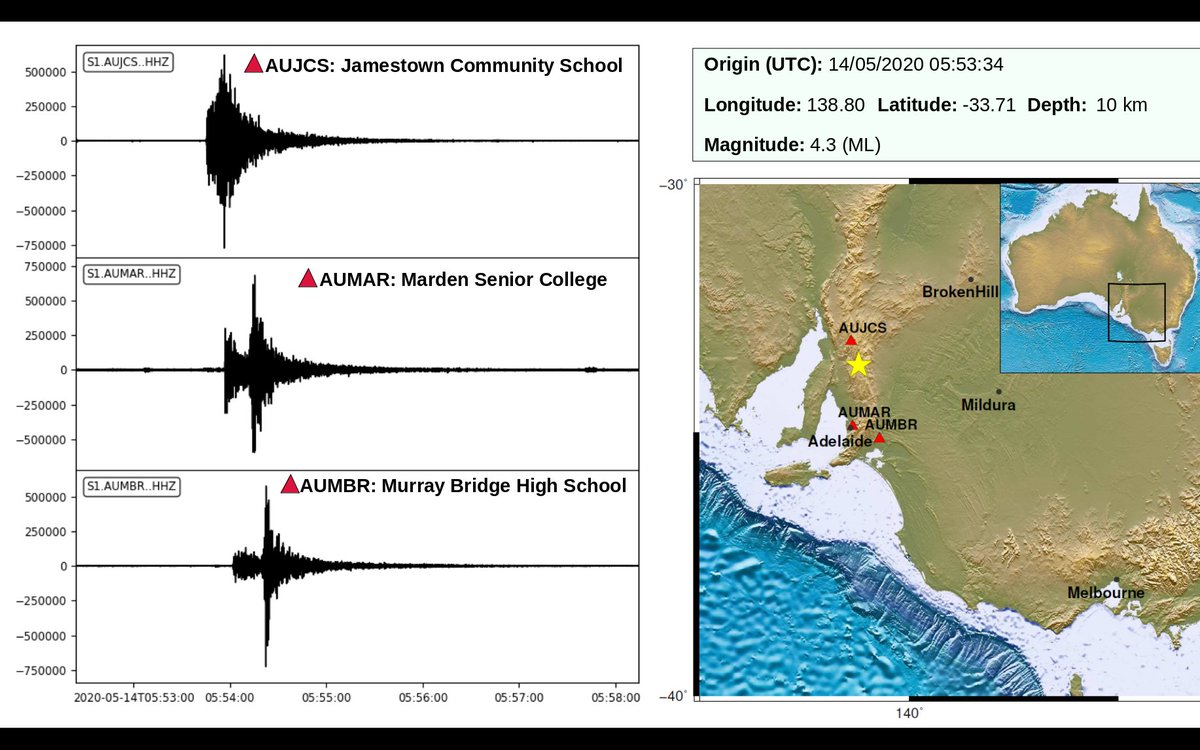
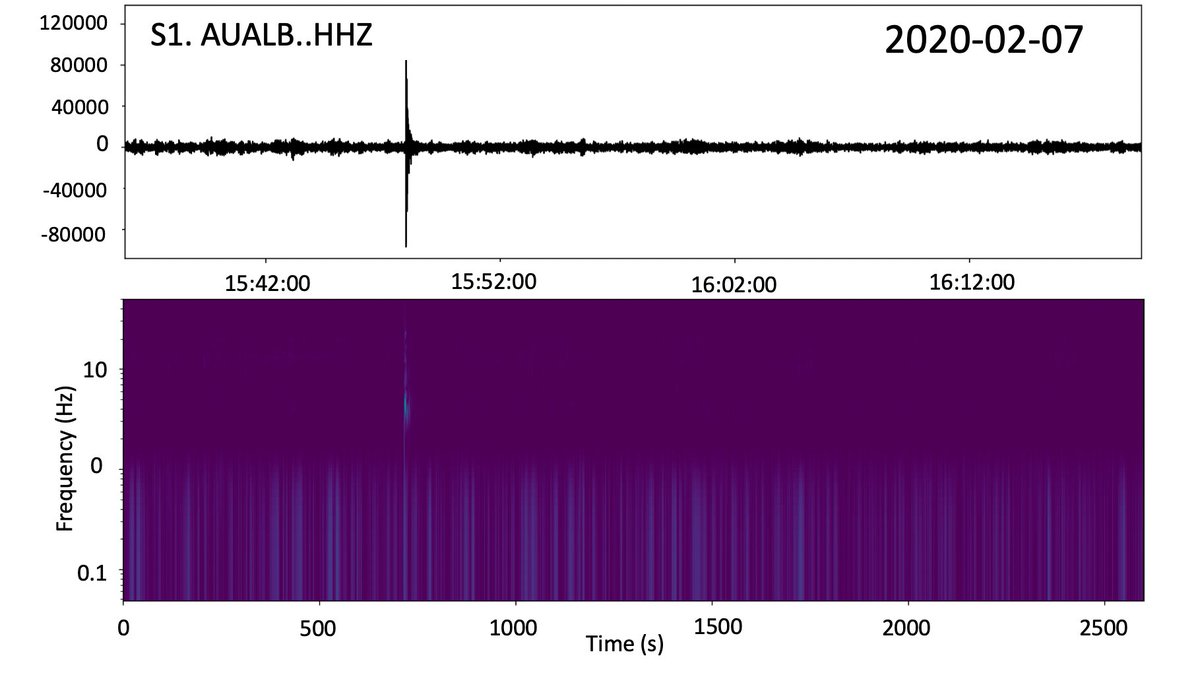
During COVID-19, @MeghanSMiller and @LouisMoresi have tuned into to our sensitive @AusisEdu seismometers that are detecting far less noise and vibration produced by humans in motion — a unique opportunity to listen in on tiny earthquakes: https://t.co/vziar5K4tM #NCRISimpact
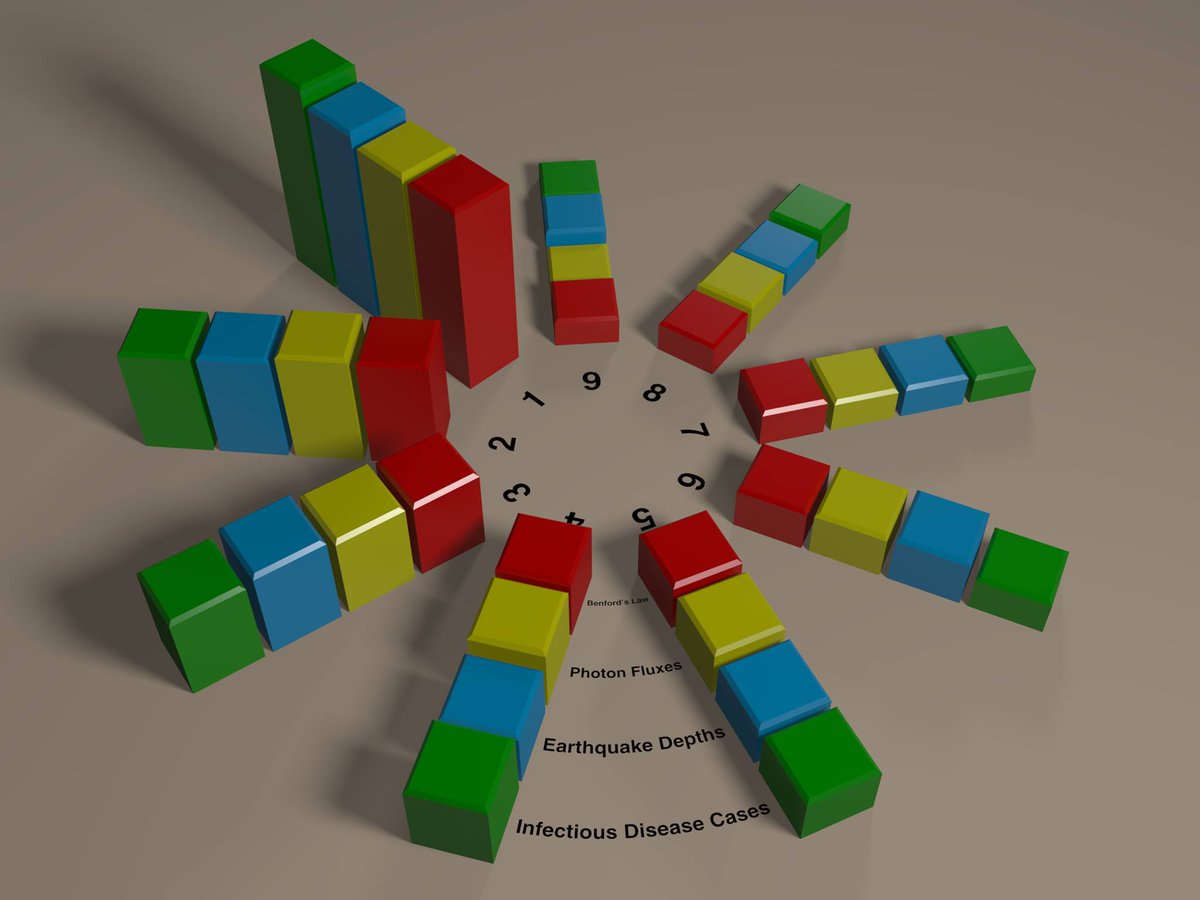
#RSESrockstar Malcolm Sambridge & Andy Jackson @ETH_en look at whether national Covid-19 reports of infections and deaths obeyed Benford’s law of first digits. It turns out YES they do! @nature#OurANU@scienceANU https://t.co/cEhKf8ow5O