Meet Go by Gopuff and SpaceXAI: your personal shopping assistant that knows what you want and delivers in minutes.
Powered by Grok text, audio, and image models.
SpaceX has almost finished writing V1.0 of an in-house AI training stack in C that exact-maps to 220k GB300s with 800G NICs, making heavy use of pipeline parallelism and getting as close to bare metal as possible.
The potential speed improvement vs JAX for large training runs is over an order of magnitude.
This is why PR diff speed matters. This isn't a dunk on GitHub specifically, because GitLab, Forgejo, etc. are all equal or worse. But this is the kind of thing that drives me nuts, because this is a core workflow and its slow enough I literally take my hands off the keyboard.
Btw, when my mouse jiggles on the left, its because the page is literally skipping frames and I'm instinctively shaking my mouse to see if it'll respond. And on the keyboard input you can literally here me finish typing before a letter even shows up.
For someone like me who is an expert at these tools, my brain navigates the tool dramatically faster than it can keep up, and that is not good. The tool should not get in the way.
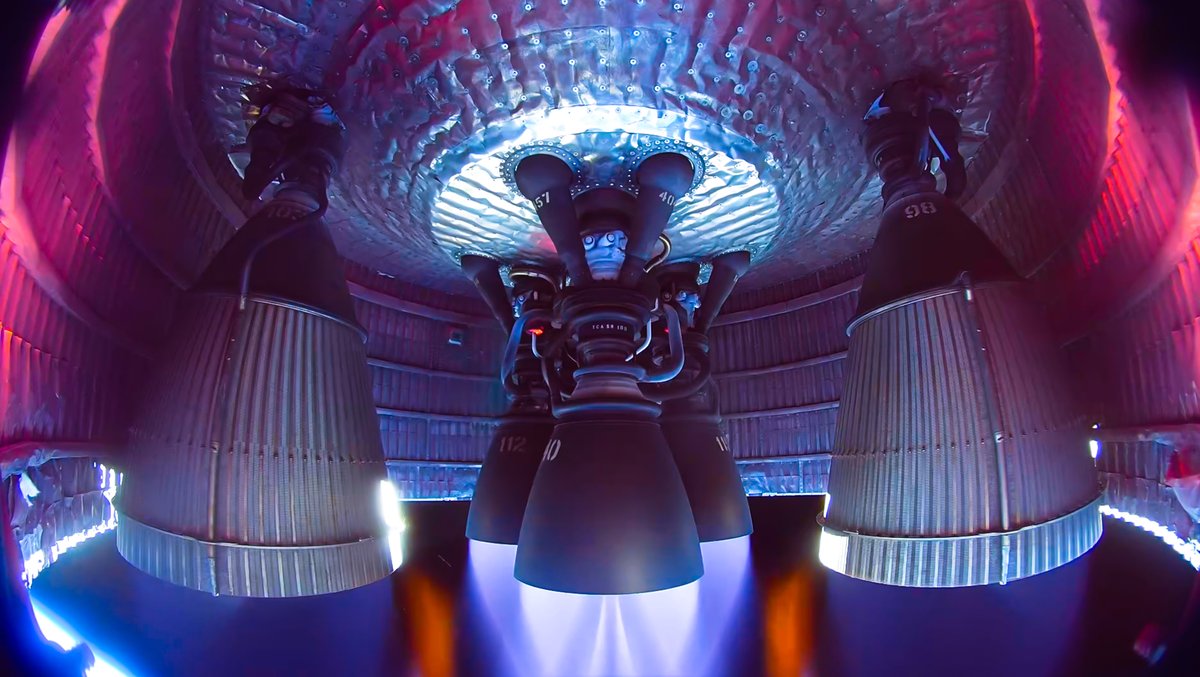
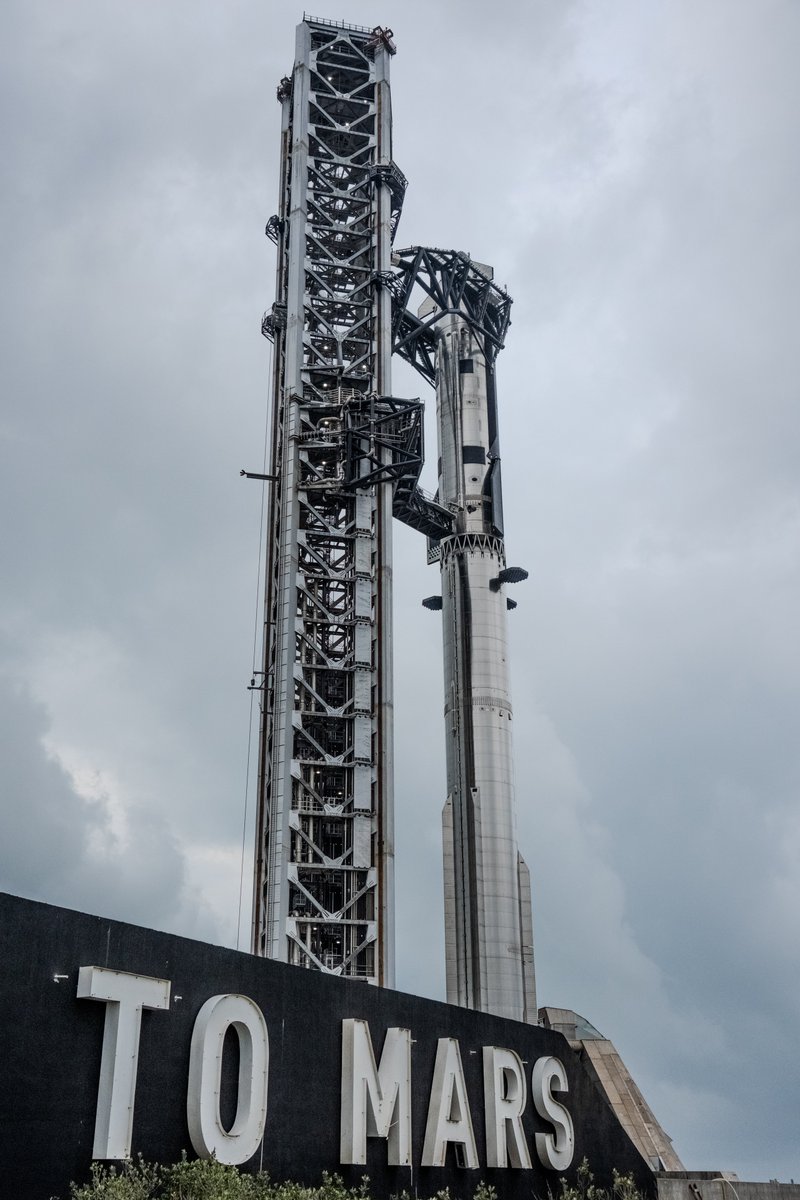
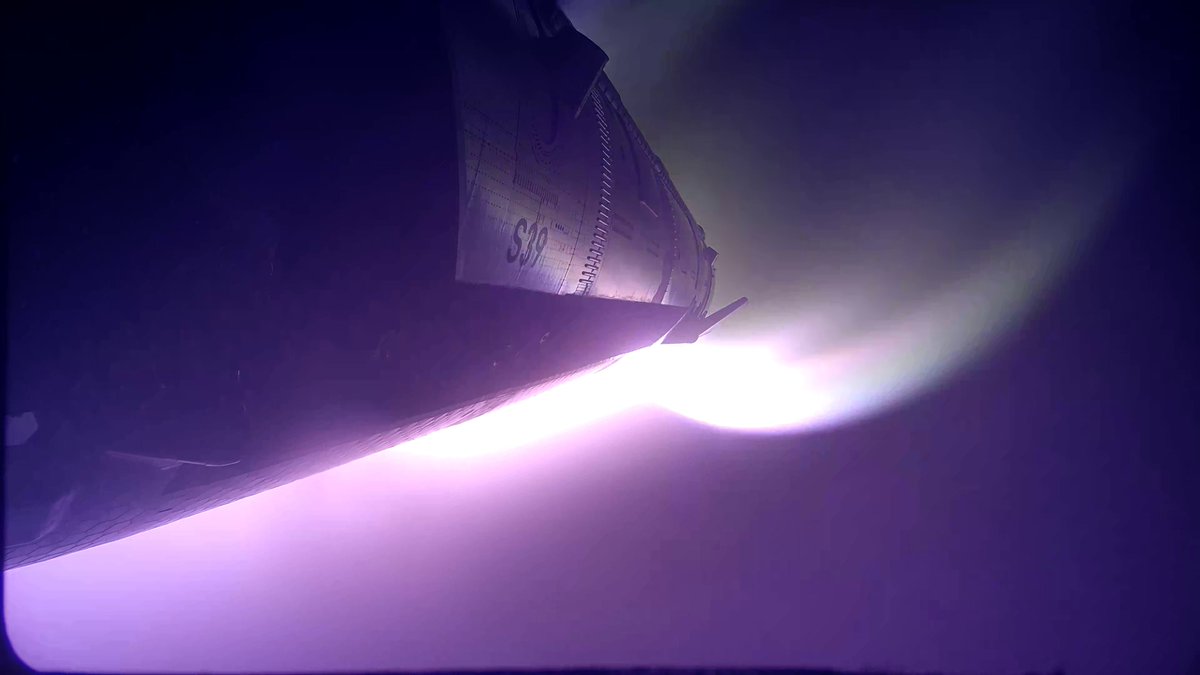
Onboard views from Starship and Super Heavy V3, which are equipped with upgraded cameras capable of streaming 4K video through every phase of flight via @Starlink
@yunta_tsai They said it couldn’t be done.
Dozens of Starlink satellites simultaneously track Starship at all times and close the link through a gap in the plasma that is located in the leeward region towards the aft end of the rocket.
SpaceX is actively hiring world-class engineers/physicists for SpaceXAI, even if you have zero prior experience in AI. Smart humans figure it out fast.
Please send an email with ~3 bullet points demonstrating evidence of exceptional ability to [email protected].
As the recently expanded partnership with @AnthropicAI demonstrates, @SpaceX is offering AI compute as a service at significant scale.
We are in discussions with other companies to do the same.
Over time, especially with orbital data centers, we expect to serve AI at extremely high scale.
Fork your dependencies, trim them to only your use case, never update unless it breaks for your users. I’ve been vocal about this for 10+ years. I’ve always said that updating is way riskier than latent bugs (which can be tracked and CVEs monitored).
If you are updating a dependency, it’s on you to analyze every single commit in the full transitive set of dependencies. If you dont see anything compelling, dont update!
I remember at HashiCorp once in awhile an engineer would try to update a dep or replace a DIY lib with an external one and id always ask “show me the commit we need.” Dont update for the sake of it.
Feeling pretty swell about this mentality with all the supply chain attacks happening.
I strongly believe there are entire companies right now under heavy AI psychosis and its impossible to have rational conversations about it with them. I can't name any specific people because they include personal friends I deeply respect, but I worry about how this plays out.
I lived through the great MTBF vs MTTR (mean-time-between-failure vs. mean-time-to-recovery) reckoning of infrastructure during the transition to cloud and cloud automation. All those arguments are rearing their ugly heads again but now its... the whole software development industry (maybe the whole world, really).
It's frightening, because the psychosis folks operate under an almost absolute "MTTR is all you need" mentality: "its fine to ship bugs because the agents will fix them so quickly and at a scale humans can't do!" We learned in infrastructure that MTTR is great but you can't yeet resilient systems entirely.
The main issue is I don't even know how to bring this up to people I know personally, because bringing this topic up leads to immediately dismissals like "no no, it has full test coverage" or "bug reports are going down" or something, which just don't paint the whole picture.
We already learned this lesson once in infrastructure: you can automate yourself into a very resilient catastrophe machine. Systems can appear healthy by local metrics while globally becoming incomprehensible. Bug reports can go down while latent risk explodes. Test coverage can rise while semantic understanding falls. Changes happens so fast that nobody notices the underlying architecture decaying.
I worry.
@PTrubey Yes, SpaceX deliberately accepted lower revenue deals with airlines in exchange for making Starlink super easy to use and available to all passengers
Congrats to the @Starlink engineering & production teams on excellent work!
It was great to see everyone when I walked the production line in Redmond on Wednesday 🖤✨
Stunning first-sat views from @Starlink launch G10-38 on May 1, deployed from @SpaceX's Falcon rocket. Watch as the Starlink sats cruise over an entire orbit, through sunrise and sunset, and slowly separate from each as they complete their post-launch deployment sequence before beginning orbit raise. The satellites are stacked like a deck of cards in the rocket, which slowly spins when dispensing to impart a small velocity difference, ensuring deconfliction. May the @Starlink be with you.