I found multiple casino and gambling articles hosted directly on @inecnigeria official website.
I am not talking about INEC linking to casino websites. These are actual gambling pages published under inecnigeria dot org.
For example:
inecnigeria. org/discover-the-excitement-of-instant-casino-france/
I identified about 28 gambling/casino pages hosted on the official INEC website.
Most of the clearest cluster was published under the WordPress author name “Ajuma Achor.”
I checked further and found that a person with the same name, Ajuma Achor, worked with Interra Networks, a technology vendor that has worked on INEC’s website. Her LinkedIn appears to indicate that she left Interra some years ago.
That raises two worrying possibilities:
Either INEC’s website has been compromised for a long time without anyone noticing, possibly through an old or compromised publishing account;
or someone with access to INEC’s website is abusing that access to publish casino content, potentially as paid SEO placements.
I don't know which one exactly.
But either scenario is frightening.
Because if someone can quietly publish dozens of casino pages on INEC’s official website, then the bigger question is: what stops that same access from being used on election day to publish false information, fake results or a misleading announcement capable of causing chaos across the country?
This needs more than deleting the casino pages. INEC needs to determine who has publishing access, how these pages got there, and whether that access still exists.
@channelstv@seunonigbinde@YIAGA@MobilePunch@thecableng@SaharaReporters@vanguardngrnews
I have lived in America long enough to learn one absolute rule: Americans will argue about everything.
They argue about barbecue sauce. They argue about the weather. They argue about which truck brand can pull a heavier oak tree. In Tennessee, I once watched two men debate mayonnaise brands with the intensity of two samurais preparing for a duel at sunrise.
So yesterday, when I entered a diner off the highway and saw complete, heavy silence, I prepared for battle.
Every truck driver had removed his baseball cap. The TV in the corner was playing a message from a nephew. Men with beards down to their chests were quietly staring at their coffee cups.
"Charlene," I whispered to the waitress, keeping my hand near my side. "Has a foreign king declared war upon the republic?"
"No, honey," Charlene said, her voice shaking slightly as she wiped the counter with unusual slowness. "Aunt Dolly passed away. She went to rest on a bed of cotton."
I did not know this Aunt Dolly. But as I listened, I learned this woman gave over two hundred million books to children with no castle of their own, wrote songs that healed entire valleys, and spent eighty years wearing fifty pounds of shiny rhinestones so that everyone else could feel joy.
When a great feudal lord passes in Japan, the province weeps for forty days. Here, Charlene just put on a record called '9 to 5,' and fifteen grown men softly sang the chorus while staring at their hash browns.
I stood up, bowed ninety degrees to the television screen, and recited my deepest respect for the Queen of Tennessee.
Charlene gave me extra bacon and told me that Dolly would have liked my armor, though she would have probably glued glitter on the helmet.
A friend of mine runs a denim brand. His jeans cost $300 because they're cut and sewn in Los Angeles using premium Japanese denim.
He tells me that Trump's trade war has done three things:
1. They've raised the cost of his inputs. He can't substitute his Japanese denim with American denim because doing so would lower the quality of his product. If he's going to make premium jeans, he has to use premium materials. And the best stuff right now comes from Japan.
2. They've made his products more expensive abroad. In Canada, for instance, the price of his jeans has gone up because of the trade war.
3. He's seen a decrease in overseas sales. He tells me that a Canadian store reduced its orders this year because, as they told him, customers now come in and explicitly say they won't buy anything made in the US.
Of course, if the tariffs encouraged Americans to switch from their cheap $50 imported Levi's to $300 made-in-USA jeans, then that would be great! But that has not happened. People who buy $50 Levi's may pay $60, reducing their purchasing power elsewhere, but they don't switch to made-in-USA jeans.
Hard to see the point of this trade war with Canada.
Every neighborhood in Japan
has a tiny police station on the corner.
One officer. Sometimes two.
A room the size of a closet.
It is called a koban.
He knows the woman who runs the flower shop.
He knows which grandfather forgets his way home.
He knows the kids on this street by name.
When you are lost,
he draws you a map by hand.
When your bicycle is stolen,
he apologizes as if he took it himself.
When you drop your wallet,
he sometimes calls you
before you notice it is gone.
There are over 6,000 of these tiny boxes across Japan.
Other countries build one big station
in the middle of nowhere.
Japan puts a lamp above your walking route
and lights it every night.
That is the difference.
In 2018, after Benue state’s 2017 ban on open grazing, Umar Ganduje, former governor of Kano state, offered to accommodate them in a 20,000 square km of ranch in Kano, where world class facilities would be provided.
Miyetti Allah rejected the offer.
This is why the mission to now use Middle Belt states for the pilot implementation of National Ranching Policy leaves more questions than answers.
At 1:00 AM in an empty diner, I finished a plate of eggs and hash browns.
I reached for my back pocket.
Empty. My wallet was sitting on my kitchen counter five miles away.
Cold sweat drenched my spine. A samurai does not steal food. Death before dishonor.
I stood up, walked to the kitchen swinging doors, pushed them open, and marched straight to the giant stainless steel sink.
The cook, a massive man named Big Mike with a spatula in his apron, turned around.
"Whoa, chief! What are you doing back here?"
I rolled up my sleeves with grim resolution.
"Sir. I have zero dollars. Point me to the pans. I shall wash until sunrise to repay my debt."
Big Mike blinked. He looked at my rolled sleeves. He looked at my intense, trembling face.
Then he threw his head back and laughed so hard his apron shook.
"Man, sit your crazy ass down!"
He walked out to the counter, pulled a worn receipt pad, and scribbled something.
"You pay me tomorrow, samurai. Now go home and get some sleep."
The next morning at 7:00 AM, I was standing at his door with a ten-dollar bill and two jars of homemade Japanese pickled ginger.
Big Mike opened the door, saw me, and screamed to the whole diner:
"HE ACTUALLY CAME BACK! AND HE BROUGHT WEAPONS!"
I have a permanent booth there now. They call it "The Honor Seat."
Angie Nixon Just Gave Democrats a Lesson in Fighting Back
“If wanting your neighbor to afford their insulin is radical, then call me a radical.
“If believing a mother shouldn’t have to work three jobs to keep a roof over her family’s head is extreme, then call me extreme.”
Nixon was outspent roughly 16 to 1 and still won Florida’s Democratic Senate primary by 12 points.
Then she looked directly toward November:
“Ashley Moody can call us whatever she wants. But in November, she will call me Senator.”
This is what fighting for working people sounds like.
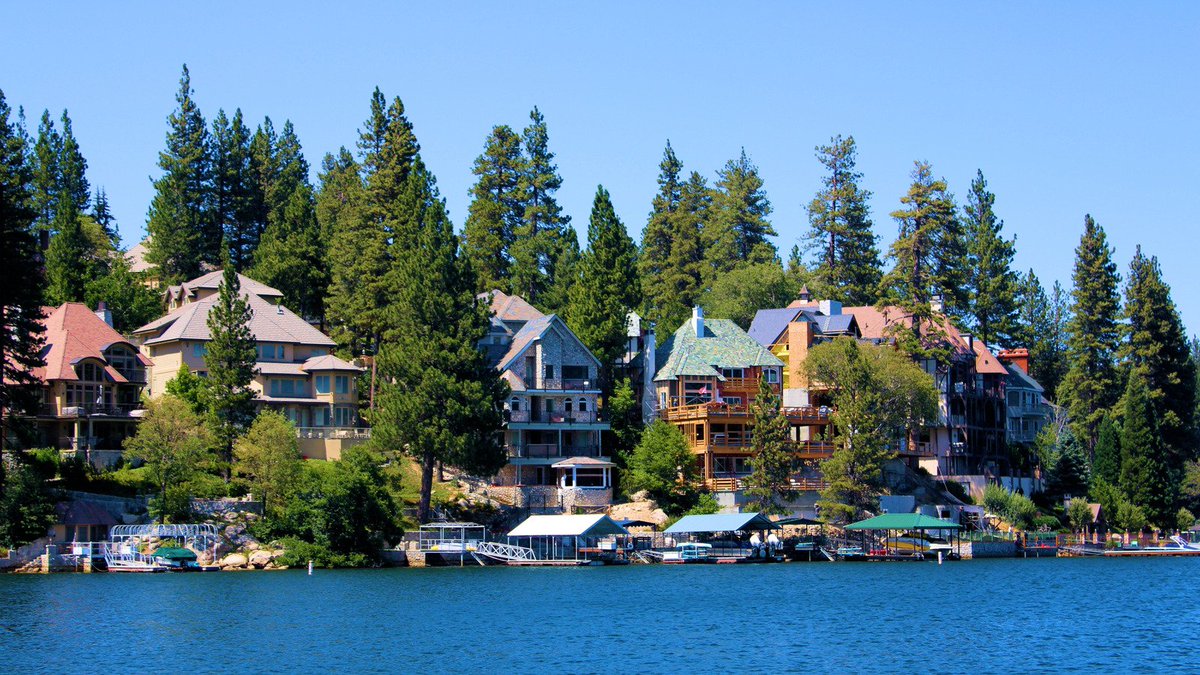
Vacation towns are about to get decimated.
Start in the 1960s. Somebody's grandparents bought a place like this on a middle class income. One earner, a decent job, a cabin on the water.
Their kids did a little better. Upper middle class, bigger house in the suburbs, and they bought a second home too. That was still normal.
Then look at now. Today the median first time buyer is 40 years old, an all time high, and first timers down to 21% of the market, an all time low.
People are hitting middle age before they close on a starter house, and plenty never do.
So the chain breaks right here. Three generations in, the handoff stops.
Now run it forward. The boomers own a staggering amount of this stuff, and over the next decade it will all come to market in the same window.
Lake houses, beach cottages, ski condos, desert casitas.
The heirs mostly don't want it. Insurance on anything near water, fire or hail has gone vertical. Property taxes reset on transfer in some states and just keep climbing in the others.
The dues on a resort condo run like a car payment and half these towns have cracked down on short term rentals, so the "it pays for itself" math doesn't pencil anymore either.
And an inherited house rarely stays inherited.
Somebody always wants the money instead.
So it gets listed. Usually right after probate clears.
Massive inventory is coming. But buyers aren't.
Get ready for these prices to go to rock bottom.
Again, imagine if every influential Nigerian with a significant media platform put INEC under the same level of scrutiny in 2027 that Davido is bringing to the Osun election. With that much sustained public attention, altering results would become far more difficult to do without consequences.
A Trading Lore Story : The TV set
They don't teach you this at the cocoa desk either.
Here's the thing about a certain kind of man. He spends the nineties doing his military service, sweating through West Africa, the kind of posting where the jungle is the job and France is a rumor. Then one day he looks at his life and thinks: I could do something else. Something with a margin.
Commodities.
Cocoa, specifically. West Africa. Because of course.
I want you to understand what kind of guy we're talking about before we get to the television. Because the television is the story, but the guy is the warning.
PERMISSION
He's on military permission of absence. A few days. Him and a friend. They take a canoe up the rivers. A week and many dive bars later they're broke. Absolutely, comically, jungle-broke. No money, no plan, and a clock ticking that they both understand perfectly.
Because if you don't come back from permission on time, you are not late.
You're AWOL. And the army does not send a letter of protest. The army comes looking.
So they do the only sane insane thing. They paddle upriver for a day into another country and present themselves at a little Foreign Legion outpost that is not their outpost, to a commander who is not their commander, and they stand there in the heat like two idiots.
The commander is less than pleased. You can imagine. Two sunburned idiots on his doorstep, AWOL in everything but the paperwork.
But he looks at them. Really looks. And he says something that, if you listen, is the whole biography of this man in one sentence.
"You're not like the other guys. Going home to mommy in France when on permission. You went to the jungle. So it's okay for this time."
They put them on a Hercules C-130. Low. Loud. The kind of flight that rattles your teeth and reminds you that civilization is nowhere near. All the way back to base.
That's the guy. A man who, when the money runs out in the middle of nowhere, does not go home. He goes further. And then he decides to become a cocoa trader.
TOGO
Now, you may or may not know this, and if you don't, sit down, because this is the part that makes the whole trade look like a magic trick.
There is not a single cocoa tree in Togo.
Not one. No plantation. No orchard. No little green fortune growing in the dirt. And yet Togo exports cocoa. Togo has cocoa. Togo is cocoa, if you look at the bills of lading and don't look too hard at the map.
Where does it come from?
Ivory Coast and Ghana.
It walks. It is carried. It is smuggled across a border that exists on paper and sits in the bush. By the time it hits Lomé it has a new nationality and a clean story and an exporter who needs a license from the Ministry of Commerce to make the whole thing official.
Our man wants that license.
He wants to establish himself. Do it right. And by "right," in this part of the world, in the late nineties, I mean: he wants to bribe the correct person, in the correct way, with the correct object, and then get on with the business of moving beans that were never Togolese to begin with.
Corruption, yes.
Amateur hour, no.
THE ASK
He asks a friend. The friend asks another friend. Information travels the way it always travels in a ministry: sideways, through intermediaries, until it arrives with the weight of the minister's own mouth on it.
The minister does not want cash.
Cash is vulgar. Cash is what you give a man you don't respect.
The minister wants a flat-screen television.
Late nineties. You have to understand what that sentence meant. A flat-screen TV was not a gadget. It was a spaceship. It was the kind of object that made a room look like the future had arrived and chosen you. Expensive. Rare. Impossible to find in Lomé without looking like you'd robbed a hotel.
So the friend does it properly. Paris. A shop. He buys the thing. Boards the plane. Puts it in the hold like a diplomatic pouch with a remote control.
The license is as good as signed.
All he has to do is land.
CUSTOMS
Lomé airport.
Lo and behold, he gets arrested.
Not arrested arrested. The other kind. The customs kind. The kind where a man in a uniform looks at your flat-screen television — this beautiful, expensive, future-in-a-box — and smiles the smile of a man who has just discovered that God loves him personally.
"Import duty," the customs officer says.
Cash, if possible.
To him, if possible.
Which is, of course, corruption. Blatant. Ugly. The kind you can smell from the tarmac. And the friend — who has just flown a bribe across two continents for a minister — is now being shaken down by a man whose job is to stand next to a conveyor belt.
He haggles. Of course he haggles. The price is outrageous. The white-guy tax. The you-have-a-television-so-you-must-be-made-of-money surcharge. He tries to talk it down. He is getting frustrated. He is standing in an airport with a spaceship in a box and a man who wants a second bribe to let the first bribe into the country.
And then — in a moment of absolute brilliance — he calls his Togolese broker.
"I have a problem."
The broker does not panic. The broker never panics. This is just Tuesday. The broker says: Okay. No problem. I will call the Ministry of Trade.
He calls back.
"Don't worry. Somebody is coming. He will take care of it."
THE CANE
About half an hour later, the somebody arrives.
Military. Green Beret type. Tall. African. The kind of man who does not need to raise his voice because the room has already decided to be quiet.
He looks at the customs officer.
He looks at the television.
And then he takes a cane — a cane — and he starts to beat the customs official.
Right there. In the airport. In front of God and the arriving passengers and the future in a box.
And while he is beating the man, he is lecturing him.
Blaming him.
For being corrupt.
You want me to freeze the frame here? Because this is the shot. This is the whole movie in one image.
A soldier of the state, representing the Ministry, protecting a flat-screen television that is itself a bribe for the minister — beating a customs officer for the crime of wanting a bribe. The whole thing happened to get an export license to export smuggled cocoa beans.
The cane goes up. The cane comes down. You do not shake down the minister's television. You do not put your little dirty hand on a corruption that is above your pay grade. There is a hierarchy here, gentlemen. There is a chain of command. You, customs officer, are stealing from the wrong people. The authorized thieves have already claimed this object. It has a destination. It has a name on it. And that name is not yours.
The customs officer learns this the hard way.
The television goes through.
The license, one assumes, follows.
THE MORAL
So here's where I talk to you directly.
You wanna know what this story is actually about? It is not about cocoa. It is not even about Togo. Togo is just the set. The cocoa was never even from there.
This is a story about targeting.
See, amateurs think corruption is a suitcase. They think you put a bunch of Samsonites chock full of $100 bills on a plane or slide it across a table, you smile, and the world opens. They think money is a skeleton key. They think if you throw enough cash at a problem, the problem gets embarrassed and leaves.
It does not.
The customs officer wanted cash. Cash would have gotten you past the customs officer. It would not have gotten you the license. The minister did not want cash. The minister wanted a television. A specific object. Prestige. A specific hunger. Something he could put in his house and look at and know that a white man had flown it in from Paris for him.
And the man with the cane? He wasn't anti-corruption. He was quality control. He was the immune system of a bribe, attacking a smaller bribe that had gotten in the way.
You have to know exactly what you are doing.
You have to know who.
You have to know what they actually want.
Sending a suitcase of hundreds to the wrong desk is not a strategy. It is a donation. It is lighting money on fire in a country that did not ask for a bonfire. You need the name. You need the object. You need the man who can arrive with a cane when the wrong official puts his hand on the package.
This is a cautionary tale, and it applies anywhere the amateurs start throwing cash at a locked door.
It applies, for instance, if you are sitting in Abu Dhabi, staring at a map of Iran, thinking that a Samsonite full of Benjamins is going to move a ministry.
It will not.
The minister does not want your suitcase.
The minister wants a television.
And if you send the money to customs, customs will take it — and then a taller man will arrive with a cane, and he will beat you, lecturing you the whole time about integrity.
Britain of all countries, is now doing "expropriation without compensation" on the grounds of "national security."
Once again, whatever oyibo tells you not to do is EXACTLY what you should do because oyibo is the world's most prolific LIAR.,
Earlier today, terrorists reportedly invaded Arangai village in Mangu LGA, Plateau State. Soldiers allegedly failed to respond to distress calls.
When civilian guards could no longer stand by and watch their families being slaughtered, they came out with homemade pipe guns to hold off the attackers — who were armed with assault and sniper rifles — to allow vulnerable residents to escape.
And this was when soldiers who had been unresponsive suddenly appeared and opened fire on the village defenders, killing this young man instantly.
Growing up, I have always been passionate about diplomacy and a lover of headlines that are aesthetically linked to interstate relations. I was so invested in defending European actions against a country I deemed evil: Russia.
Nothing that came from Russia sounded nice to me, and the name Putin to me was synonymous with evil and the desire to crush the rest of the world that was "good". Eeee!
Whenever I saw a memo from a Western nation that accused whomever for whatever, I automatically blacklisted the accused entity without thinking twice, especially being born in a family where everyone normalized the "democratic" dictatorship that was in place.
I started wondering about some things; I raised questions about why Africa didn't have a veto in the UN; I started asking why the headlines then were always about Western countries sanctioning and not being sanctioned; I began to add some things up about why, during my years in high school, tutors in one way or the other sympathized with colonialism citing "the introduction of development" by the European; I gradually developed the thought of understanding why my mom was obsessed with having me in a school where American missionaries where in charge, instead of a traditional African institution where African values are hailed first. I only had an answer to all these after the escalation of the 'Russia-Ukraine' conflict in 2022.
I paid attention to a few of Putin's speeches and figured he was stating facts. I observed that Western leaders just screamed "support for Ukraine", undermining history and the real reality of the Ukrainians themselves. Then I asked: could this be the same pattern they used in Africa?... I joined X the next year, and I got the enlightenment I sought.
So this European hypocrisy doesn't mean shit to me anymore. If this were earlier, I would be the first person to defend this as strategy instead of stupidity. I would have even blamed Putin for being mean to sell gas to the needy, innocent European people.
Bro, Europe has the stupidest people on earth, ngl: the most insecure, the most naive, and the worst category - greedy asf!
I hope their African supporters eventually wake up from their hypnosis, just like I did thanks to independent reading and many awesome users of this medium.