I have long written and spoken about the many ways US immigration policy harms international students and scholars. This has been true for as long as I can remember, including when I first came to the US on a single-entry student visa more than 20 years ago under a process formerly known as muslim registry program.
But the current administration has gone much further, through arbitrary policy changes, travel bans, and broad visa processing pauses that leave folks unable to work, travel, or train.
These policies affect a minority of scientists, and in the current state of the world they can be easy to overlook. But we should not let that happen.
I wrote about the quiet loss of Iranian scientific talent in US labs for @TheScientistLLC:
https://t.co/uX0u2mTRa3
Lesion network mapping (LNM) has been powerful in linking symptoms and brain functional circuits, but ongoing debates highlight that it is still hard to isolate symptom-specific effects. We came up with a new method, robust LNM (rLNM) — a unified framework combining null models and selective specificity to reveal reliable, symptom-specific networks from background structure. https://t.co/6WHpBRNuQn
@bttyeo@foxmdphd@ndosenbach@club_scan
Researchers at a national primate center in Oregon have formed a grassroots nonprofit to argue against the center becoming an animal sanctuary, a transition the facility’s host university has been exploring since February.
By @callimcflurry
https://t.co/yrcFzd3igX
Salaries for workers across universities in Argentina have dropped 30 to 40 percent since Javier Milei took office, creating a scientific crisis that has driven researchers to the streets.
By @natmesanash and @claulopezneuro
https://t.co/7AFHlpVZFf
Welcome @avaskham! 🥳 Angie joins us to lead media strategy & engagement across our clients.
She is a former reporter & neuroscientist, with previous work spanning digital & radio journalism, writing, and scientific publishing.
Learn more about our Team: https://t.co/894Cz78Z0U
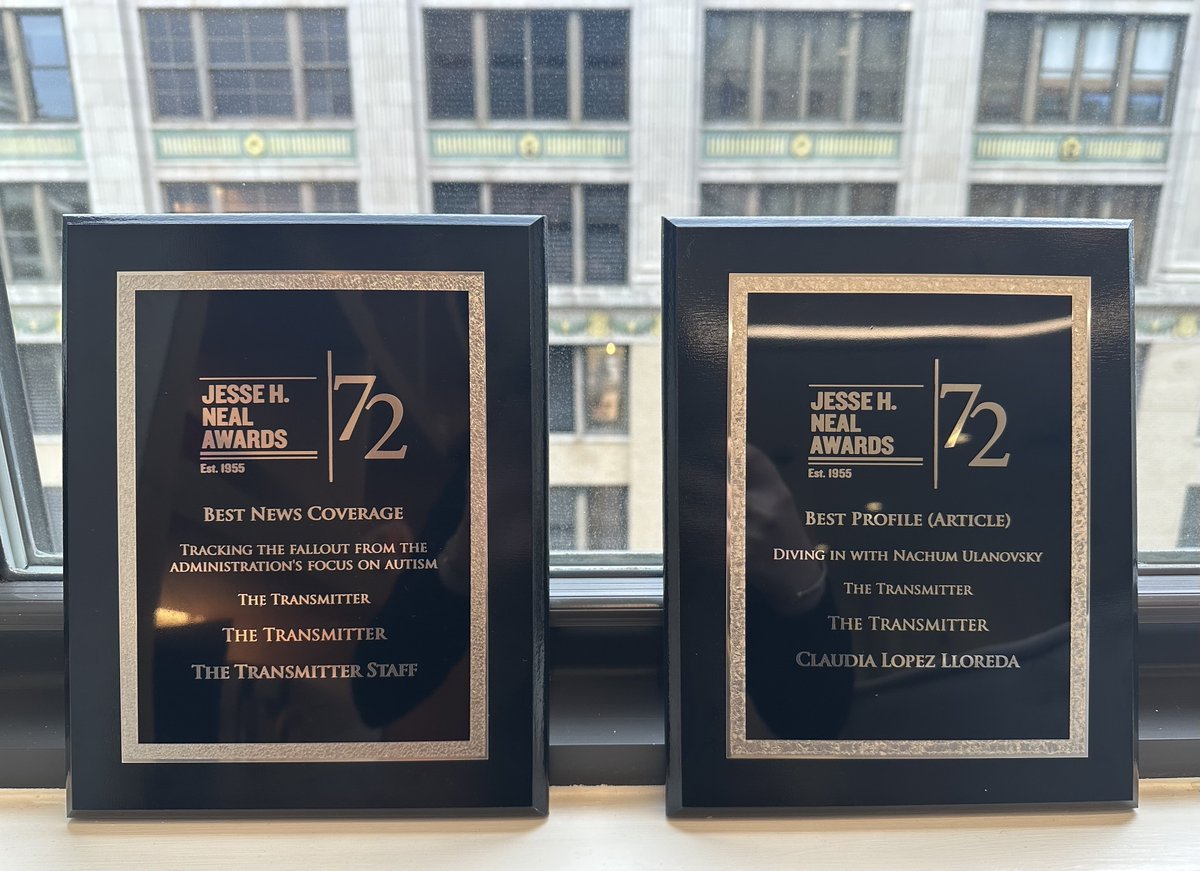
Thank you to Jesse H. Neal Awards for naming @_TheTransmitter the winner in the best news coverage and profile categories. Explore our award-winning content at https://t.co/a0IqOCy6lb. Congrats to all of the winners!
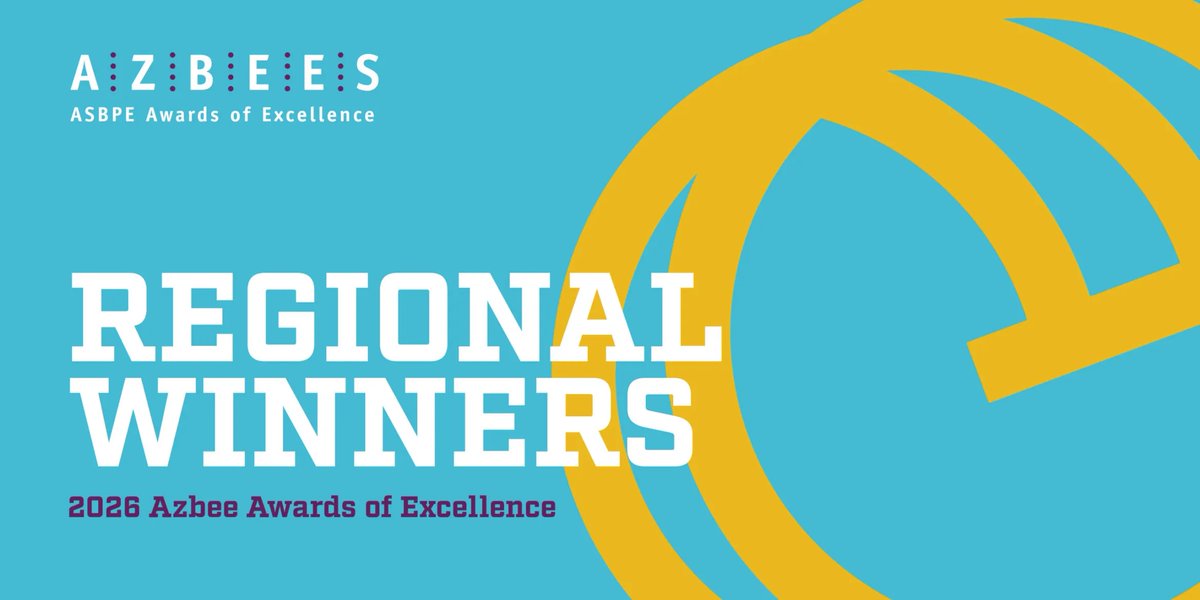
We are honored to have been named winners of seven 2026 AZBEE Awards in various categories. Congrats to all of the winners! Explore some of our award-winning content
A new preprint shows that deep learning can make a fly walk realistically using a worm’s brain — exposing a fundamental problem with how connectome models are being built and sold to investors.
By @natmesanash
https://t.co/DWQU6oVzXn
The requested boost would help counter the planned sunsetting of one of the program’s long-standing funding streams, which will result in a $195 million drop in funding for fiscal year 2027.
By @avaskham
https://t.co/bPN0NbvXvA
My travel to Cosyne was barred by the Trump admin, so I'm here on my personal dime. I care about the @CosyneMeeting community, I committed to co-chairing. And I always learn here.
But the worst part about this travel ban is my lab colleagues—students and fellows—couldn't come./1
“In her obituary, her mentee, Catherine Veil, says that [Marcelle Lapicque] fought against the prejudices of her time … it may be that the prejudices included race and not just sexism,” says @OligoclonalBand.
By @avaskham, Rebecca Horne
https://t.co/mkHbtjyFbG
Chances are you have not heard her name, but Marcelle Lapicque may have been the first Black woman neuroscientist in Europe.
By @avaskham and Rebecca Horne
https://t.co/FRbxhXSGaP
There are some really good mentoring tips in @_TheTransmitter's early career newsletter, Launch. This one from new PI @Qihong_Lu in today's edition stood out to me as being a useful idea!
A lifelong passion for writing helped rising star Theanne Griffith land a book deal and publish 15 chapter books for early readers, covering topics ranging from what the cerebellum does to how a cake bakes.
By @avaskham
https://t.co/rbKUHn4FCn
A journal has retracted the largest leucovorin trial in people with autism—one of just five randomized clinical trials assessing this treatment in autistic people.
By @claulopezneuro
https://t.co/4dCMpPLsiV
“As long as we can remain optimistic about the future of science and communicate that optimism to young people, we’re going to be fine,” says Walter Koroshetz, former NINDS director.
By @avaskham
https://t.co/HNjyGl9u82
A letter signed by 40 neuroscience groups asks Congress to ensure that scientific expertise remains a priority in the search for a new director of the National Institute of Neurological Disorders and Stroke.
By @avaskham
https://t.co/41RiFyw0GJ
The bill includes a 33 percent budget increase for the NIH’s BRAIN Initiative, which has faced significant funding cuts over the past two years.
By @avaskham
https://t.co/MCoPKumNMh