Educational & Developmental Psych. Together building equitable, socially just, connected a kind communities. Views here are my own, retweets are not endorsement
When we lead big organisational change programmes, we tend to lead them through logic: rational arguments, business cases & systematic approaches. We might get better results if we lead them through loss, not logic.
We consistently underestimate the power of a sense of loss in change processes & get surprised when people react as they do. There are typically multiple senses of loss and actions we can take to lead change with loss, not just logic:
1) Loss of competence: “everything I know is useless now”. We can help normalise discomfort, highlight transferable skills, encourage unlearning & create quick wins.
2) Loss of control: “this is being done to me”. We can involve people in change (& be clear about non-negotiables), help set clear boundaries, tap into experience & show how contributions influence the process.
3) Loss of status: “I’m becoming irrelevant”. We can acknowledge contributions and achievements, help people pass on key insights, bridge past & future & help create mutual learning.
4) Loss of belonging: “we’re losing what made us special”. We can help preserve core traditions, build new rituals for the new environment, celebrate uniqueness & help teams to adapt the changes to their style where possible.
5) Loss of narrative: “this isn’t how things should be”. We can keep connecting back to purpose, acknowledge changing realities: preserve fundamental values & develop the new story together.
We can’t logic people out of loss. Nor should we try to fight people’s feelings of loss, but we can help bridge the past and the future and build something better, together.
https://t.co/1RPIRGTB56. By Gustavo Razzetti.
When we lead big organisational change programmes, we tend to lead them through logic: rational arguments, business cases & systematic approaches. We might get better results if we lead them through loss, not logic.
We consistently underestimate the power of a sense of loss in change processes & get surprised when people react as they do. There are typically multiple senses of loss and actions we can take to lead change with loss, not just logic:
1) Loss of competence: “everything I know is useless now”. We can help normalise discomfort, highlight transferable skills, encourage unlearning & create quick wins.
2) Loss of control: “this is being done to me”. We can involve people in change (& be clear about non-negotiables), help set clear boundaries, tap into experience & show how contributions influence the process.
3) Loss of status: “I’m becoming irrelevant”. We can acknowledge contributions and achievements, help people pass on key insights, bridge past & future & help create mutual learning.
4) Loss of belonging: “we’re losing what made us special”. We can help preserve core traditions, build new rituals for the new environment, celebrate uniqueness & help teams to adapt the changes to their style where possible.
5) Loss of narrative: “this isn’t how things should be”. We can keep connecting back to purpose, acknowledge changing realities: preserve fundamental values & develop the new story together.
We can’t logic people out of loss. Nor should we try to fight people’s feelings of loss, but we can help bridge the past and the future and build something better, together.
https://t.co/1RPIRGTB56. By Gustavo Razzetti.
I’ve spent decades in trauma work and recovery.
Worked with thousands.
I've seen the same patterns over and over: emotional numbing, people-pleasing, codependency.
It's not your "mindset."
It's pain lodged in your body.
Here’s how to break free 🧵 (by a PhD psychologist)
What is parenting? How do parenting approaches differ? How can we support parents to practice positive parenting? Our latest #MonashHSCU Policy & Practice Pack explores some answers to these Q's and provides practical tips & resources professionals.
https://t.co/XVxrmNsi1M
Child protection, OOHC and youth justice systems need a complete reimaging - an ethics of care is a good starting point. Check out this policy and practice pack for more information ⬇️
Ah, one of my favourite times of year. This #MonashHSCU short course is always such a pleasure to teach, alongside @darsh_ayton and @carmody_sarah. Our learners are always so enthused, curious and open to sharing their engagement experience to help each other learn! Register now
Ah, one of my favourite times of year. This #MonashHSCU short course is always such a pleasure to teach, alongside @darsh_ayton and @carmody_sarah. Our learners are always so enthused, curious and open to sharing their engagement experience to help each other learn! Register now
🎨 Highly requested image 🖼️
The Equity Iceberg highlights different ways in which you could think about equity and the kinds of questions you can ask when trying to practice equity while implementing change. #Equity
Download a hi-res version:
https://t.co/8WeSrrvbOX
Here’s the program for the Native American & Indigenous Studies Association Annual Meeting 2024 - https://t.co/nqkgAuzlR0, which is being held on the lands of the Sámi people in Bådåddjo - Bodø, Nordland, Norway. #NAISA2024 Photo: Nordfjord area, near Bådåddjo - Bodø, no filter.
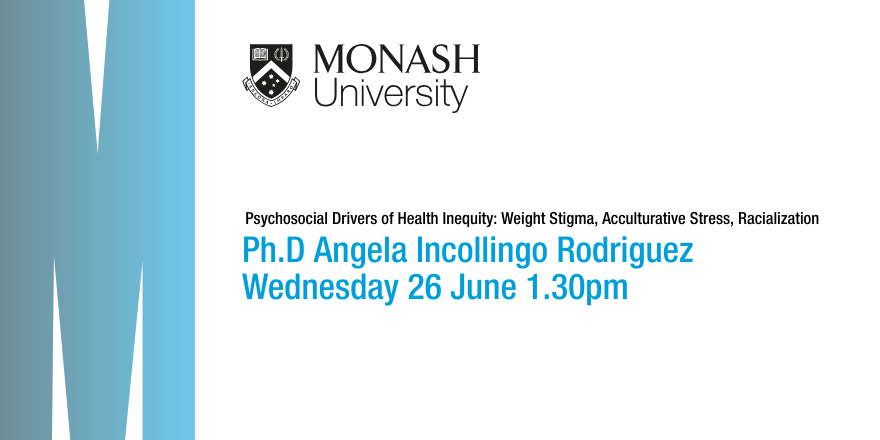
All welcome to join the next Monash Health and Social Care Unit free online research seminar. Their guest presenter joins from @WPI to discuss psychosocial drivers of health inequity. Register ➡️https://t.co/PnbYZEYIya #MonashHSCU
Check out a scoping review on equity-focused implementation theories in healthcare and delve into strategies to tackle ethnicity-related health disparities and promote equity! https://t.co/obLL3gKSUi