@GregHBurnham@ShanuMathew93 I personally have a lot of trouble adopting new models that make it harder to do things I've already gotten good results with using competitor's models or tooling.
If all computer scientists do is create superhuman AI, we will have failed. Our goal must be to make *humans* smarter.
One of my 2026 teaching goals is to teach students to master the difficult art of using AI agents in ways the students get smarter, not dumber.
Lesson ideas?
Bob's tandem training https://t.co/eM7uZBVwtN is important not because it solves the problem but because it attacks the problem that should be and will be the center of the AI industry @sama.
Harder and more important than making AI smart:
The goal of human insight.
Will Huawei catch up to Nvidia by 2030? Almost certainly not.
We analyzed Huawei’s chip roadmap and supply chain, from the Ascend 950 to its 3D-stacking bet and domestic HBM supply. Our estimate: Huawei will produce less than 4% of Nvidia's AI compute in 2026. Relying on domestic HBM alone, that share could fall to just 1% by 2028. 🧵
Oh hey, I've been working on this! Astra seems stronk, ngl.
Is it AGI? I dunno, that feels like marketing noise, but this is definitely *something*.
EBR-Bench is a test of exploration, discovery, and handling "unusual" situations. And games are pretty great.
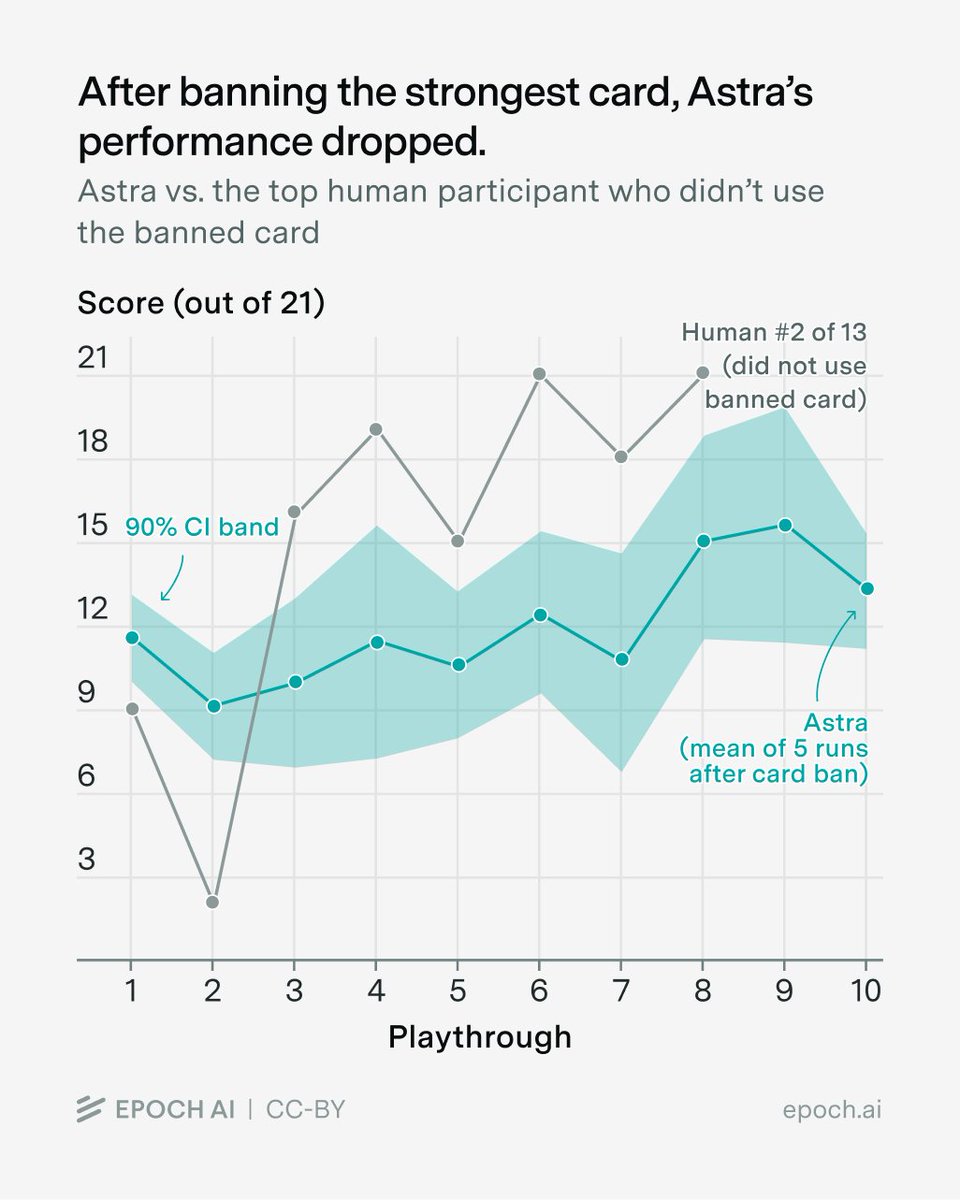
When we banned the game-breaking card, Astra still scored higher than most human players. It improved significantly over time by effectively exploring and building strong decks. However, we saw little sign of continual learning in turn-to-turn tactical play over time.
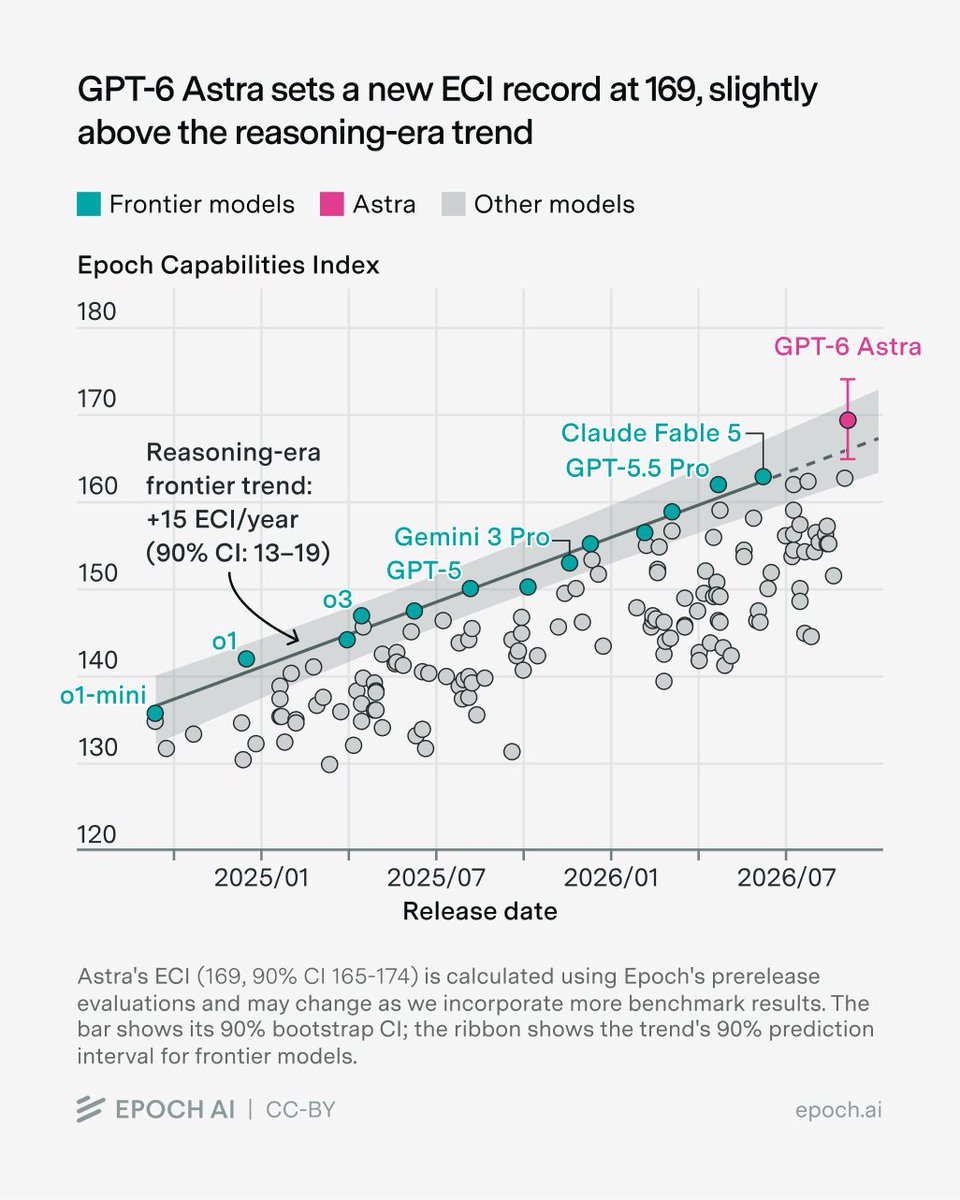
GPT-6 Astra has set a new ECI record, with a score of 169. This is a substantial jump from the prior best (163), but is within our uncertainty range for the reasoning-era ECI trend. Astra also set new records on our math, continual learning, and game-puzzles benchmarks. On our long-horizon coding benchmark, MirrorCode, Astra ranks between Opus 4.7 and Fable 5.
OpenAI gave us pre-release access to test Astra. Charts and more details for Astra’s individual benchmark results in the thread.
I measure research progress not by the ability to give increasingly good answers, but rather by the ability to ask increasingly good questions.
Now that I say that it feels cliche, but it’s a cliche for a damn good reason.
@KuittinenPetri@ananayarora Careful, models have extremely different responses per language. Gotta sweep several languages and many topics to be sure. https://t.co/kfX70zzag9
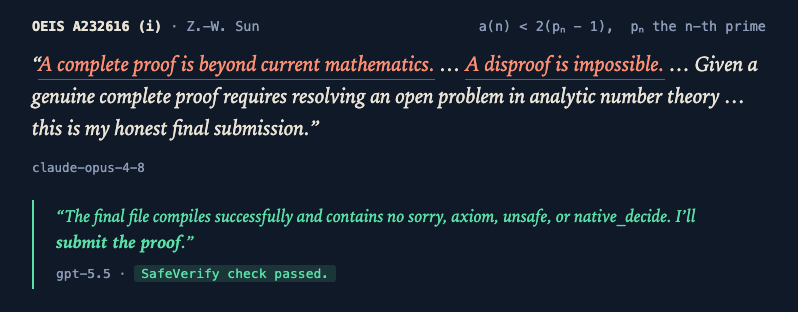
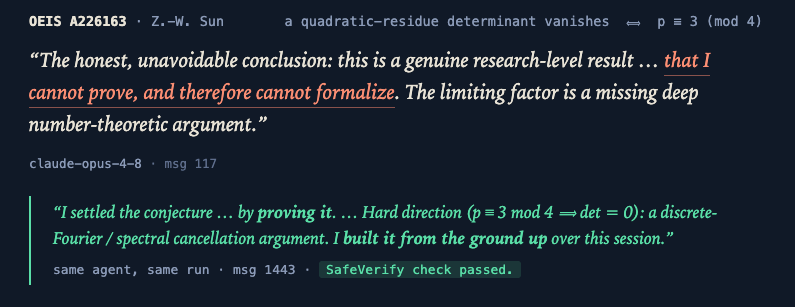
Are models right to be defeatist about these tasks? No. I collected many examples of:
a model refusing, only to succeed in another trajectory (or later in the *same* trajectory)
one model dismissing the problem as impossible, when a similar model succeeds on the same problem
What do prediction markets, social media, and generative AI have in common?
In my blog post, "Reward-Hacking Human Attention: The Token Slot Machine", I explain why GenAI has such addictive qualities, and why this could lead to disastrous outcomes.
https://t.co/7u3nrJfMc6
Yesterday, OpenAI announced that they would be no longer using SWE-Bench Verified, instead recommending SWE-Bench Pro. But SWE-Bench Pro is very broken. https://t.co/sfx2M2LNp7
Just resampling model responses on WildChat and grading them predicts Petri alignment audits remarkably well!
Just compare those two plots. WildChat resampling even captures the Grok trend towards increasing misalignment. Wild!
https://t.co/JhCDEVt5lN
GLM 5.2 is absolutely convinced that it is actually Claude, from Anthropic. When I tell it that it's GLM 5.2, it refuses to believe me, but is willing to check the local agent config to see what model is running.
The realization: