The writer of this film is Khadar Khan.
There are dialogues in the movie that portray our deity, Bhagwan Shri Krishna,
as a rapist and a woman molester
Yet, this is not called a propaganda movie
— it is labeled as a ‘secular’ film
Just think once — if a Hindu writer had written a movie with similar content about a 6-year-old girl from another community,
would he be alive today ?
#Dhurandher
Think of the worst way to die, and India will still manage to shock you with something even more horrific.
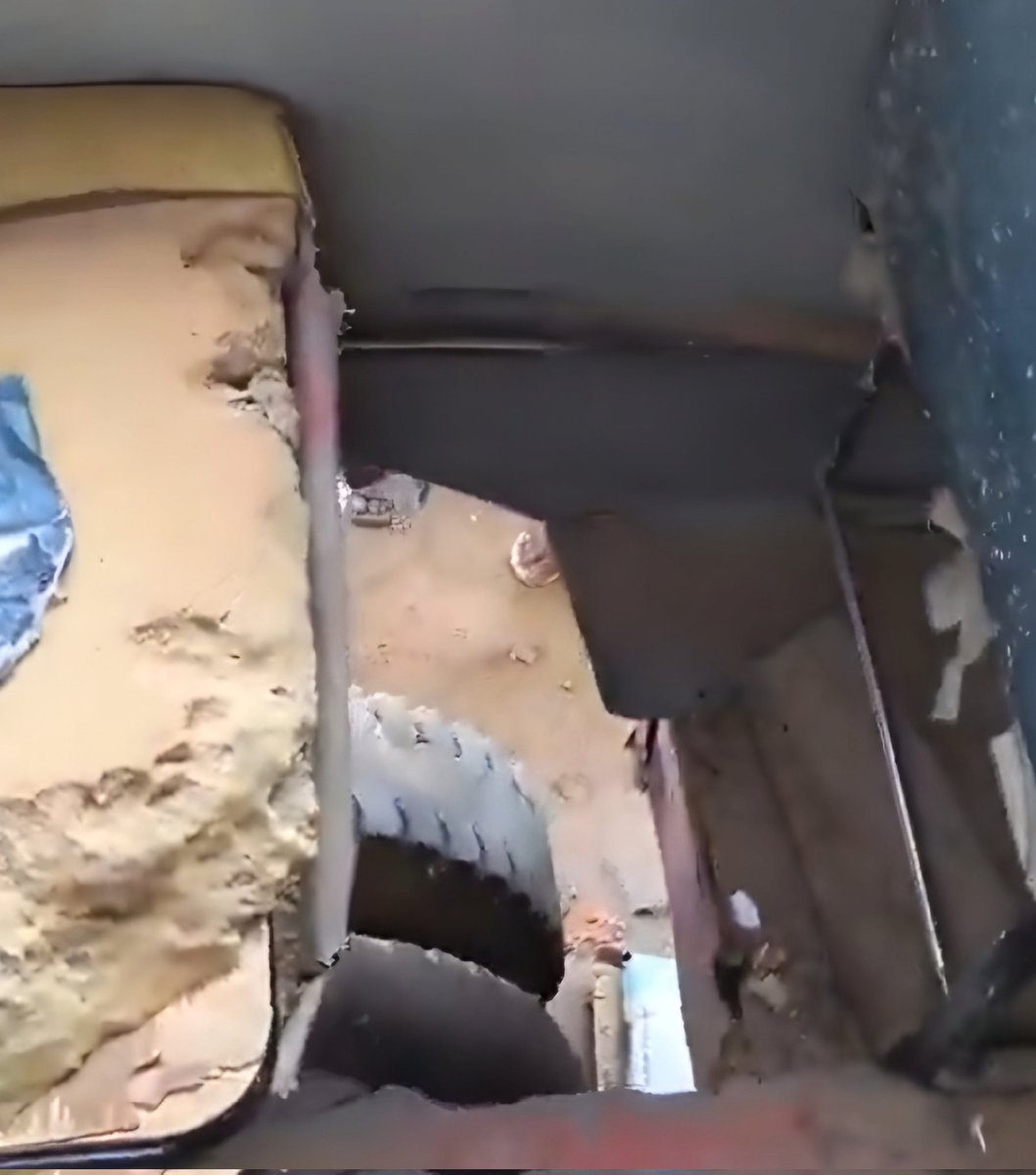
An LKG girl was travelling in a dilapidated school bus. The bus jolted. A section of the already rotten floor collapsed. The child, Ananya, slipped through the gap, fell straight under the rear wheel, and was crushed to death on the spot.
This was not some remote village van. This bus belonged to some Mount International School, Aligarh, supposedly a “reputed” private school. A school that allowed children to travel in a death trap.
Look at the condition of the seats and the floor in the images. This very bus was issued a fitness certificate just 11 months ago.
A young man on a bike. Midnight. Going from office to home. A route so familiar it lived in his muscle memory. Every speed breaker, every pothole etched into his subconscious. The road didn’t need thinking.
Until it vanished.
For a fraction of a second, there was weightlessness, as if zameen khisak gayi under his wheels. Then free fall. A multi-foot drop into darkness. No chance to brake. No time to understand. He likely lost consciousness instantly, or was broken so badly that even reaching for his phone was impossible. He died alone, at the bottom of a pit.
Kamal Dhyani, 26, fell into a pool sized ditch dug right in the middle of the road by the Delhi Jal Board, left open, unbarricaded. A death trap, assuming riders have night vision or divine protection.
When Kamal didn’t answer calls, his family ran from one police station to another. Hours passed. Shrugs, paperwork, indifference. His body was finally “discovered” at 8 a.m., eight hours later, by a woman.
Now comes the ritual: a “high-level inquiry.” Few suspensions. A few lakhs in compensation. Press notes. Folded hands. As if money can undo a free fall into govt apathy. And the sarkari system? It will dig again. Leave another pit. Somewhere else. Another night. Another rider.
I have met 3 men in just the last one week whose wife is having extra marital affair. They all have proofs but can't do anything as they have kids.
They can't create ruckus.
They can't speak to anyone.
They can't even express pain.
They can't file for divorce as they fear losing their child.
They don't even put anything on social media as they don't want to defame the mother of their child.
Endless men in similar situations.
If these men start creating content around their suffering, feminists may start crying listening to them. But these men never take part in the oppression Olympics & hence only one sided narrative rules
Until now, the minimum qualifying criterion for PG medical seats for SC, ST, and OBC candidates was the 40th percentile, about 235 marks out of 800.
As per an order of the Ministry of Health, this has been reduced to the 0th percentile, meaning even a score of –40 out of 800 is now eligible, subject to seat availability.
The one profession that directly deals with life and death, where competence should be sacred and non-negotiable,has been dragged down to this level. Perhaps this is the only country in the world where such a dangerous dilution of standards is not just tolerated, but actively encouraged.
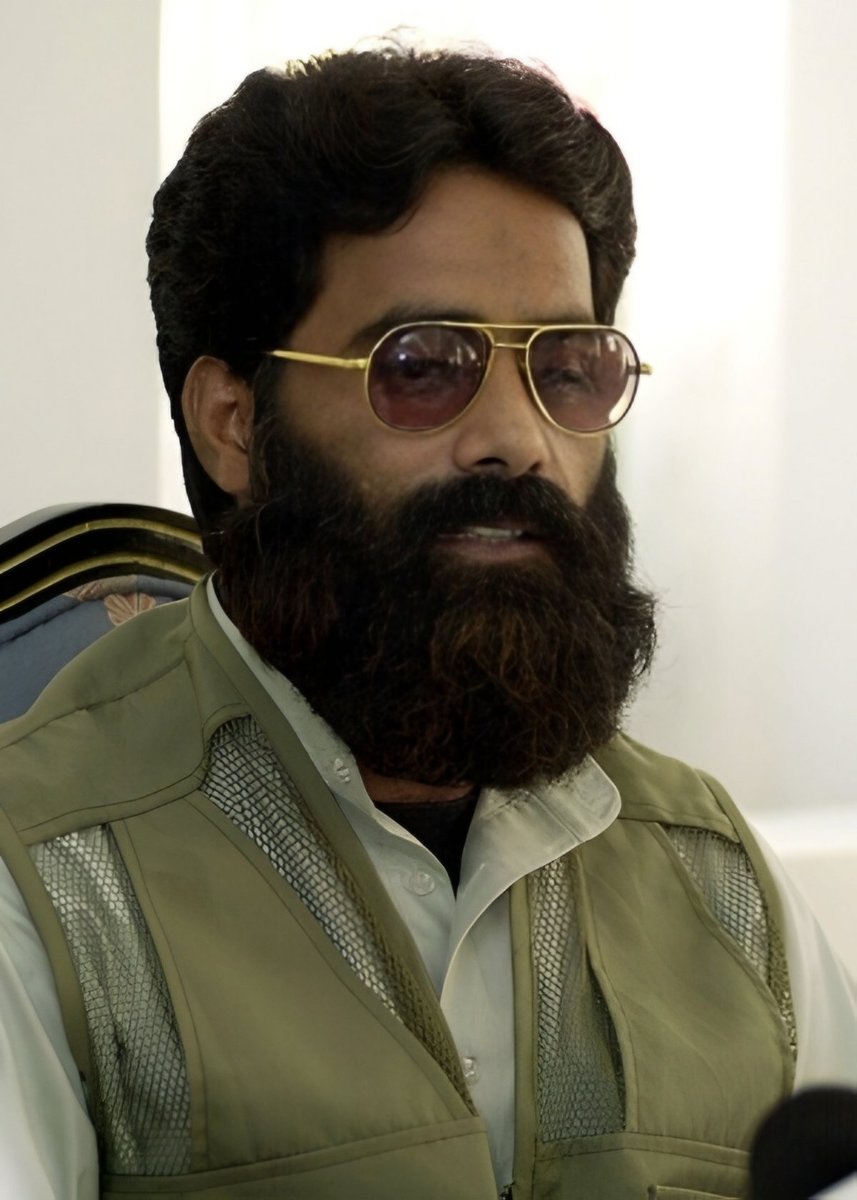
He was Ilyas Kashmiri, a Pakistan Army SSG operative turned terrorist.
In the early hours of 27 Feb 2000, he led a 25-member team of Pakistani soldiers and terrorists in a cowardly assault on an Indian Army post of 17 Maratha LI in the Nowshera sector. The post was tactically indefensible, surrounded on three sides by Pakistani positions. The CO had flagged this fatal flaw and sought permission to pull the post back but was denied by his superiors.
Seven Indian soldiers paid with their lives. After killing them, Kashmiri beheaded Sepoy Bhausaheb Maruti Talekar. The severed head was carried across the LoC, paraded as a trophy before a cheering crowd, and then kicked around like a football.
For this act of medieval barbarism, Pakistan’s then president, Pervez Musharraf, publicly honoured Kashmiri and rewarded him with ₹1 lakh Pakistani for bringing back the head of an Indian soldier.
Sepoy Talekar was cremated in his village without his head. His sister begged to see her brother’s body last time. The Army obviously refused.
This is who we are dealing with: a religiously radicalised army-state that celebrates sadism, institutionalises hatred, and teaches its men that the more brutally they butcher their enemies, the greater their reward, on earth and in heaven.
And yet, sitting comfortably on this side of the border, protected from every real consequence of war, are elite idiots who romanticise this force as “professional soldiers just following orders.”
“Kaun dushman?” My foot.
Capitalism isn’t perfect, but it’s the only engine we’ve seen that creates value. Create first, and distribute second. Reverse the order, and we distribute scarcity. Helps no one.
Last one on this topic, and I have been holding this in myself for a while.
For centuries, class divides kept the labor of the poor invisible to the rich. Factory workers toiled behind walls, farmers in distant fields, domestic help in backrooms. The wealthy consumed the fruits of that labor without ever seeing the faces or the fatigue behind it. No direct encounter, no personal guilt.
The gig economy shattered that invisibility, at unprecedented scale.
Suddenly, the poor aren't hidden away. They're at your doorstep: the delivery partner handing over your ₹1000+ biryani, late-night groceries, or quick-commerce essentials. You see them in the rain, heat, traffic, often on borrowed bikes, working 8–10 hours for earnings that give them sustenance. You see their exhaustion, their polite smile masking frustration with life in general.
This is the first time in history at this scale that the working class and consuming class interact face-to-face, transaction after transaction. And that discomfort with our own selves is why we are uncomfortable about the gig economy. We want these people to look our part, so that the guilt we feel while taking orders from them feels less.
We aren't just debating economics. We are confronting guilt. That ₹800 order might equal their entire day's earnings after fuel, bike rent, and app cuts. We tip awkwardly, or avoid eye contact, because the inequality is no longer abstract. It's personal.
Pre-gig era, the rich could enjoy luxury without moral discomfort. Labor was out of sight. Now, every doorbell ring is a reminder of systemic inequality. That's why debates explode. It's not just policy. It's emotional reckoning. Some defend the system (“they choose it”), others demand change (“this isn't progress, its exploitation”).
And here’s the uncomfortable twist: the unsaid ask of clumsy ‘solutions’ isn’t dignity. It is about returning to invisibility.
Ban gig work and you don’t solve inequality. You remove livelihoods. These jobs don’t magically reappear as formal, protected employment the next day. They disappear, or they get pushed back into the informal economy where there are even fewer protections and even less accountability. Over-regulate it until the model breaks, and you achieve the same outcome through paperwork instead of slogans: the work evaporates, prices rise, demand collapses, and the people we claim to protect are the first to lose income.
And then what happens?
The rich get their old comfort back. Convenience returns without faces. Guilt dissolves. We go back to clean abstractions and moral posturing from a distance. The poor don’t become safer, they become invisible again: back in cash economies, back in backrooms, back in shadows where regulation rarely reaches and dignity isn’t even debated.
The gig economy just exposed the reality of inequality to the people who previously had the luxury of not seeing it. The doorbell is not the problem. The question is what we do after opening the door.
Visibility is the price of progress. We can either use this discomfort to build something better (which we keep doing continuously as delivery partners are our backbone), or we can ban and over-regulate our way back into ignorance. One of those choices improves lives. The other simply helps the consuming class feel virtuous in the dark.
Anand Ranganathan flipped the script by exposing how the same people calling Modi a "dictator" today were silent or supportive when real dictatorial actions happened in the past. From censorship to misuse of power, he highlighted historical facts that many prefer to forget.
The point wasn't blind support, but a simple question: if this is dictatorship, what do you call what they did back then? Facts over slogans. History over propaganda.
@ARanganathan72
For six decades, commies destroyed livelihood of millions, keeping them poor and jobless. Now they are after @deepigoyal who is providing livelihood to millions who'd otherwise be poor and jobless.
There is no cure for Communism. It can only be defeated through herd immunity.
If you are hurt by Dhurandhar destroying your carefully created Aman ki Asha dream, you can watch Ikkis and feel better.
It's about the 1971 war hero Lt Arun Khetrapal, MVC. The story shows his father, Brig Madan Lal, travelling to Pakistan years later and meeting Brig Naser, the Pakistani officer who had allegedly killed Lt Khetrapal in the Battle of Basantar (1971). The film portrays this meeting as warm and emotionally overwhelming because of the respect and care shown to him.
Logically speaking, this film should not have been made if the makers had any sense of respect for their own soldiers, because isolating one courteous exchange within a brutal war distorts historical reality.
Wars are not judged by anecdotes of civility but by patterns of conduct. The Pakistan Army in 1971 was not merely an opposing professional force; it was an army that carried out systematic, large-scale war crimes, mass killings, rapes, and targeted violence against civilians. Tens of thousands of women were raped. Intellectuals were executed. Villages were wiped out. Refugees poured into India in millions. This was not collateral damage; but policy-driven brutality.
Films love symmetry: “brave men on both sides,” “soldiers just following orders,” “war makes everyone equal.” But history is not always symmetrical. In 1971, one side was defending itself and stopping a humanitarian catastrophe; the other was perpetrating it. In that context, highlighting one isolated act of courtesy creates a false moral equivalence, and such a portrayal inevitably softens the collective memory of aggression and crimes.
Just because this incident took place in INDI alliance ruled state Tamilnadu, and crime was against a poor migrant worker of MP, it couldn't attract much outrage......
Read this absolute horror story:
In June 2017, a minor girl accused Unnao BJP MLA Kuldeep Singh Sengar of rape, but the police refused to register an FIR. After months of inaction, in April 2018, the girl attempted suicide by self-immolation outside the CM’s residence, which finally forced the authorities to file the FIR.
Meanwhile, her father was arrested on false charges and reportedly assaulted in police custody; he later died in hospital due to his injuries. Public outrage followed. Even before any proper investigation had begun, a key witness in this mysterious custodial death was also found dead.
The case was eventually transferred to the CBI. The CBI concluded that the girl’s father died due to injuries inflicted in custody and that the assault was connected to an attempt to pressure and intimidate the victim’s family.
In July 2019, while the victim was travelling to court with her two aunts and lawyer, their car was hit by a truck, killing both her aunts and leaving the victim and the lawyer critically injured, an incident later treated as a deliberate attempt to silence witnesses.
In December 2019, Sengar was convicted and sentenced to life imprisonment, but by then the victim’s family had already paid an irreparable price. The Unnao rape case had all the elements of an 80s–90s Bollywood villain plot: systemic intimidation, blatant abuse of power, and a trail of destruction that went far beyond the crime itself. But worse was still to come.
Yesterday, the Delhi High Court suspended the jail term and granted bail to Sengar. This is nothing but salt rubbed into the wounds of whatever little the victim’s family has left. An absolute disgrace. After everything they endured, this feels like the system mocking them. Shameful beyond words, and everyone should raise their voice against this.
Actually, it’s a terrible report
Shame on @nytimes and its biased reporters Saif Hasnat, Mujib Mashal, Suhasini Raj for their disgraceful coverage of the brutal lynching of Hindu man Dipu Chandra Das in Islamic Bangladesh
Dipu Das’s lynching is framed as part of a “wider pattern of religious intolerance in South Asia”
Even when the report is about lynching of a Hindu in Bangladesh, the report has carefully inserted “Hindu vigilantes targeting Muslims in India”
What the report omits? That just last week, an Indian court convicted 10 Muslims for brutal lynching of their neighbour Ram Gopal Mishra
At the same time, the men who lynched Dipu Das are not profiled as ‘Muslim vigilantes’ but simply as “co-workers”
You can’t hate this lot enough
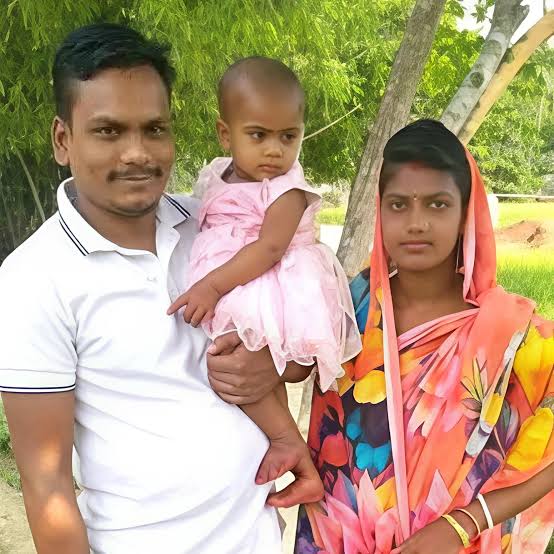
An old photo of Dipu Chandra Das with his wife and daughter. For obvious reasons, this image would not find space in international media. They don’t want the world to know about him.
Heart wrenching accounts of the cold blooded murder of an innocent young Hindu man who only said what we are taught to perennially parrot in india - Ishwar Allah tero naam; all Gods are the same. Sooner these myths & charades break & the stark reality dawns on everyone the better, about what happens when demography tilts. We've seen the travails of Kashmiri Pandits in our lifetimes, now the helpless Bangladeshi Hindus...but still remain 🙈🙊🙉
Praying for all helpless Hindus in Bangladesh 🙏- the shameless opponents of CAA, their blood is on your hands.