@BacovcinAkiva @FieldSpeakerZDQ Also interestingly there are scholarly works showing an Akkadian substrate or at least influences in the Hebrew of Chumash.
@BacovcinAkiva @FieldSpeakerZDQ There is a mefaresh on a midrash about “Avrohom haivri” that basically says “Ivrit” language refers to Akkadian (or Sumerian?). Have to find it.
Kabbalah and the Rupture of Modernity is set to ship in the next couple of weeks!
***Pre-order with code Rupture20 for 20% off***
Repost to enter a competition for an autographed copy - the winner will be announced on publication day (March 25)
https://t.co/e3Hk2EXnsM
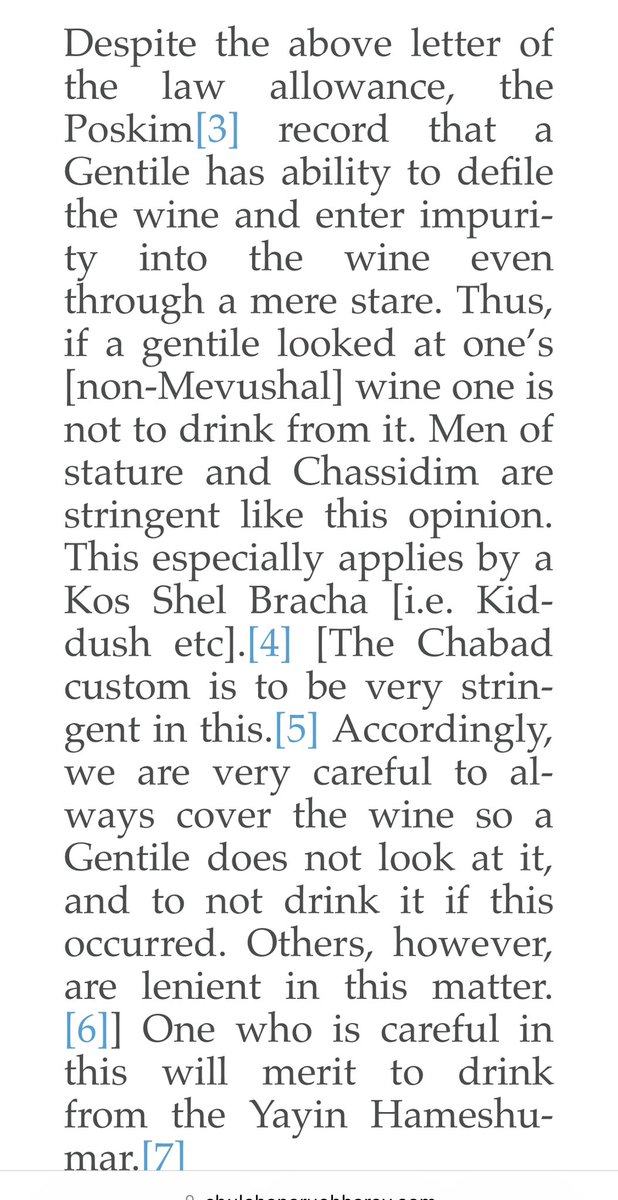
@Kosherqueen_ Nothing to do with Baalei Teshuva. This is actually the standard chabad minhag. Here is from https://t.co/v1aw0k2cXT (Rabbi Yaakov Goldstein). The rebeim were very careful about this.
@querynotfound That theory isn’t held in high esteem among linguists. Don’t remember who it was, but I’ve never read such harsh words against a theory in an academic paper.
@mycr_karenina I don’t know what dialects are used in those shows - but Austrian _standard_ German in my opinion IS easier for Yiddish speaker to understand. (Viennese local dialect would not be at all). Mainly because of lack of ich-laut and lack of final devoicing (both similar to Yiddish).
@mycr_karenina I think the main potato chip issue is that within the community itself some keep it and some don’t. If you’re going to deprive your kids from something their (also chabad) friends and cousins enjoy, there better be a pretty strong justification (which there arguably isn’t).
@mycr_karenina@querynotfound@Mottel@ezalmanov@Etti_di_farina I didn’t mean the glass but the shape material and style of the mullions as well as the stone pattern around window (not sure what it’s called) is textbook Jacobean revival. (Which is sometimes called Jacobethan - usually a mix).
@mycr_karenina@querynotfound@Mottel@ezalmanov@Etti_di_farina No I mean the parapets on the gables of 770. Maybe there’s a better term? The other image is from a Jacobean period building not American Jacobean revival. Can you show an example of something classified Gothic revival resembling 770? Open to be convinced still not seeing it.
@mycr_karenina@querynotfound@Mottel@ezalmanov@Etti_di_farina In general there seems to be a lot of overlap in these medieval and post-medieval revival styles - they’re sometimes eclectic. I’d be fine with “Early 20th century English revival” but I think it’s closer to what is called Jacobean revival even if that term isn’t perfect.
@mycr_karenina@querynotfound@Mottel@ezalmanov@Etti_di_farina Not an expert - but still going with Jacobean. I agree it’s not a replica of 16th century Jacobean country houses but it seems to be much more in line with early 20th century Jacobean revival than any gothic revival from that period. Especially the parapets and windows.
@Bibliogato@JewYid Are you certain this picture was in Ukraine? That architecture is almost certainly not from there. Sash windows, gabled dormer, victorian porch, fence. It’s almost certainly mid-Atlantic US. Maybe Long Island or New Jersey. There is nothing remotely like this in Eastern Europe.
@YiddishPro @PYMundGenealogy Couldn’t that have been litvish circa 200 years ago or some form of writing trying to conform to a standard? Any other evidence lubavitch had acc/dat distinction where others hadn’t?
@YiddishPro @zislepovitch@Mottel My knowledge of inner workings of Slavic languages (other than the portion in Yiddish) is very little so I will gladly defer. I was only addressing it from linguistic theory in general and the likelihood of “mistakes” in such a well known song first popularized in Europe.