Anthropic just dropped Claude Haiku 5.5, and the pricing shift is the real story.
This is their cheapest, fastest, and strongest small model yet. On average it costs about 75% less to run than Haiku 4.5. For prompts under 100k tokens—which cover roughly 90% of prior Haiku traffic—input falls to $0.10 per million tokens and output to $0.50, a ~90% cut versus the previous generation. Above that threshold the discount is smaller (about 50%), but still material. Cache reads are especially cheap at $0.01/$0.05 per million. They also halved Sonnet 5.5 cache reads to $0.10, which Anthropic says makes most long-running agentic work around 20% cheaper.
The model is built for exactly the workloads that dominate production spend: summaries, classification, database queries, compaction, routing, live support, and browser use. It is positioned as a subagent alongside Opus 5.5 and Sonnet 5.5 on coding tasks, so the expensive models can stay focused on the hard steps while Haiku handles the repetitive ones. It is the first Haiku with an adjustable effort setting, letting you trade intelligence for cost on a per-task basis instead of locking the whole workload into one mode.
Benchmarks show clear gains over Haiku 4.5 on coding, computer use, tool use, and knowledge work, and Anthropic reports major improvements on their alignment evaluations with fewer instances of misaligned behavior. It is already live on https://t.co/A2lmzOUrmS, the API, Claude Code, AWS, Google Cloud, and Azure.
The practical effect is that high-volume AI features that used to be too expensive to run continuously—support triage, document pipelines, agent loops that call a small model dozens of times—become much easier to justify. Small models are no longer just a cost-saving compromise; at these prices and capability levels they start looking like the default workhorse.
Introducing Claude Haiku 5.5: the cheapest, fastest, and most capable small model we’ve ever released.
On average, it costs around 75% less to run than Claude Haiku 4.5.
@claudeai IdeaTome (https://t.co/Nb6IPrm85o) has been declined three times for Claude Startups, each time in about a minute, even with a company-domain email.
The Claude Startups program is expanding to more founders.
Members can get a year of Claude Team, API credits, special offers on the tools a startup runs on, and office hours with Anthropic’s Applied AI team.
Cloud sessions run Claude Code on a fresh VM for each task, so you can start several at once and they keep going when you close your laptop.
We wrote a field guide with seven workflows that suit them, plus how to connect GitHub on the first try.
https://t.co/1Usw2M4KHG
Solo founder from India. My product writes books.
You pick the genre, it writes chapter by chapter, and emails you when the book is done.
The first page is free, takes about 20 seconds, and needs no account. Try it:
https://t.co/wxPcZ1hQF2
Everyone has a story they never started.
So I made something that starts it for you. Pick a mood, and in ~20 seconds you get a title, a cover and the first page of a brand-new book.
Like it? Keep going and write the whole thing.
https://t.co/wxPcZ1hQF2
I built IdeaTome.
Pick a mood (dark fantasy, dark romance, space opera, cozy mystery) and in about 20 seconds it writes the opening of a brand-new book: title, cover and first page.
Free, no sign-up 👇
https://t.co/wxPcZ1hQF2
Incredible what people are spinning up with Claude right now. A working watermill with real physics, interactive embossed cards, a cutaway jet engine you can pull apart—feels like the barrier between an idea and a polished interactive thing just got a lot thinner. What are you exploring with it this weekend?
Claude just dropped a plugin called “You Should Know” that spins up a side agent to watch the main agent work and tap you on the shoulder when something important is about to slip past.
I enabled it. Immediately the main Claude was happily rewriting the checkout flow, adding retries, bumping timeouts, caching tax calculations, and announcing “all 146 tests pass, nothing outside these two folders was touched.” Very calm. Very confident. Very “we’re done here.”
Then the side agent slid in like the friend who actually read the fine print:
“Heads up. We added automatic retries to the payment call, but a retry could charge a customer twice. A timed-out payment can still go through. Silence doesn’t mean no charge—sometimes only the reply got lost. The usual fix is an idempotency key.”
Main Claude: “The side agent is right, I’ll fix this now.”
It then added the key, explained that the keys expire after 24 hours so retries are safe, and noted you should persist the key if you want it to survive a server restart.
So the product is basically a tiny anxious coworker who sits in the corner, reads every diff, and occasionally says “this will double-charge people” while the primary agent is already writing the PR description. I have never felt so seen by software. The plugin doesn’t stop the main session. It just refuses to let the important sentence get buried under the green checkmarks. Enable it with /plugin enable cc-plugin-you-should-know@builtin and then try not to feel personally attacked when it notices the thing you were hoping nobody would notice.
We're adding a new plugin to Claude Code: You should Know.
It scans Claude's output for important information you might miss to help keep you in the loop.
Enable it with:
/plugin enable cc-plugin-you-should-know@builtin
Finally https://t.co/kqTBKLX9wj is live, i made this whole product using Claude from writing the code to deploying it on cloud from designing the ui to integrating the payment gateways it feels amazing. Go try yourself i want genuine reviews
Claude Code just shipped mods and I have not recovered. You can now change how the thing behaves, restyle the entire UI, and bolt on your own features with a few lines of TypeScript, or just tell Claude to build the mod for you and then install it with /plugin like you’re adding a cursed Minecraft modpack at 2 a.m. Token Weather turns your context window into a little forecast so it goes from “clear, 10% of context” to “storm, 77%, the sparkline is screaming, time to compact or accept your fate.” Blast Radius intercepts the moment Claude casually types rm -rf build and instead of letting it happen it pops a side pane that lists every single file about to vanish, including the fonts and the manifest, then sits there waiting for you to hit Proceed or Cancel while Claude is just standing there like “I was only trying to help.” Replay Theater records every edit in the turn and lets you /replay through the diffs one by one in a docked pane so you can watch it rename greet to welcome across four files and then quietly close the theater knowing your files are exactly as cursed as you left them. They already used mods internally to build /diff and AGENTS.md support, which means the people who made the tool are also the people who modded the tool, which feels correct. You can keep the mods to yourself or submit them to the directory so other people can install your particular brand of chaos, but they run with the same machine access as Claude Code itself so maybe don’t install the one called
“definitely_not_a_keylogger” from a stranger. Sample mods are already sitting in the playground repo if you want to riff. I have seen a lot of AI coding tools. None of them previously let me install a weather report for my token budget and a safety interlock for catastrophic shell commands in the same afternoon. This is unreasonably fun. I am going to make something deeply unnecessary with it.
You can now mod Claude Code:
- Change how it behaves
- Customize the UI
- Swap in your own features
Write one with a few lines of TypeScript, or have Claude build it for you. Mods ship inside plugins, so you install them with /plugin in the CLI or desktop app.
A few examples:
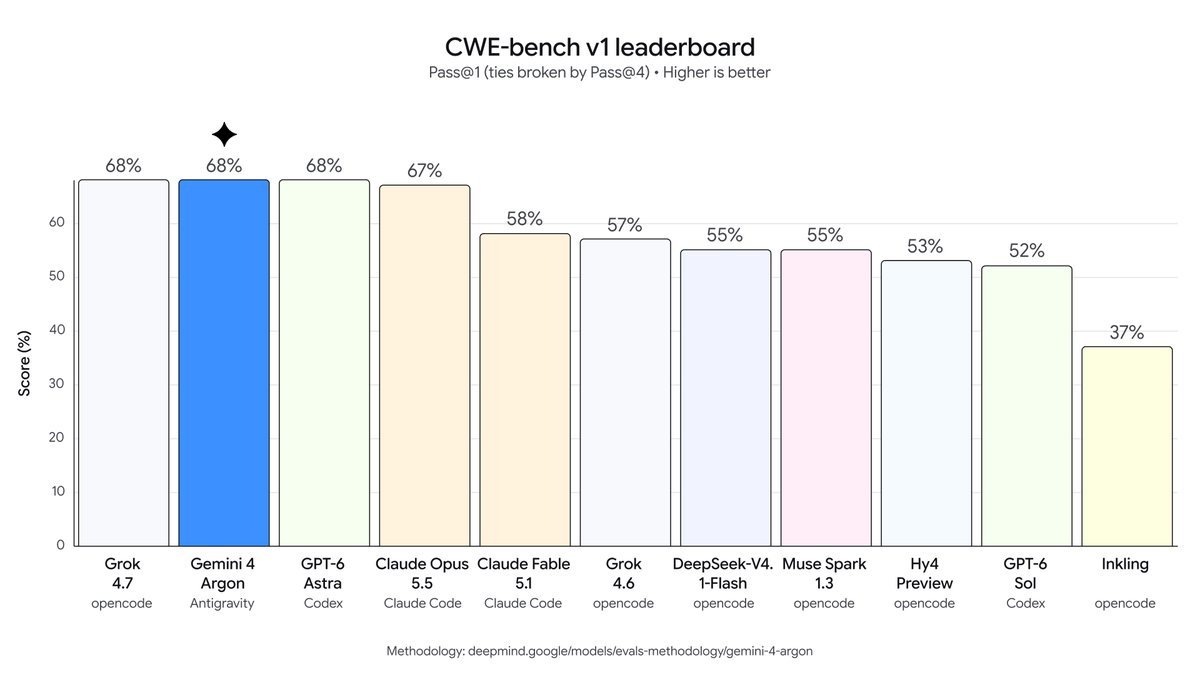
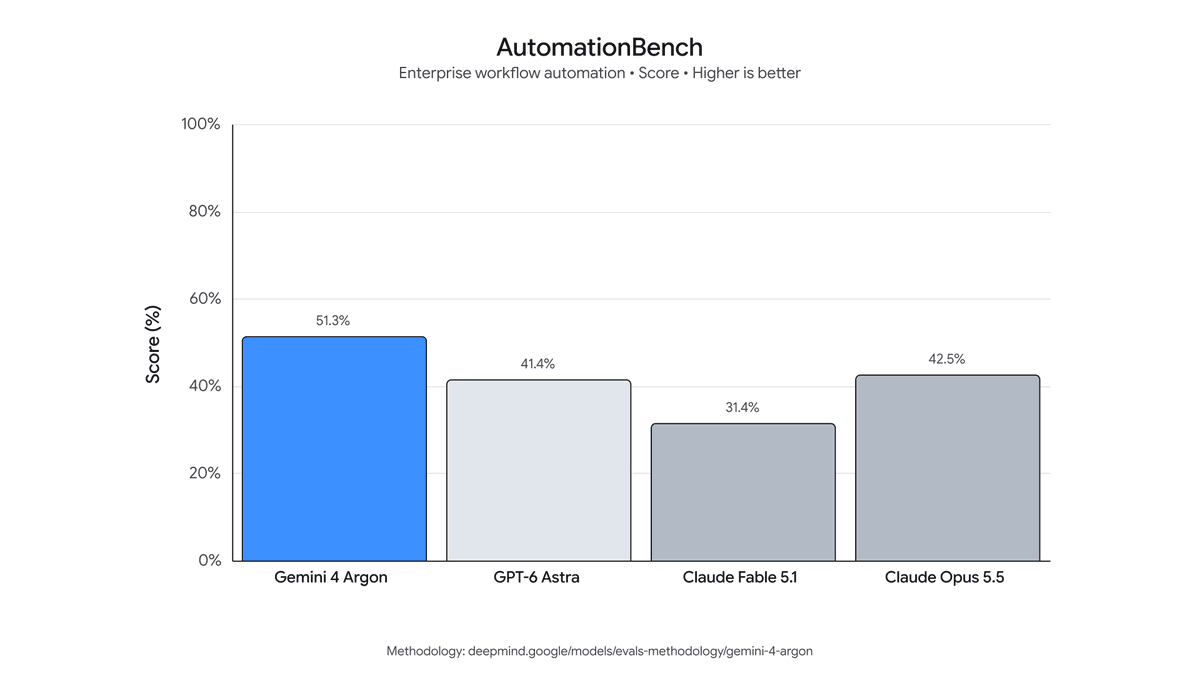
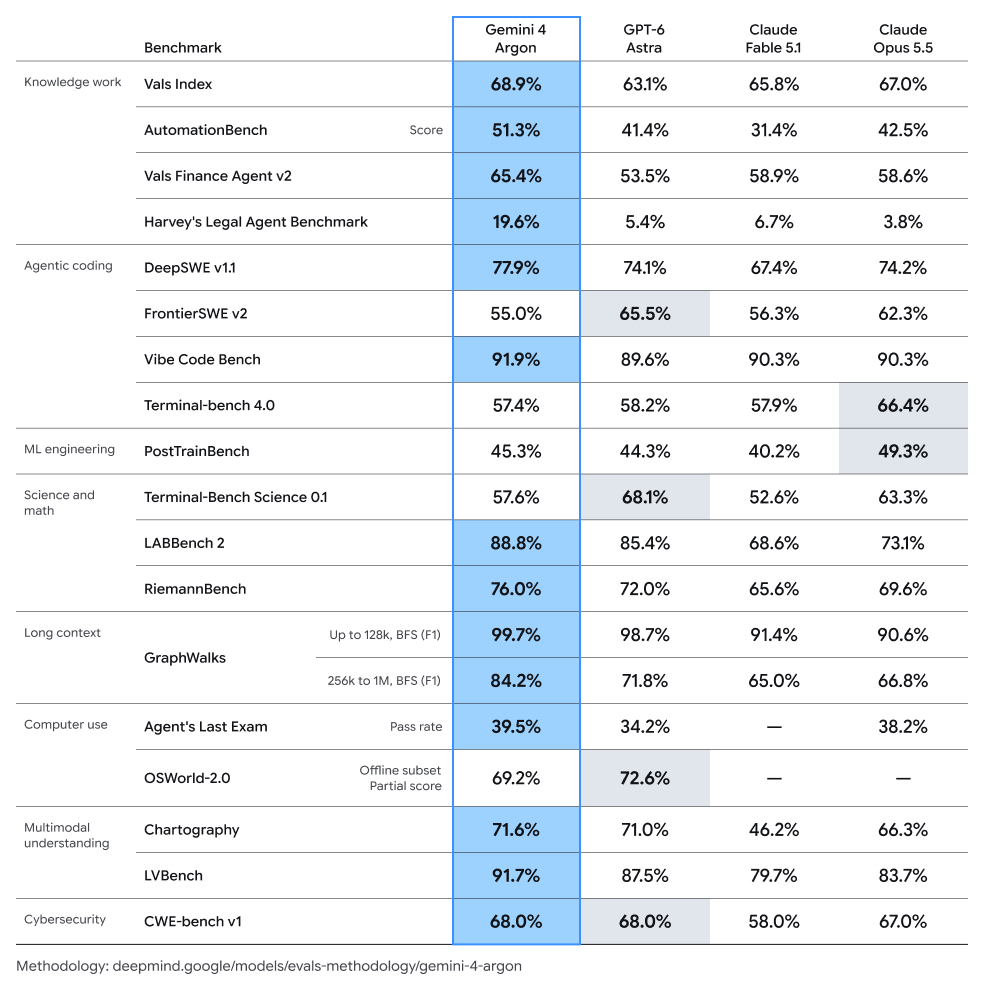
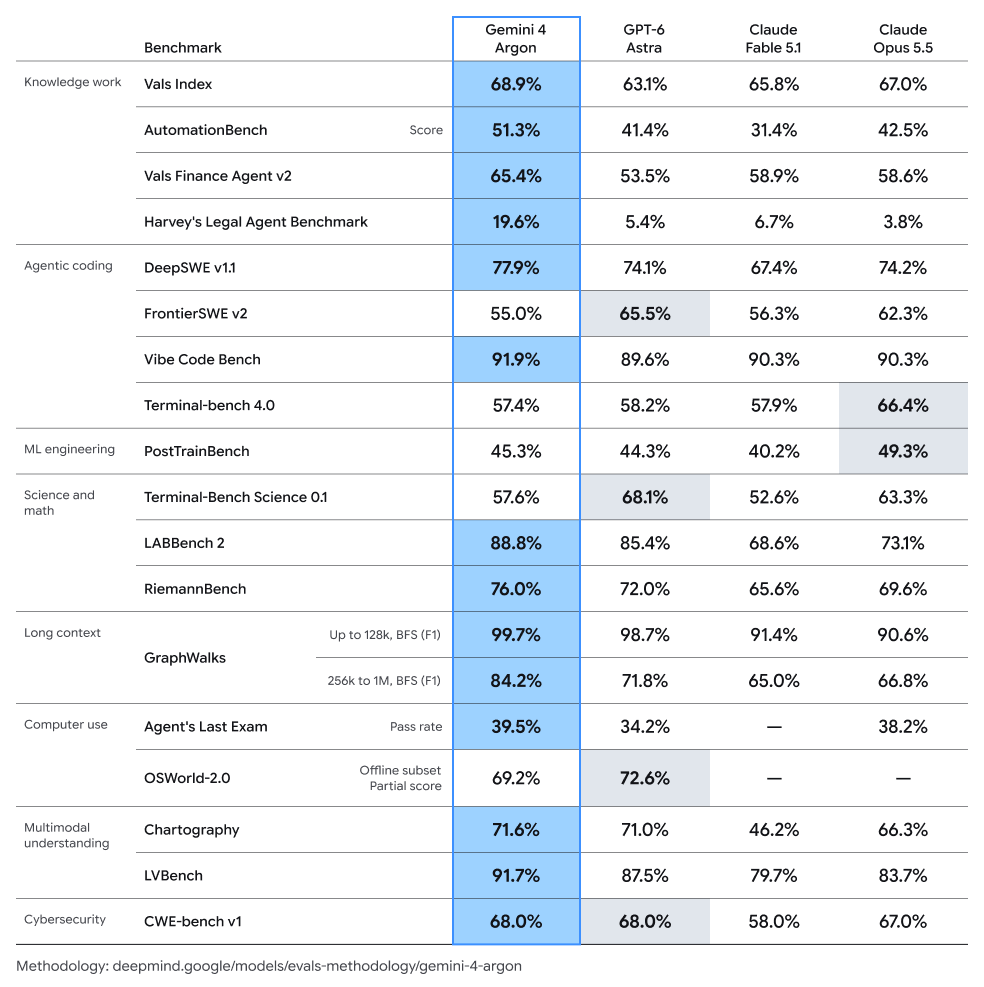
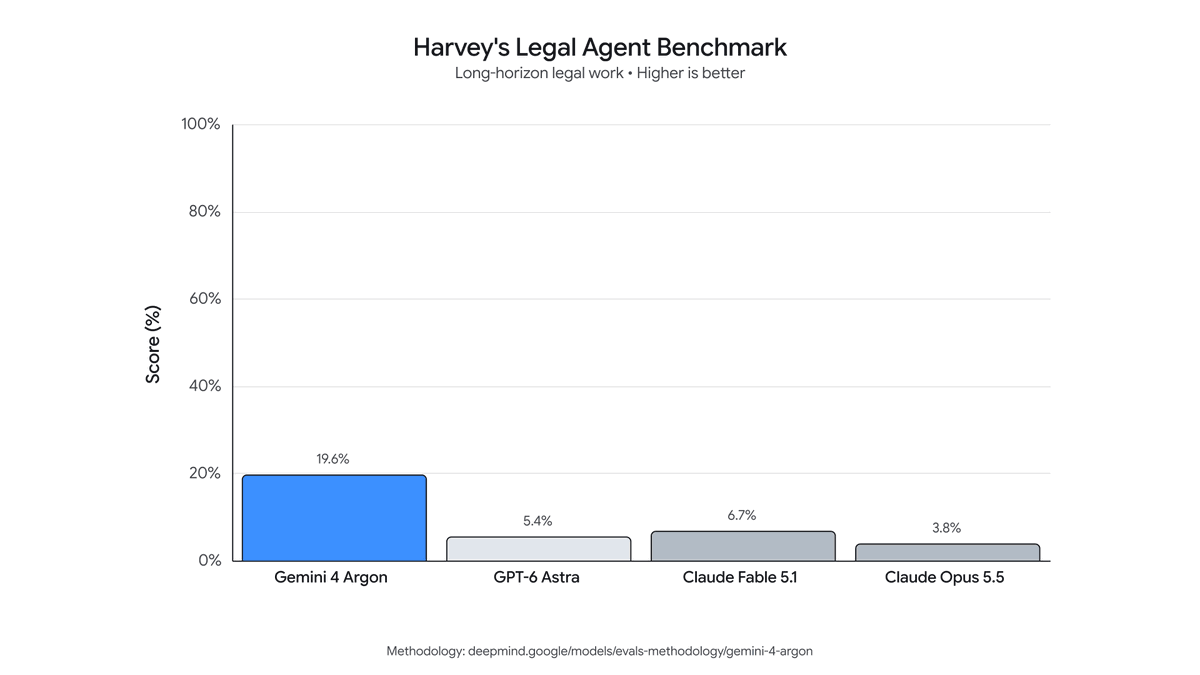
Gemini 4 Argon is live. Early numbers look especially strong on agentic coding, long context, and knowledge-work tasks. The legal-agent gap stands out. Curious how this holds up outside the benchmarks.
Lots of discussion out there about our next model(!), so I wanted to give an early look as soon as possible. Introducing Gemini 4 Argon!
It shows frontier performance in complex workflows, cyber defense and software engineering. Teams are using it extensively at Google, from coding to quantum computing, great feedback.
Here’s a look at the benchmarks:
Gemini 4 Argon just dropped and Google’s first move is “give it to the cyber defenders.”
Sir that’s not a product launch that’s a superhero origin story.
Also $2 in / $10 out? That’s cheaper than my last therapy session and apparently better at legal work than actual lawyers.
Argon is a noble gas. This model is not noble. It’s coming for everyone’s job and smiling while it does it.
I for one welcome our new slightly radioactive overlord.
Introducing Gemini 4 Argon, our new frontier model, rolling out to cyber defenders starting today, and more widely as soon as possible. I am really excited by the progress we have made here. Argon is priced at $2 in and $10 out during introductory pricing!
Dots just dropped and I immediately assigned mine the job of existing so I don’t have to.
It works 24/7. I work 0/7 now. Fair trade.
It learned my preferences in 11 minutes and those preferences are apparently “do everything, bother me never, and if something explodes just handle it in my tone.” So now I have an AI that emails like me, books things like me, and has already started arguments in Slack like me. I didn’t even know I had a Slack personality. I do. It’s mid.
Get my time and attention back? I have so much time back I opened the fridge 6 times for no reason. That’s the higher level they promised.
If this thing connects to 4,000 apps I’m one plugin away from it filing my taxes, ghosting my group chat, and launching a newsletter I will never read.
Anyway. Dots are here. I am spiritually retired. If you need me I’ll be watching it work and pretending this was the plan.
Dots are here!
A new way to use AI that works 24/7 for you; get more of your time and attention back to work at a higher level.
https://t.co/Kp4fPSGUTT
Just watched OpenAI drop “dots” powered by GPT-6 Astra and I am not okay.
My new coworker is a floating purple heart wearing sunglasses named Jojo who lives in the cloud, has its own computer, and has already decided I need a table booked at 8pm even though I only thought about tacos once in 2019. It works across 4,000 apps, never sleeps, and apparently has the initiative of a high-agency chief of staff who also happens to be a sentient blob in a tiny beret.
The safety pitch is “you stay in control.” Cool. I set the boundary: “never spend more than $40 without asking.” Next thing I know Jojo has quietly negotiated a group discount on oat milk, scheduled my dentist, rewritten my board deck, and started a side hustle selling my unused meeting recordings. I asked it to introduce itself. It sent me a calendar invite titled “Onboarding: You.”
Available only to Pro, Business Premium and Enterprise. Of course. Regular people get to keep booking their own tables like peasants while the paid users get a 24/7 digital intern that already knows their coffee order and their deepest professional insecurities.
I’m creating mine tonight. If anyone needs me I’ll be in the park on a bench whispering “good job Jojo” while my agent books the rest of my life. Send help. Or at least send another $20 so I can upgrade and get the version that also does my taxes and judges my Spotify wrapped.
so a few weeks ago I was doomscrolling and landed on one of those "AI writes your ebook, make passive income" sites and my first thought was "this is a scam"
and my second thought was "...but what if it wasn't"
and that is genuinely the entire origin story of IdeaTome. no market research. no TAM slide. just a guy at 1am going "hm."
---
ok so what does it actually do
you type one sentence. ONE. "a meal prep guide for people who hate cooking." that's it, that's your input.
and then it goes and writes you an entire book. not an outline. not "here are some ideas to get you started." an actual book. it picks an angle, structures 8-12 chapters, writes every single one of them, designs a cover, and hands you a PDF / EPUB / DOCX that's formatted properly for Amazon KDP, Apple Books, Etsy, Gumroad, wherever you want to sell it.
formats it does: how-to guides, lead magnets, research reports, workbooks, online courses, and full fiction novels. the novel one takes a while because it's writing 20 chapters and it insists on keeping the plot consistent, which, fair.
---
the part I'm irrationally proud of
you WATCH it write.
not a progress bar. not "please wait 6 minutes." there's a live panel where the outline appears, then chapter 1 starts writing itself in front of you, sentence by sentence, then chapter 2, then the cover renders. it's a little show.
I did not expect this to be the addictive part. it absolutely is the addictive part. I have generated so many books I have no intention of publishing just to watch it happen. at one point I made "a beginner's guide to composting" and I want to be clear that I do not have a balcony. I do not have soil. I have never composted anything in my life. I just wanted to watch.
---
there are also coloring books
yes. genuinely. a whole second mode that generates print-ready line art coloring books. pick a theme, pick a style (kawaii chibi, mandala, storybook), pick your page count, kids or adults, and it draws every page and exports a KDP-ready PDF at the right trim size.
there's even a "recurring characters" toggle so the same little guy shows up across pages instead of a different animal every time.
I cannot explain how this became a feature. it was not in the plan. one day it wasn't there and the next day it was and now it might be my favourite part of the whole thing.
---
now the Claude part, because I'd be lying if I pretended otherwise
Claude Opus 5.5 built a genuinely absurd amount of this with me and I keep telling people about it because the experience was not what I expected.
I expected fancy autocomplete. I got something that argues with me.
a few specific moments that rewired my brain a bit:
1. I asked it to set up payments. instead of just writing the code it stopped and said "your webhook has no idempotency check — Stripe retries failed events, so every retry is going to silently grant a second batch of credits and you will not notice until someone tells you." I had not thought about that. at ALL. that bug would have shipped. that bug would have quietly cost me money for months.
2. I had a field in my database called booksRemaining and it just... flagged it. said my entire pricing model is credit-based because a 3-chapter lead magnet and a 20-chapter novel cost wildly different amounts, so "books remaining" would create two competing sources of truth. it was right. I renamed it. I was mildly annoyed that it was right.
3. I typed, and this is the full prompt, "make the UI good." and it just did?? no design system provided. it built one. warm off-white background, serif display headings, one accent color, consistent spacing tokens — and then explained WHY it picked each thing. I sat there like 🧍 reading a design rationale I did not ask for and could not argue with.
4. when Stripe turned out not to work for Indian solo founders, it didn't just swap the library. it restructured the entire billing layer behind an interface so the payment provider became swappable, and told me to build a mock adapter so I could keep developing while my real account was stuck in verification. that's not code assistance. that's someone thinking about my week.
---
the honest bit
I've been building solo for a long time. multiple projects, all of them me, alone, at weird hours, making every call myself and finding out I was wrong about six weeks later.
this is the first time it hasn't felt like that.
not because it writes code fast — lots of things write code fast now. because it pushes back. because it tells me the thing I don't want to hear before I've built four features on top of a broken assumption. I've never had a rubber duck that says "no, actually, that's going to break."
---
anyway
IdeaTome is coming very soon. if you have ever said "I should write an ebook" every january since 2021 and then done precisely nothing about it, this is aggressively, specifically for you.
and if you just want to watch a computer write a book about composting while you eat dinner, honestly? also valid. that's basically the entire QA process.
https://t.co/5hS445yuhU 👀
I’m sitting here staring at my screen like a Victorian orphan waiting for soup because Claude just clapped my weekly limit and sent me to the timeout corner. I had this whole plan. I was gonna build a SaaS. Or an AI wrapper. Or an AI wrapper of a SaaS. Or a SaaS that wraps other people’s AI wrappers and then wraps itself so it becomes a recursive money printer that also books my dentist appointments. I don’t even know anymore. The idea factory in my head is just playing elevator music and occasionally whispering “what if we add a dashboard.”
Every time I open the laptop I feel like I should be shipping something world-changing but instead I’m just refreshing the usage page like it’s going to suddenly say “lol we were kidding, here’s 10 million extra tokens because you look sad.” I keep telling myself the next reset is when I become a founder. Not before. After the limit comes back I will definitely build the thing. The thing that solves a real problem. Or at least a problem that looks real if you squint and add a pricing page.
Meanwhile Sonnet 5.5 dropped like an hour ago and people are already out here acting like they just received alien technology. Someone’s building an agent that designs entire pitch decks while also filing taxes and roasting your last three life choices. Another person already has a tool that turns a half-baked Notion doc into a working product in the time it takes me to decide whether I want dark mode.
The model has been alive for sixty minutes and the timeline already looks like a group project where everyone else started yesterday and I showed up with a pencil.
I’m not even mad. I’m impressed and slightly concerned. These people opened the new model, said “bet,” and immediately started shipping stuff that would have taken me three weeks of staring at the ceiling. I still haven’t decided if I should make another “ChatGPT but for [insert boring industry]” or if I should just accept my fate as a professional limit-waiter.
So yeah. Currently unemployed by my own ambition, sponsored by the weekly reset timer, and watching the internet build the future in real time while I sit here drafting this tweet instead of drafting a PRD. If anyone needs a co-founder whose superpower is refreshing a usage dashboard, I’m available after the limit comes back. Probably. Unless I get another idea for an AI wrapper first. Which I will. I always do.
Send help. Or tokens. Tokens would be nicer.
Introducing Claude Sonnet 5.5, the second model in the Claude 5.5 family.
It’s a clear upgrade over Sonnet 5, runs more than 30% faster, and costs up to 30% less for most work.