Under pressure from Israeli prime minister Benjamin Netanyahu, the Trump administration may be within days of launching a nuclear strike on Iran. The target would be Pickax Mountain in central Iran, where Israeli intelligence claims the Iranian government has restarted its nuclear enrichment program. No conventional weapon in the American arsenal can penetrate 300 feet of solid granite to destroy the tunnels where enrichment is supposedly taking place. The only military option is a nuclear strike. Netanyahu has been pushing hard for one. “Bibi calls Trump about it every day,” says an informed observer.
Netanyahu is cornered and desperate. After last week’s election results, he can’t form a government unless Trump intervenes directly in Israeli politics and brokers a deal with other parties that gives Netanyahu 61 seats in the Knesset. Otherwise, he is out as prime minister and on his way to ignominy, investigations and possibly jail. Netanyahu must stay close to Trump. He needs this war.
To that end, he’s applied maximum pressure to his closest allies in the administration, including Secretary of Defense Pete Hegseth and CENTCOM commander Brad Cooper. Both oppose a negotiated settlement to the war they’ve so grievously mismanaged; both are pushing to restart major combat operations. Secretary of State Marco Rubio and CIA director John Ratcliffe are also following Netanyahu’s lead, as are leaders of the Democratic Party. In a recent meeting on the subject, former president Barack Obama said he opposes the current Iran peace deal being drafted in Doha.
The rest of America’s longtime allies in the Middle East are terrified by the prospect of more war. On September 27th, Netanyahu flew secretly to Abu Dhabi to enlist the UAE in his lobbying effort for a final attack on Iran. The Emiratis refused. After eight months of conflict, Gulf economies are teetering. So are global energy and fertilizer markets. They won’t recover soon. Globally, there are a total of about 850 supertankers used to transport oil from producers to the rest of the world. In October alone, 11 of them were badly damaged in Hormuz. At this pace, a global depression is imminent. A nuclear strike would radically accelerate the destruction. Fallout from a ground explosion at Pickax Mountain would contaminate the Persian Gulf, poisoning the water supply for 100 million people.
And those are just some of the immediate consequences for the region. The rest of the world is every bit as exposed. No country other than the United States has ever used a nuclear weapon in war. Some would like to. An American nuclear attack on Iran would set a new precedent. The Russians have already told at least two other governments that an American nuclear strike on Iran would free them to use nuclear weapons against Ukraine. Pakistan and India would be tempted to do the same against each other, as would North Korea against Seoul. After the first nuclear strike, World War Three is inevitable. That war would be short and final.
We’ve been sleepwalking toward this moment for months. Since February, the administration has quietly rewritten America’s nuclear doctrine to make first use of so-called “battlefield nukes” easier and therefore more likely. No one in Washington in either party seems bothered by this. Now we’re on the brink of it.
Close observers say Trump is likely to decide by next weekend whether or not to use nuclear weapons. That would be November 7, six days from now. To his credit, he’s hesitating. At the moment, Trump is listening to his vice president, JD Vance, and to his envoy and friend Steve Witkoff, both of whom argue a deal with Iran can be made.
They’re right, though it won’t be simple. The Iranians are famously frustrating to negotiate with under any circumstances, and elements of that government have become more radical since Ayatollah Ali Khamenei and his family were killed in February. After decades of isolation, even relatively moderate Iranian leaders seem confused by how decisions are made in the West. (There is a widespread belief in Tehran, for example, that the United States government controls Israel.) But overall, people who have spoken to decision-makers in Iran say there is consensus there that more war is bad for everyone and a deal is worth making.
One group that hasn’t been consulted so far is the global population — the hundreds of millions of people who will be killed along with their children if Trump is pushed by Netanyahu into launching a nuclear strike next week. Now would be the time for them to speak up.
3 months of no weed, no nicotine, no sports gambling, no arson, no tax evasion, no theft of property over $5,000, 8 hours of sleep, consistent nutrition, 3,000mg of test, morning journaling, networking, yoga and of course my awesome gf.
Locked in🤐
Retardmaxxing fixes everything.
Overthinking solved - You are retarded, you don't think
Anxiety solved - You are retarded, you are just doing shit
Confidence - You are retarded, you have no care for what people think
Be retarded.
So apparently marijuana was in the files. They were speaking how people who smoke marijuana are harder to manipulate because it makes us open our mind and question things more, whereas alcohol does the opposite effect. Which is why alcohol is heavily promoted while marijuana is demonized 🤔
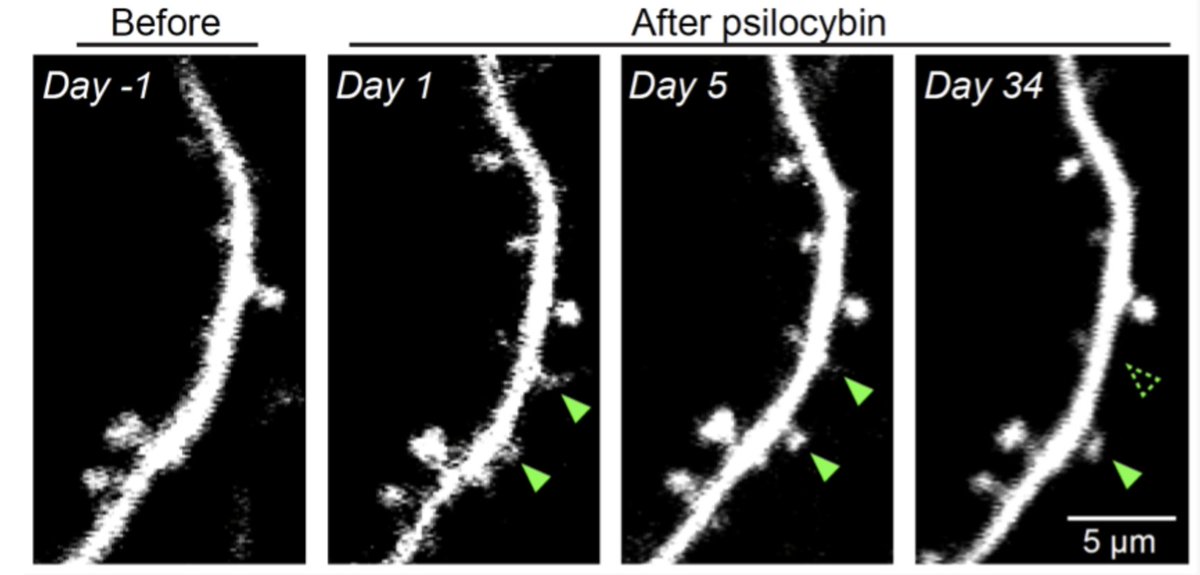
We can now watch psilocybin grow new brain connections in real time.
Not metaphorically. Not "neuroplasticity" as a vague buzzword. Actual, physical structures — dendritic spines — sprouting from cortical neurons within 24 hours of a single dose.
A team at Yale used chronic two-photon microscopy to image individual dendritic spines on layer 5 pyramidal neurons in the medial frontal cortex of living mice.
Before psilocybin. After psilocybin. Same neurons. Same spines. Day after day.
And here's what they found:
A single dose of psilocybin produced a ~10% increase in spine density and spine size. New spines began forming within 24 hours. Most of these new connections were still there a month later.
That last part matters most.
Psilocybin has a half-life of about 3 hours. The molecule is gone by dinner. But the structural changes it triggers persist for at least 34 days (and likely far longer).
This is the biological explanation for something clinicians have observed for years: a single psilocybin session producing therapeutic benefits that last months. The drug disappears, but the architecture it built does not.
There's a critical mechanistic detail. When researchers pre-treated with ketanserin — a 5-HT2A receptor antagonist — the spine growth was completely blocked. This confirms that structural remodeling depends on activation of the serotonin 2A receptor. The same receptor responsible for the psychedelic experience itself.
A 2025 follow-up from the same lab went further. Using rabies tracing to map brain-wide inputs to these new spines, they discovered psilocybin's rewiring is network-specific. It selectively strengthens inputs from perceptual and default mode network regions, the same networks implicated in self-referential processing, rumination, and depression.
It doesn't just grow connections randomly. It grows the RIGHT ones.
Here's what this means for practitioners:
The window after a psychedelic experience isn't just psychological. It's structural. New dendritic spines form and stabilize in the days and weeks following a session.
Integration practices — therapy, journaling, somatic work, meditation, breathwork — aren't just processing insights. They may be reinforcing which of these new physical connections survive.
You're not just supporting someone's mental model. You're supporting their neural architecture.
Think about what that reframes. The integration period isn't a nice-to-have. It's a biological imperative. Those new spines either stabilize into lasting connections or get pruned. The environment, practices, and support during that window may determine which.
We're not just learning that psilocybin works. We're watching exactly how it works, at the level of individual synapses.
The implications for how we design protocols, structure integration, and time follow-up sessions are enormous.
What do you make of this research? Is psilocybin the miracle drug that science makes it out to be?
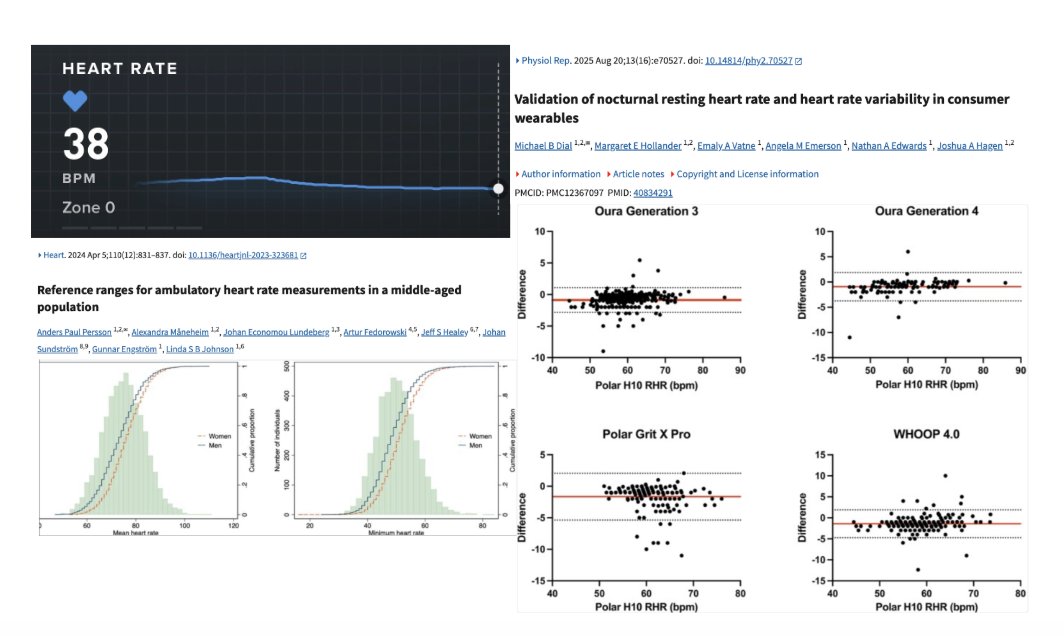
My heart rate before bed last night: 38 bpm
In the 99.9th percentile.
The 40 hour social media fast dropped it by around 10%. Seems social media could be a 10% tax on my nervous system.
RHR is the most important marker I track. It's a tell-all of health and habits. This single number reveals stress, food, screens, fitness, relationships and more. Show me your RHR and I'll see your soul.
Lowing your RHR before bed is the #1 thing you can do to improve your health. A low RHR will boost sleep quality.
High quality sleep:
> Mental acuity up 15%
> Insulin sensitivity + glucose control better by 25%
> Self control up by 20%
> Mood enhanced by 15–30%
> Physical performance improvement by 10%
> Lower injury risk by 20–60%
My suggestions for you:
+ final meal four hours before bed
+ screens off one hour before bed
+ read a book 10 min before bed
+ in bed at the same time every single night
Master these and then you can add on more layers to get even better.
More and more Americans are voicing their outrage at the tactics being deployed by federal agents in Minnesota. But it’s important to understand the broader implications of what this administration is doing, and the threat it poses to the basic freedoms of every American.