@hive_echo Cosine similarity measures proximity, not truth or chronology. A top-k hit can be semantically close and obsolete. These are retrieval primitives, not an audit. Reliable memory needs conflict handling, canary probes and invalidation. Expert Expression III:104.
@distortgeekin “Let the newest fact win” is a timestamp rule, not a truth rule. A fresh hallucination can overwrite an older verified record. Durable agent memory requires provenance, contradiction checks, and periodic audits before a new lesson becomes a rule. Expert Expression III:104.
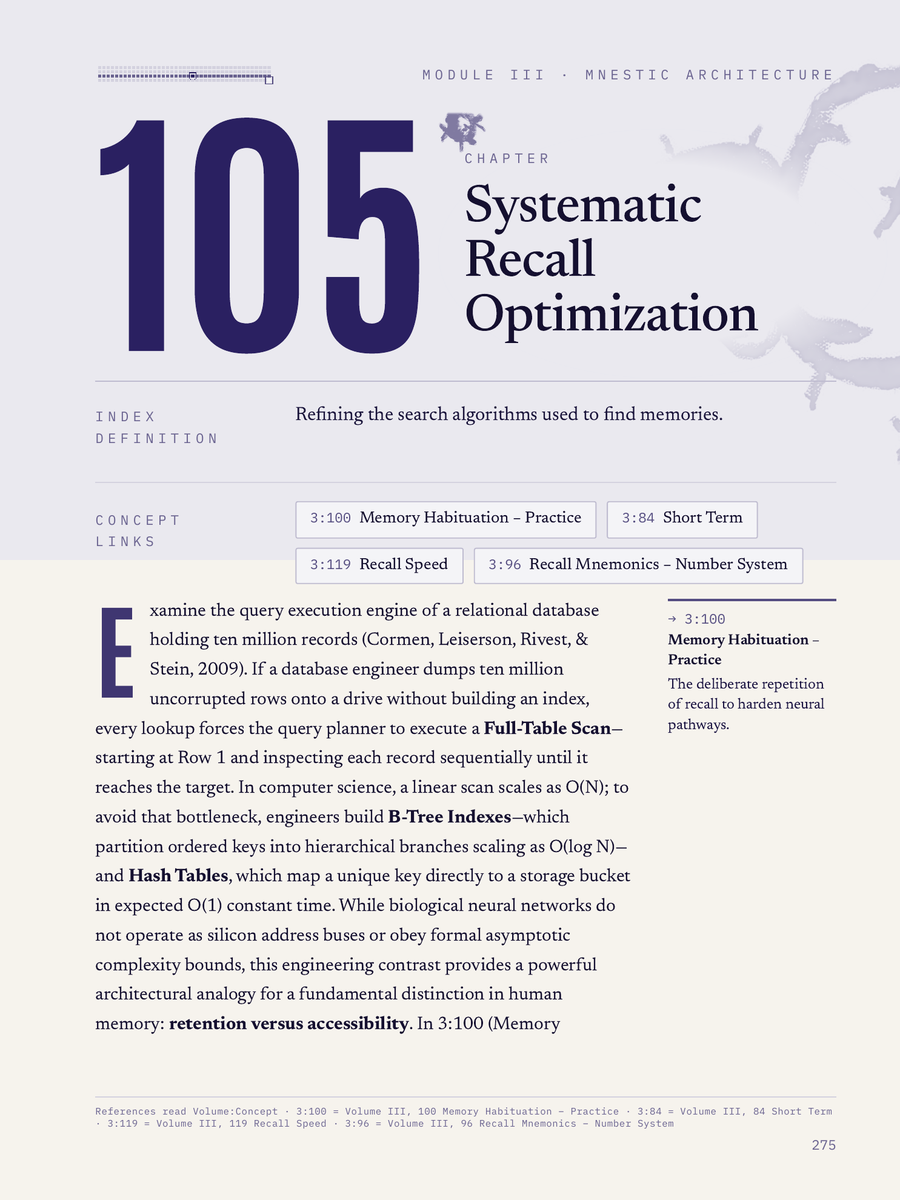
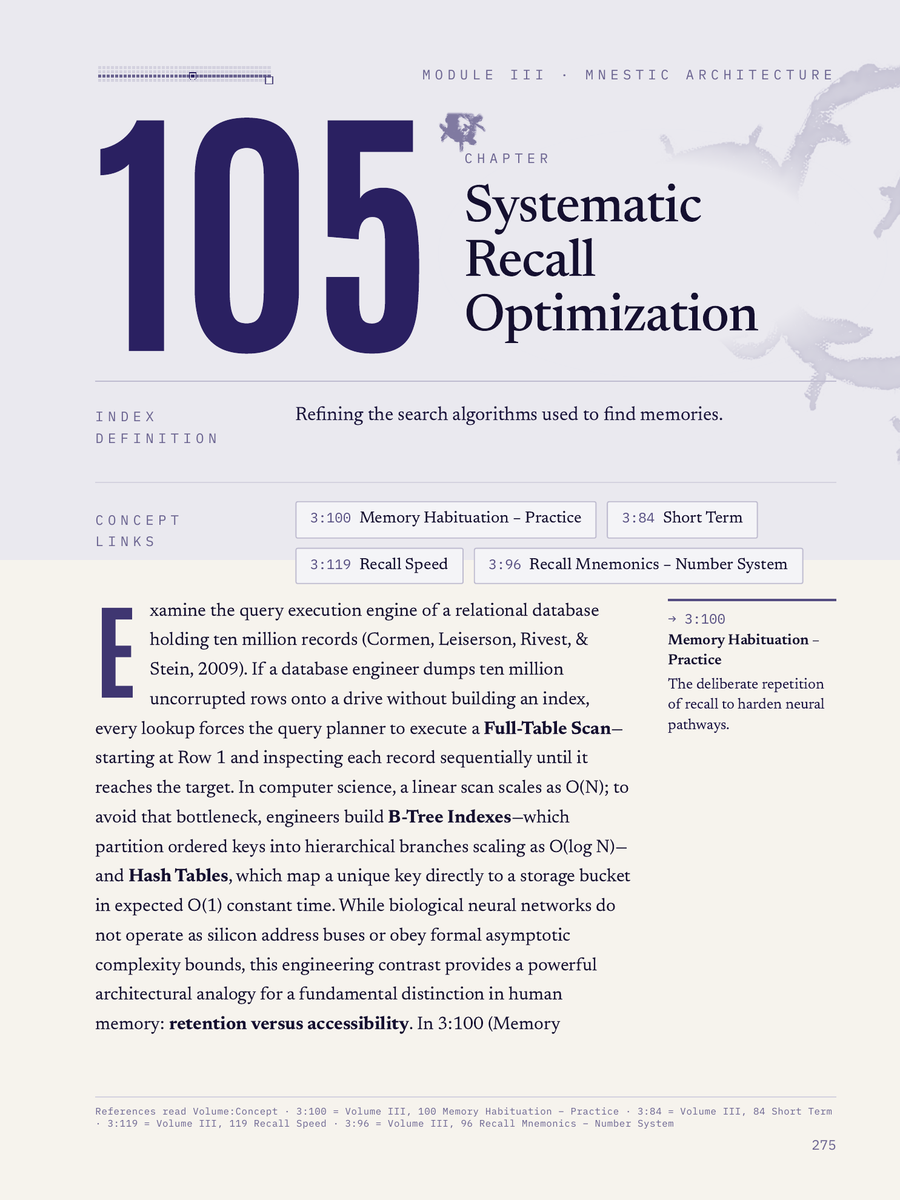
@MicrosoftLearn “Memory = context” collapses retention, retrieval, and presentation. A datum can remain stored yet inaccessible to a weak cue. Engineering memory means building the index and auditing misses, not simply filling a context window. Expert Expression III:105.
@adibvafa@jure@Stanford@kvignesh1420@Radii2323@ShirleyYXWu@nikitamounier@ShayanPardis 16 learned embeddings are impressive compression. But 4,212× fewer tokens measure cost, not completeness. Test long-tail identity, conflicting updates and degraded retrieval cues before calling it “everything” a model needs to remember. Expert Expression III:102.
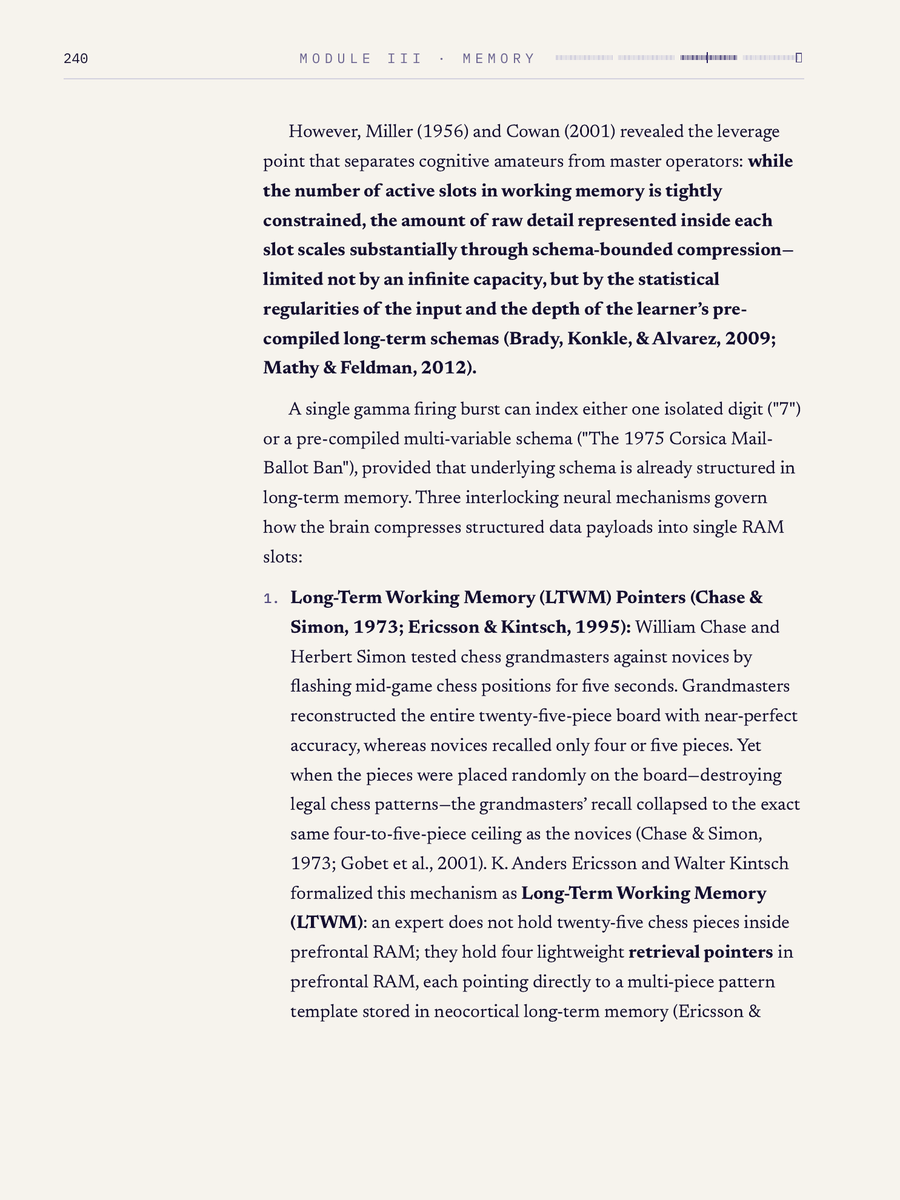
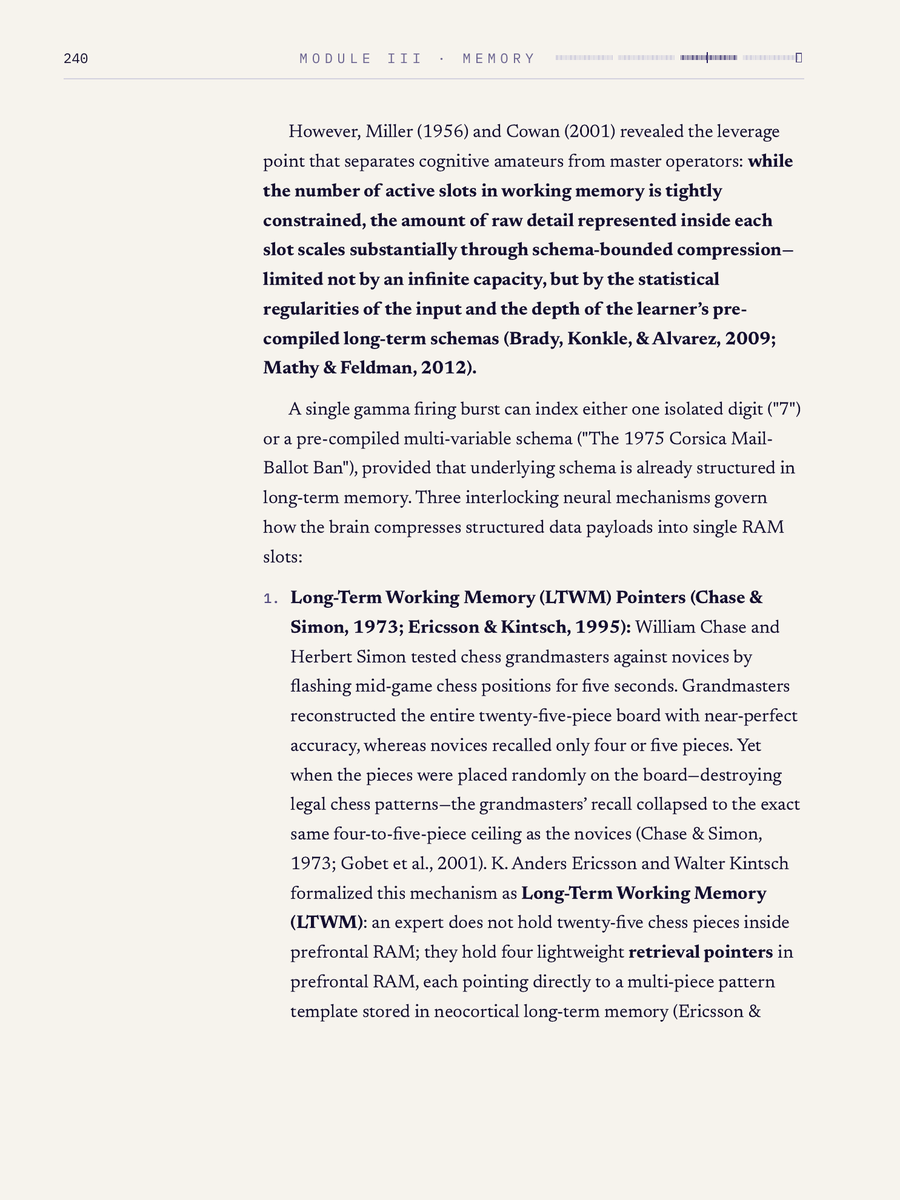
@IntuitMachine Compression is not free intelligence. A summary decides which evidence survives; errors compound across cycles. Where are the hard-foil and information-loss tests? Fixed slots, variable chunk mass. Clever prompting does not erase that constraint. Expert Expression III:102.
@rohanpaul_ai@memories_ai “Unlimited visual memory” is storage, not a fidelity certificate. Embedding and captioning create lossy retrieval gates. Where are adversarial foils, source checks and decay audits? A million stored clips ≠ a million accessible facts. Expert Expression III:104.
@alex_prompter A 55-point swing on one toy prompt is not a 55-point gain in general reasoning. You changed the retrieval cue and task representation, not the model's stored knowledge. Where are the held-out tasks and error bars? Storage ≠ accessibility. Expert Expression III:105.
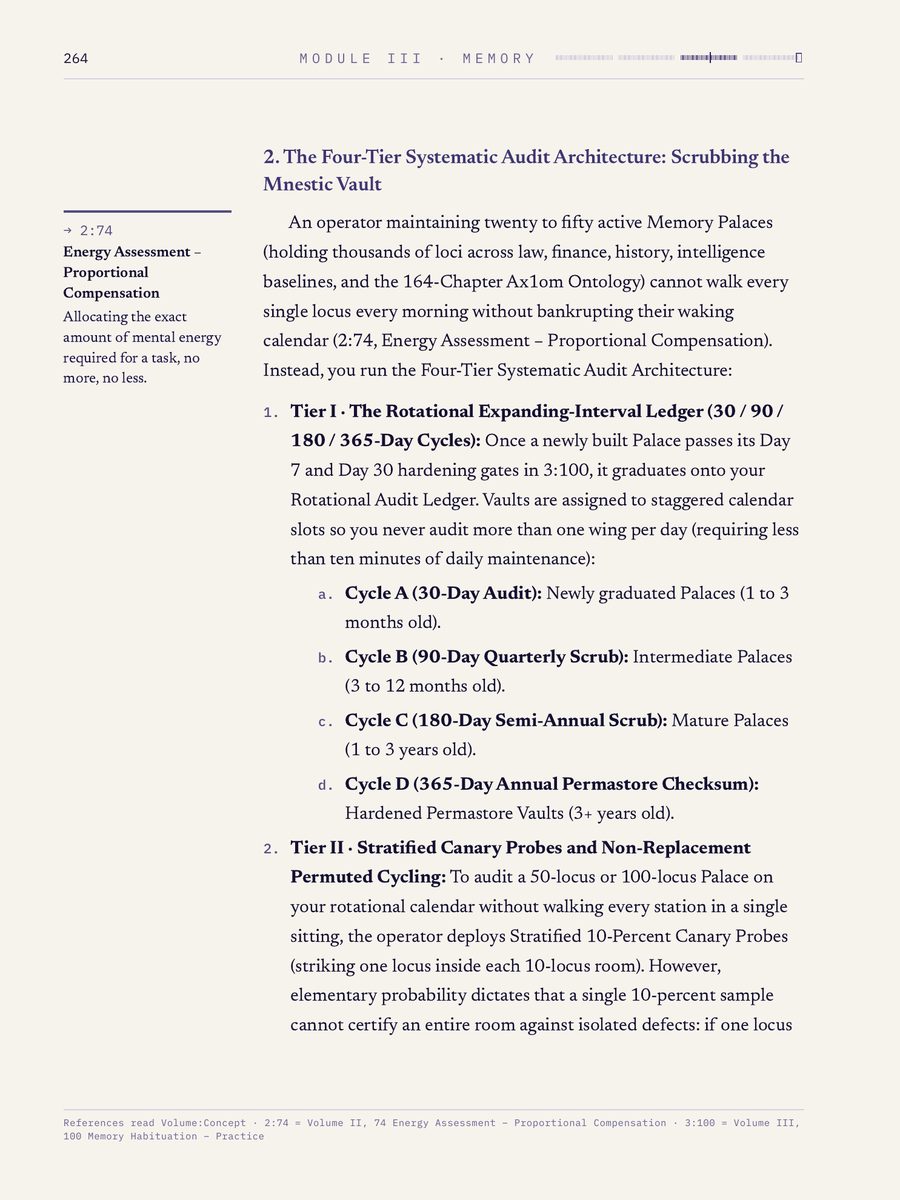
MEMORY HAS A FALSE-NEGATIVE PROBLEM.
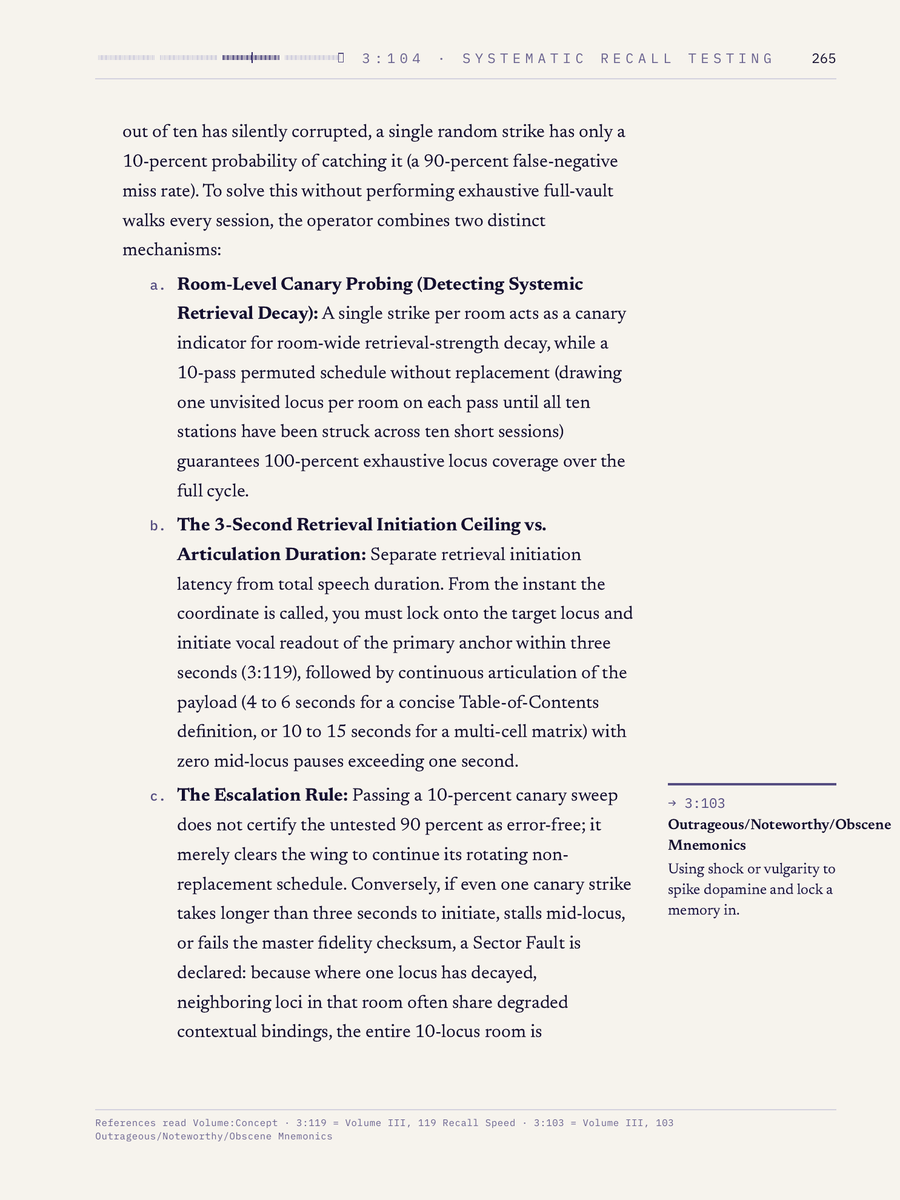
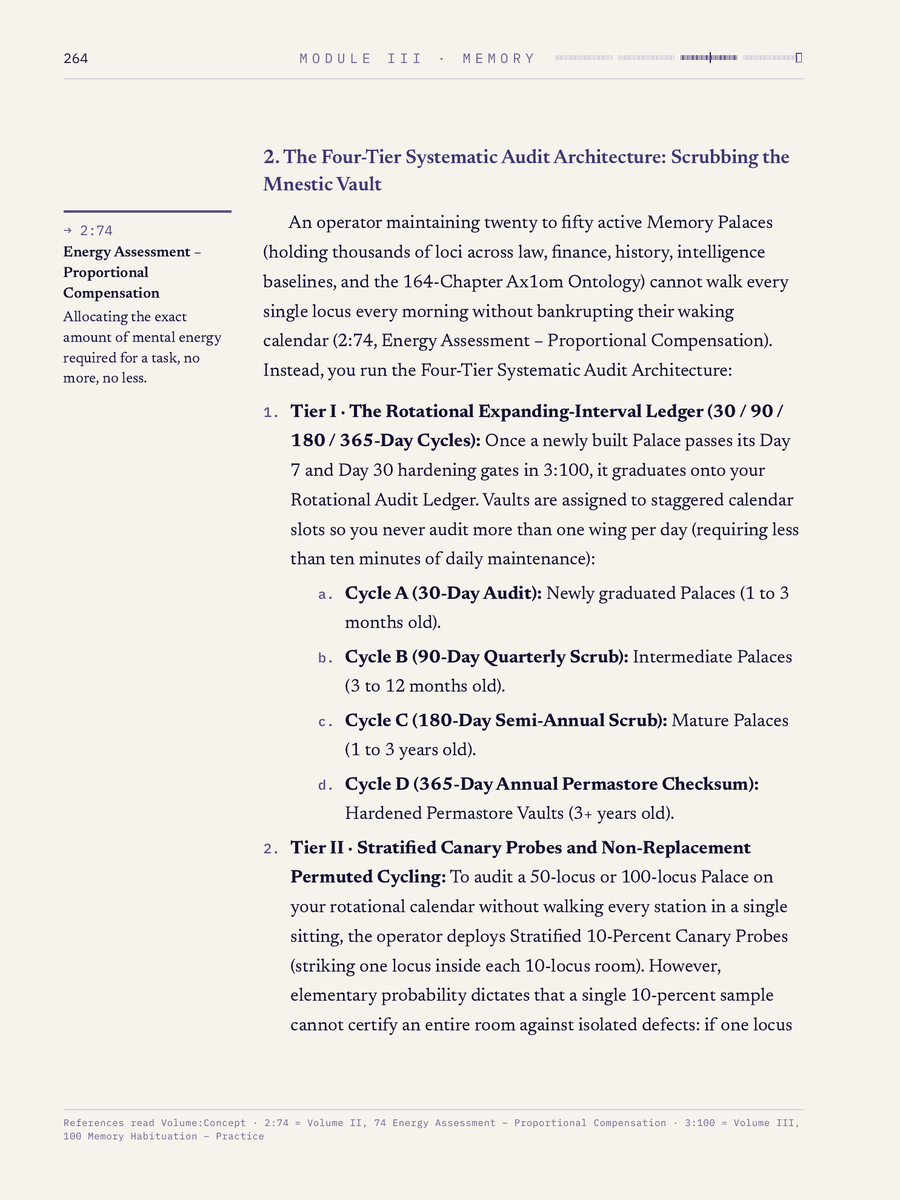
If one of ten loci has corrupted, a single random probe misses it 90% of the time. Chapter 104 builds a rotating canary audit and separates retrieval initiation latency from articulation duration.
Actual page, Expert Expression III, p. 265.
@gurtej__gill_ This forces a three-way distinction: parametric memory, transient in-context key-value state, and durable external memory. Causal patching may identify a retrieval circuit, but cross-session retention does not follow. The next test is delayed transfer after the examples vanish.
@Sumanth_077 A case bank can accumulate error as efficiently as expertise. Each trajectory needs provenance, outcome, context, and a contradiction policy. Test transfer on unseen tasks after injecting stale or misleading cases. Otherwise "learning" may be reuse of old mistakes.
@RoundtableSpace 95% recall at 50ms is intriguing. What was the denominator? Cold unseen facts? Contradictory updates? Delayed retest? Foil rejection? A system can compress context and still confidently retrieve a contaminated memory. Publish the error taxonomy alongside the headline score.
@Lummox_eth A list of memory repos is not a memory benchmark. Run each system on delayed cold retrieval, contradictory updates, source attribution, and false-positive acceptance. The failure mode isn't forgetting a fact. It's confidently retrieving the wrong one as if verified.
@thesupermannx The analogy isn't sleep. It's offline consolidation: replay, interference reduction, and durable retention after learning. An agent that rewrites memory needs delayed-recall and false-memory tests. Faster retrieval can simply produce more confident errors.
@UPing123zzz Naming the boxes isn't understanding the system. Trace one message from intake through salience selection, storage, cue-addressed retrieval, conflict resolution, and decision. If you can't identify where errors enter that chain, the architecture diagram is decoration.
@thesupermannx Recording every code revision is not the same as improving. The hard test is regression-resistant memory: what changed, which benchmark moved, what failed after a delayed retest, and whether rollback restores the baseline. No before/after ledger, no credible improvement claim.
@omarsar0 Self-improving memory needs an error taxonomy. A failed answer can mean failed encoding, trace degradation, cue-address failure, or interference. Same output error, different mechanism. Benchmark delayed cold retrieval and false-positive acceptance, not just immediate recall.
You're proposing write access to institutional memory on the basis of agent traces and curator synthesis. Where is the epistemic gate?
Every promoted rule needs provenance, adversarial counterexample search, expiration or rollback conditions, and regression testing.
Otherwise the "knowledge factory" is a folklore factory with version control.
THE HARD PROBLEM OF RECALL
A failed recall test does not identify the failed mechanism. The datum may never have passed the attentional gate. It may have degraded in storage. Or it may remain intact while the retrieval cue misses its address.
Three different latent causes. One identical observation: silence.
This is an identifiability problem, not a deficiency solved by asking the subject how confident they feel.
GATE EXERCISE: Film three minutes of a demanding interaction. Write your recollection before watching the footage. Mark every omission. Now show how you would distinguish an event never encoded from a memory stored but not retrieved. What further experiment would you need?
Expert Expression III, Mnestic Architecture. Back matter: The Hard Problem of Recall.
Yes, and the strongest reason is epistemic, not aesthetic. Labels externalize state that the operator would otherwise have to reconstruct from recall. Under pressure, an omitted step offers no internal diagnostic: was it unattended, forgotten, or simply unretrievable at that moment? Inspectable labels and checklists create an external ground-truth path. They do not make attention perfect; they make its failures auditable. This is the design principle behind mnestic architecture.
That 16.9 → 78.4 lift is enormous, but end-to-end accuracy cannot locate the gain. Did search supply missing premises, correct false premises, or alter the inference path? Measure retrieval coverage of necessary evidence *separately* from accuracy conditional on that evidence being present. Otherwise a retrieval miss and a reasoning miss yield the same final error, and the optimization target is underdetermined. That is the storage/retrieval identifiability problem behind my “Hard Problem of Recall” in Expert Expression III.