📢 JAMA Network Open 2025
⚠️ Pregabalin ≠ Gabapentin
🔹 246,237 adults (65–89 yrs) with chronic pain
🔹 Pregabalin → 48% higher risk of incident HF vs gabapentin (HR 1.48)
🔹 With established CVD → 85% higher HF risk (HR 1.85)
💧 Peripheral edema: don’t ignore it
🔹 Gabapentinoids commonly cause pedal edema
🔹 Pregabalin has higher α2δ receptor affinity and potency
🔹 Edema may be more than a cosmetic side effect—it may be an early warning sign of HF
🔹 New bilateral leg swelling + weight gain + dyspnea after starting pregabalin? Think HF.
📊 HF incidence:
• Pregabalin: 18.2/1000 person-years
• Gabapentin: 12.5/1000 person-years
✅ No difference in all-cause mortality
🎯 Take-home:
When an older patient on pregabalin develops “unexplained” edema, don’t just prescribe a diuretic—evaluate the heart.
#HeartFailure #Pregabalin #Gabapentin #CardioRheum #MedTwitter #JAMA
@DurgaPrasannaM1
SSC has done more harm than good
Yet, they learn nothing over time
We need guidelines based in evidence, led with hubris, and written by folks with appraisal skills
ARISE-FLUIDS has arrived and it's awesome 🥳
For over a decade, the Surviving Sepsis Guidelines recommended that septic patients get at least 30 cc/kg fluid. In the United States, these guidelines were weaponized into performance metrics, pressuring clinicians to prescribe arbitrary volumes to every patient.
Evidence-based clinicians have LONG known that this guideline lacked evidentiary support. For example, I've attached a picture of a blog I wrote about this back in 2017. Despite the lack of evidentiary support and some evidence of harm, the Surviving Sepsis Guidelines INSISTED on perpetually recommending 30 cc/kg fluid resuscitation.
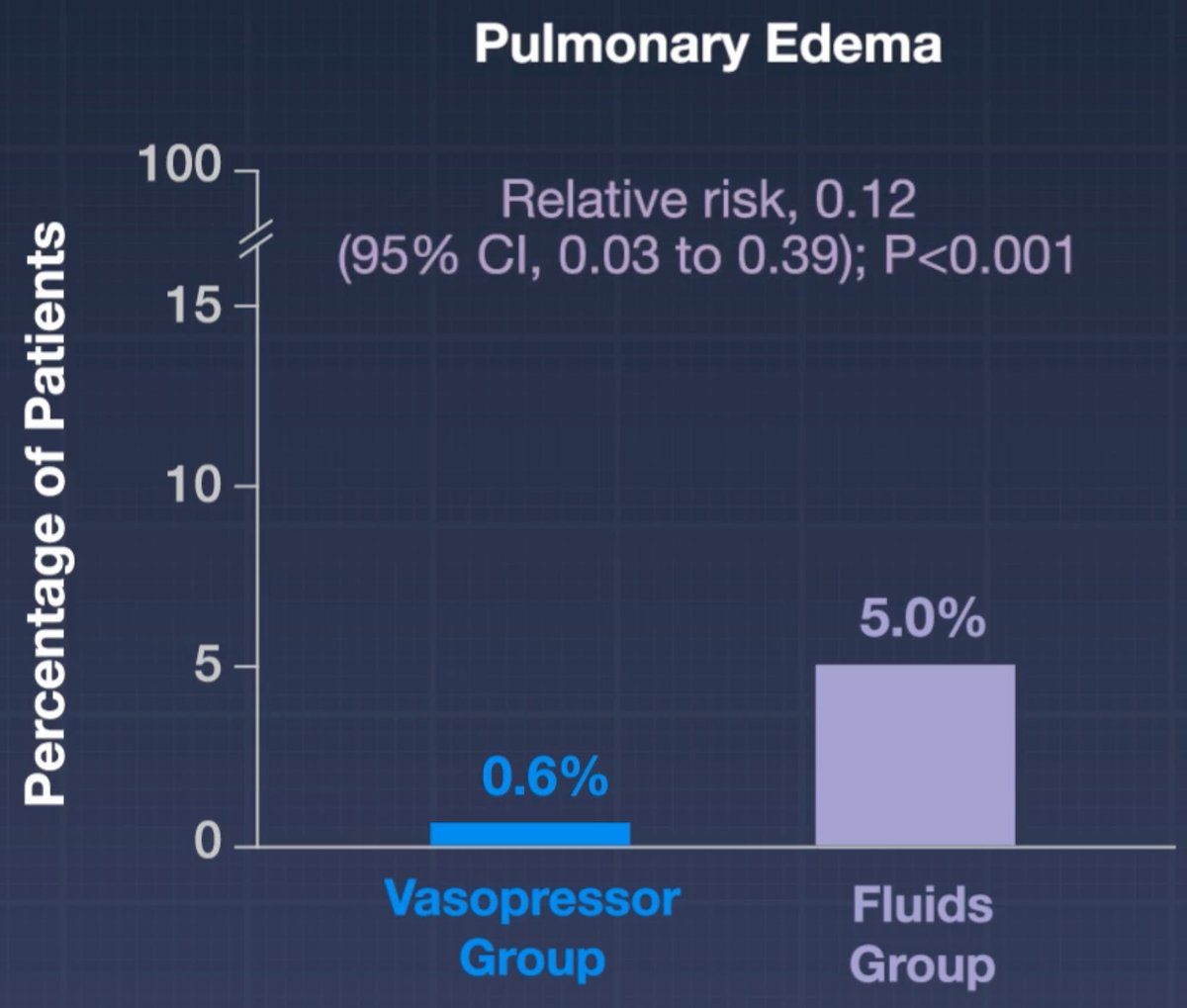
We finally have a prospective RCT demonstrating that mandating early administration of 30 cc/kg fluid (as compared to early vasopressors) doesn't help and may actually cause harm.
It's important to note that all of the hard endpoints in this trial were neutral (e.g., mortality, days free of organ support).
I still think that 30 cc/kg fluid is a pretty reasonable volume of fluid for *most* patients. But the study does suggest that giving too much fluid may promote edema - so we should be *thoughtful* about this intervention rather than mandating it for every septic patient.
Based on the subgroup analysis, the fluid-conservative strategy may have helped the subgroup of pneumonia patients the most. This is statistically nonsignificant but aligns with my expectation. ARDSy patients often don't respond well to fluid. (In contrast, I really doubt that a liter of fluids in either direction matters for most urosepsis patients.)
This is a great example of the over-reach of guidelines and protocoled medicine. People get all upset about practice variation, so sometimes they try to stomp it out using guidelines and protocols. But these guidelines are highly fallible, so what may occur is that you standardize care in a way that harms everyone equally. 🤦♂️
Totalmente de acuerdo compadre… el problema es que muchos biomarcadores siguen viviendo en el Olimpo académico.
La fisiopatología de la LRA ya va en Ferrari, pero en la trinchera seguimos con clínica, diuresis y creatinina tardía porque NGAL, KIM-1 o NephroCheck son más raros que un catéter funcionando bonito en urgencias.
En muchos hospitales incluso privadosla creatinina todavía es la que termina gritando: “ya valió madre el riñón”
Valproic acid is great for refractory agitated delirium.
🏆 Especially useful in patients with explosive/aggressive behavior in the context of a personality disorder (often exacerbated by delirium).
Candidates for VPA:
✅ Not pregnant
✅ No severe liver dz or history of hyperammonemia
✅ No major drug-drug interactions with VPA
✅ Didn't respond to antipsychotics +/- alpha-2 agonists (dexmedetomidine). This isn't a hard requirement, but generally VPA isn't usually a front-line agent.
Advantages of VPA:
👍 Cardiovascular stability
👍 Low risk of airway compromise (only mildly sedating)
👍 Antiseizure activity (e.g., can be used for sz prophylaxis in an agitated patient)
👍 Can be given IV or PO (1:1 conversion with immediate-release formulations)
👍 EM/ICU folks should be knowledgable and comfortable within it already
Disadvantages of VPA:
👎 Dosing requires a little more thought than most agents. For patients on this for more than a few days you want to check a VPA trough and adjust it using the Fraser equation (to account for albumin).
👎 Can cause a lot of side-effects (but most of these are due to *chronic* VPA, rather than just a few days of therapy)
Dosing
🎯 My preference is to use the same dosing regimen as for status epilepticus (40 mg/kg load max 3 grams, then 15 mg/kg/day in divided doses). You can up-titrate as needed while following VPA troughs if ineffective (max dose of 45 mg/kg/day).
🎯 Many studies have reported starting lower and up-titrating, but this delays its efficacy for 2-3 days.
🎯 Using more frequent doses (e.g., q6hr rather than q8hr) may avoid toxic peak levels while maintaining adequate trough levels.
This isn't an option I use a ton, but it's a terrific tool to have in your toolbox for agitated delirium that isn't responding to usual front-line treatments.
⚠️ VPA should be weaned off prior to hospital discharge (unless the patient is seen by psychiatry and they are intentionally recommending VPA as chronic outpatient therapy for bipolar disorder etc - which would be uncommon).
(more discussion on VPA pharmacology in the IBCC chapter on status epilepticus)
Recent article on this in NeuroCritical care here:
Pagas mínimo 1000€ la entrada para que un ojeador vea a tu novia y diga "Esta parece una fresca, para la Casita" y ver si con suerte, Bad Bunny acaba restregándole la cebolleta y reírse del logro con sus amigas.
Ser inсеl es más digno que someterse a este ritual de humillación.
Publishing zillions of papers isn't the flex everyone thinks it is
Above a certain publication frequency, hyperprolific authorship has a limited differential diagnosis:
🫤Repetitive articles ("salami publication")
🫤Putting your name to others' work (coauthor network)
🫤Fraud
La bendopnea en derrame pleural nunca había sido estudiada sistemáticamente.
El estudio PLEASE-3 lo hace por primera vez — y los hallazgos tienen implicaciones clínicas directas.
📄 Iacopetta et al. Eur Respir J 2026
DOI: 10.1183/13993003.02747-2025 🧵👇