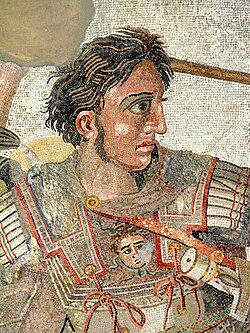
On this day in 356 BC, Alexander the Great was born in Pella, the capital of Macedon. He would be dead before his 33rd birthday, but in that short window he conquered the largest empire the ancient world had ever seen, from Greece all the way to India, and by most accounts he never lost a single battle in his life.
According to Plutarch, the very night Alexander was born, the Temple of Artemis at Ephesus burned to the ground. This was not some small shrine. It was one of the seven wonders of the ancient world, a marble temple so massive and so beautiful that people crossed the sea just to stand inside it.
The man who burned it was named Herostratus, and he did it for one reason only. He wanted to be remembered forever. He had no grudge and no cause. He just wanted his name to outlive him. The people of Ephesus were so disgusted that they made it a crime to ever speak his name again, and it clearly did not work, because more than two thousand years later we are still saying it.
The ancient writers could not resist the timing of it all. They said the goddess Artemis, who was supposed to protect women in childbirth, let her own temple burn to ash because she was too busy that night. She was hundreds of miles away up in Macedon, personally watching over the delivery of the baby who would grow up to conquer the known world.
Plutarch adds another detail that is almost too clean to be real. He says Alexander's father, King Philip, received three messages on that single day. His general had just crushed an enemy in battle, his racehorse had just taken first place at the Olympic Games, and his wife had just given him a son. Three victories delivered to one man in one afternoon.
Meanwhile, back in Ephesus, the priests and seers were not celebrating anything. They were running through the streets in a panic, tearing at their faces, screaming that the fire was a warning from the gods and that a great destroyer had been born that night who would bring ruin to all of Asia.
They thought they were mourning a building. They had no way of knowing that the real disaster was not the pile of burning marble in front of them. It was a newborn child in a palace far to the north, a boy who in thirty years would march an army straight through their world and change the map of it forever.
Jeff Bezos: "I've created $2.1 trillion of wealth for other people."
"Somebody needs to make a list where they rank people by how much wealth they've created for other people."
While talking about his net worth, he floated an idea that flips the whole concept of a "rich list" on its head.
He did the math live, right there on stage.
"Amazon's market cap is 2.3 trillion today. I own about 200 billion of it."
"So if you take 2.3 trillion and subtract out the piece I kept for myself, then I've created something like $2.1 trillion of wealth for other people."
That's not a typo. Trillion, with a T and it's not even his money.
"That should put me pretty high on some kind of list."
He didn't stop at himself, either. He immediately named who else deserves a spot at the top.
"People like Jensen, Nvidia, he's going to be very high on that list."
"That would be a pretty cool list. Somebody should do that list."
@ihteshamali@BillAckman@BillAckman is following a strategy he says no one has cared about before and it's not a quarter thing it's a decades thing. He's putting his money where his mouth is
Yes, absolutely right, he had all the power and pretended not to. A true mastermind! He could give a masterclass in endurance, determination, and managing perceptions.
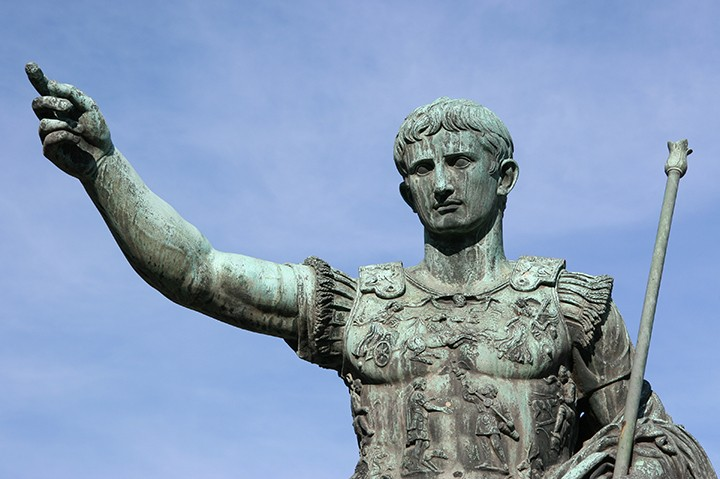
The first man to rule Rome as emperor was not a great general. He was a sickly teenager who got seasick, fell ill before almost every major battle, and once hid in the reeds of a marsh to avoid being captured. His name was Gaius Octavius, and almost nobody in Rome took him seriously. By the time he died he was the most powerful man the Western world had ever seen, and we still say his name every single year.
It started with a murder. In 44 BC, Julius Caesar was stabbed to death in the Senate, and his will revealed a shock. He had secretly adopted his teenage great-nephew Octavius as his son and heir. The boy was eighteen, studying abroad, with no army and no real reputation. Mark Antony, Caesar's battle-hardened right hand, assumed he would brush the kid aside in weeks. Cicero, the most famous orator in Rome, figured he could use the boy as a puppet and then discard him. Both of them were dead within a few years, and the boy was still standing.
What Octavian had was patience and a complete lack of mercy when it counted. He allied with Antony when it suited him, helped draw up kill lists that sent thousands of Romans to their deaths including Cicero himself, then crushed Caesar's assassins at Philippi. When the alliance with Antony finally broke, he beat him too. The showdown came at sea off the coast of Greece at Actium in 31 BC, where Antony and Cleopatra were defeated and soon after both took their own lives. After more than a century of civil wars tearing Rome apart, one man was left holding everything.
Here is the part that makes him a genius rather than just another warlord. He had absolute power and he pretended he did not. He went before the Senate and theatrically handed the Republic back to them, then quietly accepted every meaningful power they offered in return. He refused the title of king. He refused to be called dictator. He called himself princeps, simply the first citizen, just a humble servant of Rome. It was a polite fiction and everyone understood it, but it let Rome keep believing it was still a republic while one man ran the whole thing. He even took a new name to seal the image, Augustus, meaning the revered or sacred one.
And then he delivered. He ended generations of bloodshed and gave Rome the Pax Romana, a long stretch of peace and stability. He built roads, temples, aqueducts, a fire brigade, and a police force. There is a famous line that he found Rome a city of bricks and left it a city of marble. He was not invincible. The loss of three entire legions in the forests of Germany haunted him so badly that he was said to bang his head against the walls crying out for his dead general to give him back his legions. But he ruled for more than forty years, longer than most Romans had been alive, and he died in his bed, something Julius Caesar never managed.
When he was gone, the Senate declared him a god. They renamed a month in his honor, and that is why to this day, more than two thousand years later, the eighth month of the year is called August. A frail boy nobody respected reshaped the entire Western world so completely that you used his name on a calendar this year without even thinking about it.
His name was Augustus. The first Roman emperor. The sick kid who outlived everyone who underestimated him and never gave the power back.
تُستخدم كلمة «منو» في اللهجة العراقية للسؤال عن الشخص، وغالبًا ما تُفسَّر على أنها اختصار لعبارة «من هو» غير أن السجلات الاكادية تُظهر أصلًا أقدم، إذ نجد فيها صيغة الاستفهام
mannu atta
بمعنى «من أنت؟». هذا التشابه الصوتي والدلالي يرجّح أن «منو» ليست طارئة، بل امتدادٌ لغوي قديم
@thealepalombo Sophia Loren was my favorite actress, I'm enamored with 'La dolce Vita' idea in Italy. Pasta and delicious sauces, olives, cured meats😍🍽️. I love Josh Groban's Italian song 'Per Te'❤️. I love reading on the romans, love Augustus Caesar, an impressive leader to me💪