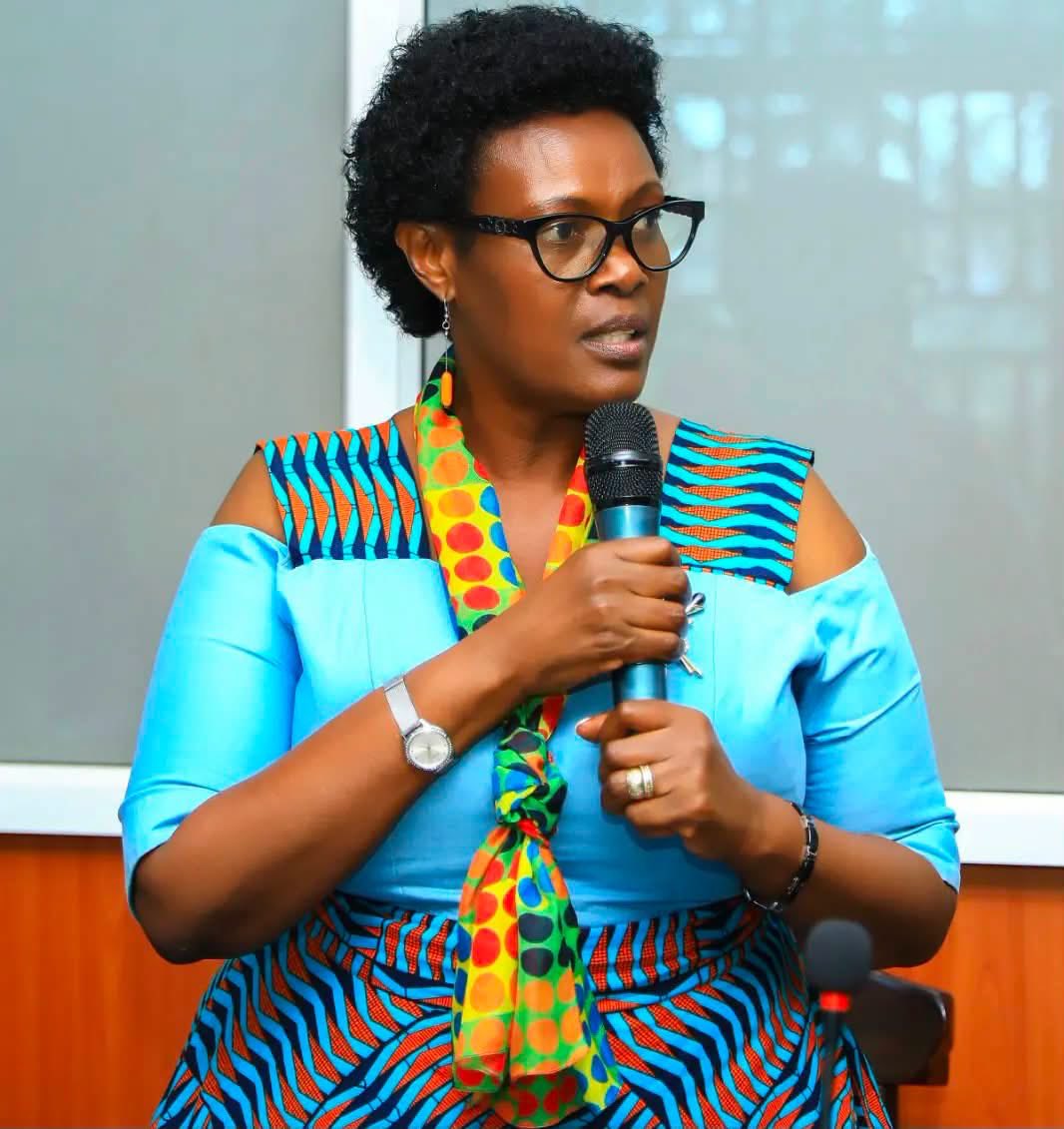
UPDF Representative, Maj.Gen.Henry Masiko says it is an honour and national pride for Uganda to deploy UPDF contingent to protect the Gaza Strip.
“We are not going there to dance, we going there to confront threats against society and humanity. We should be proud of this.”
The murder of Susan Magara stands as a chilling reminder of how greed can turn familiar people into monsters.
This was not a random kidnapping. It was a cold, calculated operation built on betrayal.
Critics claimed the government targeted suspects because they appeared in court in Islamic attire. But the High Court’s conviction was based on forensic evidence, material proof, phone records, and confessions not religion.
Prosecutors said the syndicate planned the crime like a business, allegedly meeting inside Usafi Mosque in Kisenyi, Kampala. Yusuf Lubega was identified by the State as a key planner who allegedly attended meetings, managed logistics, and coordinated operations from behind the scenes.
The most damaging insider was Yakub Byensi. A family acquaintance from the same Bunyoro region, he allegedly tipped off the gang that Susan’s father, John Magara, had wealth, and urged them to target Susan for ransom.
To avoid detection, the group used 17 SIM cards registered under fake names. But they underestimated Uganda’s security forces. When the kidnappers demanded ransom in recorded calls, police released the audio and offered a Shs100 million reward. Yakub’s brothers in Italy recognized his voice and alerted family in Masindi. His own mother also identified him in tears. That voice ID became the breakthrough that unraveled the entire cell.
Susan was allegedly held in a Nateete house provided by Hajara Nakandi, who prosecutors said guarded the property and took part. As the gang feared Susan could identify them, Nakandi allegedly made the decision to kill her.
Before that, Abbas Musa Buvumbo, described in court as the group’s “doctor,” allegedly cut off two of Susan’s fingers while she was alive. The fingers were sent to her father with a video of Susan pleading for her life. The family paid over Shs700 million in ransom, but the gang allegedly killed Susan anyway injecting her with ketamine and suffocating her with a plastic bag before dumping her body near the Entebbe Express Highway.
They then allegedly spent the money on luxury cars and land in Buikwe and Luweero.
The court’s verdict rested on digital trails, recovered assets, confessions, and voice recordings. The case shows that crime leaves traces, and that justice, however painful, can work.
✍🏼 Deox T
In a photo taken on May 12, 2011, Ugandan President Yoweri Museveni is pictured front and center with his wife, First Lady Janet Museveni, second from the left.
They are standing alongside several African heads of state during Museveni’s swearing-in ceremony in Kampala. From left in the front row are Zimbabwe’s President Robert Mugabe, Kenya’s President Mwai Kibaki, and former Kenyan President Daniel arap Moi. In the middle row, from left, are Ethiopia’s Prime Minister Meles Zenawi, Tanzania’s President Jakaya Kikwete, DR Congo’s President Joseph Kabila, Nigeria’s President Goodluck Jonathan, and South Sudan’s leader Salva Kiir, among other dignitaries.
Museveni, who has been in power since 1986, was sworn in for a fourth term as president. The ceremony took place as thousands of opposition supporters gathered in Kampala to welcome opposition leader Dr. Kizza Besigye back from neighboring Kenya, where he had traveled for medical treatment after being shot in the arm.
If you want to live a long, peaceful life in Uganda, you must learn to help others while staying cautious. The speed at which someone goes from a desperate beggar to an ungrateful enemy is faster than slow internet during a storm. In Uganda, kindness is often repaid with betrayal.
It usually starts in the village. A wealthy uncle takes pity on a poor child and pays for their education all the way through Makerere University. Ten years later, that child is driving a fancy car in Kampala. But when the same uncle calls for help with medicine, the graduate complains to friends that village relatives are a burden who only appear when they need money.
Even children we sacrifice for can forget us. Parents deny themselves food and clothes to pay for expensive international schools. The moment that child gets a visa to Canada, they change their accent and stop answering calls. Later they post online about “toxic African parenting,” forgetting the years you ate cold meals to pay their fees.
This ungratefulness shows up everywhere. At introduction ceremonies, a girl will give a expensive gift to a celebrity pastor she barely knows, while ignoring the aunt who sold land to pay her school fees. That aunt ends up sitting in the back, hungry, while the pastor gets the praise.
In marriage it’s worse. A woman may take in a broke man, feed him, and fund his job search. The moment he gets a good job with benefits, he decides she is “not classy enough” and starts chasing someone younger on Instagram. The reverse happens too. A man lifts a woman out of poverty by funding her business and lifestyle. Once her business makes money, she calls him outdated and claims she is “independent,” while spending his money on trips with someone else. If he struggles financially, she leaves and says she was “blinded.”
Friends can be dangerous too. You house a struggling female friend out of kindness. While you’re at work, she gets close to your husband, and months later she’s living in an apartment he bought.
In business, the same pattern repeats. You bring a childhood friend into your company, give them shares and clients. Once they learn the trade, they start a rival company, steal your clients, and leave you with debt.
The diaspora trap is common. You work 10 years abroad to send money home for a building. Your brother sends you construction photos. When you return, there’s only empty land and goats, while he’s driving a car bought with your money.
Even tenants and colleagues betray you. You let a family stay rent-free until they get back on their feet. When you ask for rent, they report you and use the law to stay for free. In offices, the junior staff you mentored and promoted will spread rumors and report you so they can take your job.
Even in church, assistants you trained often plot to remove you so they can take over the congregation and offerings.
This is why leaders like Museveni don’t trust the people who cheer loudest. Power teaches you that today’s loyalist can become tomorrow’s prosecutor. Just like in Angola, where the successor jailed his predecessor’s children the moment he took power.
✍🏼 Deox T
While life in Kampala goes on with music, markets, restaurants, dating and traffic jams, Ugandan soldiers are preparing to deploy to some of the world’s most dangerous places from the jungles of Congo, to the deserts of Somalia, to war zones like Gaza.
Thousands of miles away, a young Ugandan soldier sits in a hot, cramped tent that smells of earth and gun oil. He didn’t choose where to go. Orders came down, he packed his gear, picked up his rifle, and walked toward a place where death could come at any moment. That is the reality of being a soldier: you go where you are told, without debate or hesitation. Civilians will never fully understand that kind of surrender.
It feels strange to then watch political drama in Kampala. Groups like NUP march on paved streets in red berets, shouting slogans and posting online, calling themselves "foot soldiers." But their struggle ends when they go home to a warm bed. A real struggle looks nothing like that. A real parade happens in silent jungles, where the only people watching are enemies, and the only goal is to survive until morning.
Analysts talk about the money. Yes, foreign missions bring revenue, remittances, and boost the treasury. But money cannot comfort a soldier lying awake under a dark sky. It cannot replace the voice of his child or his mother’s hug. The state gains financially, but the pain, fear, and trauma are carried alone by the individual.
For parents back in the village, it is a nightmare. Every unknown call brings fear that it’s news of their son’s death. And if a soldier dies, there are often no national honors. There is just a quiet burial in a rural village, a grieving mother, and a family left to cope while the city moves on.
The public is also quick to judge. We analyze military failures online like football games. When helicopters crashed on Mount Kenya en route to Somalia, people counted the lost equipment. For the soldiers inside, it was a terrifying end before they even reached the battlefield. After the Bulo Marer attack, some commanders were charged with cowardice. To us it was policy. To them, it was being punished after surviving hell watching friends die, running out of ammo, and waiting for help that never came.
The hardest truth is who gets celebrated. Generals in offices receive medals and funerals. But the real backbone of peace is the unknown private: the one fighting in Garamba, patrolling Mogadishu, and serving in foreign wars. They endure malaria, bad food, and trauma so that we can live normal lives.
They are our shield. Even when forgotten, they are the true heroes.
As we sleep safely tonight, let us remember the human cost. They are dying in silence so we can live freely. They deserve more than a salary. They deserve our deepest respect. And we must never take our peace for granted.
✍🏼 Deox T
Forget the secret ballot. In Uganda’s Local Council elections, character is tested in broad daylight. Instead of voting in private, voters line up in single file behind the candidate of their choice in a school compound. Your feet become your ballot, and everyone under the mango tree sees exactly where you stand.
In a normal election you can smile at a candidate, eat their food, take their money, and still vote for their rival in secret. With the lining-up system, that is impossible. The 10-meter walk across the yard to join a line is the longest walk of your life because the whole village is watching.
The politics begins weeks earlier. Boda boda riders act like campaign mercenaries. A clever rider will collect “fuel money” from three candidates, promising each a block vote from his stage. On polling day the math becomes real. When the whistle blows, riders must choose. Those who took money from everyone often claim their bike has broken down and speed out of the gate to avoid picking sides.
The social traps are everywhere. A tenant who owes rent must decide: stand with a landlord or with a childhood friend. Choose the friend and you may be facing an eviction notice before votes are counted. A shopkeeper who has given tea on credit watches customers cross to a rival who helped a relative out of trouble last week. Credit dries up instantly.
Family is no easier. If a father-in-law is running against a biological uncle, picking one side turns your home into a battleground for months. Bloodlines, dowry, and loyalty are all on display.
The cruelest moment is for candidates with no support. The polling officer calls for lines, and a candidate turns around to find only his wife behind him. She cannot hide. The village counts, whispers, and stares. Even worse is when a candidate’s own wife stands in the opponent’s line because that opponent promised her group a loan. The silence on the walk home can break a marriage.
Counting is public theater. Agents shout numbers for the winning line with pride. For the losing line, they mock: “One, two, and half a person!” while the crowd laughs. Losers rarely take it well. A butcher who gave meat on credit suddenly demands payment. A borehole owner locks his taps. A pharmacist triples medicine prices for people in the “wrong” line.
Yet the system also exposes truth. Wealth and big talk mean little when only a spouse and a maid stand behind you. A mechanic who helps everyone may have a line stretching onto the road. Money loses power when loyalty must be shown publicly.
By evening the vote is done, but relationships have shifted. Shops gain new customers, neighbors stop greeting each other, and everyone knows where they stand.
If your line was empty, it may be time to leave the compound, clear your head, and plan again somewhere people still treat you with respect.
✍🏼 Deox T
SHE NEVER MADE IT HOME
On the evening of February 7, 2018, 28-year-old Susan Magara left work and started her journey home through Kampala. She never made it.
What began as a missing-person report soon turned into one of Uganda's most horrifying kidnapping cases. As fear gripped her family, a chilling phone call confirmed their worst nightmare: Susan had been abducted, and her captors were demanding a huge ransom.
In The Susan Magara Files,Susan's last known movements, the critical first hours after she vanished, an ordinary drive home became the start of a national tragedy.
Authorities confirmed they had tracked down and re-arrested Patrick Kasaija, also known as “Pato,” in connection with the murder of Susan Magara. After fleeing to South Africa, he was extradited back to Uganda and taken into custody.
📽️: NTV
Many Ugandans are still asking how Patrick Kasaija, the socialite also known as “Pato,” walked free despite being one of the key suspects in the Susan Magara kidnapping and murder case.
At the time, Pato was living in South Africa. But after he was extradited back to Uganda, the Director of Public Prosecutions, Jane Frances Abodo, withdrew the murder and kidnapping charges against him, saying there was not enough evidence to proceed.
📸: Public domain
Patrick kasaija “Pato” and the Susan Magara Case: The Questions That Remain After Eight Years
The 2018 kidnapping and murder of Susan Magara remains one of Uganda’s most painful criminal cases. In August 2026, High Court Judge Alex Mackay Ajiji convicted nine people for their roles, bringing some closure to a crime that shocked the nation. Yet one name still sparks public debate: Patrick Kasaija Agaba, widely known as Patrick Agaba or “Pato.”
Susan Magara was 28. She worked as a cashier and administrator in her family’s business. On 7 February 2018, she was abducted while driving home in Lungujja, Kampala. Her kidnappers demanded a ransom initially reported at US$1 million. The family later said they paid about US$200,000, roughly Shs700 million.
For nearly three weeks, Susan was held captive. On 27 February 2018, her body was found dumped along the Entebbe Expressway near Kigo in Wakiso District. The brutality and ransom element kept the case on front pages for months.
During early investigations, Patrick Agaba became a central figure. Police publicly linked him to the case and at times described him as a possible mastermind. Investigators cited several lines of inquiry: alleged audio recordings of ransom demands, phone communication patterns, movement records before and after the abduction, and his associations with other suspects. Because of this, Agaba was one of the most discussed names in the investigation.
After leaving Uganda, Agaba was arrested in South Africa in March 2018 following an Interpol request. A lengthy extradition process followed, and he was returned to Uganda on 15 May 2019. Many Ugandans expected him to face trial with the others for Susan’s kidnapping and murder.
That did not happen. After his return, Agaba was charged in a separate kidnapping case involving Joan Alupo Cora and was later released on bail in that matter. His name stayed tied to the Magara case in public discussion, but he was never formally prosecuted for it.
The turning point came on 16 October 2023. The Office of the Director of Public Prosecutions discontinued proceedings against Agaba in relation to the Magara case. Senior State Attorney Irene Nakimbugwe presented a nolle prosequi signed by DPP Jane Frances Abodo, informing court that the state would no longer proceed against him. The court accepted the withdrawal and discharged him.
Under Article 120 of the Constitution, the DPP has power to institute or discontinue criminal proceedings. However, the DPP’s office never gave the public a detailed explanation for the decision. That silence left many questions.
Were the early pieces of evidence the alleged audio recordings, phone data, and movement records later found to be weak or inadmissible? Did new information emerge that shifted the investigation? Or were there other legal and strategic considerations behind the withdrawal? 8 years later, those questions remain unanswered.
While Agaba walked free, the prosecution continued against nine other accused: Yusuf Lubega, Hussein Wasswa, Muzamiru Ssali, Hassan Kato Miiro, Hajara Nakandi, Abubaker Kyewolwa, Mahad Kasalita also known as Kisalita, Ismail Bukenya, and Abbas Musa Buvumbo.
In August 2026, Justice Ajiji found all nine guilty. The court ruled the prosecution had proven a common intention to kidnap Susan for ransom and later to kill her.
Hajara Nakandi and Abbas Musa Buvumbo were sentenced to death for their direct role in keeping Susan captive and in her killing. The other seven received life imprisonment for planning, transportation, guarding and ransom collection.
The court also ordered that property bought with ransom money be confiscated and sold, with proceeds paid to the Magara family.
The convictions closed the trial of those accused. But for many Ugandans, the case still feels incomplete. The discharge of Pato without a public explanation means that, even after 8 years, questions about evidence, justice, accountability in the Susan case remain.
📽️: NTV
The Minister of State for Urban Development, Margaret Muhanga has called for the end to individual ownership of land, and instead have all land in Uganda entrusted with Government.
She says it was wrong forthe 1995 Constitution to entrust land in the hands of Ugandans as this move has hampered the development of public projects.