Yesterday I published a small package mainly to stop rewriting the same setup every time.
Woke up today to 535 downloads in just 15 hours 🤯
If you want to try it use:
npx create-express-mongodb-ts-starter my-app
Heres whole link to package:
https://t.co/VaCcHu9rbj
I’ve seen a lot of people complaining about @cursor_ai Pro plan, and honestly, I didn’t get it at first.
It worked fine for me.
But recently it started to click why people say that.
It’s not that it’s bad, it’s that you end up using expensive models for everything. Thinking, planning, coding… all billed the same way.
That adds up.
That’s where something like @opencode feels different.
It’s more pay-as-you-go, you pick models based on what you actually need, instead of relying on one default for everything.
Use strong models for planning and architecture, then switch to cheaper ones for execution.
Same workflow, just more intentional.
I haven’t properly measured it yet, but it feels like you could get pretty similar results in maybe $10–15 instead of always defaulting to a $20 plan.
Still confused whether JavaScript is pass by value or pass by reference?
Truth: JavaScript is always pass by value.
But sometimes the value itself is a reference.
Primitives → the actual value gets copied.
Objects / arrays / functions → the reference (memory address) gets copied.
That’s why this happens:
const user = { name: "Ayush" }
const copy = user
https://t.co/LCPn4dm4cD = "Rahul"
console.log(https://t.co/3lf3D62vn7) // Rahul
Because both variables are pointing to the same object.
So, if it were a primitive, you'd get an independent copy.
With objects, you're just copying the reference.
@qasimbizs@Tobby_scraper Sometimes data backups can become messy and get you headaches , but I still prefer self host to reduce cost with caution of data backups
I'm in the Zed Student Pro plan!!!
If you're a student developer, you can get the Zed student plan.
Might be worth checking out if you're interested in trying the editor.
https://t.co/VycUHpOKGn
Introducing: Zed for Students! 🎓
Enjoy Zed's Pro plan free, for a year, if you're a current university student (or teacher!)
- Zed Pro features for 12 months
- $10/month in token credits
- Unlimited edit predictions
Apply today: https://t.co/YE6suEkB2U
Ever wondered why "this" behaves differently in different types of functions in JavaScript?
Normal function → this is decided by how the function is called.
Arrow function → this is decided by where the function is written.
A common misconception is that arrow functions don’t have this.
They do , they just don’t create their own.
Instead, arrow functions capture this from the surrounding lexical scope.
Once this clicks, this in JavaScript becomes far easier to reason about.
Just found a crazy VPS cloud provider
You can get a VPS for about $3.96/month (~₹360/month) from @ContaboCom with specs like:
• 4 vCPU
• 8 GB RAM
• 75 GB NVMe storage
• 200 Mbit/s port
For this price, that’s honestly insane value.
If you're a developer and want a server to deploy side projects, APIs, Docker apps, or just experiment with infrastructure, this looks like a great option.
Could easily run multiple small services or apps on a single machine.
Might actually be one of the cheapest VPS deals out there right now.
If anyone knows even cheaper (but still reliable) VPS providers, drop them in the comments 👇
To every JavaScript / Node.js developer:
Please take the time to deeply understand the difference between the JavaScript browser runtime and the Node.js runtime.
JavaScript is not just “one thing.”
It behaves differently depending on where it runs.
In the browser, you have:
The DOM
Web APIs (fetch, localStorage, etc.)
The window object
A sandboxed environment
In Node.js, you have:
The file system
OS-level access
The global object
CommonJS / ESM module systems
A different event loop implementation
Same language. Different runtime. Different capabilities.
If you truly want to strengthen your understanding of JavaScript, stop treating it as just syntax. Learn how the runtime works, the event loop, execution context, memory model, and how asynchronous behavior is handled in both environments.
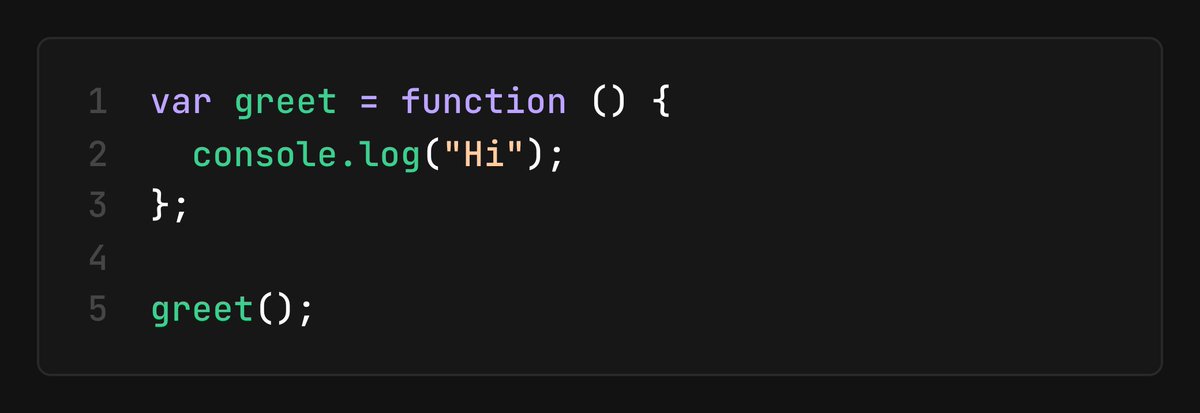
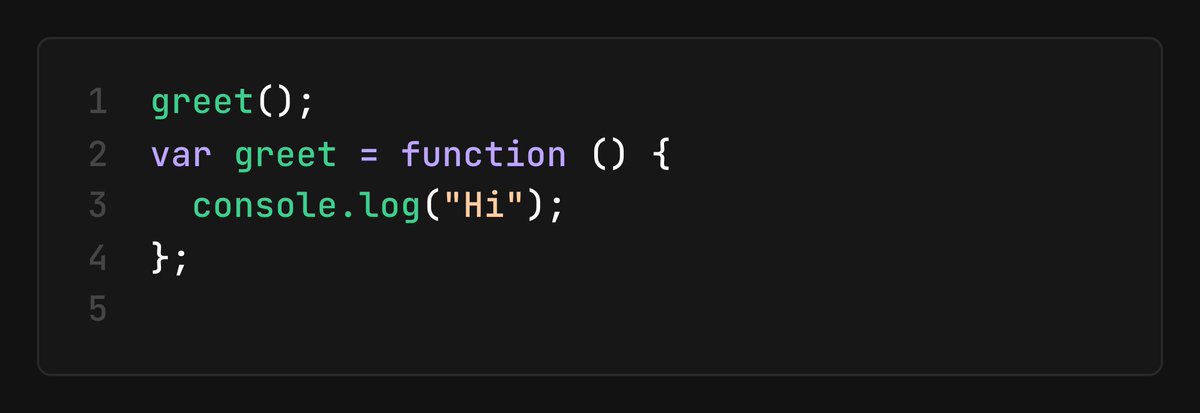
If you truly want to understand advanced concepts like closures, lexical scoping, and hoisting, then don’t start with the buzzwords.
Start from here 👇
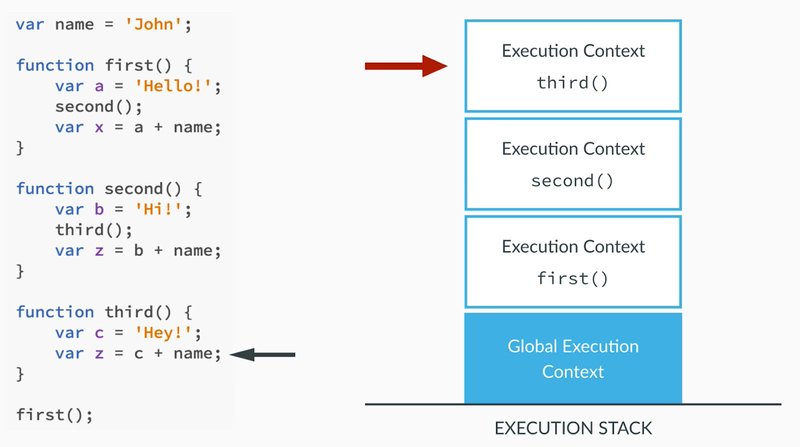
How JavaScript actually runs your code.
Before jumping into “what” closures are, understand:
• What is an Execution Context
• What are its types? (Global & Function)
• What are the two phases of an execution context? (Creation & Execution)
Because here’s the truth:
Closures don’t “magically” remember variables.
Hoisting isn’t “moving code to the top.”
Lexical scoping isn’t just a definition to memorize.
They all make sense only when you understand what the JavaScript engine is doing behind the scenes.
Skip this foundation, and you’ll end up memorizing behavior instead of understanding it. (I did the same earlier.)
Learn the runtime first.
Everything else becomes obvious.
Finally left my job because I was feeling very stuck there. It's time to invest some time in learning the essentials where I lack or am not that strong:
- DSA (Problem Solving)
– Deepening JS/TS/Node fundamentals
– Go deeper into backend systems
- Building some cool projects (GenAI and more)
From today, I’ll be sharing everything I learn along this journey.
Damn, they ghosted me. I waited for 3 days — I don’t think they’re going to call me now. 🥲🥲
Even though I had a great interview and answered every question well, this really says a lot about the current job market
Yesterday evening, I had a frontend interview (Next.js & React) at Scalong.
They asked mainly about:
Next.js:-
SSR, ISR, SSG
Special files & file conventions
Performance optimizations
SEO
React:-
Why React is needed
What problems it solves & how
Some coding snippets (mostly around useState and useEffect)
JavaScript:-
Hoisting
Closures (with code)
Promises (with code)
Event loop
To all React & Next.js devs: prepare these concepts — these questions repeat everywhere.
Happy to share that I cleared this round 🎉
Second round is tomorrow , will share more insights after it finishes.