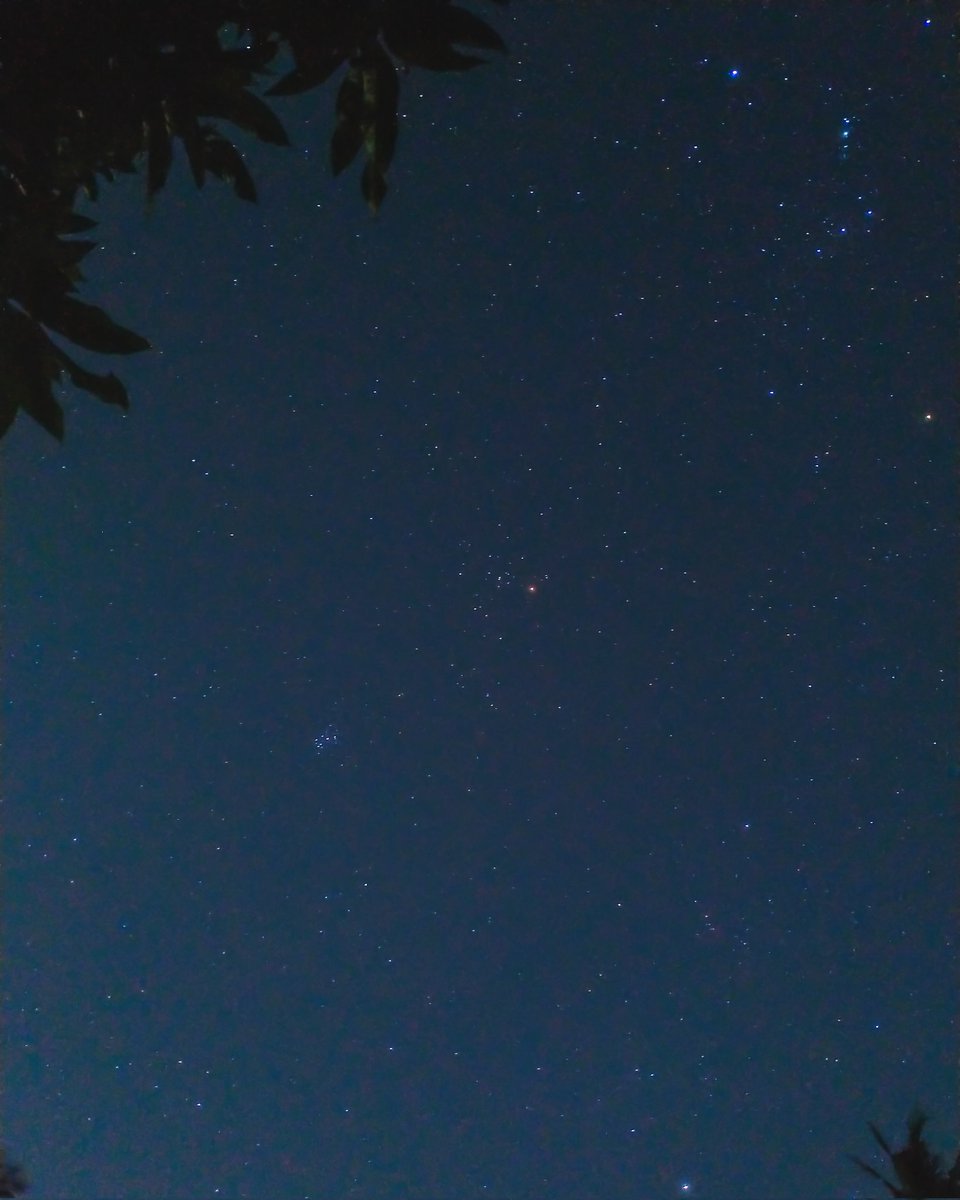
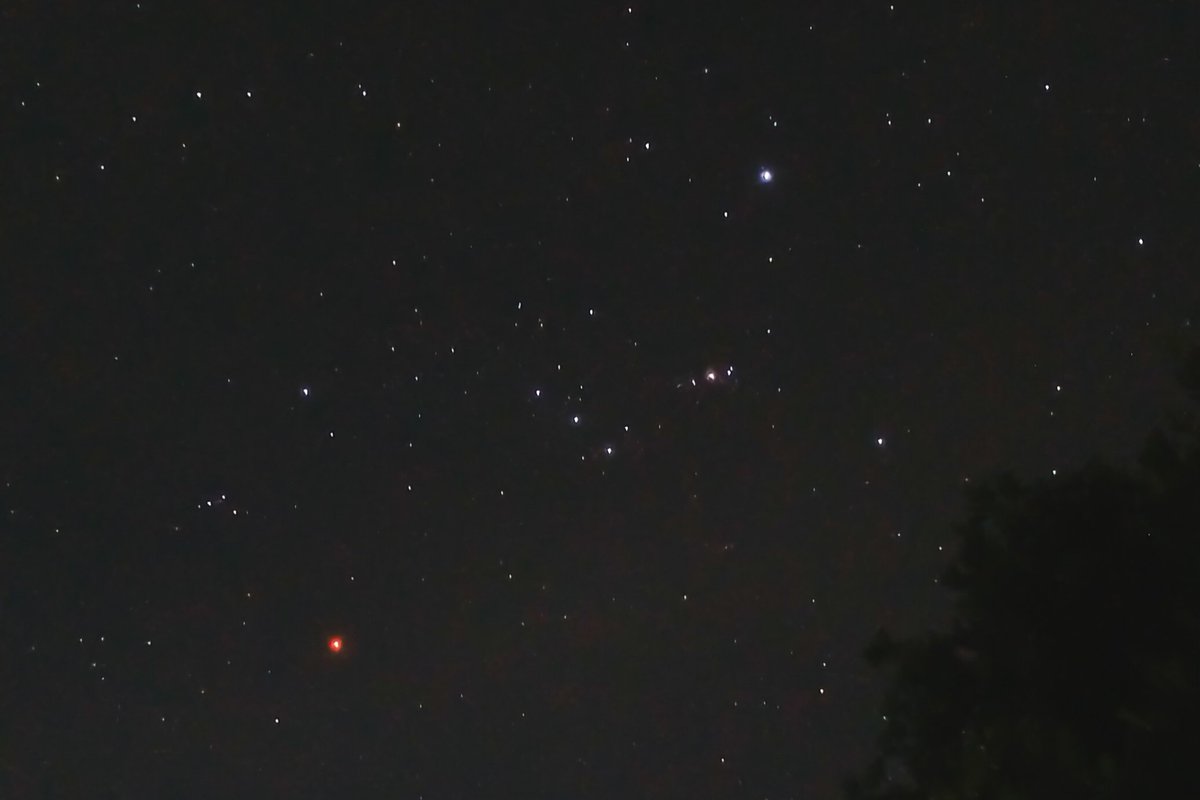
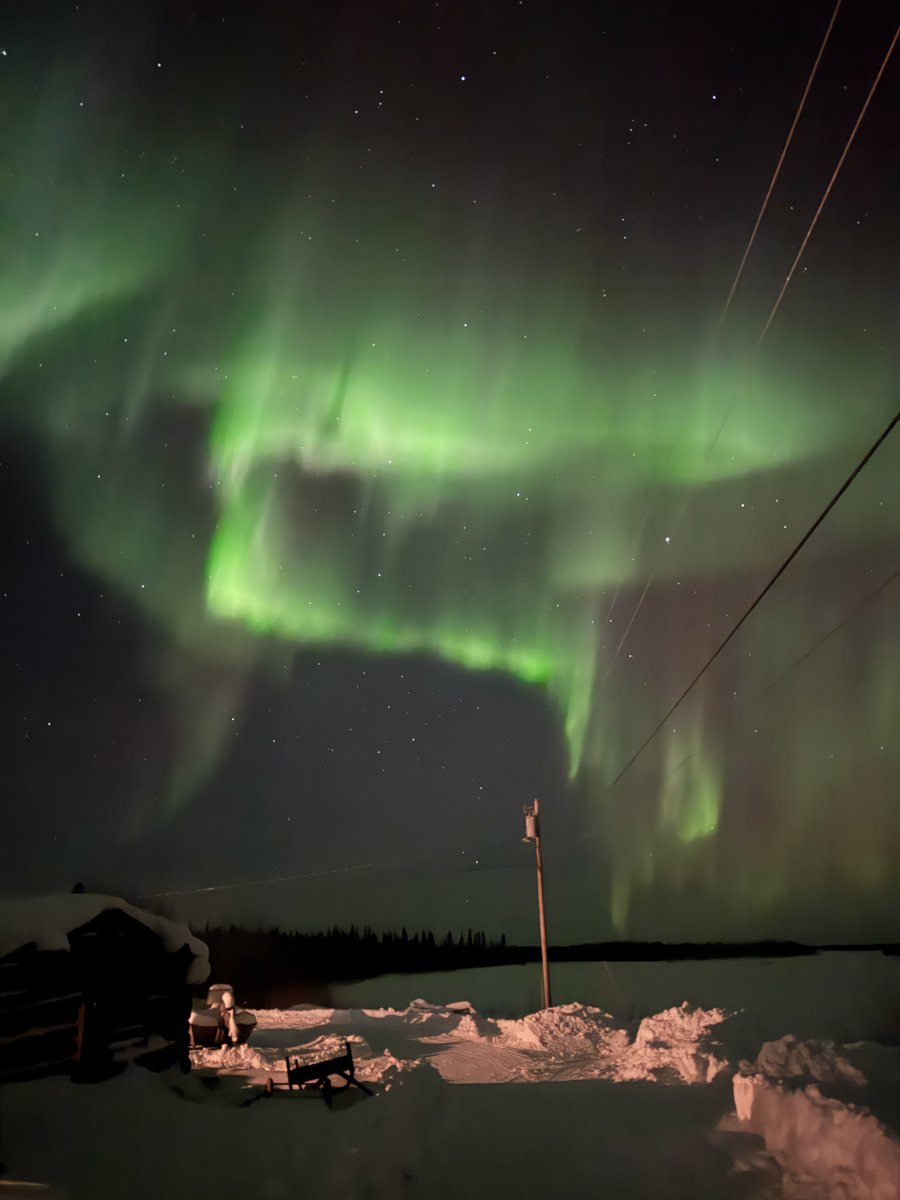
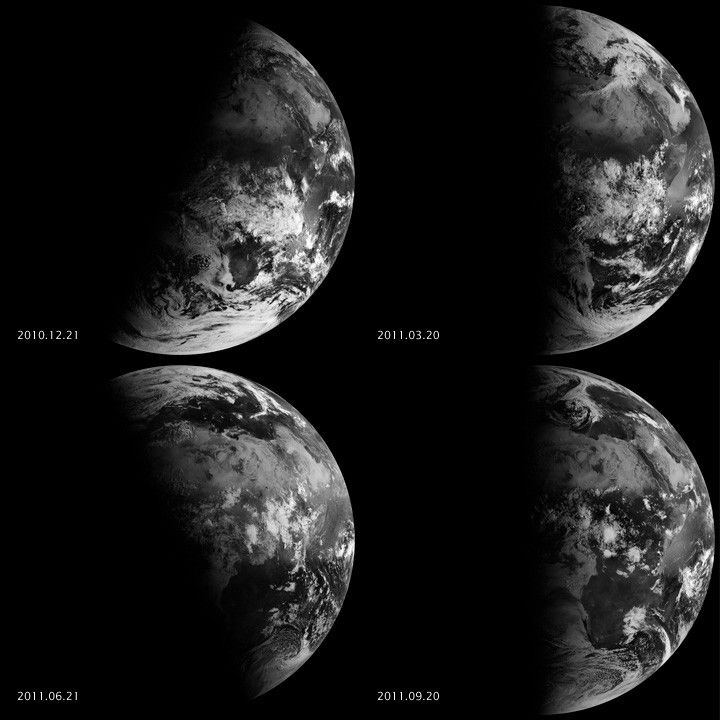
Happy vernal equinox! 🍀
Today marks the first day of spring in the Northern Hemisphere and the first day of autumn in the Southern Hemisphere.
After today, the Sun will shine more directly on the Northern Hemisphere than on the Southern Hemisphere until the autumnal equinox.
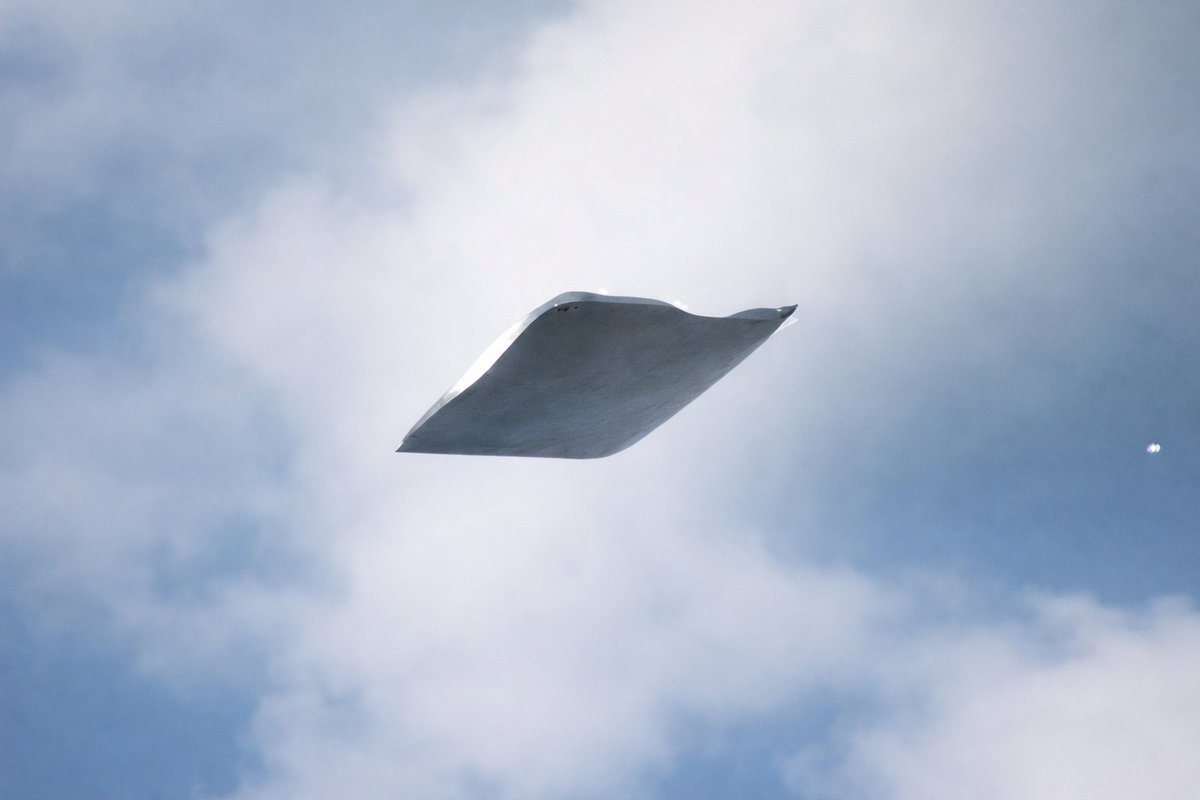
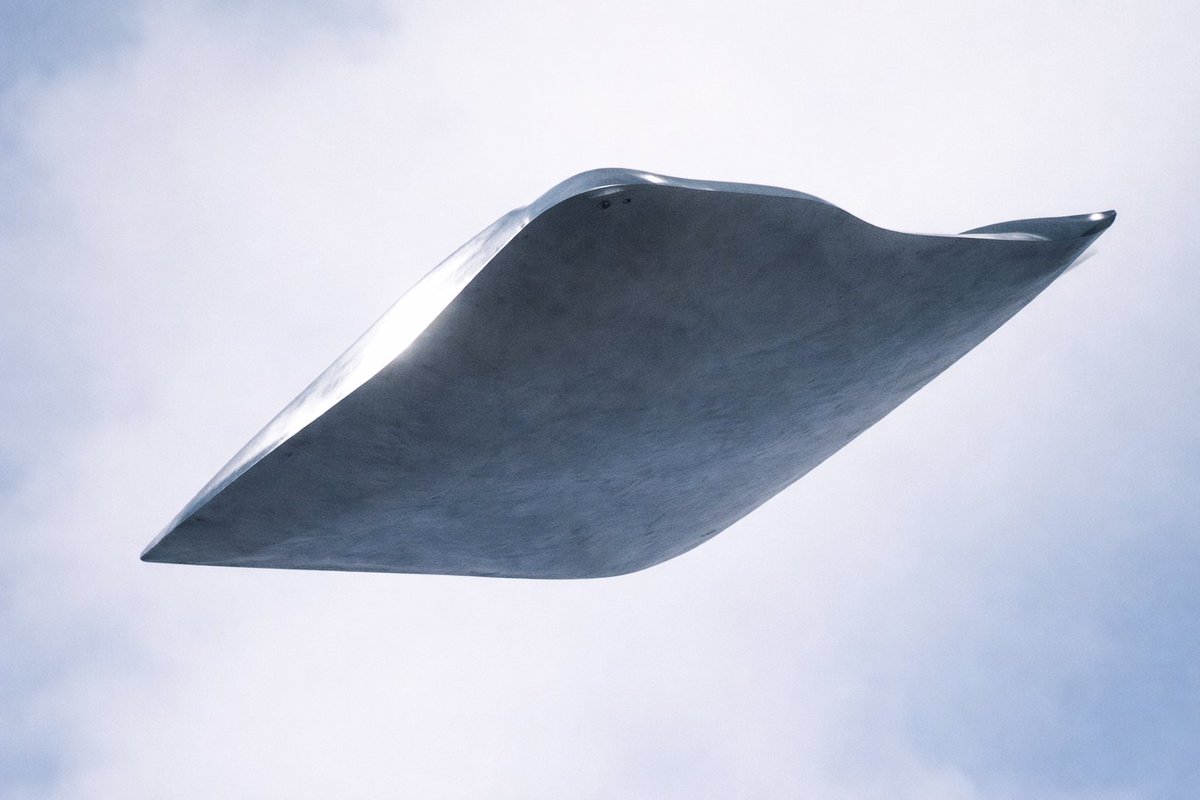
A Colombian pilot flying at 12,500 feet captured what is being described as the best UFO footage ever recorded, and its authenticity has been confirmed.
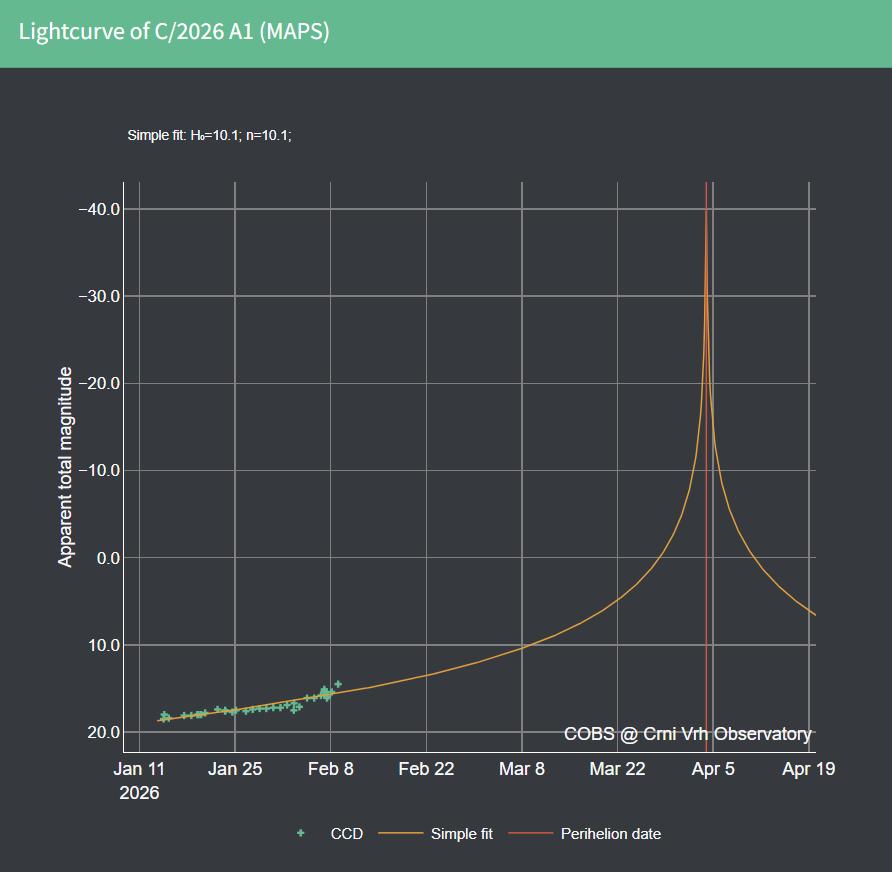
The projected lightcurve of Comet C/2026 A1 (MAPS) is insane... Perihelion is April 3rd, it is possible this becomes the greatest comet of the 21st century, who knows!
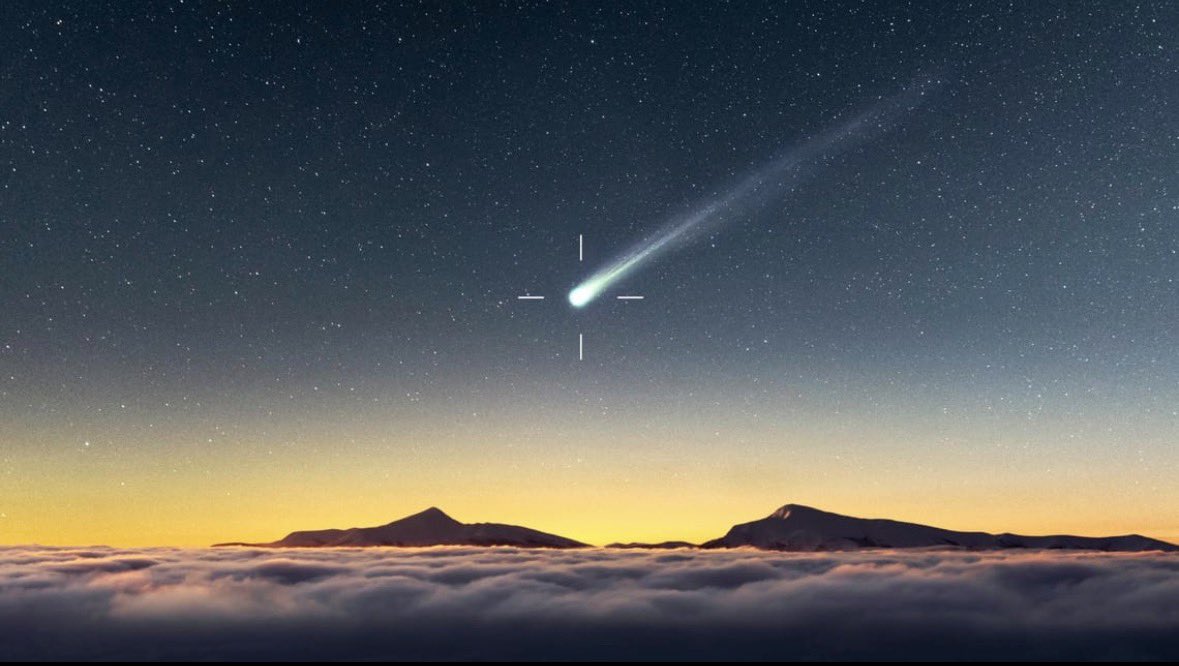
A new comet, designated C/2026 A1 (MAPS), was recently discovered. It belongs to a class called Kreutz “sungrazer” comets, which follow extremely close paths past the Sun. Some members of this group in the past have become extraordinarily bright when they survived their close solar passages. 
Right now:
There is credible astronomical talk about C/2026 A1 potentially becoming very bright later this spring. Many popular sites and space news outlets are reporting that if it survives its very close approach to the Sun around April 4, 2026, it could become bright enough to see without a telescope, possibly even during the daytime near the Sun’s position in the sky. 
However:
This brightness prediction isn’t certain. Comet brightness is extremely hard to predict before it actually nears the Sun. Sungrazers like this often break apart or fade under intense solar heat and tidal forces before they get bright enough to see easily from Earth. Most newly discovered comets don’t end up visible in broad daylight. 
If this one does become very bright, any daytime visibility would likely only be when it is very close to the Sun in the sky (so near the Sun’s position at sunrise or sunset), and only for observers in the hemisphere where it’s above the horizon at that time. Southern Hemisphere observers are currently expected to have better viewing conditions because the comet’s path stays lower in the northern sky before perihelion. 
In summary: Yes, astronomers have identified a comet with the potential to be spectacular and possibly visible without optical aid, but it is not guaranteed to become as bright as some dramatic headlines suggest. Daytime visibility would be rare and only under specific sky geometry and brightness conditions, not something certain for all places on Earth.