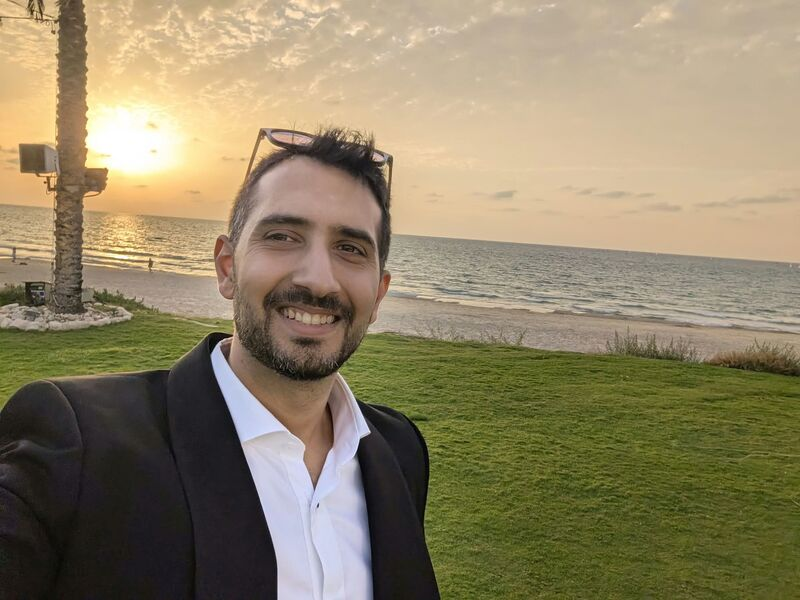
Hi X,
I'm new here, so I wanted to introduce myself:
I'm Yaniv, co-founder and CEO of X5 Labs. We build governed AI that learns how work actually gets done inside regulated enterprises, and we're building with a top-5 US bank, a global financial institution, and one of the largest hardware manufacturers in the world.
• Studied electrical engineering at NYU and led an algorithm research team there.
• Spent 7 years in the IDF's 8200 unit working on computer vision and machine learning (<1% acceptance rate). What got me in was understanding I didn't know everything, and being built to be trained.
• Went from researcher to research team lead to VP R&D. That's where I learned the gap between a model that works and a model that works in production.
• Led algorithm research at SAIPS, Ford's Israeli autonomous-vehicle subsidiary.
• Co-founded and ran my first company as CEO. When I stepped back, I realized most of what ran it was never written down.
• Started X5 Labs to fix that.
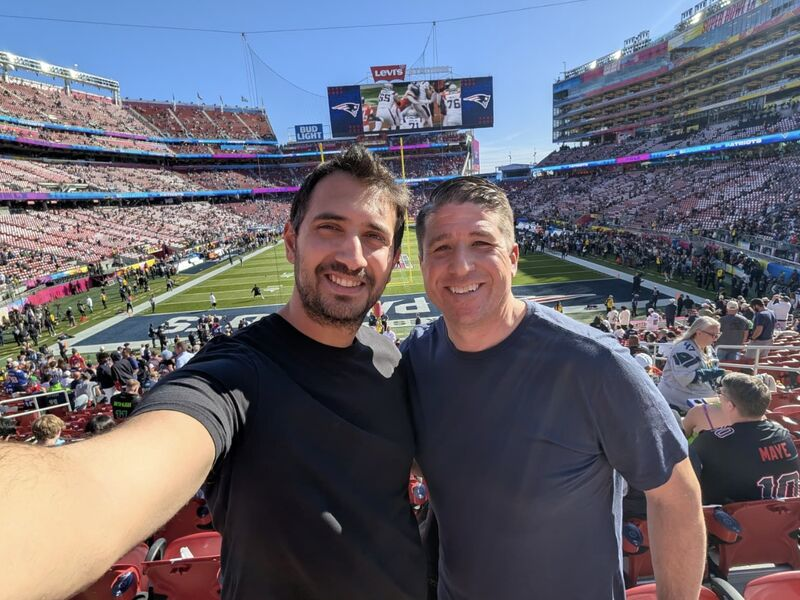
• Spent 72 hours at Super Bowl LX with over 50 CIOs and Fortune 100 VPs where the same questions came up in almost every conversation.
I'll be sharing a lot more here: what happens when an AI agent hits its first exception inside a major bank, what you find when you watch how employees actually work, and why knowing when an agent should stop matters more than letting it run.
Got a question about any of it? Drop it below and I'll answer the best ones.
You could give a bank the smartest model in the world tomorrow, and it still wouldn't understand how the bank actually works.
I'm a big believer that the next real breakthrough in enterprise AI comes from models understanding the environments they're expected to operate in.
That environment is a company's systems, permissions, exceptions, and the judgment calls its people make every day.
A process diagram shows the official steps while a model has to understand how people actually carry them out:
- What they check
- What they ignore
- What they escalate
- Where judgment comes in
Every major organization will eventually have its own operating intelligence, grounded in how that specific business works and learned process by process. I think we'll see early forms much sooner than people expect, even in the most complex, regulated businesses.
The shift I care about is AI moving from understanding the world to actually operating within it. Not to replace anyone, but to empower whoever comes next so they don't have to spend all that time learning from the same mistakes.
When an exception appears in a regulated business, the first question is who decides what happens next.
I'd rather focus on what won't change.
In 10 or 20 years, the people running regulated enterprises will still need to:
1. Prove what happened at every step.
2. Show where judgment entered the workflow.
3. Keep people accountable for decisions.
4. Stay within their own security boundary.
5. Handle the exceptions nobody planned for.
6. Keep how the work gets done after the people who know it move on.
Models will keep getting more capable, and the tools around them will keep changing, but these won't.
What lasts in enterprise AI will be built on how the work actually gets done.
I walked off a stage in Miami and had 12 minutes to get to a meeting with a global bank's CIO. I didn't even have time to take my mic off.
I call it founder whiplash. It comes with the territory of building a global startup.
Last week I spoke at Boldstart Ventures' annual LP meeting in Miami. Was great getting to connect in person with Ed Sim, Eliot Durbin, and Ellen Chisa.
I spoke about our vision for the next frontier of AI: moving beyond models that understand the world to building intelligence that understands how enterprises operate, learns how work gets done, and enables AI to execute it.
Everyone assumes AI made building a startup easier.
In some ways it did.
It also made the human part worth more than it used to be. A CIO still has to decide whether to trust you with his bank's workflow. An LP still has to decide whether to trust you with their fund's capital.
And I wouldn't trade either room for a call. There's something about being there in person I still love, whiplash and all.
Those decisions still happen best in a room, in real time, and one at a time. Because the building itself moves faster now, more of those rooms land in the same week than they used to.
If I had one thing to warn other founders building at this pace, it's that even though you can't be in two places at once, your schedule will probably look like it.
Our US team finally made the 600,000 mile trip to Israel.
It reminded me that nothing beats building in the same room.
Bill Serino, our CRO, and Ben Venker our Head of Product, flew in and spent the week with us. For most of the team, it was the first time meeting face to face, and the difference showed up fast.
When you build one company seven hours apart, you get good at communicating over threads, shared docs, and calls booked during the hours both sides are awake.
In the office, the work moved differently.
I would stop Bill in the hallway with "come take a look at this." Two minutes in, we'd realize someone else needed to see it and pull them in too.
A question that would have taken a whole thread turned into three people looking at the same screen, working it out in real time.
I spend most of my time arguing that the real work inside an enterprise lives in places nobody documents (i.e. the exceptions, the escalation calls, the judgment between the steps).
Last week reminded me the same applies to us.
Some of our best product decisions came out of conversations that just happened in the spur of the moment.
Make the time to bring your team together.
You won't regret it.
I spent 72 hours at Super Bowl LX with over 50 CIOs and Fortune 100 VPs, and the same questions came up in almost every meeting.
- What happens when an agent hits something it's never seen before?
- How does it understand the organization's actual policies and processes.
- Who gives it permission to act?
- What happens when it's wrong. How do you prove what it did afterward?
When you're the one operating a bank or an insurer, these are all mission critical questions.
Every room cared less about how smart the models were than about whether anyone could trust what they'd actually do once they were running.
I'm a big believer that the next real breakthrough in enterprise AI comes from models understanding the environments they're expected to operate in.
That was in February. Eight months later, we're building the answer to those questions with a top-5 US bank, a global financial institution, and one of the largest hardware manufacturers in the world.
Hi X,
I'm new here, so I wanted to introduce myself:
I'm Yaniv, co-founder and CEO of X5 Labs. We build governed AI that learns how work actually gets done inside regulated enterprises, and we're building with a top-5 US bank, a global financial institution, and one of the largest hardware manufacturers in the world.
• Studied electrical engineering at NYU and led an algorithm research team there.
• Spent 7 years in the IDF's 8200 unit working on computer vision and machine learning (<1% acceptance rate). What got me in was understanding I didn't know everything, and being built to be trained.
• Went from researcher to research team lead to VP R&D. That's where I learned the gap between a model that works and a model that works in production.
• Led algorithm research at SAIPS, Ford's Israeli autonomous-vehicle subsidiary.
• Co-founded and ran my first company as CEO. When I stepped back, I realized most of what ran it was never written down.
• Started X5 Labs to fix that.
• Spent 72 hours at Super Bowl LX with over 50 CIOs and Fortune 100 VPs where the same questions came up in almost every conversation.
I'll be sharing a lot more here: what happens when an AI agent hits its first exception inside a major bank, what you find when you watch how employees actually work, and why knowing when an agent should stop matters more than letting it run.
Got a question about any of it? Drop it below and I'll answer the best ones.
OpenAI doubling workforce for enterprise
Yes, the last mile in the enterprise is the longest and messiest - you still need people
“OpenAI would also step up recruitment of specialists to focus on what the company calls “technical ambassadorship”, helping businesses make better use of its tools, according to the people.”