What have we learnt working with several projects who have adopted scratch orgs, modular/package-based development over the last year? @SalesforceArchs@salesforce
Let's begin by looking into Scratch Orgs,
A thread.🧵
@opencode sdk is so easy to integrate. The ability to switch among differ providers itself is a big win. Building coding agents is now for everyone
Thanks @thdxr and team for the awesome stuff!
@kelseyhightower@diegosucaria What people is missing is that because they designed the system as a set of decoupled services they could easily pack them together to save the overhead of data passing.
Decoupling (which is the basic tenet of microservices) allows for more deployment options than a monolith.
@rohitforce@danielfe@SalesforceDevs Thanks @rohitforce will schedule some time up with you . Its not the metadata type . but rather the record based configuration and auto generated stuff from managed packages
@danielfe@rohitforce Is there any improvements in the roadmap for a beefier scratch org? Something that has more file storage? This would help with imdustry cloud development or certain managed packages #sfdx@SalesforceDevs
Nope. Disambiguating "deploys" from "releases" and using flags to manage releases will still make sense, even in a Glorious Future where deploys are just as instantaneous as flag flips. ☺️
But this is a terrific thought experiment!! Let's review the reasons why. 👉
It's peculiar to me that the most challenging thing we do as Salesforce engineers is try to make DevOps work.
Salesforce has created billions of dollars worth of challenges with their odd deployment mechanisms.
🤔
@MitchSpano Agree with all of it here, metadata API needs some serious investment, Its so frustrating to see when a new type comes out , that can only be retrieved but not deployed ! The amount of work around we have to do in our tooling is growing every day
@stephen_wolfram@OpenAI What’s funny to me, is that we spent so many years developing clever ways for machines to communicate with one another, and in the end we ended up with English as the RPC protocol 🤔
Happened upon this today. This is a document that quite literally changed my life. If you're a technical practitioner working with Salesforce and you've not read it. Stop what you're doing and read it now. #YoureWelcome https://t.co/zR3TMyW9IH
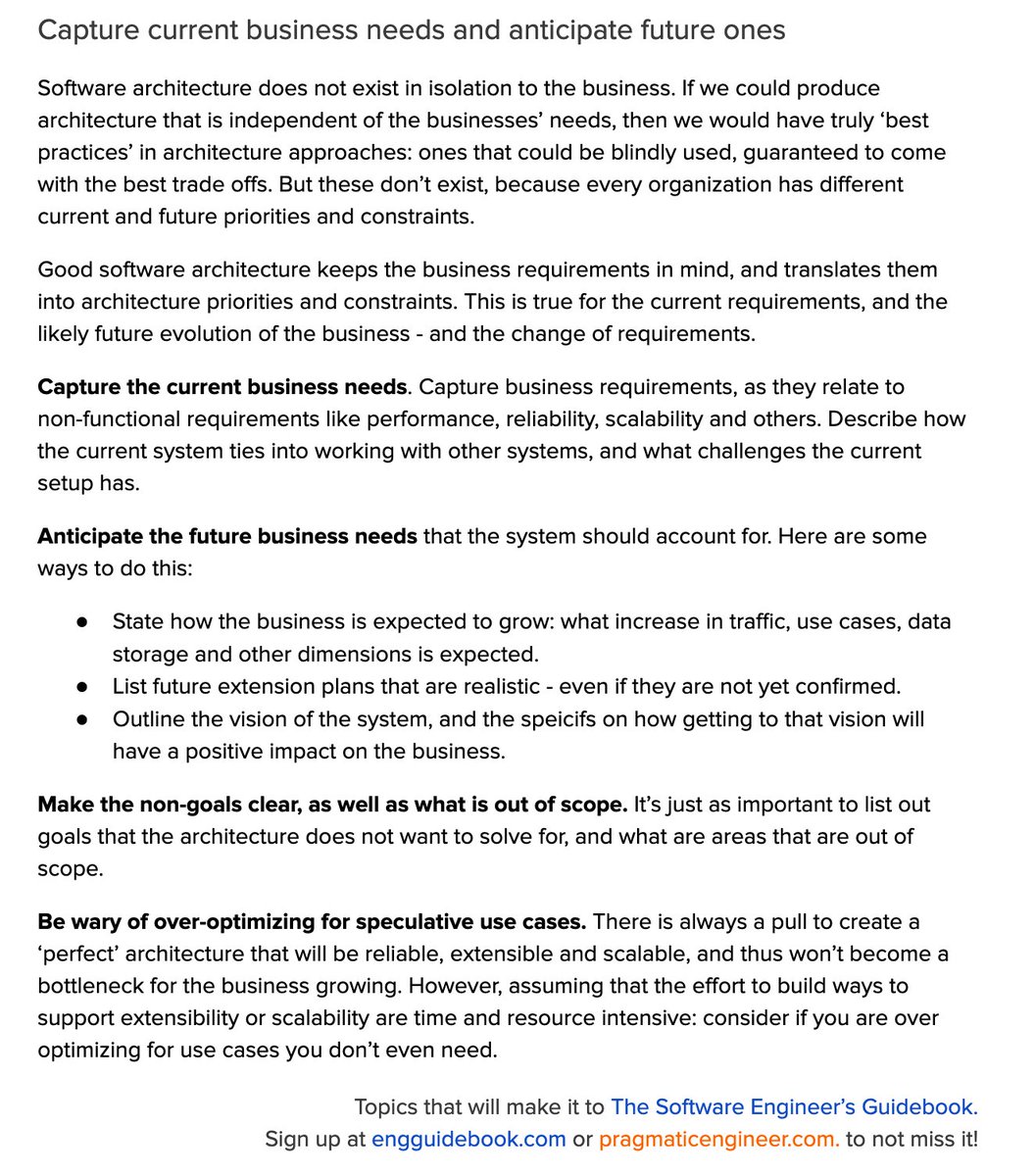
When 'architecting' a system - aka planning how to build it, what components to put in place, what technologies to use - what are considerations you should take?
Here's an important one: capture the current business needs, and anticipate future ones:
Check out my latest blog post where I share some challenges we faced and how we improved our workflow using Scratch Org Pools.
Learn how to speed up your scratch org creation and enhance your development experience.
#salesforce#sfdx#dxatscale
https://t.co/WKZbnlEkIB
@rsoesemann@RobSalesforce@karenfidelak@AndrewDavis_io Nope, it is definitely possible, thats what we do with @dxatscale ;) For starters, we even recommend version controlling manual pre/post steps . Its a bit more challenging for 'native devops platforms' to figure out the right representation to version control and make it readable