Francis Fukuyama recently shared a compelling piece titled “The Myth of Authoritarian Efficiency” by political scientists Jørgen Møller and Svend-Erik Skaaning (Aarhus University / V-Dem project).
The article dismantles the popular notion that authoritarian regimes—particularly China—are simply better at “getting things done.” Drawing on historical data and comparative evidence, the authors argue that democracies consistently outperform autocracies over the long term across critical domains:
• Military effectiveness: Democracies have won more than 80% of wars since 1815. Greater legitimacy enables citizens to make greater sacrifices, and democratic alliances prove more durable.
• Economic performance: While autocracies can drive catch-up growth to middle-income levels, they struggle to transition to innovation-driven, knowledge economies that require rule of law, intellectual property protection, and open debate. High-quality democracies show a modest but robust long-run growth advantage.
• Avoiding catastrophe: Autocracies periodically produce large-scale man-made disasters (Mao’s Great Leap Forward, Soviet collectivization). Institutional checks and public scrutiny in democracies make comparable failures rare.
• Crisis management & environment: Transparency, independent science, and accountability lead to better outcomes on pandemics, climate policy, and environmental indicators. China’s zero-COVID flip-flop and overstated economic statistics illustrate the risks of centralized, unaccountable decision-making.
The authors acknowledge democracies can be slow and messy, but emphasize that self-correction mechanisms ultimately make them more resilient and effective than systems that concentrate power without feedback loops.
Francis Fukuyama, author of the landmark book The End of History and the Last Man, continues to spark important conversations about the enduring strengths of liberal democracy in an era of renewed authoritarian confidence.
Full article (highly recommended):
https://t.co/rdLYptPLnY
What’s your take—do you see evidence of this “myth” playing out in emerging markets or great-power competition today?
#Democracy #Geopolitics #China #EmergingMarkets #InternationalRelations #PoliticalEconomy
Exactly five years ago, as a Member of the European Parliament, I filed a 22-page complaint with the European Commission arguing that Spain's €53 million rescue of Plus Ultra, a tiny airline with Venezuelan shareholders operating four leased planes on three Latin American routes, was illegal state aid.
The company was not strategic: 0.1% of Spanish aviation passengers, position 77 by passenger volume. The aid was nearly eight times its financial debt and more than three times the maximum the Commission's own rules allowed. The capital that lifted it out of "firm in difficulty" status pre-Covid (a requirement of the aid approval) came from a €6.3 million participative loan from a Panamanian bank, of which €4.1 million was locked as collateral in a foreign account. The actual loan was €2.2 million.
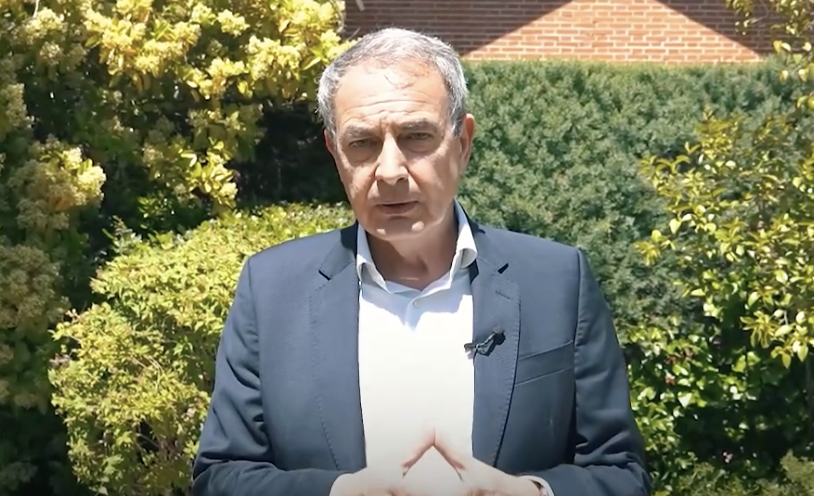
Today the Audiencia Nacional has indicted former Prime Minister Zapatero for organised crime, traffic of influences, and document falsification in the same case. The criminal investigation alleges that the rescue funds were used to launder money from Venezuelan corruption, with €1.5 million in commissions paid through a consultancy owned by a Zapatero associate.
Plus Ultra is what the "entrepreneurial" state looks like in practice. A small concentrated group (Plus Ultra's shareholders and their political contacts) captured a large diffuse rent (€53 million of Spanish taxpayer money). The politicians making the call were not maximising the survival of strategic Spanish industry.
Rules are out and discretion is back on both sides of the Atlantic. Trump grants tariff exemptions firm by firm, takes equity stakes in Nippon Steel and Intel, allocates CHIPS Act funds on terms that are not public. Everyone in the know trades on the news.
When the market fails the easy solution is "let the state intervene". But the state is not composed of angels, but of politicians who are human beings. When designing solutions to "market failure" one has to always wonder "with this design and these incentives, are there reasons to believe the state will be able to do this better"?
I explained the Plus Ultra case here:
https://t.co/vaT0zOaShY
Link to my allegations in spanish: https://t.co/FWqpynQU5p
And thread below
Lo más escandaloso del auto de imputación de Zapatero es la sospecha de haberse lucrado con el hambre de los venezolanos.
Ese es el dato que eleva el caso por encima del rescate de Plus Ultra, de las consultorías y de una supuesta red de influencias en Madrid: el juez vincula expresamente la trama atribuida al expresidente con fondos procedentes de PDVSA y del programa de alimentos del chavismo, CLAP.
Ese es el corazón moral de este escándalo. El expresidente que durante años viajó a Caracas para negociar con Maduro aparece ahora, según el auto, en el rastro de una estructura que habría movido y blanqueado dinero conectado con la gran corrupción chavista: petróleo saqueado, sociedades pantalla, canales financieros opacos y el negocio de las cajas de comida para una población hambrienta.
El CLAP no es una corrupción cualquiera. Es la trama que, según el Tesoro de Estados Unidos, permitió a Alex Saab canalizar dinero hacia los hijastros de Maduro para obtener contratos públicos sobrevalorados y convertir un programa creado para alimentar a los venezolanos más vulnerables en una maquinaria de sobornos, sobreprecios y enriquecimiento para los próximos al poder. Ese es el universo corrupto que ahora aparece en el auto de Zapatero.
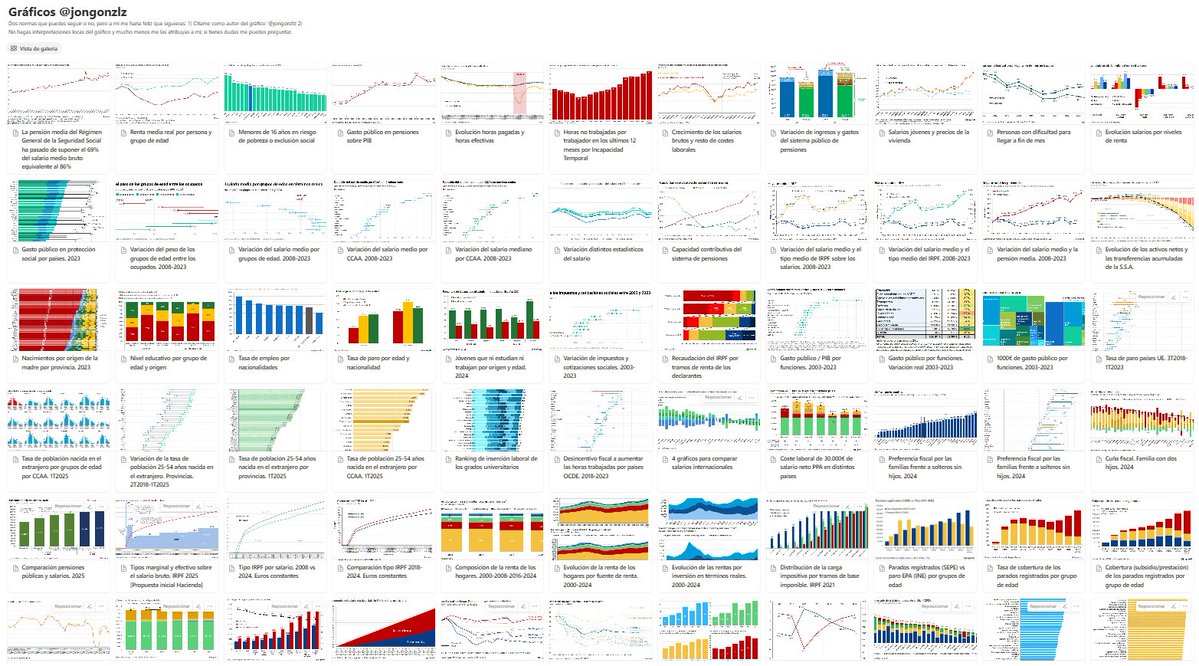
Los linchadores profesionales lo han conseguido y han expulsado a @Jongonzlz de aquí. No les gusta que trabaje en un banco. No les gusta que sepa hacer números y explicar que no existe ninguna ‘hucha de las pensiones’, que el PIB per cápita lleva años estancado igual que la productividad por hora trabajada, o que la presión fiscal sobre salarios bajos y medios ha aumentado desde 2018.
No soportan el rigor, el trabajo ni la excelencia. Porque el linchamiento suele ser el refugio de la mediocridad.
Este post de apoyo a @Jongonzlz está escrito y publicado conjuntamente con @lugaricano.
El sistema público de pensiones contributivas en España se encuentra en una situación muy complicada.
El sistema actual ofrece a los cotizantes una rentabilidad real implícita anual del 3,63 %. Dado el crecimiento de los cotizantes y de la productividad en España, esta tasa está al menos dos puntos porcentuales por encima de la que garantiza la sostenibilidad del sistema a largo plazo. De manera más sencilla: el valor presente descontado de las pensiones contributivas es aproximadamente un 60 % mayor que el valor presente descontado de las cotizaciones. Los jubilados contributivos en España están recibiendo mucho más de lo que pagaron.
Esta rentabilidad excesiva ha generado un problema fundamental: un déficit del sistema contributivo de unos 61.000 millones de euros (el de verdad, no el de las cuentas del Gran Capitán que incluyen las transferencias del Estado) y que no deja de crecer. Este déficit genera presiones sobre las cuentas públicas que limitan la capacidad de las administraciones públicas para implementar muchas políticas necesarias, desde la educación hasta la infraestructura. Y desde el punto de vista de la equidad intergeneracional, esta rentabilidad excesiva nos ha colocado en la paradójica situación de que las personas de 65 a 85 años tienen la renta disponible más alta de todos los grupos de edad en España.
El sistema necesita una reforma profunda. Por ejemplo, es clave reintroducir un factor de sostenibilidad en el valor de las pensiones que considere el crecimiento de los cotizantes, la productividad y la esperanza de vida. Muchas economías avanzadas han introducido estos factores e incluso España avanzó en esa dirección hasta la reforma Escrivá de 2021-2023.
Jon González, @Jongonzlz, de manera casi solitaria, ha acometido una labor impagable de documentar esta situación (y otros temas clave de nuestra economía), y ha conseguido poner a la sociedad frente al espejo de la insostenibilidad de la situación actual.
Desgraciadamente, el sistema político no tiene ninguna gana de enfrentarse a este problema. La edad mediana del votante español está en torno a los 51 años. Uno de cada tres electores tiene 60 años o más; uno de cada cuatro ha cumplido 65 años. Si se suman a los 15 millones de inactivos en edad de votar los casi 3 millones de empleados públicos, el resultado es que más de la mitad del censo electoral residente en España vive de una transferencia o de una nómina pagada con impuestos. La aritmética básica de cualquier elección en España descansa, por tanto, sobre un electorado en el que la minoría la constituyen los asalariados del sector privado en edad activa.
Pedir a un partido con vocación de gobierno que recorte la rentabilidad implícita de las pensiones contributivas es pedirle que confronte directamente a su votante mediano. Ningún sistema político hace eso voluntariamente y el español no es la excepción.
Por eso, en lugar de hablar de números, se busca descalificar al mensajero. Desafortunadamente, las narrativas maniqueas de buenos y malos—si eres bueno, prefieres pensiones altas; si no eres malo o estás a sueldo de los malos, tienen éxito en España porque nuestra conversación nacional se centra siempre en la “justicia” o la “moralidad” y nunca en los números.
Es normal: somos un país con poca tradición de análisis riguroso y, menos aún, de análisis basado en los números. “Mi abuela merece una pensión más alta” siempre es más fácil de explicar que “la rentabilidad real implícita del sistema está por encima de lo que nos podemos permitir”, y, además, le coloca a uno en el “lado bueno”: el de los que quieren dar más dinero, no menos, como los malvados economistas.
Pero lo realmente preocupante no es que se intente descalificar al mensajero en lugar de analizar sus argumentos. Lo que se busca es poner en riesgo su situación profesional. Ante las órdenes de la Moncloa, cualquier trabajo en España es precario. Nosotros mismos lo experimentamos en carne propia cuando, en 2012, se nos despidió de FEDEA, una fundación con la que colaborábamos, por orden directa y explícita de Moncloa.
Ya no es una cuestión de si uno está de acuerdo o no con Jon. Es algo mucho más importante. ¿Se puede analizar la realidad económica de España sin que las jaurías mediáticas busquen tu “cancelación” profesional?
Es este el momento de decir las cosas claras y mostrar nuestro apoyo absoluto y total a Jon. Por eso hemos tomado la decisión inusual de publicar este post simultáneamente.
Jon, te agradecemos profundamente lo que haces.
People shocked by what Donald Trump is saying here should not be. The US is moving into a position not unlike Britain’s in the 1920s and 30s.
This aggressive approach to burden sharing is not new. Britain did much the same to the Dominions!
As Sir Samuel Hoare made clear, if they did not step up, the implicit guarantee of imperial protection could not be taken for granted. The language was more polite, but the blunt message was the same.
“A human being should be able to change a diaper, plan an invasion, butcher a hog, conn a ship, design a building, write a sonnet, balance accounts, build a wall, set a bone, comfort the dying, take orders, give orders, cooperate, act alone, solve equations, analyze a new problem, pitch manure, program a computer, cook a tasty meal, fight efficiently, die gallantly. Specialization is for insects.”
— Robert A. Heinlein
I had dinner once with a top physicist and a top computer scientist and asked what they thought the probability was that we were in a simulation.
They answered simultaneously at 0% and 100% respectively. It was like a double-slit experiment, but with humans.
One of the more frustrating trends in public life over the past decade is how people who lead failing institutions blame social media for their failures.
A university president whose faculty have become political activists instead of educators and whose administrators multiply like rabbits will tell you that “misinformation on social networks” is eroding public trust in higher education. An editor whose publication lost its readership will claim that the real problem is X, rather than consider that the publication became boring, that the writing was uniformly uninspired, and that it stopped covering anything that mattered. A politician who loses an election will blame Meta algorithms rather than admit that voters simply did not like what was offered. A central banker whose institution missed the worst inflation in 40 years will worry publicly about TikTok videos spreading financial illiteracy.
The pattern is always the same. The institution fails at its core mission. The public notices. The people in charge, rather than examining what went wrong, identify an external force that is “polarizing.” The diagnosis is never “we did a poor job.” It is never “we lost our audience because we gave them nothing worth reading.” The diagnosis is always “bad actors are distorting the conversation.”
This is not new, of course. Before social media, talk radio was the scapegoat. Before talk radio, it was television. Before television, it was tabloid newspapers. Every generation of leaders has found a communication technology to blame for people’s loss of trust in them.
What is new is the intensity and the shamelessness. Over the last few years, “social media” has become a universal excuse that requires no evidence and tolerates no scrutiny. It is deployed reflexively.
The people who make this argument never seem to ask the obvious question: why are people on social networks so receptive to criticism of your institution in the first place? If your university were delivering excellent education at a reasonable price, no number of tweets would persuade parents otherwise. If your publication were covering important questions with clarity and substance, readers would not have migrated elsewhere. If the work you showcased were serious rather than trivial, people would still be paying attention.
Trust is not destroyed by social media. Trust is destroyed by poor performance, and social media makes it harder to hide. That is a different thing entirely, and the people running these institutions know it, which is what makes the excuse so cynical.
The honest version of the argument would be: “We used to be able to fail quietly because there was no mechanism for people to compare notes. Now there is, and we do not like it.”
That, at least, would have the virtue of being true.
@LandsknechtPike Slingers were usually shepherds who spent hours every day practicing since early childhood. There was no much else to do while tending the sheep and it was a useful skill to fend off wild dogs or wolfs and to hunt birds.
@cultrun La private equity es una de las mayores burbujas de la historia, basada en contabilidad trucha. Llevan años colocando basura a los inversores retail mientras la gente que sabe reduce exposición. Ahora está explotando por el lado del private credit, Blackrock restringe por eso.
Several colleagues in DC have been asking about Spain’s position on the war with Iran. The reality is very different from the public rhetoric. The fear of Trump’s ire (sanctions, visa restrictions) seems to have weighed on the government, and in practice PM Sánchez has ended up doing the opposite of what he’s been saying publicly. The bases in Spain are being used, Spain has sent a frigate to Cyprus, and military coordination with the U.S. continues through NATO channels, and also bilaterally. At the operational level there is no real opposition from Spain to the U.S. campaign. Zero. What we are seeing is more a political message for domestic consumption. The government rules in minority and depends on support from the far left, so the tough language serves as a political slogan. On the ground, cooperation with the U.S. does and will continue.
Sánchez effectively lost his parliamentary majority several months ago, and his legislative initiatives are routinely defeated in parliament. Spain has not passed a new national budget since 2023, which illustrates the legislative paralysis that currently characterizes Spanish politics. However, he has refused to call an early election and instead governs largely through executive decrees. The Spanish constitution does not require a prime minister to call elections simply because he lacks a stable majority, but the usual political practice in parliamentary systems is to seek a renewed mandate when legislative governance becomes impossible.
Furthermore, the corruption scandals are getting closer to him. His brother has been indicted, his wife may soon face indictment, and all four of his closest collaborators during his primary campaign and early government have been indicted (see the photo I include from the primary: all four of his companions are indicted). One of them is currently in prison without bail, and another spent time in prison before posting bail.
His Socialist Party has also suffered a series of historic defeats in regional elections, which matter greatly in Spain given the country’s highly decentralized political structure. Spain is formally not a federal state, but the autonomous communities exercise extensive powers over education, health care, taxation, and public administration. Electoral losses at that level, therefore, carry significant political weight. His poll numbers are also extremely weak.
Sánchez appears to have calculated that attacking Trump and emphasizing the war will help him regain political ground. The war is unpopular in Spain, where public opinion has historically been skeptical of U.S. and Israeli foreign policy.
Anyone who has followed his career since the plagiarism evidence of his book (which he admitted) and the long-running questions about his doctoral thesis knows that he has repeatedly demonstrated a remarkable capacity for political repositioning.
If it suited his immediate interests, he would likely take the opposite stance tomorrow and be the strongest supporter of the war.
I totally agree that from the PoV of human welfare working less (15h per week as Keynes dreamed) is great. But, from the PoV of economic and political power, if Europeans work 35 hours a week and Chinese work 70 hours, Europe will lose. It is a no-brainer.
One of the reasons socialism lost was precisely b/c people did not work hard, as they did not have to. The pay was the same. And you could drink at the workplace. Which was fun.
I think that under mature socialism most people worked about 3 to 4 hours per day.
@HdezEsteban Japón es el canario en la mina de las economías desarrolladas, la que primero empezó con el colapso demográfico. La Sanaeconomics no son más que cuidados paliativos para amortiguar la inflación y represión financiera brutal que se avecina. No hay nada nuevo aquí, lee a Dalio.