Introducing B3IQ.
A new model to own, run and monetize compute.
Already being used by faculty, researchers, and student teams at Stanford, NYU, Penn, UChicago, Dartmouth, Waterloo, and the University of Hawaiʻi.
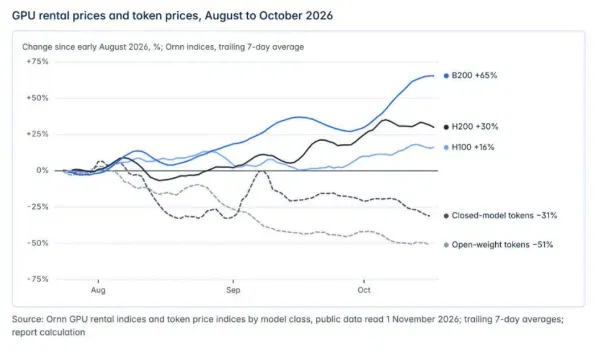
@pequityresearch Worth looking at H200s as well. Rentals are up about 51% over the last three months, to around $6.53 an hour.
Prices may fluctuate, but the underlying demand for compute remains hard to ignore.
Data: Ornn
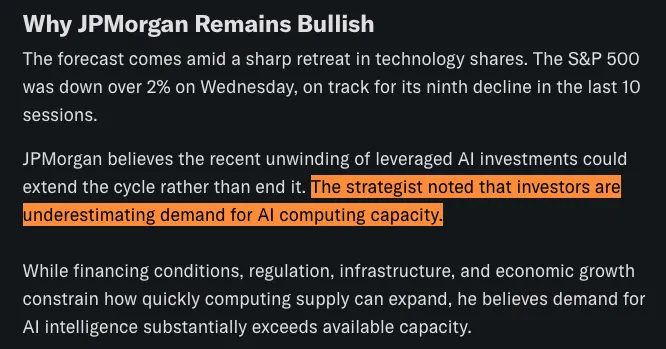
Demand for compute isn’t going anywhere...
But last week’s selloff put a spotlight on the debt piling up to meet it.
Viktoriya Hying (@B3Labs) joins Jack to explain why B3IQ believes the teams using compute (not debt-heavy neoclouds) should own the GPUs behind AI.
@Kalshi Of the four constraints he lists, infrastructure is the one money can't speed up much. Chips can be ordered, but power and buildings have to exist first, they take years to build.
Curious how much of 2027's supply ends up waiting on power rather than chips.
Last week's AI selloff put compute financing under scrutiny.
@viktoriya0x explains why B3IQ's customer-owned model can help scale compute, and how we plan to reach 100 MW by the end of 2027.
Demand for compute isn’t going anywhere...
But last week’s selloff put a spotlight on the debt piling up to meet it.
Viktoriya Hying (@B3Labs) joins Jack to explain why B3IQ believes the teams using compute (not debt-heavy neoclouds) should own the GPUs behind AI.
@MTSlive@bernhardsson He's probably right. Anthropic alone has close to $900B in compute commitments, not to count OpenAI and the other labs, and much of it runs for multiple years.
Smaller teams are often the ones renting by the hour, and they have the least say in the price.
@sspencer_smb Doubt it's 3. Google's sold so much TPU capacity that even its own researchers are waiting in line for chips.
Maybe they can be this generous because they own the hardware?
Revolut did this at bank scale, but you can start with a single machine without running your own data center.
At B3IQ, we size the GPUs to your workload, then build, host, and operate them, while you keep ownership.
Learn more: https://t.co/FZfUW0fbtE
@OrnnExchange@sphere_labs Quite telling charts in the report.
Tokens fell 31% to 51% over three months, while B200 rental prices rose 65%
Cheaper AI is great for users and even better for whoever owns the GPUs.
@DeItaone Owning the compute is the play. And both deals have 90-day cancellation clauses after their initial lock-in periods.
If compute demand shifts, SpaceX can pull that capacity back for Grok or its other AI projects.
We test our machines under real load and publish what they actually deliver.
The full breakdown, with methods and data, is on our blog ↓
https://t.co/ghcQWQEZ7z
3. Scaling
We trained YOLO11m on one of our RTX PRO 6000 machines, first on 1 card, then on all 8.
1 card: 409s per epoch
8 cards: 64s per epoch
A 6.4x speedup, not one-on -one.
Each card did about 20% less work, and utilization barely moved (71% vs 75%).
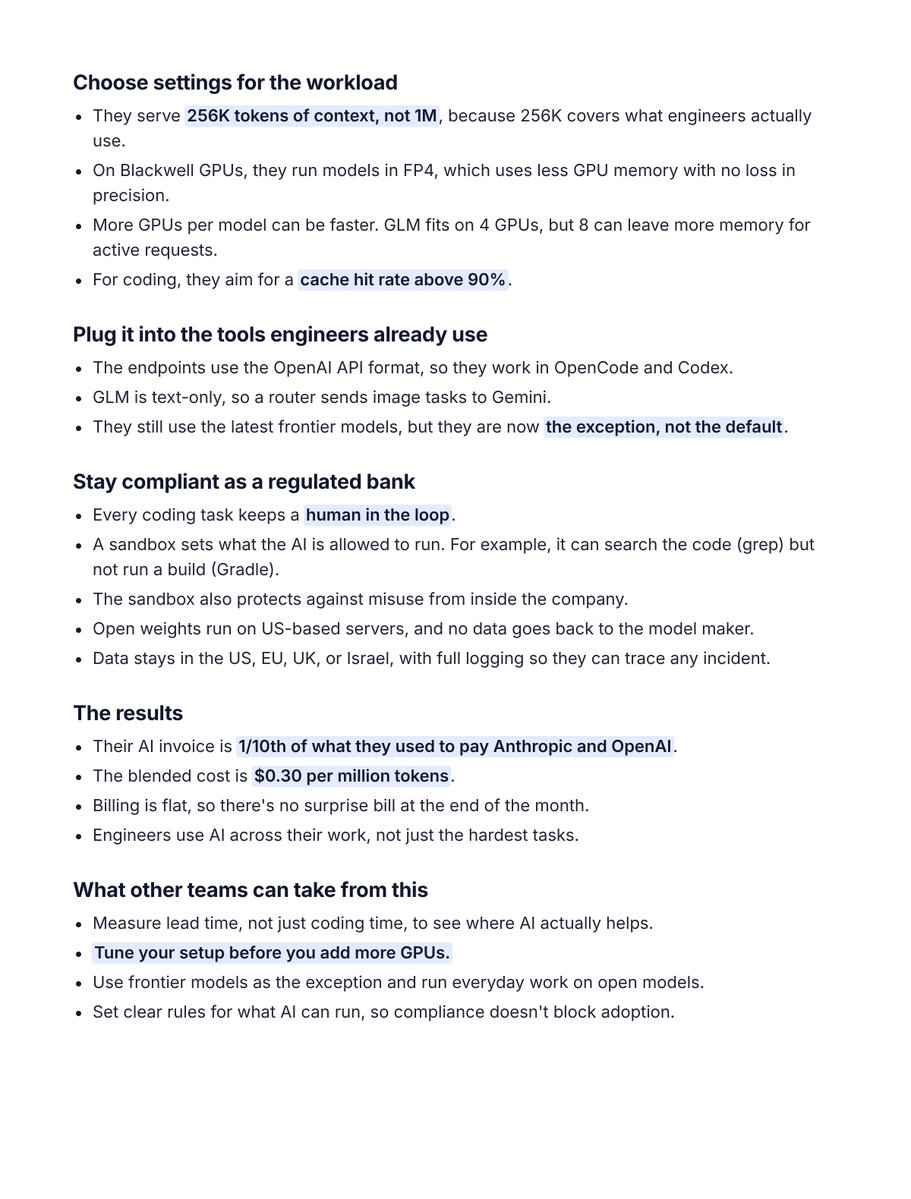
@rileybrown It's already happening at platform level. Agents are 76% of tokens on OpenRouter now, up from 8% a year ago.
Renting works fine for one-off renders. If your agents run all day, you'd probably want your own machine.
@saxena_puru Part of the answer is token prices. They're down ~60% since May, per Nvidia, while OpenRouter's weekly volume is up 35x YoY.
So demand for GPU hours is rising, but new supply is still the limiting factor.
SemiAnalysis cut its 2028 accelerator spend forecast by 28% last week.
Everything is going liquid-cooled
AI hardware is moving to liquid cooling for power and efficiency.
A lot of new companies are entering the market to build the parts that demand runs on: pumps, connectors, cabinets.
Prices are rising
Many hardware makers expect prices to keep climbing.
Memory is the biggest pressure, along with other supply chain constraints, and they expect that to hold even with new memory competitors coming into the market.