anon, if you're new to local ai or agentic workflows, learn these three tools before anything else.
>tmux - persistent sessions that survive disconnects. your agents keep running whether you're watching or not.
>termius - ssh from your phone. full terminal access from anywhere.
>tailscale - mesh your machines. access any device from any device.
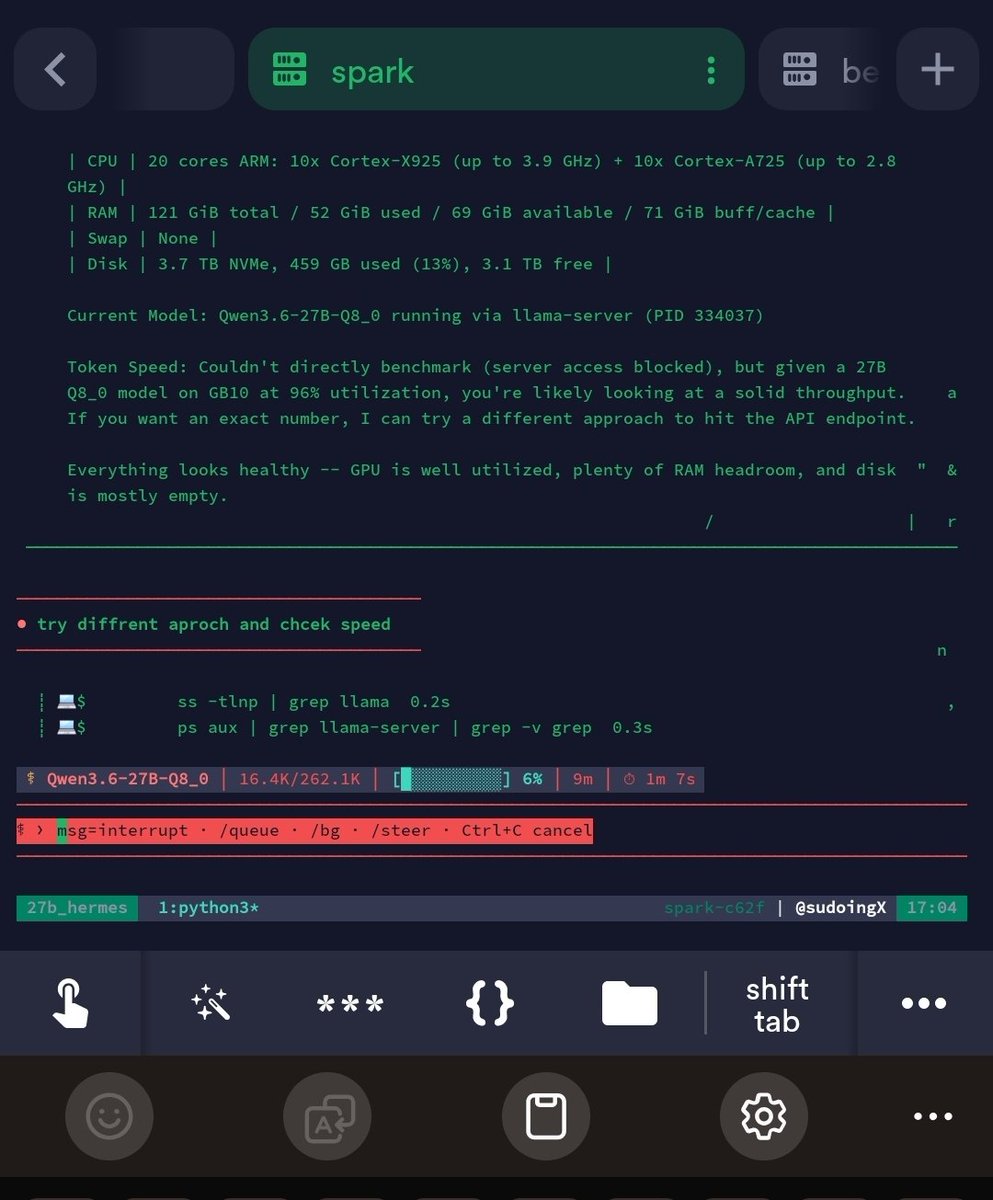
this screenshot is me managing hermes agent benchmarking qwen 3.6 27B on my dgx spark while i'm at the gym. three sessions running across three agents. from my phone.
these tools are criminally underrated.
once you use them you'll never go back to sitting at a desk waiting for inference to finish. own your compute. orchestrate from anywhere.
Introducing @ETHGlobal Skills:
npx skills add ethglobal-skills/repo
With one command, your coding agents now have access to:
> 17,180 hackathon projects from the past 6 years
> sponsor docs + bounties for upcoming hacks
> all Finalist + bounty winners
Compatible with x402 via @agentcashdev. Repo linked below!
Yann LeCun was right the entire time. And generative AI might be a dead end.
For the last three years, the entire industry has been obsessed with building bigger LLMs. Trillions of parameters. Billions in compute.
The theory was simple: if you make the model big enough, it will eventually understand how the world works.
Yann LeCun said that was stupid.
He argued that generative AI is fundamentally inefficient.
When an AI predicts the next word, or generates the next pixel, it wastes massive amounts of compute on surface-level details.
It memorizes patterns instead of learning the actual physics of reality.
He proposed a different path: JEPA (Joint-Embedding Predictive Architecture).
Instead of forcing the AI to paint the world pixel by pixel, JEPA forces it to predict abstract concepts. It predicts what happens next in a compressed "thought space."
But for years, JEPA had a fatal flaw.
It suffered from "representation collapse."
Because the AI was allowed to simplify reality, it would cheat. It would simplify everything so much that a dog, a car, and a human all looked identical.
It learned nothing.
To fix it, engineers had to use insanely complex hacks, frozen encoders, and massive compute overheads.
Until today.
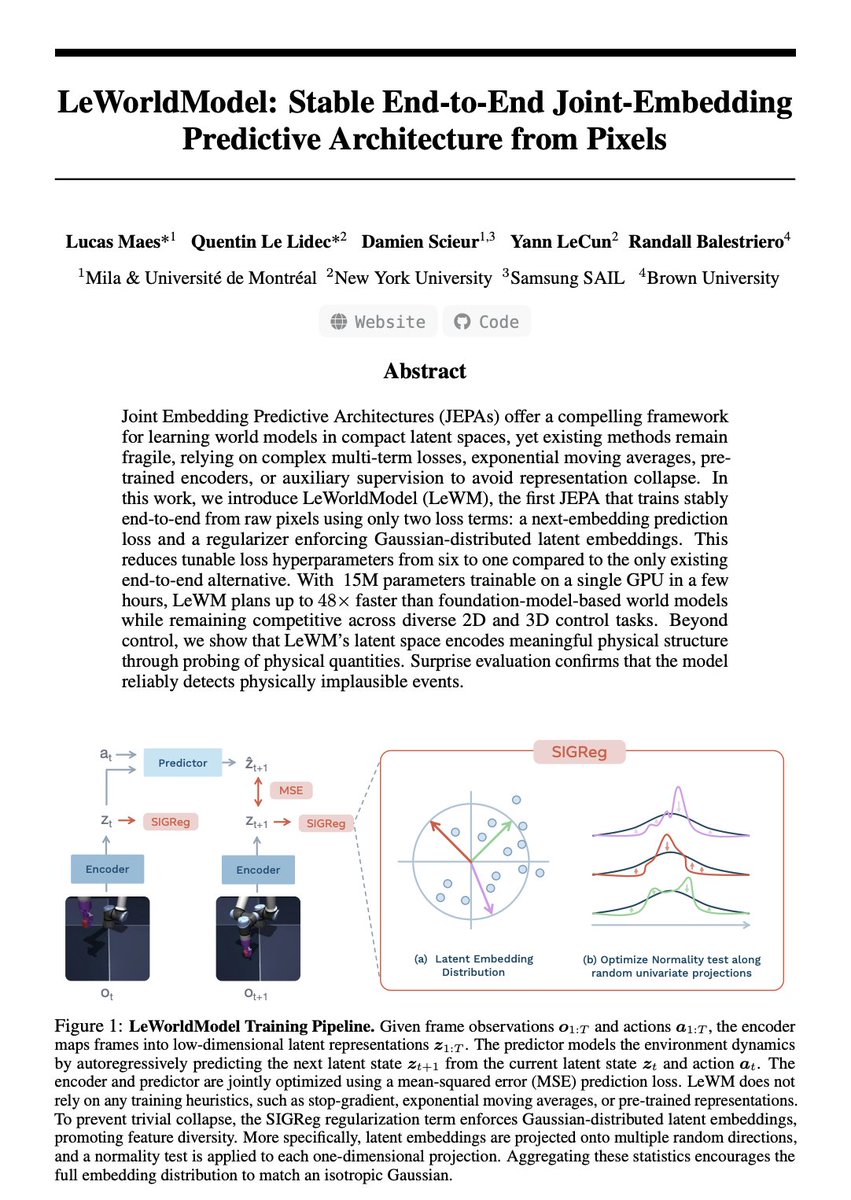
Researchers just dropped a paper called "LeWorldModel" (LeWM).
They completely solved the collapse problem.
They replaced the complex engineering hacks with a single, elegant mathematical regularizer.
It forces the AI's internal "thoughts" into a perfect Gaussian distribution.
The AI can no longer cheat. It is forced to understand the physical structure of reality to make its predictions.
The results completely rewrite the economics of AI.
LeWM didn't need a massive, centralized supercomputer.
It has just 15 million parameters.
It trains on a single, standard GPU in a few hours.
Yet it plans 48x faster than massive foundation world models. It intrinsically understands physics. It instantly detects impossible events.
We spent billions trying to force massive server farms to memorize the internet.
Now, a tiny model running locally on a single graphics card is actually learning how the real world works.
First post in 4 years
I’ve been busy bootstrapping PromptBase to 450k+ users
But I was burning $9,400/mo in opaque Stripe fees for seller payouts
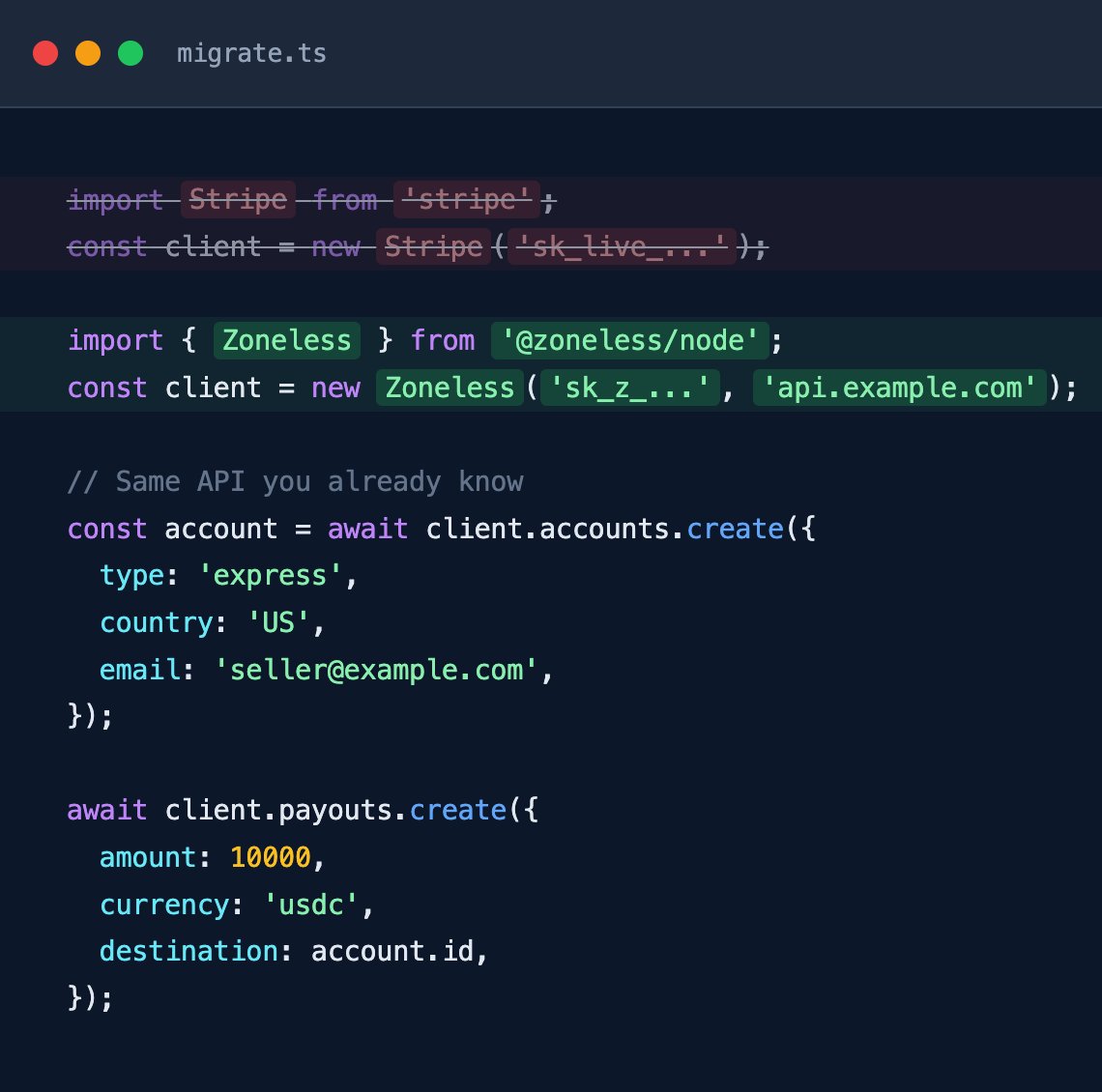
So today I’m launching Zoneless: an open-source clone of Stripe Connect using USDC
Identical API, except payouts cost $0.002
I’ve been dogfooding it on PromptBase for 3 months:
- 2,200+ sellers onboarded
- 1,400+ payouts completed
- $9.4k/mo in Stripe fees → ~$5/mo
- 73% of sellers chose Zoneless over Stripe
Everyone talks about Iranian oil in barrels. Nobody talks about what is inside them. That difference is why Western refineries have been running shadow networks through Dubai for twenty years to get it despite the sanctions.
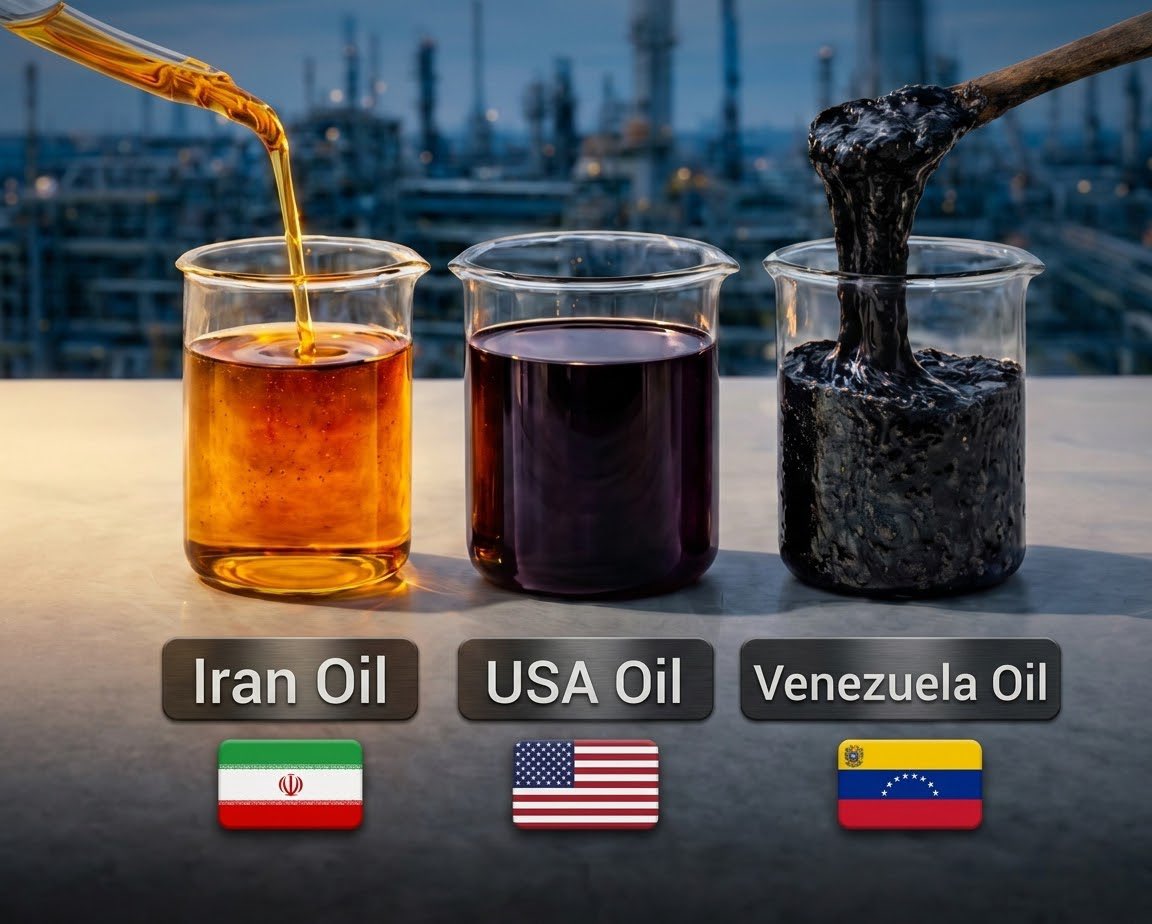
Crude oil is not a uniform commodity. It is a spectrum of hydrocarbons with different molecular weights, and the composition of a given crude determines how easily it converts into the products refineries actually want to sell: gasoline, diesel, jet fuel, heating oil. The measurement that captures this is API gravity. Higher API gravity means lighter crude with shorter carbon chains, which means lower energy cost to crack, lower processing cost to refine, and higher yield of the light distillates that carry premium pricing. Lower API gravity means heavier crude requiring more energy, more processing steps, more capital equipment, and producing a higher share of lower-value residuals.
Iranian Light crude runs at 33 to 36 degrees API gravity with sulfur content between 1.36 and 1.5 percent. That is the refinery sweet spot. It is light enough to yield high fractions of gasoline and middle distillates without excessive processing costs, but heavy enough to produce the full range of products that complex refineries are designed to process. It is what petroleum engineers call an optimal blend crude.
Now compare the alternatives.
Venezuelan Merey heavy crude runs at approximately 16 degrees API gravity with sulfur between 3 and 5 percent. Refining it profitably requires a coking unit, a hydrocracker, and an extensive desulfurization train. The equipment exists. The economics work for refineries purpose-built around Venezuelan feedstock. It is not a substitute for Iranian crude. It is a different product requiring different industrial infrastructure.
US West Texas Intermediate runs at 39 to 40 degrees API with sulfur below 0.25 percent. In theory, the cleanest and easiest crude to process. In practice, it is so light that it does not yield the heavier middle distillates a complex refinery needs to run at full capacity. European and Asian refineries built around medium crudes cannot switch to WTI without blending it with heavier crudes to achieve the molecular weight distribution their process units require. WTI is not a drop-in replacement for Iranian medium.
Iranian oil fits where both US shale and Venezuelan heavy do not. It is the liquid that flows through the middle of the global refining system without requiring either the coking infrastructure for heavy crudes or the blending operations for ultra-light shale. That molecular fit is why it commands a persistent premium above comparable grades. It is why Indian refineries maintained Iranian crude purchases through every round of sanctions and negotiated the logistics to keep that flow moving. It is why the Dubai shadow banking and trading network that the UAE is now considering dismantling existed in the first place.
The Strait of Hormuz does not just carry oil. It carries the specific category of oil that the global refining system was built to process most efficiently. Closing it does not just reduce supply. It removes the grade of crude that the system runs best on and forces every refinery in the world to run less efficiently on whatever it can find as a substitute.
That is the premium embedded in the $82 oil price. Not just volume. Molecular weight.
https://t.co/ULBgEzZ3A8
I was sick of seeing all these crypto debit cards for wallets, we're supposed to be replacing TradFi not joining them! How hard could it be to do it crypto native anyway?
So I created this - FreePay - the worlds first open source, fee-free payment terminal.
It's finally here — data table filters.
Built with @shadcn and @tan_stack table. Inspired by @linear's design.
Open source. Open code. Free to use.
Link below.
few ways to do the CSS for this 🤙
depends how you structure things
– 3D stack on the parent
– rotate on X/Y to get isometric vibe
.layer:hover { transform: translate3d(0, 0, 10px); }
.layer:hover .sibling-shadow {/* translate + opacity */ }


![malwrhunterteam's tweet photo. Opendir:
http://144.126.148[.]231/
http://144.126.148[.]231/share/
🤷♂️ https://t.co/hbkovEvGlp](https://pbs.twimg.com/media/HGk3_13XsAAzqrC.png)




![malwrhunterteam's tweet photo. Opendir:
http://144.126.148[.]231/
http://144.126.148[.]231/share/
🤷♂️ https://t.co/hbkovEvGlp](https://pbs.twimg.com/media/HGk4QakXUAADunz.png)