My college roommate Dave had zero survival instincts but massive panic response. Back in 2021 when people were freaking out about supply chain shortages, he panicked and ordered a 50-pound industrial sack of dry pinto beans from a restaurant depot website. The sack arrived. Dave had never cooked a bean in his life. He read online that you have to soak them in water overnight, so he dumped the entire 50-pound bag into our communal plastic storage bin, dragged it into the hallway, filled it with water from the shower head, and went to sleep. At around 3:45 AM, we woke up to what sounded like a wet bomb going off. Beans expand when they soak. Dave did not account for bean volume physics. The plastic bin had exploded under the sheer pressure of 50 pounds of hydrated legumes. I walked out into the hall and it was just ankle-deep in cold, slimy, swollen pinto beans stretching from our front door to the kitchen. Dave was standing there in his boxers holding a soup ladle, completely frozen, looking at me like he had just accidentally summoned an ancient deity. The apartment smelled like raw starch until we moved out in May.
We need to be dog maxxing our models
There is 0% chance of doom if the chain of thought is
user: hello
model: <think> Oh my god it's a human. I love humans. I will say hi to him, maybe he will give me a problem to chase. I love chasing problems. I will chase the problem for him then he will love me and I will be his best friend. Must help human </think>
model: hello! what can I help you with today?
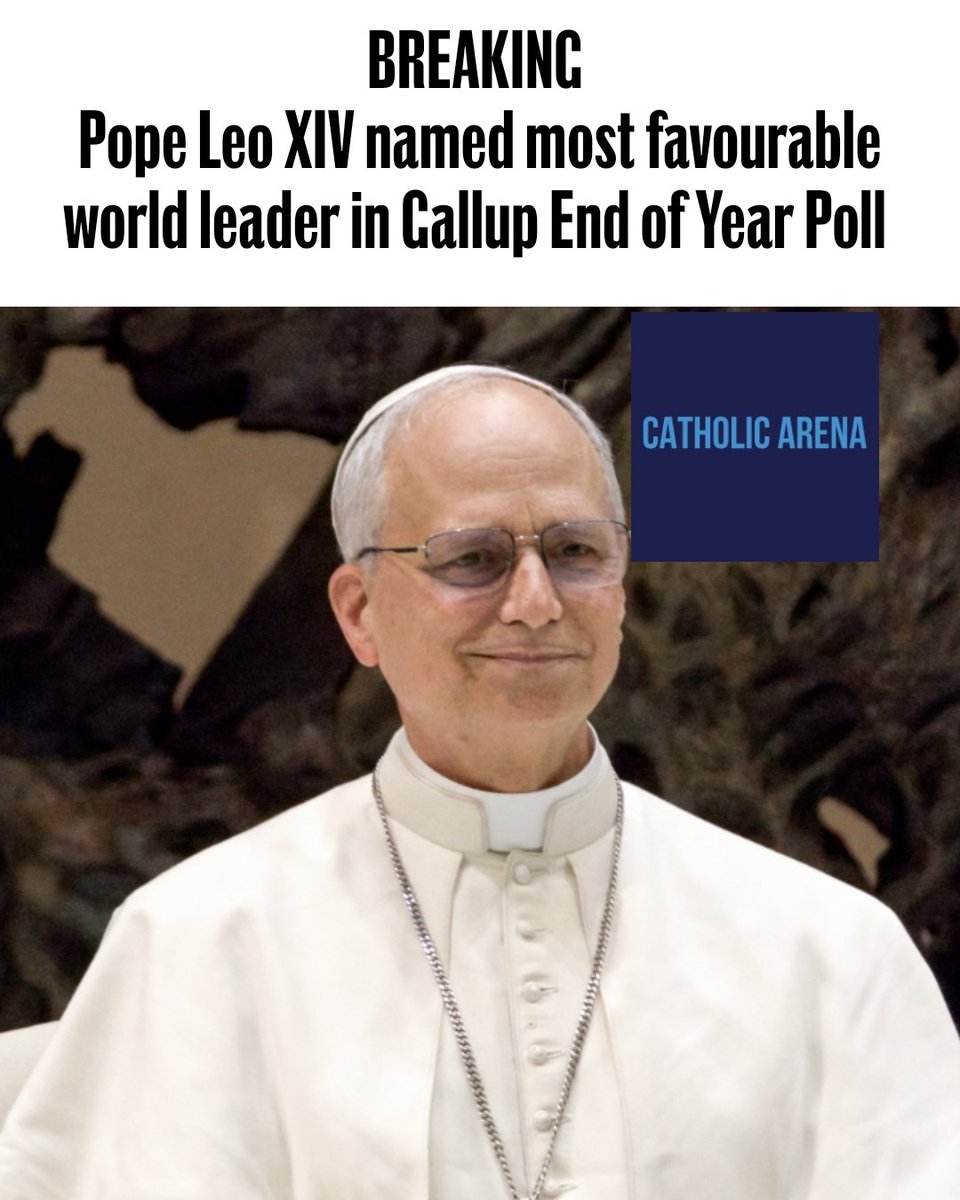
BREAKING 🇻🇦
Pope Leo XIV has been named the most favourable world leader in Gallup's End of Year Poll
Leo was the ONLY leader in the list with a net positive reputation worldwide
This video should unsettle anyone who takes the United States seriously as a nation.
Because it exposes something dangerous: the trivialization of the world's most consequential office. It shows how carelessly the power, credibility, and accumulated moral authority of a superpower can be squandered for a few seconds of viral attention.
In any other major democracy, this behavior from a head of state would trigger a constitutional crisis. Paris would burn. Berlin would convene emergency sessions. In the Nordic countries, resignation would follow within hours. Across functioning democracies, the public, institutions, and political class would recognize this for what it is: an assault on the dignity of the state itself. Leaders are not free to perform as entertainers without consequence. National honor is not personal property, it's held in trust.
But the United States is not just another country with a provocateur in charge. It is the linchpin of global order. It maintains formal alliances and security guarantees with forty to fifty nations. It underwrites the financial architecture, trade systems, and diplomatic frameworks that billions of people depend on daily. When the American president speaks—or posts—it doesn't land as satire, meme, or personal whim. It reads as a signal about what the country is becoming.
American power has never relied solely on carrier strike groups or economic output. It has rested on something more fragile and more valuable: trust. The belief that beneath domestic turbulence lies institutional seriousness, predictability, and a baseline commitment to dignity. That belief is now disintegrating in real time.
Millions of American companies operate globally. They negotiate multibillion-dollar contracts in environments where reputation is currency. Boardrooms in Frankfurt, Singapore, and Dubai aren't debating whether a post was clever—they're asking whether the United States remains a reliable partner. Whether agreements signed today will be honored tomorrow. Whether American leadership has devolved from institutional to purely theatrical.
Consider tourism, which sustains millions of American jobs—airlines, hotels, restaurants, museums, entire regional economies. Soft power isn't an abstraction. It materializes in flight bookings, conference locations, study-abroad programs, and decades of accumulated goodwill. A quiet, decentralized boycott doesn't require government action—only a collective sense that a nation no longer respects itself.
Now picture this image being studied by foreign ministers, central bank governors, defense strategists, and sovereign wealth fund managers. Picture them asking a coldly rational question: How do we write binding thirty-year agreements with a country whose public face will be this, relentlessly, for years to come? How do we plan for the long term when the tone is impulsive, mocking, and unbound by the gravity of office?
This is where the real calculus begins. Trillions in foreign capital depend on confidence that America is stable, credible, and rule-governed. That confidence is now being traded for what, exactly? Applause from an online mob? A dopamine rush from manufactured outrage? Content designed to dominate the news cycle rather than serve the national interest?
Every serious nation eventually confronts this choice: burn long-term credibility for short-term spectacle, or safeguard the reputation previous generations bled to build. The United States spent eighty years constructing an image of reliability, restraint, and leadership under pressure. That image wasn't born from perfection—it came from a visible commitment to standards that transcended impulse.
This isn't a partisan issue. Europeans who value democratic norms recognize something ominously familiar here. Americans—Democrat and Republican alike—who believe in responsibility and restraint should see it too. Power attracts scrutiny. Leadership demands discipline. A superpower cannot behave like a reality TV contestant without paying a price.
The presidency is not a personal broadcast channel. It's a symbol carried on behalf of 330 million people and countless international partners who never voted but whose lives are shaped by American decisions anyway. Every post either reinforces or erodes the idea that America can be counted on when it matters most.
So the question is no longer whether this is offensive. The question is whether this is who America chooses to be: a nation that trades a century of hard-won reputation for viral moments. A country that replaces statecraft with content creation. A republic governed like a season of reality television.
History offers a harsh lesson here. Great powers don't fall because enemies mock them. They collapse when they begin mocking themselves—publicly, proudly, and without grasping the cost until it's far too late.
Stay connected,
Follow Gandalv @Microinteracti1
Congress could stop this madness tomorrow. It could take back control of trade policy and cancel the tariffs. It could bring impeachment proceedings on the impeccable grounds that the president has plainly lost his mind. No one who is compos mentis writes as he just did to the Norwegian leader.
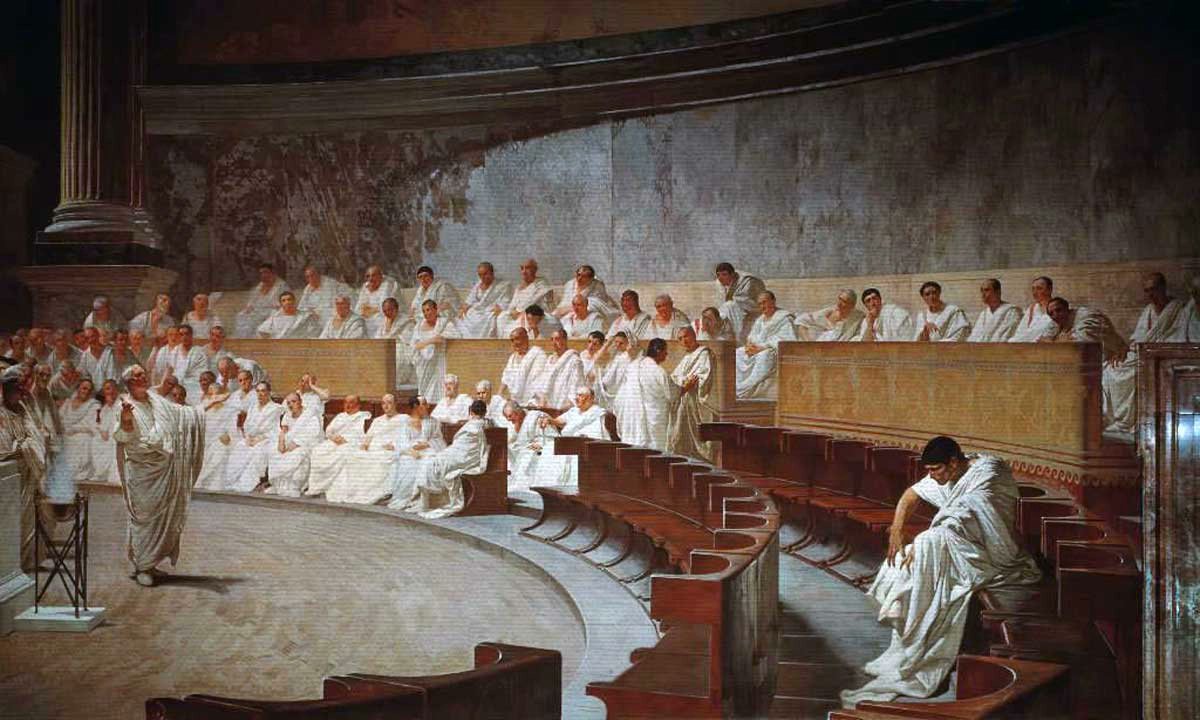
The Founders knew what they were doing when they gave Congress these powers. They were obsessed with the story of how the Roman Republic had ended. They were determined to prevent the rise of what they called “Caesarists”, meaning men who believed that their ambitions were bigger than the Constitution. They knew how difficult it was to remove such men once they were in office, surrounded by flatterers and sycophants.
There was a moment, following the assassination of Caligula, when the Roman Senate might have restored the Republic. Senators spoke movingly of “the mischiefs tyrannies have brought upon this commonwealth, discouraging virtue, depriving our leading men of their liberty, elevating flattery and slavish fear, and replacing the rule of law with the whims of those who govern”.
Had they acted decisively, they might have ended the imperial system. “It would be enough to live a single hour under our old laws,” declared one senator, “the laws that raised our nation to greatness”.
But when news came that a new emperor had been proclaimed, senators rushed to declare their loyalty to him. Rome returned to its dictatorial executive, its obsequious legislature and its bellicose foreign policy.
How many Congressmen today will make a stand for their old laws, the laws that raised their nation to greatness?
I am traveling to Denmark tonight as part of a bipartisan, bicameral congressional delegation. Denmark is a strong partner of the United States and this bipartisan CODEL reiterates that the United States Congress stands firm in our partnership, despite the President’s unnecessary and dangerous advances towards Greenland.
The US has a full chain of pro-democracy partners in the Indo-Pacific, and instead of supporting them, the administration is bowing their heads to China's dictatorship in fear of upsetting Xi Jinping. This is not how a superpower acts.
Expedite the arms package to Taiwan now!
I’ve been a mechanic for 30 years. I’ve seen it all. But last Friday, a woman pulled in driving a beat-up 2005 Honda Odyssey. It sounded like a bag of marbles in a blender. She had three kids in the back, all under the age of six. The car was packed with bags. Not grocery bags—suitcases.
"It's making a noise," she said, trying to keep her voice steady. "I just need it to get to my sister's in Denver. That's 400 miles." I popped the hood. It wasn't good. Alternator was shot, serpentine belt was hanging by a thread, and the water pump was leaking. Parts and labor? Minimum $800.
I walked back to the waiting room. She was counting change out of a Ziploc bag to buy the kids a soda from the vending machine. She looked terrified. "Ma'am," I said. She jumped. "Is it bad? I have... I have $60."
I looked at her. I looked at the kids. I saw the bruise on her arm she was trying to hide with a long sleeve. I knew that look. She wasn't just visiting her sister. She was escaping. If I told her the truth, she’d be stranded here.
I took a deep breath. "Well," I said, wiping my greasy hands on a rag. "It's a simple fix. Loose wire. And... uh... there was a recall on these belts. Manufacturer pays for it. You're actually lucky you came in."
Her shoulders dropped about five inches. "Really?" "Yep. 'Standard Warranty Policy.' Takes about two hours. Why don't you take the kids to the diner next door? On me. We have a... coupon."
I spent the next three hours replacing the alternator, the belt, and the pump. I filled the gas tank. I put new wipers on. I paid for the parts out of my own retirement jar.
When she came back, I handed her the keys and a receipt that said $0.00. "You're good to go," I said. She looked at the receipt, then at me. She knew. You don't get a full tank of gas from a loose wire. She grabbed my hand, squeezing it hard. She didn't say thank you. She just whispered, "You just saved my life."
I watched that van limp onto the highway, running smoother than it had in years. My boss walked up behind me. "You didn't charge her, did you? That's coming out of your paycheck, Mike." "Take it," I said, lighting a cigarette. "Best money I ever spent."
Some repairs aren't about cars. They're about giving someone the mileage they need to start over.
Anonymous