AI Engineering Podcast Episode #1: Beyond the AI hype
https://t.co/Ppj2snLukd
Speakers: Gaurav Sen and Tanishq Singh
Let us know your thoughts in the comments!
Awesome log parsing cheat sheet.
Log parsing commands are useful for:
🔹Searching patterns in text files
🔹Analyzing network packets
🔹Parsing fields from delimited logs
🔹Replacing strings in a file
🔹Sorting a file
🔹Displaying differences in files by comparing line by line
Source: Thomas Roccia
Over to you: have you used any command in this list?
—
Get a Free System Design PDF (158 pages) by subscribing to our weekly newsletter today: https://t.co/RibM5u7UxP
#systemdesign #coding #interviewtips
.
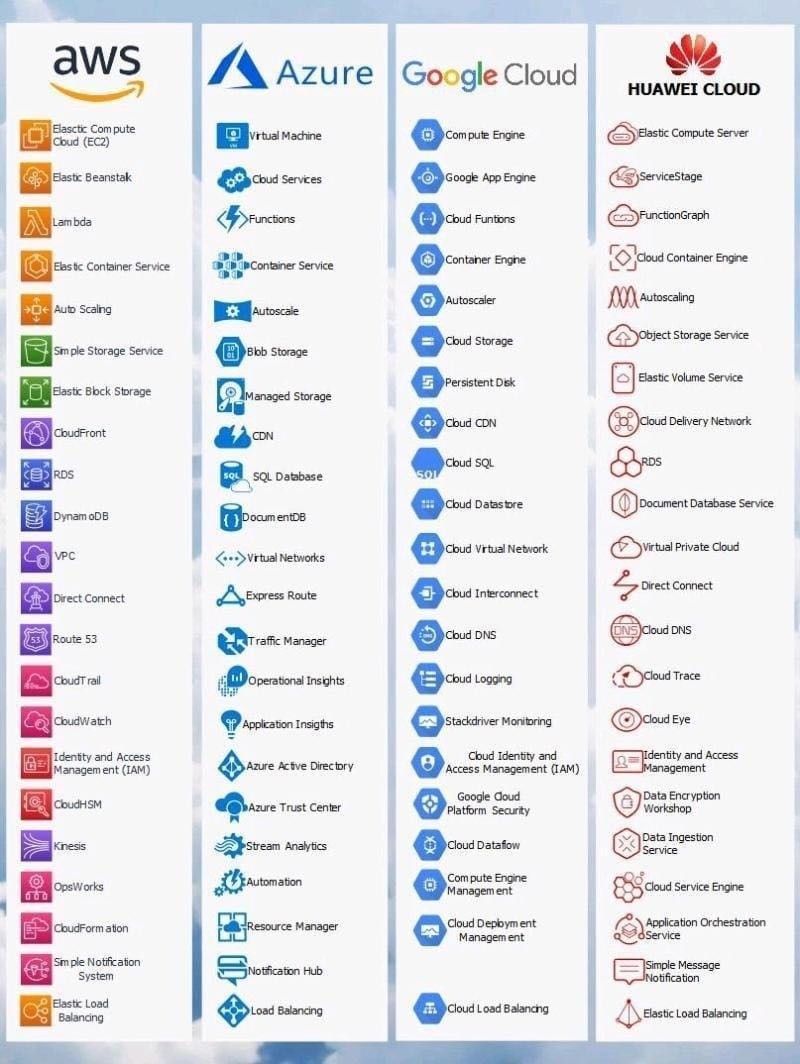
A nice cheat sheet of different cloud services.
--
Subscribe to our weekly newsletter to get a Free System Design PDF (158 pages): https://t.co/7ux5WHZMsr
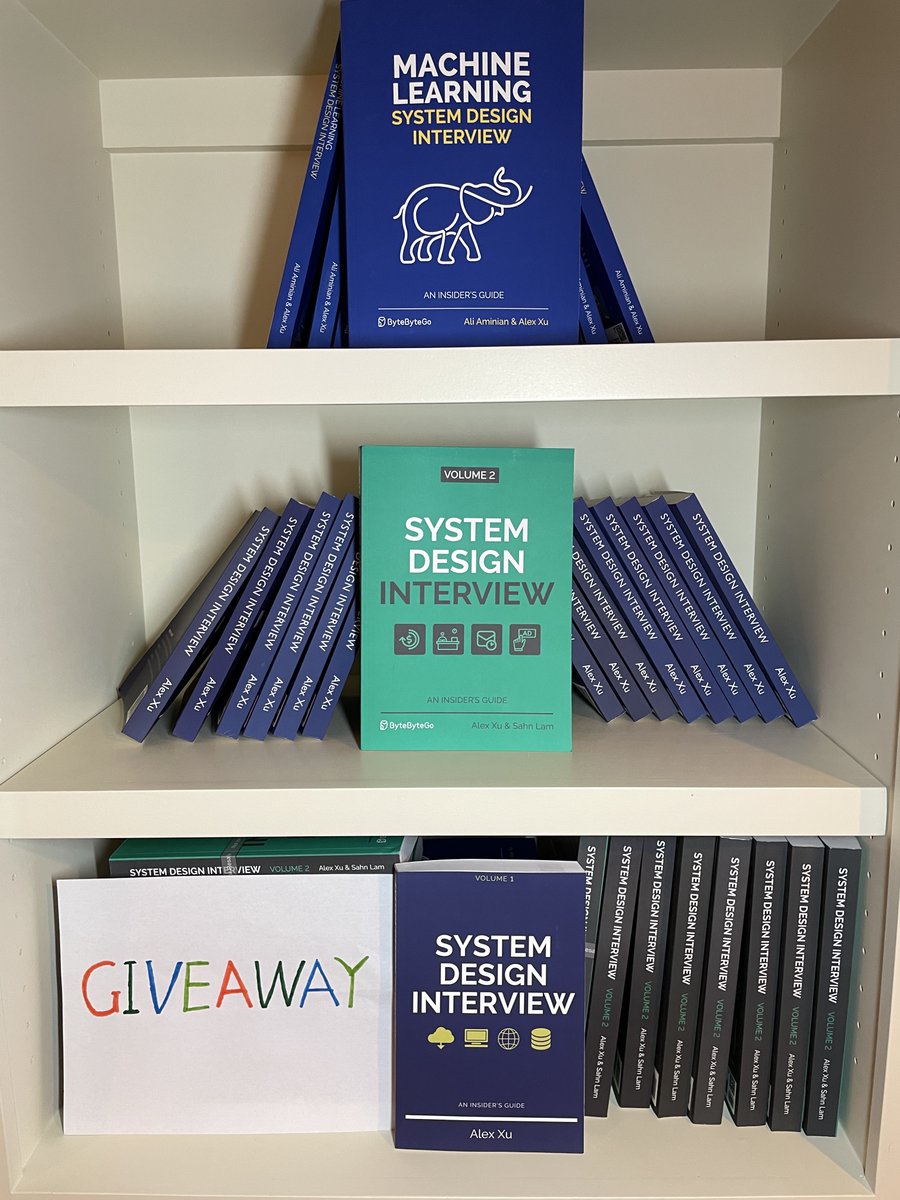
🎁 Giving Away 100 System Design + ML System Design Books + Newsletter Deep Dive Content 🎁
To celebrate our upcoming 1-year YouTube channel anniversary, we will be giving away:
🔹 10 signed physical books (vol. 1 + vol. 2 + ML system design; winners get all 3)
🔹 90 1-year subscriptions to the ByteByteGo online course. The course includes content for two system design books (vol. 1 and 2), vol. 3 (coming out in 2023), and an ML system design book.
🔹 10 1-year subscriptions to the ByteByteGo paid newsletter content.
🔹 Shipping is on us. If you live outside the US, you will receive a 1-year subscription to our online course.
𝐇𝐨𝐰 𝐭𝐨 𝐩𝐚𝐫𝐭𝐢𝐜𝐢𝐩𝐚𝐭𝐞:
✅ Follow me on Twitter
✅ Like & Retweet
✅ Subscribe to our free weekly newsletter: https://t.co/4QcX8btXGL If you have already signed up, please enter your email again to be eligible.
⏰ The giveaway ends in 72 hours.
#systemdesign #coding #giveaway
.
How to learn better and faster as a software engineer? ⚡
I follow these 5 things to ensure I am learning continuously and evolving to be a better software engineer every single day.
https://t.co/sojb9BSqzo
White papers for software engineers (Version II):
1. Google File System
2. Map Reduce
3. BigTable
4. Megastore
5. Monarch
6. Chubby
7. Spanner
8. Dapper
9. Borg
10. Zanzibar
11. Pregel
12. Amazon Aurora
13. Dynamo DB
14. Scalability at what COST
15. Foundation DB
16. Monolith: Tiktok Recommendation System
17. MilliSampler
18. Scaling Memcache at Facebook
19. Gorilla DB
20. FlexiRaft
21. Cassandra
22. TAO
23. MineSweeper - Root Cause Analysis
24. Prophet - Forecasting at Scale
25. ShardManager
26. Hadoop FileSystem
27. Kafka
28. Flink
Bookmark this link for updates:
https://t.co/36agVu0KkW
Spend the first 3 years of your career ensuring these to accelerate your growth ⚡️
- become proficient in at least one stack
- understand infrastructure and architecture
- understand how your work fits into the big scheme
- show extreme ownership and lead
- help others succeed
Simple Systems Scale.
Simple systems are efficient, performant, and easy to understand, maintain, and scale.
Hence, while designing any system, ensure that the architecture and implementation are kept really simple. Complex systems falter under stress.
https://t.co/OGUmtXbEMU
@largedatabank@phil_eaton@borjasotomayor @justinjaffray These are great! Some more top of my head:
- Database Internals by @ifesdjeen
- Let's Build a Simple Database - https://t.co/MNzNMLjaGM This is classic. Though incomplete, still a great resource
- Architecture of a Database System by Stonebraker - https://t.co/MPkUAAeLxM (1/2)
Recently @RazorpayEngg conducted an internal ChatGPT hackathon to encourage creative ideas around ChatGPT and AI.
I'm super glad to share that my project – mocktopus was one of the winning projects in the hackathon 🎉🚀
#hackathon#opensource
10 topics I would focus on if I were to start my Machine Learning career again:
1. Python
2. Data Structures & Algorithms
3. Probabilities & Statistics
4. Learning Algebra
5. Calculus
6. ML algorithms
7. SQL
8. Testing
9. Version control
10. LLM / Langchain
Here is a roadmap:
"How Cloud Computing is transforming from raw infra to app-centric services"
Longer blog post 👉https://t.co/NGlZm4ELRe
TLDR of timelines, app, infra, API changes 👇🧵(0..4)
To get feedback, you don’t have to wait for your company’s official perf cycle.
You can run your own perf cycle.
This technique works for any situation, but it is especially relevant when you are new to a team:
- After you’ve spent a couple of months on a new team, run your own lightweight perf cycle.
- Ask a few key peers if they’d be willing to provide some written feedback – it can even be anonymous – and send them this simple form to fill out.
This form is especially designed to be lightweight, while still capturing the key things that would be captured in the official performance review process, whenever that is going to happen.
There are many reasons for doing this of course, but the main reason is that it helps you avoid surprises in the real performance review.
You see, you would rather find out if a colleague has some tough feedback (or even if they would like you to see you make minor tweaks) early-ish in the relationship than to find that out in your official performance review.
Btw, this technique also works quite well with a colleague with whom you’ve especially had a hard time working.
You see, by getting that colleague’s feedback in this manner, adjusting your approach based on it, and then having a conversation with that colleague afterwards about how things are going, you are significantly reducing the chances that this colleague will write you a negative review in your official perf cycle.
In most cases I’ve seen that, by giving them the catharsis of sharing their feedback here, they tend to be much gentler and usually very positive during the official perf cycle because they have seen you respond well to their feedback.