I am elated to share that I have been awarded the #MSCA postdoctoral fellowship for my project REMaP-Carbon @MSCActions.
Excited to be working on an interdisciplinary project that furthers nutrient recovery and circular economy💩 ➡️ 💧
At the Photorefinery conference! Looking forward to the discussions on electrification of bioprocesses and the world of light-driven microorganisms
#photorefineries2026
@IndiGo6E postponed my parents’ flight due to its own technical issue, then reissued their tickets without the booked paid seats. Customer care refused equivalent seats even when told they are senior citizensand. Promised callbacks within 30 and 5 minutes. Two hours later...
Work life balance is not a modern idea.
It has been part of my approach from the very beginning of my career.
Even as I was building Marico, I rarely stayed in office beyond six in the evening. The evenings were always for myself. Sometimes it was squash or golf, sometimes an hour in the gym, sometimes listening to Indian classical music while walking and often spending time with family.
That did not mean I ignored work. I often carried papers home and spent time on them before dinner. My commute became my office on the move, a time for reading or making calls. Once I left the office, I shifted the context but kept the discipline.
This rhythm helped me sustain energy over decades. Many assume that longer hours lead to greater output. In truth, what matters most is efficiency and focus.
Plan your day well, deligate and empower to good talent and identify what deserves attention and pursue it with intensity.
Work life balance is not a modern idea.
It has been part of my approach from the very beginning of my career.
Even as I was building Marico, I rarely stayed in office beyond six in the evening. The evenings were always for myself. Sometimes it was squash or golf, sometimes an hour in the gym, sometimes listening to Indian classical music while walking and often spending time with family.
That did not mean I ignored work. I often carried papers home and spent time on them before dinner. My commute became my office on the move, a time for reading or making calls. Once I left the office, I shifted the context but kept the discipline.
This rhythm helped me sustain energy over decades. Many assume that longer hours lead to greater output. In truth, what matters most is efficiency and focus.
Plan your day well, deligate and empower to good talent and identify what deserves attention and pursue it with intensity.
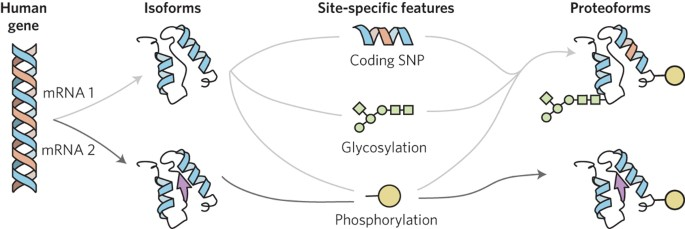
One gene can code for proteoforms with:
◼️ different functions
◼️ different sequences
◼️ different regulation
◼️ different cell type expression
Such examples should inform the interpretation of gene deletion experiments seeking to infer "gene functions".
A friendly reminder that the Central Dogma is NOT "DNA -> RNA -> protein."
All that Francis Crick *actually* said was: “Once information has got into a protein it can’t get out again.”
This negative statement — namely, that some transfers of information seem to be impossible — was the entire synopsis of Crick’s idea.
The DNA -> RNA -> protein idea was popularized by James Watson in his 1965 textbook, "The Molecular Biology of the Gene," as a way of summarizing how protein synthesis takes place. But Watson’s explanation was misleading. And, as we now know, there are many exceptions to that "version" of the Central Dogma (including reverse transcriptase.)
In 1956, Crick was working on a lecture that would bring together what was then known about the “flow of information” between DNA, RNA, and protein in cells. Crick formalized his ideas in what he called the Central Dogma, and his original conception of information flow within cells was both richer and more complex than Watson’s reductive presentation.
Crick was aware of at least four kinds of information transfers, all of which had been observed in biochemical studies by researchers at that time. These were: DNA → DNA (DNA replication), DNA → RNA (called transcription), RNA → protein (called translation) and RNA → RNA (a mechanism by which some viruses copy themselves). To summarize his thinking, Crick sketched out these information flows in a little figure that was never published.
Crick’s diagram also included two types of information flow for which there was no experimental evidence, but which he surmised might be biochemically feasible; namely, DNA → protein and RNA → DNA.
The direct synthesis of proteins using only DNA might be possible, Crick thought, because the sequence of bases in DNA ultimately determines the order of amino acids in a protein chain. If this were true, however, it would mean that RNA was not always involved in protein synthesis, even though every study at that time suggested it was. Crick therefore concluded that this kind of information flow was highly unlikely, though not impossible.
Crick also theorized that RNA → DNA was chemically possible, simply because it was the reverse of transcription and both types of molecules were chemically similar to each other. Still, Crick could not imagine any biological function for this so-called “reverse transcription,” so he portrayed this information flow as a dotted line in his diagram.
The most significant part of Crick’s idea — and the part that Watson ignored in his oversimplification — was that there are three flows of information that cannot occur, due both to lack of experimental evidence and any plausible biochemical mechanisms. These were protein → protein, protein → RNA and, above all, protein → DNA.
(From the Archives) "Francis Crick Was Misunderstood."
Read & subscribe: https://t.co/5DiAnjTzAO
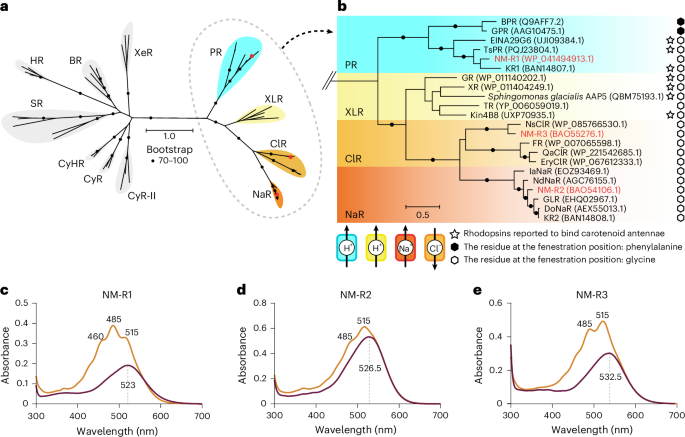
Out Now! Carotenoids bind rhodopsins and act as photocycle-accelerating pigments in marine Bacteroidota https://t.co/HLFdaValwc #Carotenoids#Rhodopsins#MarineBacteria
Happy to introduce AlphaGenome, @GoogleDeepMind's new AI model for genomics.
AlphaGenome offers a comprehensive view of the human non-coding genome by predicting the impact of DNA variations. It will deepen our understanding of disease biology and open new avenues of research.