Every time a bottle, food pack, nylon bag, or any waste is thrown from a vehicle onto the road, it may seem insignificant. However, when thousands of people do the same, our streets become littered, drainage channels become blocked, and the environment suffers.
What you throw away today can contribute to:
Flooding caused by blocked drains and waterways.
Environmental pollution and unpleasant surroundings.
Health risks from disease-causing pests and contaminated water.
Increased government spending on waste evacuation and road maintenance.
A negative image of our beautiful city.
A clean Lagos is not the responsibility of government alone - it is a duty we all share. Dispose of your waste properly, keep a waste bag in your vehicle, and use designated waste bins.
What you do: Throw waste on the road.
What you cause: Pollution, flooding, and environmental degradation.
What you should do: Keep your waste until you find a proper bin.
Keep Lagos Clean. Protect the Environment. Save Lives.
#CleanerLagos
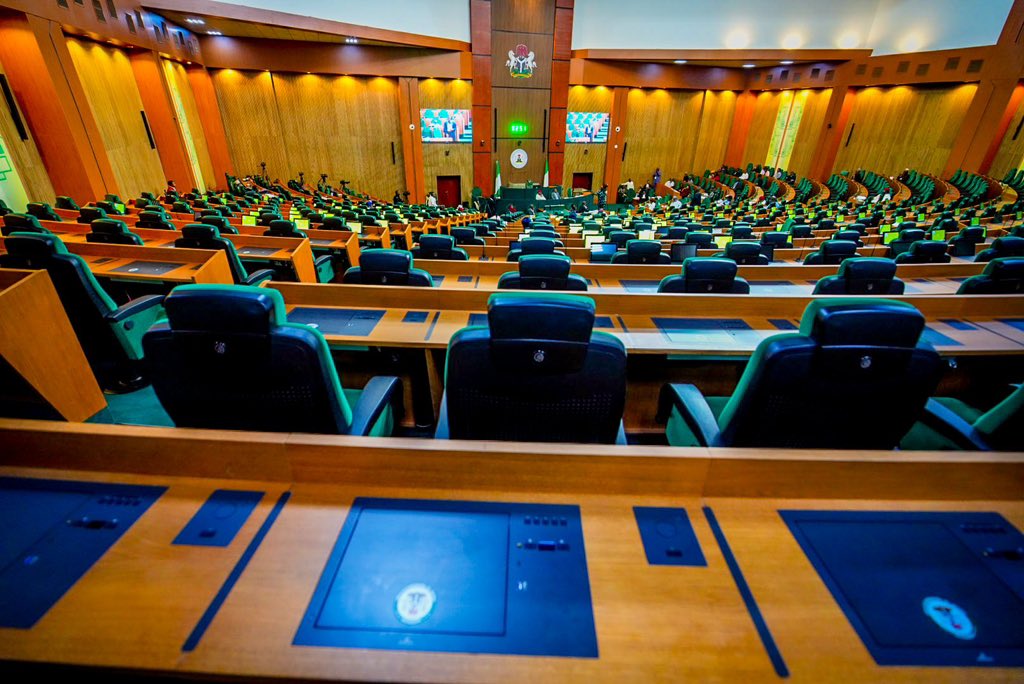
BREAKING: The House of Representatives has passed constitutional amendments to establish state police in Nigeria and has postponed other constitutional amendments to another legislative session.
Details of Proposed Constitutional Amendments for the Establishment of State Police and Federal Police
1. Establishment of Federal Police and State Police (New Section 214)
• Two distinct police bodies are constitutionally established:
• (a) the Federal Police
• (b) State Police (one per State, established by State law)
The National Assembly must pass an Act prescribing:
• Structure, organisation, administration, and powers of the Federal Police
• Framework and guidelines for the establishment of State Police
• State Police cannot commence operational policing until:
• Established by a Law of the State House of Assembly, and
• Certified as meeting national minimum standards (prescribed by an Act of the National Assembly)
• Transitional provision: Until a State Police becomes operational, the Federal Police continues all policing functions in that State. After commencement, the Federal Police handles federal policing functions and may provide assistance to the State Police.
2. Responsibilities and Non-Interference (Section 214)
Federal Police is responsible for:
• Maintenance of public security, public order, and security of persons/property throughout the Federation (to the extent provided by the Constitution or National Assembly Act).
• Similar functions within a State to the extent the State has legislative power under the Constitution.
Key safeguard against federal overreach (Section 214(6)):
The Federal Police shall not interfere with State Police operations or a State’s internal security affairs except in these limited cases:
• To contain serious threats where there is a complete breakdown of law and order and the State Police is unable to respond.
• When the Governor requests intervention.
• When a State Police is unable to function due to administrative, financial, or other problems.
Any such intervention requires prior approval by the National Police Council.
Federal Capital Territory (FCT): Fully under the jurisdiction and operational control of the Federal Police.
3. Leadership and Command (New Section 215)
• Federal Police: Headed by the Inspector-General of Police (IGP).
• Appointed by the President on the advice of the National Police Council, from serving members of the Federal Police.
• Subject to confirmation by the National Assembly.
• The IGP has command over the entire Federal Police, including contingents in States.
• The President (or authorised Minister) may give lawful directions on public safety and order; the IGP must comply.
• State Police: Headed by a Commissioner of Police (CP).
• Appointed by the Governor on the advice of the National Police Council, from serving members of the State Police.
• Subject to confirmation by the State House of Assembly.
• The Governor (or authorised Commissioner) may give lawful directions on public safety and order; the CP must comply.
• If the CP believes a direction is unlawful or contradicts general policing standards, the matter can be referred to the National Police Council (whose decision is final).
4. Removal of Top Officers (New Section 216)
• IGP: Removed only by the President on the recommendation of the National Police Council for specified grounds (grave misconduct, breach of Police Act/Regulations/Code of Conduct, conviction for fraud/dishonesty, bankruptcy, or mental incapacity). Requires two-thirds majority approval of the National Assembly.
• State Commissioner of Police: Removed only by the Governor on the recommendation of the National Police Council for similar grounds. Requires two-thirds majority approval of the State House of Assembly.
5. Funding Support (New Section 216A)
The Federal Government shall provide grants or aids to State Police on the recommendation of the National Police Council, subject to approval by the National Assembly.
6. Oversight Bodies
National Police Council (restructured and renamed from the old Nigeria Police Council; new composition and expanded functions in Third Schedule):
• Broad membership including: Chairman (Presidential appointee confirmed by NA), Attorney-General of the Federation, serving senior Federal Police officer, Attorneys-General of all States, retired Commissioners of Police (one per geo-political zone), representatives of NHRC, Public Complaints Commission, NLC, NBA, NUJ, and Traditional Rulers’ Councils.
• Key functions: Appointment and discipline of Federal Police officers (except IGP); recommending State top officers (CP, DCP, ACP) to Governors based on State PSC lists; supervising Federal and State Police activities (within constitutional limits); setting standards for training, intelligence, forensics; assisting State Police on request.
State Police Service Commission (new body established for each State in Third Schedule, Part II):
• Composition: Chairman (appointed by Governor, confirmed by State HA), representatives of NHRC, Public Complaints Commission, NLC, NBA, NUJ, retired Assistant Commissioners of Police (one per senatorial district), and Traditional Rulers’ Council.
• Functions: Recommending three qualified candidates for CP/DCP/ACP to the National Police Council; appointment, discipline, and removal of State Police officers below the rank of Assistant Commissioner of Police; other functions as prescribed by Constitution or National Assembly Act.
7. Legislative Framework (Second Schedule – Concurrent Legislative List)
• National Assembly may make laws on: establishment/organisation/administration/powers/duties of Federal Police; powers/duties of State Police; national minimum standards for both; policing standards, inspection, certification, complaints mechanisms, criminal information systems, inter-governmental cooperation, federal intervention, use of force, firearms, grants, and accountability.
• State Houses of Assembly may make laws for the establishment, organisation, administration, funding, and oversight of their State Police — but must comply with the Constitution and valid National Assembly Acts.
• States may set higher standards than national minimums but not lower.
• National Assembly laws cannot give federal authorities routine command, deployment, appointment, promotion, transfer, discipline, or control over State Police personnel (except for explicitly authorised federal intervention).
8. Other Related Changes
• Updates to various constitutional provisions (e.g., Sections 34, 35, 39, 42, 84, 89, 129, 153) to replace references to “Nigeria Police Force” with appropriate “Police”, “Federal Police”, or “State Police” terminology.
• Exclusive Legislative List adjustments (e.g., light arms for policing purposes; fingerprints/biometrics/forensics shared with State Police; Federal Police listed separately).
• Consequential amendments to the Third Schedule for the new bodies and their compositions/powers.
You speak as if war is a math problem. It is not.
Let me educate you.
First, you cannot simply "issue an international tender for 500 helicopters." Who pays? Nigeria's defence budget is about $2 billion annually . A single attack helicopter costs $20–$50 million. 500 helicopters would cost tens of billions more than the entire Nigerian budget for years. Mercenary pilots? Even more expensive. And where do you base them? Who maintains them? Who secures the fuel supply?
Second, "close the borders with support from Chad, Niger, Cameroon, and Benin." Those countries have their own internal crises. Chad just lost soldiers fighting ISWAP. Niger is unstable. Cameroon is fighting its own insurgency. You cannot "close" a border that is thousands of kilometres long, with villagers who have crossed back and forth for generations, with no wall, no fence, and no political will to displace entire communities.
Third, "10,000 men" sounds impressive until you realise they have to be moved, fed, housed, paid, and equipped. The Nigerian military is already overstretched across multiple theatres. You cannot simply pull 10,000 soldiers from one operation and drop them into another without creating a vacuum somewhere else.
Fourth, "international satellite imagery", we already have it. The US shares intelligence. France shares data. The problem is not knowing where the t£rr0r!sts are. The problem is getting to them before they move, and holding the ground after they are gone.
Fifth, you assume that "unleashing chaos with an air mobile force" will end the insurgency. It will not. Air power cannot hold ground. It cannot win hearts and minds. It cannot stop the next generation of recruits from emerging from poverty, illiteracy, and grievance.
Your plan reads like a video game strategy, not a real-world counter-insurgency doctrine.
War is not about numbers. It is about logistics, politics, economics, and human endurance.
You have a division of ideas. You need a battalion of reality.
If you're an Arsenal fan and never got the chance to watch Arsenal's trophy lift, you can relive all 44 minutes of Arsenal's title winning celebrations here 😍