@TraditionalistW Pretending Lupita Nyong is not very beautiful is dumb. It is one thing to say maybe she is not your cup of tea but beauty is not ENTIRELY subjective right?... can we not use our brains here?
Diocletian issued the Edict on Maximum Prices in 301 AD and immediately made criminals out of half the Roman Empire.
The edict fixed maximum prices on +-1,000 goods and services, from wheat and wine to haircuts and legal fees. Violators faced death. The emperor genuinely believed that merchants were gouging war-weary citizens, and that a sufficiently stern imperial decree could override the laws of supply and demand. Supply and demand cannot be overridden by decree.
Prices carry information. When Diocletian debased the silver denarius to fund his military campaigns, prices rose because the currency was worth less, not because merchants were conspiring against the common Roman. The edict attacked the symptom while the debasement continued. Sellers faced a choice: sell at a loss or don't sell at all. Rational people chose the latter. Goods vanished from markets. Farmers slaughtered livestock rather than sell meat at mandated prices that fell below their production costs. The historian Lactantius wrote that the resulting shortages and chaos exceeded the original problem the edict claimed to solve.
Black markets appeared within weeks. Trade moved underground, to back rooms and private arrangements where actual scarcity and actual demand set prices honestly. Enforcement proved impossible because the incentive to trade privately outweighed the risk of punishment for most participants. The state had simply added transaction costs and danger to commerce it could never actually stop.
Diocletian repealed portions of the edict within a few years, though the broader monetary rot continued until the Western Empire's collapse. You cannot decree prosperity into existence by threatening the people producing it.
Today, 1700 years later, politicians still repeat this lesson. Some people simply will never learn.
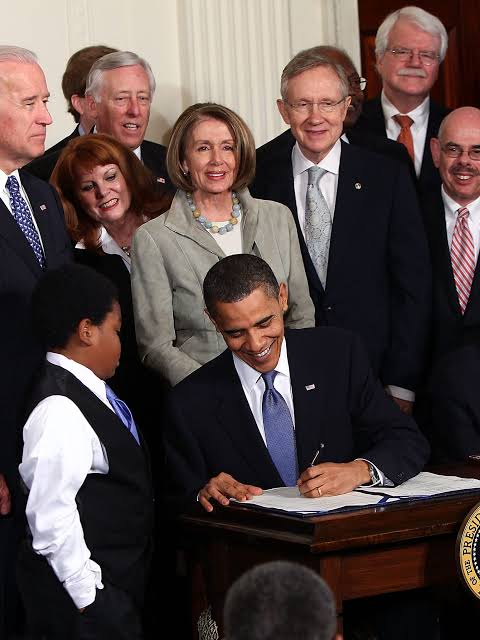
The Infrastructure Investment and Jobs Act carried a $1.2 trillion price tag and a noble-sounding name. Congress passed it in November 2021, Biden signed it, and the press celebrated. Roads, bridges, broadband. The whole sales pitch. What actually landed in the bill tells a different story.
Genuine infrastructure spending, the kind that moves physical goods and connects people to markets, accounted for roughly $110 billion of that $1.2 trillion. Roads and bridges got $40 billion in new money. Passenger and freight rail received $66 billion. Broadband pulled another $65 billion. Add it up, and you are still well under 20% of the total, and the real figure for hard infrastructure sits closer to 10% once you strip out programs that would have passed in any normal appropriations cycle.
The remaining $1.1 trillion went to things Congress rebranded as infrastructure. Workforce development, climate resilience programs, electric vehicle subsidies, community development block grants.
This is how Washington operates. Take a word the public trusts, attach it to everything in the hopper, and dare anyone to vote against "roads and bridges." The label launders the spending. You pay for it through deficit financing that the Federal Reserve then monetizes, which erodes your purchasing power as reliably as a direct tax, just less visibly.
No federal agency holds the information needed to allocate capital better than private investors who face actual profit and loss. Amtrak lost money on food service alone for thirty consecutive years before anyone noticed. The bill does not fix one pothole more efficiently because Amtrak now has $22 billion to spend.
No government builds infrastructure. They pass the actual work to their connected cronies in the private sector, after taking their cut.
At least we know Biden actually signed this in person.👇
@kalkiverxe@elonmusk We just accept and take for granted that we should not be allowed to make decisions concerning the products we buy and from whom, that it is the job of our government to force us to protect our local industry whether we value that or not... we are a nation of idiots
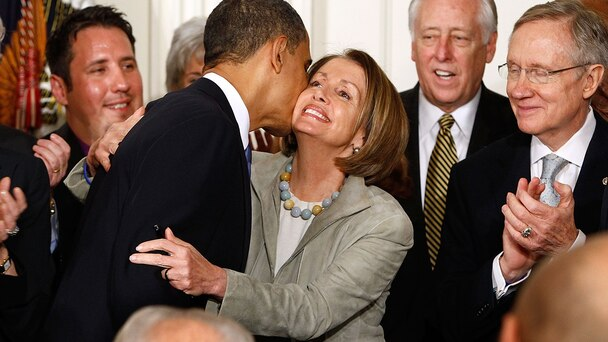
Barack Obama signed the Affordable Care Act in March 2010, guaranteeing you cheaper insurance, more competition, and the ability to keep your doctor. Premiums for individual plans more than doubled between 2013 and 2017. Deductibles climbed so high that millions of technically "insured" Americans still skipped medical care because the out-of-pocket costs were prohibitive.
The government mandated what your insurance must cover, forced healthy young people to subsidize older high-risk pools, and then expressed genuine surprise when prices spiked. Prices always tell the truth.
The 2009 stimulus, officially $831 billion, operated on the Keynesian assumption that government spending creates wealth. Government spending transfers wealth, first taxing or borrowing it from the productive sector, then routing it through political channels where efficiency is nobody's personal concern. The "shovel-ready jobs" Obama later joked about produced no measurable acceleration in recovery. The recession that followed 2008 should have cleared in 18 months, as previous sharp downturns historically did when left alone. The Obama recovery took a decade and delivered the weakest GDP growth of any post-war expansion on record.
Dodd-Frank, signed in 2010, weighs 2,300 pages. Community banks spent compliance budgets they never had, and roughly 1,900 small banks vanished between 2010 and 2016. The big institutions that actually caused the 2008 crisis absorbed the regulatory cost with ease and used the new complexity as a competitive moat. Regulations written by large players consistently protect large players. The middle-class small-business owners who needed credit found fewer lenders willing to offer it.
Obama also expanded drone warfare to seven countries, assassinated American citizens without trial, and extended the surveillance state through a reauthorized PATRIOT Act, which undermines any libertarian's case that the Democratic Party is less hostile to civil liberties than its competition.
Then there was Cash for Clunkers, which destroyed 690,000 working cars in 2009 by crushing them with sodium silicate. Mechanics lost parts inventory. Buyers on a budget lost affordable transportation. Prices for used cars spiked. You paid more so dealers could move new inventory.
A generation of voters watched the government spend $5 trillion across two terms, nationalize health insurance markets, regulate finance into oligopoly, and print money through three rounds of quantitative easing that inflated asset prices and rewarded those who already owned property. You paid higher premiums, earned lower real wages, and watched your savings earn nothing in a deliberately suppressed interest-rate environment. The bill always arrives later. You see the ribbon cutting and the document signing, but you feel the damage to your pocket only years later.
Power selects for a specific personality type, and it is not yours.
F.A. Hayek spelled this out in 1944. In a centrally planned system, the people who rise are not the most competent or the most honest. They are the most willing to exercise force against strangers, the most comfortable with contradiction, and the most skilled at coalition-building through favors rather than merit. Government filters for the bad ones from the start.
The mechanism is straightforward. Political power means controlling resources you did not earn. Capturing that control requires outcompeting rivals who have no ethical constraints. A principled candidate refuses to promise contradictory things to different voter blocs. An unprincipled one does it without blinking. The unprincipled one wins. Repeat this selection pressure across hundreds of electoral cycles and you get the U.S. Congress in 2026: a body where the average member has held office for over a decade, raised millions from interested parties, and delivered almost nothing measurable to the people who voted for them.
Bureaucracy compounds the problem. Once entrenched, state agencies attract people who want authority without accountability. You cannot fire most of them. The FDA, the TSA, the Federal Reserve all function this way, staffed by individuals whose career advancement depends on expanding the agency's reach, never on serving you efficiently.
@ThatGMoney@ns123abc Are you certain about this? Because this is what I think Altman wants people to believe, but when I dug deeper into this story, I felt like that is an interpretation that does not quite fit. It felt more like they just set up weak constraints, perhaps on purpose...
Big Short investor Steve Eisman says the AI labs know they have no moats and are manufacturing a crisis to get regulation that hands them a duopoly
"I think this is all nonsense."
[ You think it's all nonsense? ]
"All nonsense. I think that there's something else completely going on here. ... What I think is happening is that token maxing is over. The open weight models are taking big market share. I think these companies are very nervous. They realize that there are no moats around their business whatsoever, and they're trying to manufacture a crisis that will create regulation, and that they think they can then manipulate to create the moats, to create the duopoly that they want."
[ Wow. ]
"That's what I think is going on."
"Honestly, I think this whole Terminator thing is garbage. That's for sure."
This journalist went from 25K to 50K followers and counting overnight with this video.
Content Creators need to know there is a massive opening in the market for non-slop, that explains how things actually work.
This is how we beat the dsa/tiktok brainrot.
Here are the most important lessons from the Austrian School of Economics in one post:
The entire edifice of modern economic policy rests on a lie: that a group of planners can manage an economy better than the people living in it.
Start with value. Nothing has value in the abstract. You value a glass of water differently when you're drowning than when you're dying of thirst in the Sahara. Value lives inside individual human minds, not in objects, not in labor hours, not in government decree. Every price control, every subsidy, every centrally administered wage floor ignores this and produces predictable wreckage.
Money didn't come from a government committee. It emerged spontaneously from markets, as traders across centuries converged on commodities like gold and silver because they held value across time and space. Governments didn't invent money; they hijacked it.
Inflation is the expansion of the money supply itself. Rising prices are the symptom. When the Federal Reserve expanded its balance sheet from roughly $4 trillion to nearly $9 trillion between 2020 and 2022, the price explosion that followed wasn't a mystery. It was the direct, mechanical consequence of that expansion. The Fed caused it.
Prices do something irreplaceable: they transmit information across millions of actors simultaneously. When lumber prices spiked in 2021, builders across North America cut waste and sought alternatives without a single bureaucrat issuing a memo. No central planner can replicate that signal, because no central planner possesses the knowledge embedded in it.
This connects directly to the knowledge problem. You know your neighborhood, your suppliers, your customers, your own tolerance for risk. Your competitor knows his. A bureaucrat in Washington knows none of it. The knowledge required to run an economy is dispersed, personal, and contextual. It cannot be extracted, aggregated, and fed into a planning model. The Soviet Union ran that experiment for seventy years and produced chronic shortages of basic goods.
Bad businesses must be allowed to fail. When they fail, they release labor, capital, and resources to producers who will use them more effectively. When Washington handed General Motors $49.5 billion in 2009 to prevent exactly that process, it kept misallocated capital locked inside a failing structure and punished every competitor who had managed their business responsibly.
Every function government performs, a voluntary market arrangement performs better: faster, cheaper, and responsive to actual human preferences rather than political incentives. Education, roads, security, dispute resolution, all of it. Government agencies face no profit and loss signal, no competition, and no mechanism to reward performance. They optimize for budget preservation and political survival, and the people using the service have no exit option.
The political class and the central banking apparatus that sustains it are the villains. Both benefit directly from the idea that expert management beats voluntary exchange. They will not surrender that idea willingly.
What would you add?
I was incredibly concerned with the debt.
Now I get it.
It’s never going down.
The budget will never get balanced.
Both parties don’t care and if they say they do they are lying.
Fighting about taxes is silly.
We can’t tax our way out of it.
There isn’t enough tax revenue to be extracted.
We are going to print our way out of it.
5% real inflation forever.
What’s 40 trillion in debt if we inflate the gdp to 100 trillion?
It’s the only choice.
Both sides want to keep spending.
My thesis the next 30 years:
The dollar will be worth less tomorrow than today.
The government will promise anything and spend everything.
Plan accordingly.
If the government had allowed competition and entrepreneurship in healthcare, we would not be suffering from outdated standards and outrageous prices. Healthcare desperately needs to be subject to market forces.
“The strongest argument for free enterprise is that it prevents anybody from having too much power—whether that person is a government official, a trade union official, or a business executive.”
— Milton Friedman
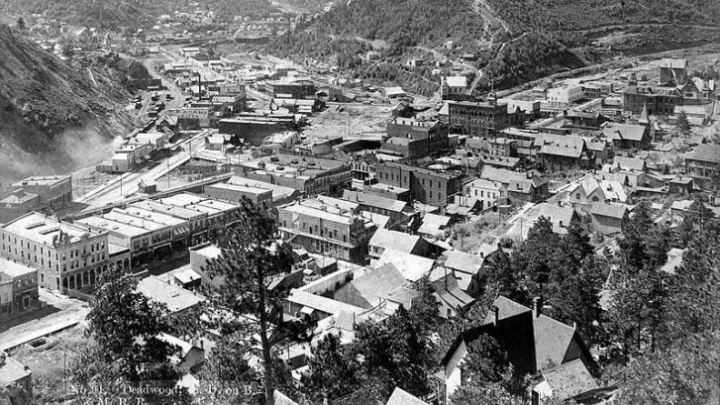
When gold miners flooded into Deadwood in 1876, the federal government had zero presence and local law enforcement didn't exist—yet somehow civilization flourished without collapsing into Mad Max chaos.
You had thousands of men carrying guns, handling massive amounts of gold dust, drinking heavily, and gambling constantly. The statists would predict immediate societal breakdown. Instead, private businesses emerged to provide every service government claims monopoly over. Saloon owners hired their own security. Mining claim disputes got resolved through private arbitration. Transportation companies protected their own shipments. Even justice operated through private courts and community enforcement.
Wild Bill Hickok's death actually illustrates the system working. Jack McCall shot him in the back on August 2, 1876. The community immediately organized a people's court, tried McCall, and initially acquitted him (they botched it—thought they lacked jurisdiction). But when McCall bragged about the killing in another town, they re-arrested him and he faced proper justice. No federal marshals needed.
The violence you read about in Hollywood versions? Greatly exaggerated. Deadwood's murder rate stayed remarkably low for a frontier boom town of 5,000+ people. Private property rights got respected. Contracts got honored. Hell, they even built infrastructure—roads, bridges, water systems—all through voluntary cooperation and private funding.
And this wasn't some primitive barter economy (though they did use gold directly, proving Menger's regression theorem beautifully). These entrepreneurs created sophisticated financial networks, insurance systems, and trade relationships spanning continents.
Government finally showed up in 1877 and immediately began taxing, regulating, and "organizing" what private enterprise had already built efficiently. Just like they always do—arrive late, take credit, then claim you couldn't have survived without them.
What poeople think regulations do:
- Protect consumers from greedy corporations
- Ensure product safety and quality
- Level the playing field for small business
- Prevent market failures and exploitation
What regulations actually do:
- Create massive compliance costs that only big corporations can afford
- Establish regulatory capture where industries write their own rules
- Strangle innovation and entrepreneurship in red tape
- Build permanent bureaucratic empires that expand regardless of results
You're not getting consumer protection. You're getting a cartelization mechanism that happens to sound compassionate.