Representing the worldwide Bahá’í community to the United Nations and regional institutions. Follow @BahaiBIC_Rights for news and advocacy on human rights.
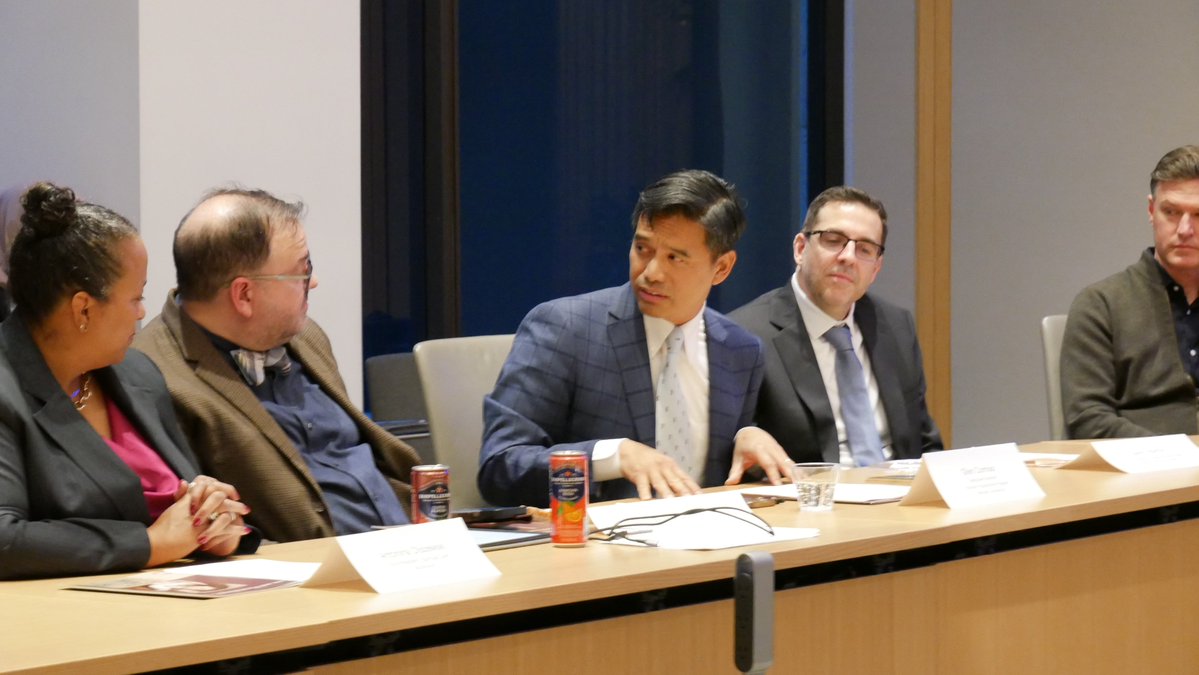
The Bahá’í International Community’s UN Representatives were pleased to recently welcome Mr. David Rupa, Principal Advisor for International Relations at the National Youth Development Authority of Papua New Guinea, to our office for a discussion on how to foster the social conditions that can best release the immense potential of young people towards the betterment of society.
Mr. Rupa shared several examples and insights from the rich experience of the government of Papua New Guinea in how its development models respond to local realities and how youth shape that process. Among them, he articulated that development is an iterative learning process of continuous action, reflection and consultation to evaluate what worked and what could be improved. A local population must own its developmental process – the vision and path it takes must emerge from its own aspirations.
Mr. Rupa also highlighted that at the heart of these approaches is the understanding that young people have agency, and play a significant and distinct role in ensuring the well-being of their entire community. Their contribution, like that of every member of society, is indispensable if a whole population is to move towards collective prosperity.
#UNGA81 #Baha’i
@NYDA
@CeciliaSchirmei@BayaniRachel@DanielPerell@LNkunzimana
“Love in Action”: Advancing Human Flourishing as a Cross‑Cutting Accelerator for the SDGs
Love may be one of the most familiar notions in our everyday lives, but you do not often find it in the language of international policy. But halfway through the United Nations General Assembly High-level Week, Harvard University’s Institute for Quantitative Social Science partnered with the Bahá'í International Community to host an event titled “Love in Action: Advancing Human Flourishing as a Cross‑Cutting Accelerator for the SDGs.”
Harvard’s research explores a question rarely asked in development spaces: how love can be utilized as a driver of growth and human flourishing. And findings highlighted in the event offered a timely insight: love is not peripheral to development, but a measurable factor within it. By fostering unity and creating conditions for sustained hope, communities could harness the qualities of love as a practical grassroots mechanism for advancing the Sustainable Development Goals.
The event highlighted trust, belonging, care, and love to be an indispensable foundation for community life and a critical aspect of the progress of humanity. The BIC thanks Harvard for pushing the boundaries of this conversation and bringing academic research and rigor to the human capacity for love, opening the way for policy to be re-examined through consultation and evidence-based research.
#UNGA81 #LoveInAction #Love #Bahai
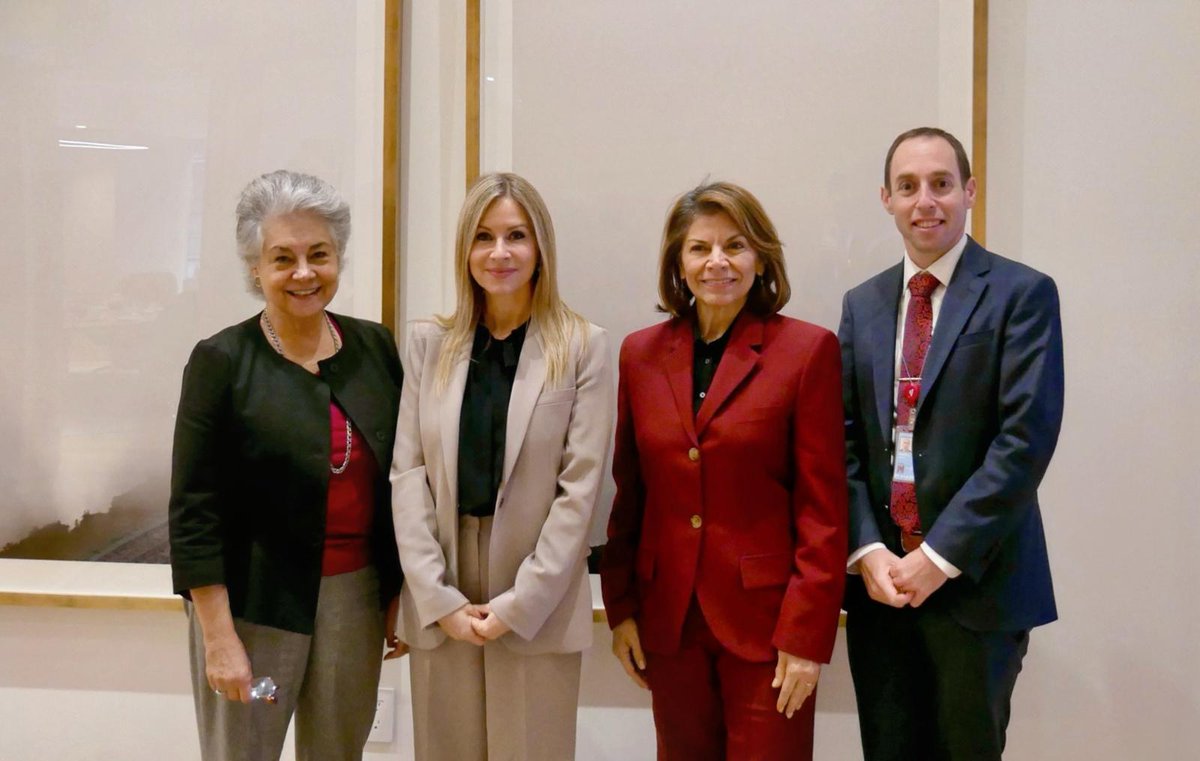
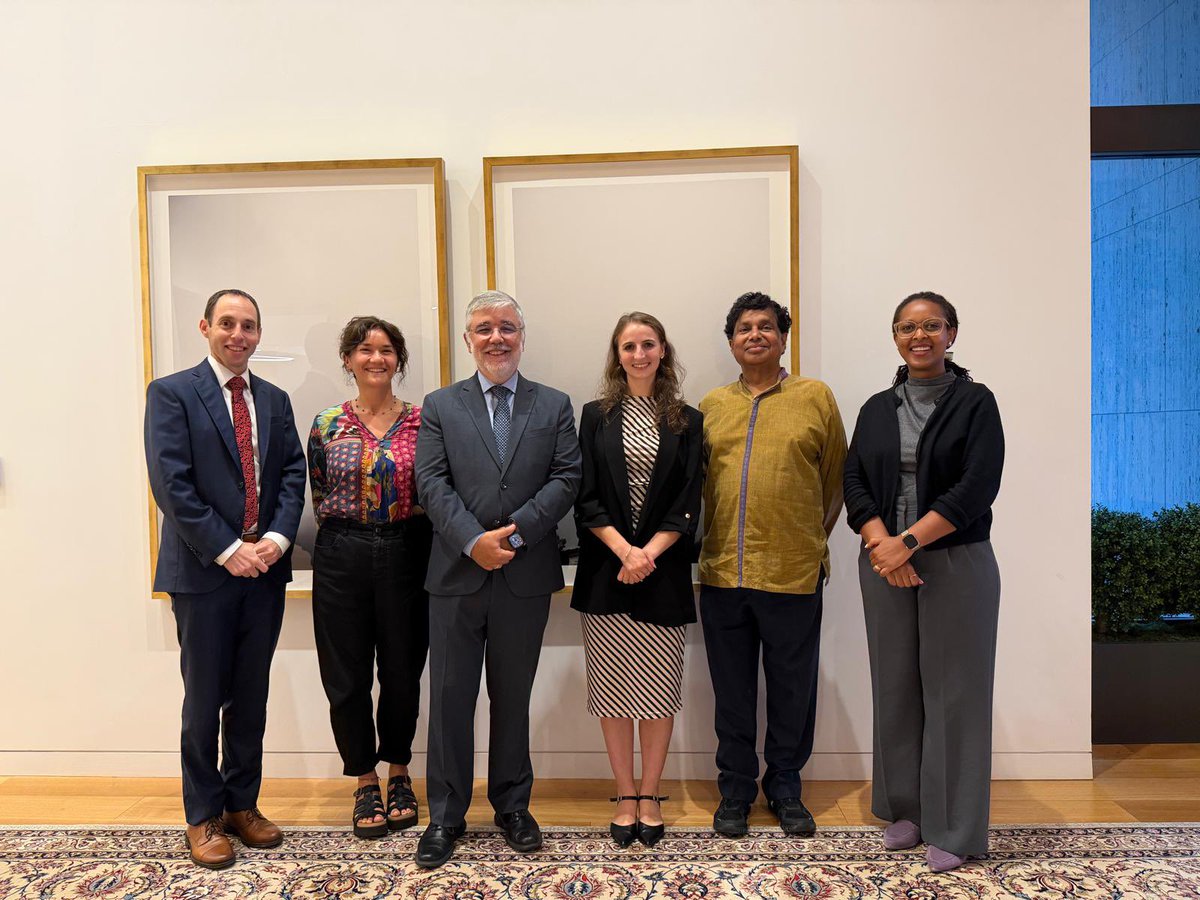
We were so pleased to have H.E. @Laura_Ch Laura Chinchilla, President of @ClubdeMadrid , María Elena Agüero, Secretary General of Club de Madrid, and Agustina Briano, Director of Outreach and Development, meet and exchange ideas with Bahá’í International Community Representatives, @BayaniRachel and @DanielPerell, ahead of Club de Madrid's event at the BIC Offices: "New York Policy Lab, Democracy 2050 – Building the Democracy to Come". Club de Madrid is the world's largest forum of democratic former Presidents and Prime Ministers, working to strengthen inclusive democratic practices and global leadership.
Club de Madrid advances a clear vision of progress on the international stage, grounded in the conviction that meaningful change is built through sustained trust and continued engagement. Their willingness to remain in conversation across different contexts demonstrates the value of relationships that deepen over time and create space for shared learning and understanding.
Consulting with them, as well as with other members of the Club de Madrid, demonstrated the importance of hearing perspectives of leaders who have borne the weight of responsibility and who now choose to place the insights and experience gained through that responsibility in service to humanity’s future.
#UNGA81 #Democracy2050 #Bahai
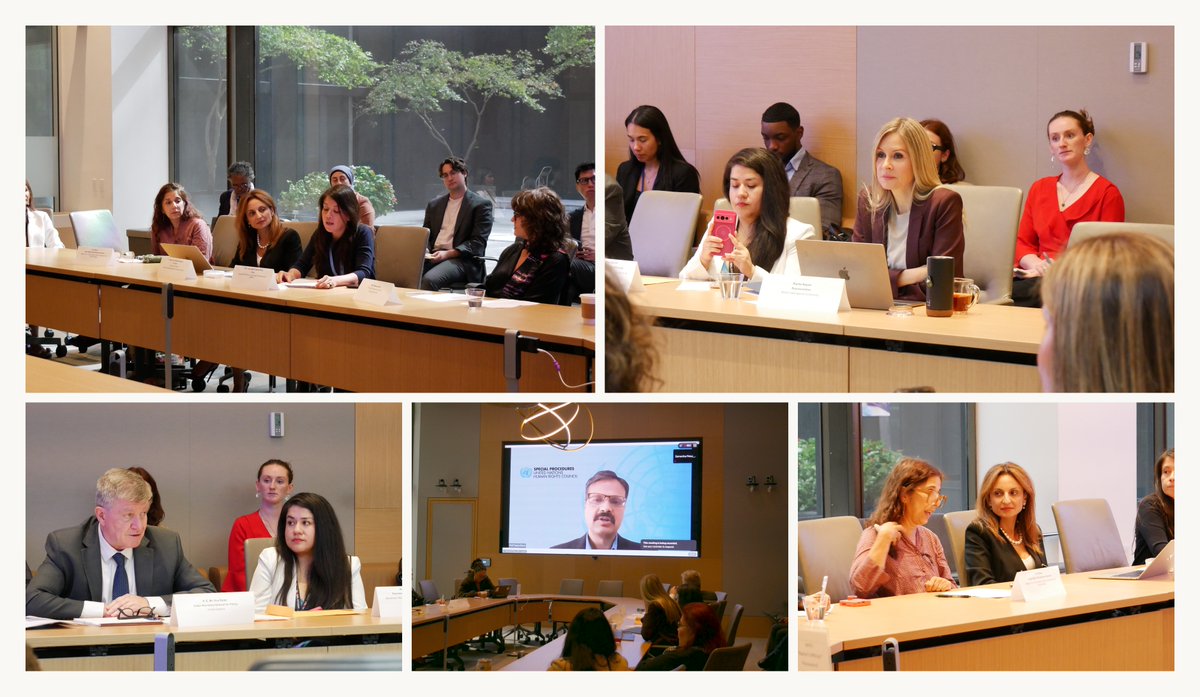
40 Years of the Declaration on the Right to Development in a Key Moment for Multilateralism: 2030 and Beyond
The Baha’i International Community was pleased to participate in a High-level dialogue marking the 40th anniversary of the Declaration on the Right to Development, where a range of policy-makers and other stakeholders explored how a broader understanding of development could strengthen multilateral cooperation.
We extend our sincere gratitude to the Group of Advocates for the Right to Development, the United Nations University for Peace, and The Millennials Movement for organizing the event. We also thank Under-Secretary-General for Policy Guy Ryder, UN Special Rapporteur on the Right to Development Surya Deva, and all the featured speakers for their thoughtful contributions to this important conversation.
In reflections closing the event, Rachel Bayani, Principal Representative of the BIC, highlighted the importance of communities collectively shaping their own futures, including how they choose to develop.
"Development is a daily exercise….It requires numerous spaces of reflection, where people come together to read their reality, where they build a common vision as to what the challenges are that need to be addressed, and where they together devise solutions," she said.
As action is taken and decisions implemented, she continued, strategies and approaches can and must be regularly adjusted. “You need a process of action and reflection for a process of development to be meaningful in the long run… Initiatives need to be refined continuously. And the local population needs to lead that process.”
#UNGA81 #RightToDevelopment #BuildingCapacity #Bahai
@TmmMillennials@UPEACE@GuyRyder@ProfSuryaDeva@pkoundouri@juany_ibanez@RGARAVITO@UNSRdevelopment
As @UN High-Level Week continues in New York, BIC Representative Cecilia Schirmeister reflects on power, a theme discussed widely throughout the week and the focus of the UN Secretary-General's address at the opening of the General Debate.
What if power were reframed as a constructive capacity, latent within every person? How might that change the way we think about who can contribute to a better future for humanity?
#UNGA81 #Bahai
We warmly thank Ambassador Antonio de Almeida-Ribeiro of the International Dialogue Centre @KAICIID for meeting with the Bahá'í International Community's Secretary-General of the Bahá'í International Community, David Rutstein and Principal Representative @BayaniRachel. Together we reflected on the importance of bringing together diverse groups and building consensus among people of different backgrounds and belief systems, both through dialogue and cooperation.
#UNGA81 #DialogueForPeace
As world leaders gather for the 81st @UN General Assembly under the theme “Restoring #trust, managing transformation: a United Nations that delivers for all,” the Principal Representative of the Bahá’í International Community, @BayaniRachel, is emphasizing that trust emerges only when nations are confident that other nations are genuinely concerned for their wellbeing. #UNGA81
#UNGA81 #trust
The Bahá’í International Community was pleased to participate in the "Global Conference on Promoting Interreligious and Intercultural Dialogue and Tolerance in Countering Hate Speech," convened by the @UN Secretary-General on September 17.
In her remarks, Principal Representative @BayaniRachel Bayani highlighted that countering hate speech requires us to widen the circle of those we consider members of our community, embracing people of different beliefs, cultures, and backgrounds.
We are grateful to the Kingdom of Morocco (@Morocco_UN), the United Nations Office on Genocide Prevention and the Responsibility to Protect (@UNOSAPG), and the United Nations Alliance of Civilizations (@UNAOC), for hosting the event.
#UNGA81 #InterreligiousDialogue
We extend our sincere gratitude to Vice Rector Juan Carlos Sainz-Borgo of the University for Peace (UPEACE), Ramu Damodaran, UPEACE’s Permanent Observer to the UN, and Melissa Wild, Founding Executive Director of UPeace NY, Inc. for taking the time to visit the Bahá'í International Community. Our conversation on the complexity of peace efforts, the needs of humanity today, and the future of the United Nations were inspiring and thought provoking. We particularly appreciated the Vice Rector’s reflections on the impact the oneness of humanity would have on global affairs.
The Bahá’í International Community has had a busy few months—from our United Nations Office in New York to all our sister offices around the world. We are delighted to share a quick look at our recent activities and our latest contributions in this latest newsletter for the UN community.
Read our full newsletter here: https://t.co/H8EAImlpgR
From colleagues across our offices in Addis Ababa, Brussels, Cairo, Geneva, Jakarta, and New York, the Bahá'í International Community wishes you a very happy #InternationalYouthDay!
At global and regional intergovernmental bodies alike, the potential of youth and the contributions they make to society remain a core focus of our work.
Young people aren't waiting to inherit the world as it is; they're already reshaping it, bridging generations and reimagining what collective wellbeing truly means. Whether in multilateral spaces or in their own neighborhoods, youth are demonstrating what it looks like to be protagonists in the constructive transformation of society.
#InternationalYouthDay #YouthLead #Youth2030 #FutureReadySkills #Protagonists
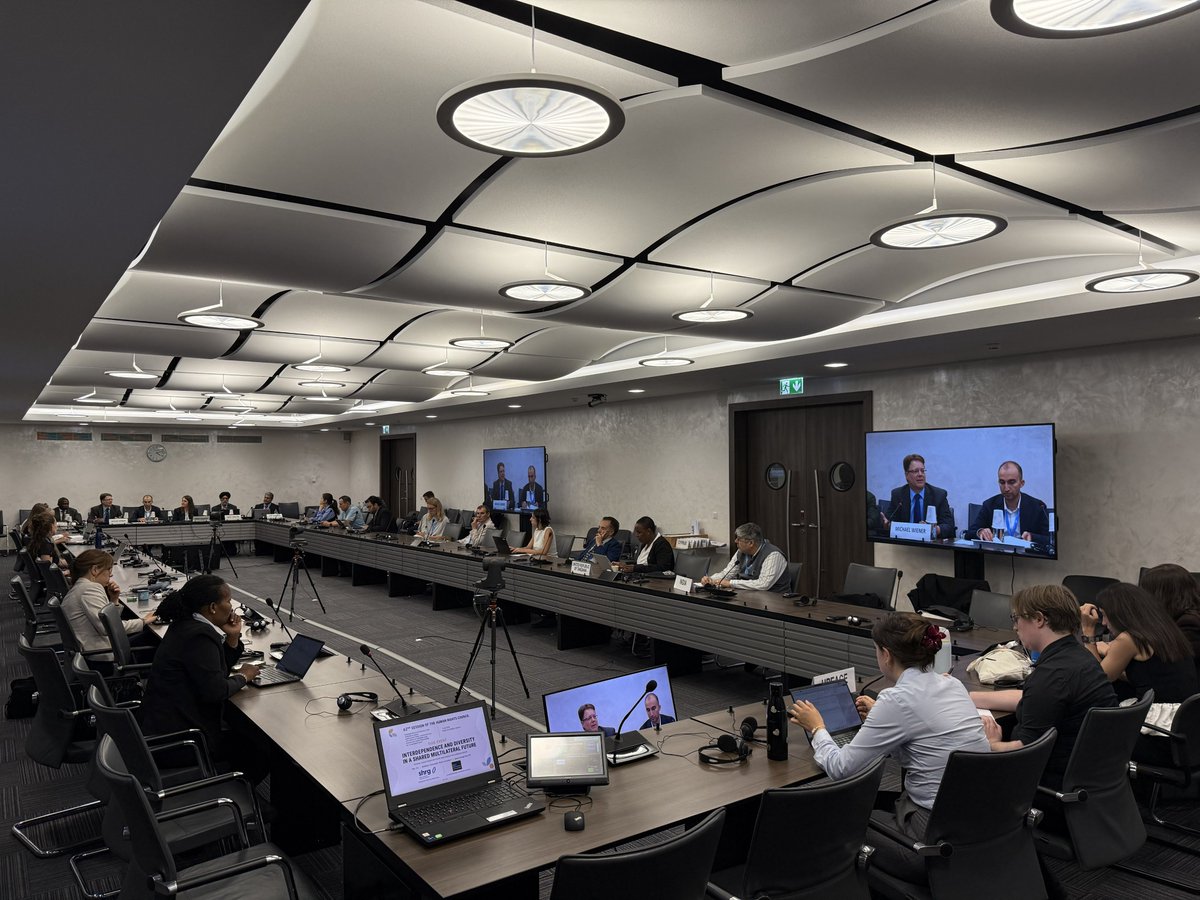
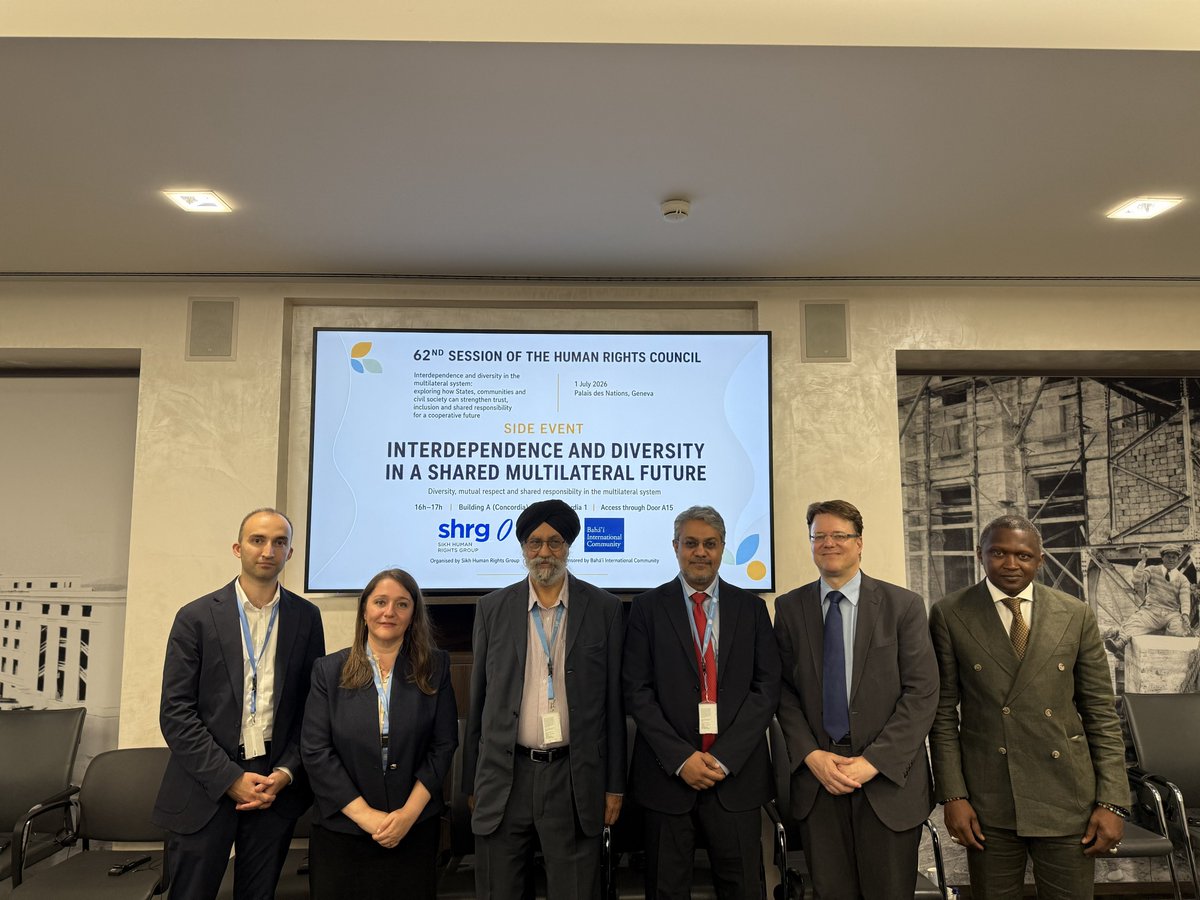
The Bahá'í International Community participated in a panel titled "Interdependence and Diversity in a Shared Multilateral Future," held on 1 July 2026 on the sidelines of #HRC62. Organized by @shrg_ngo and co-sponsored by @BahaiBIC, the panel explored how a proposed Declaration on Diversity could strengthen trust, inclusion, and shared responsibility for a cooperative future.
Reflections shared during the panel highlighted the importance of treating diversity as a source of collective resilience rather than division. In her remarks, Baha’i International Community representative @ShaddadHaddad affirmed that the oneness of humanity and its interdependence is not merely an ideal but a principle with practical consequences, and diversity is one of unity's essential conditions.
She added that an international Declaration on Diversity could translate abstract appreciation of diversity into practical commitments, such as protecting freedom of religion or belief, shaping education around the oneness of humanity, creating consultative spaces, seeing the potential in every human being to contribute to the common good, and recognizing the roles of families, youth, and faith communities.
The panel also featured Dr. Michael Wiener of the Office of the @UN High Commissioner for Human Rights, Mr. Amit Wadhwa of @dharmaalliance, Mr. Biro Diawara of Rencontre Africaine pour la Défense des Droits de l'Homme, and Dr. Jasdev Singh Rai of @shrg_ngo, moderated by @AlbertBarsegh.
On the sidelines of #HRC62 in Geneva, faith leaders and advocates gathered at a panel titled "Advancing Human Rights through Inclusive Dialogue," hosted by the Feminism and Faith Forum, to explore how faith-based actors can work alongside one another to advance human rights and end gender-based discrimination and violence.
Representing the Bahá'í International Community at the panel, @ShaddadHaddad addressed the situation of Bahá'í women in #Egypt, where decades of state-sponsored discrimination have barred recognition of Bahá'í marriages — depriving women of legal rights and protections, and leaving them no recourse in family courts, as in the eyes of the law, their family relationships "effectively cease to exist." She invited participants to reflect on the principle of the equality of men and women, and its profound implications for the organization of every aspect of collective life, as well as on the obligations that states and the international community bear toward women who experience discrimination on multiple and intersecting grounds — adding that “ensuring that every woman can exercise her agency, enjoy equal protection under the law, and contribute fully to the life of her community is not only a matter of individual rights, but a prerequisite for the progress of humanity as a whole.”
The event brought together a diverse group of participants, including members of faith communities, activists, academics, and representatives from several missions, including the European Union, Zambia, Belgium, Jordan, and Egypt.
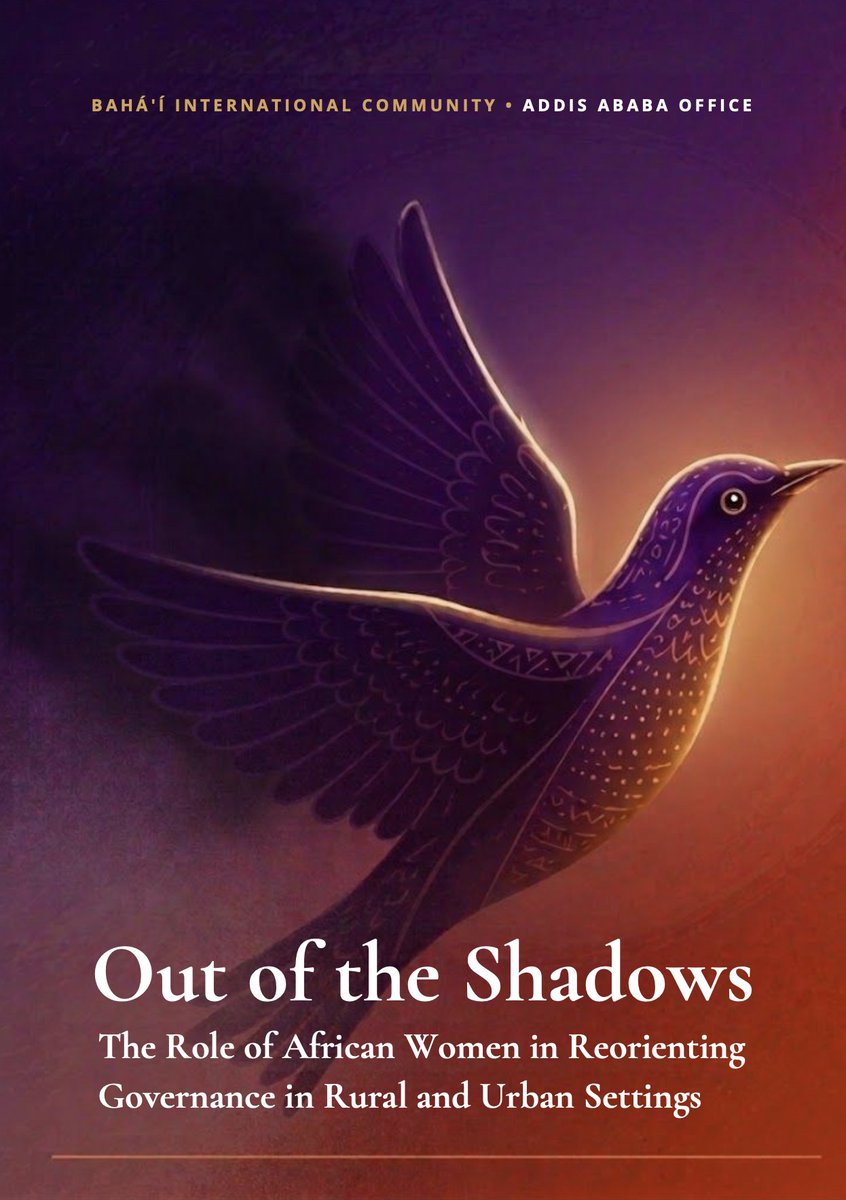
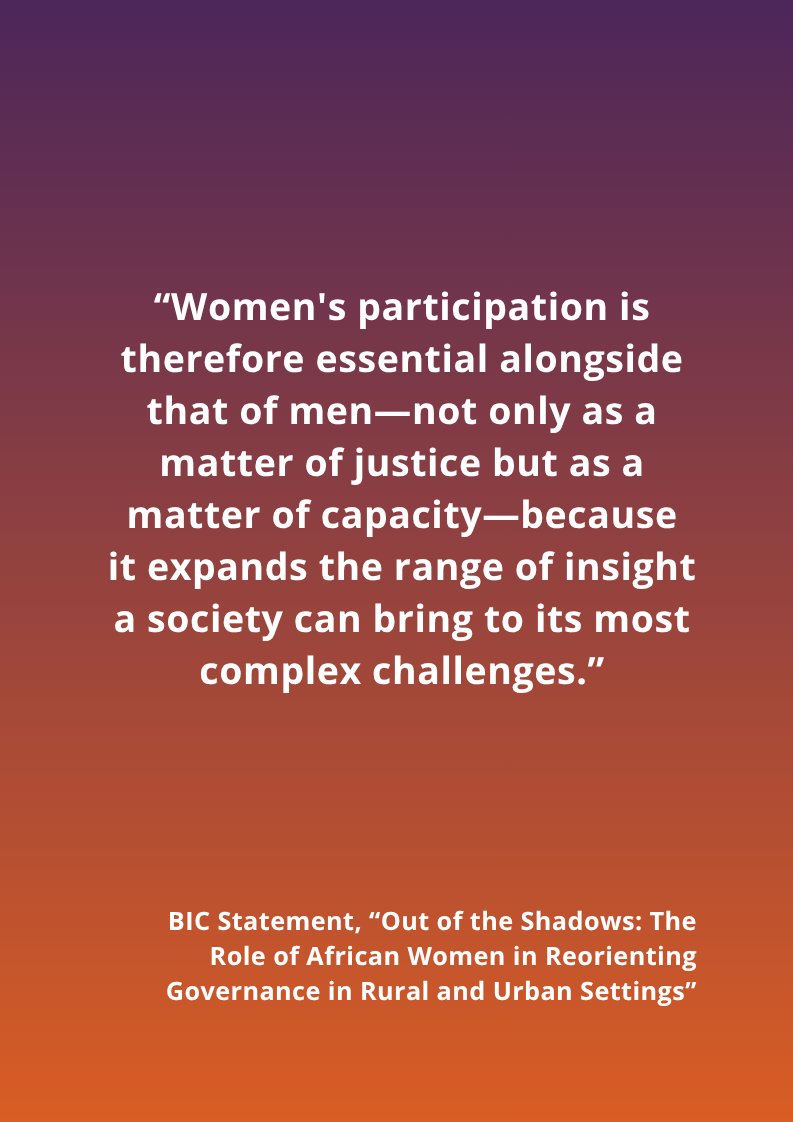
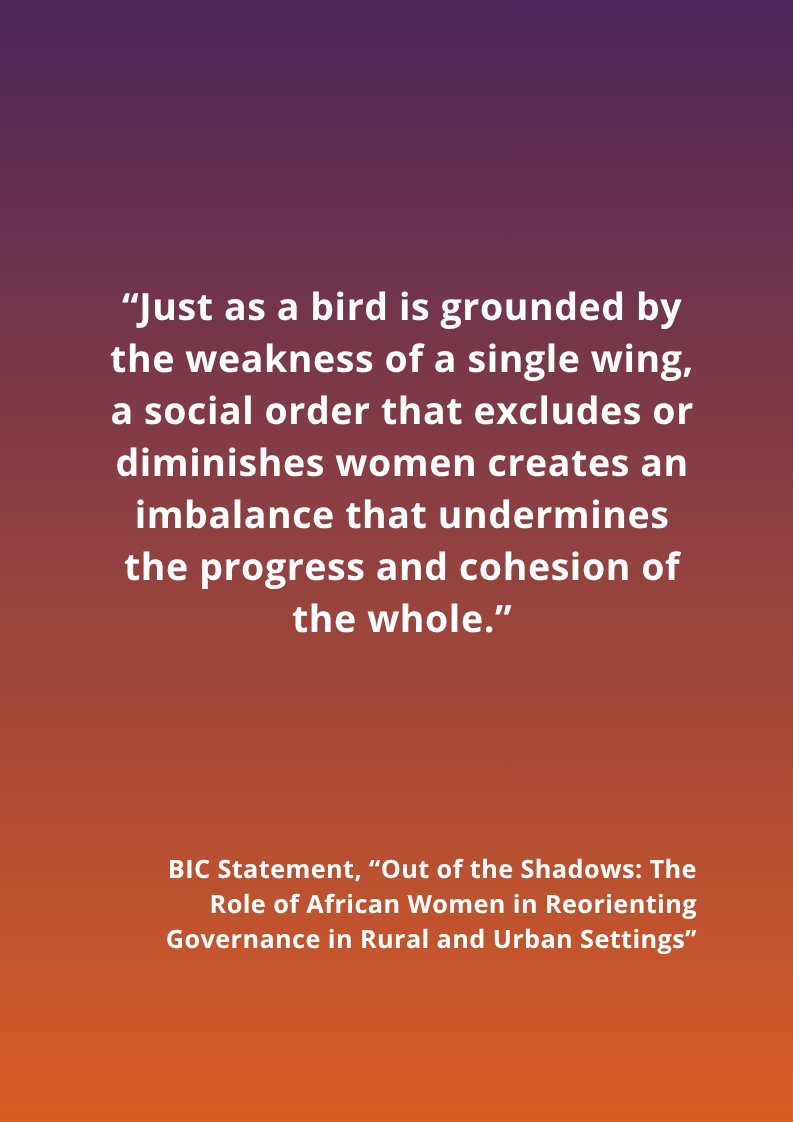
To mark Pan-African Women’s Day, the BIC Addis Ababa Office has released a new statement: "Out of the Shadows: The Role of African Women in Reorienting Governance in Rural and Urban Settings."
The statement reflects on the indispensable role of African women in shaping governance and the collective well-being of their communities, calling for a fundamental re-examination of the assumptions that govern human relations.
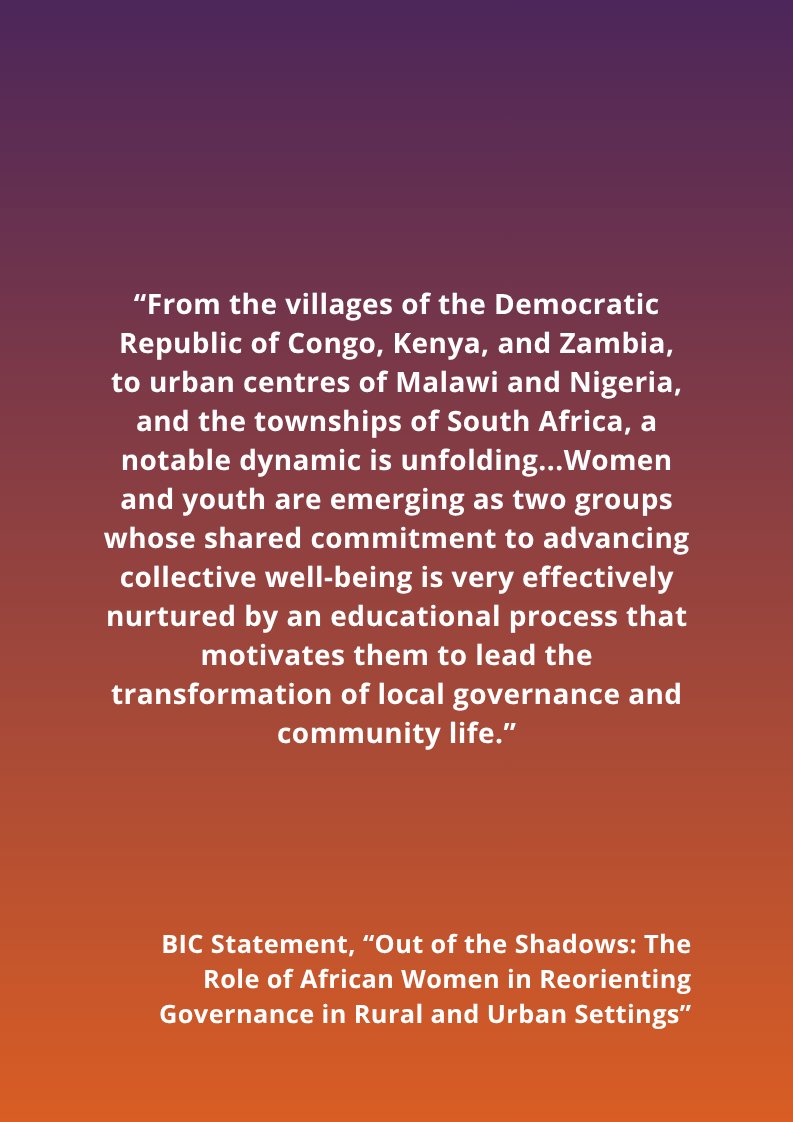
"...the real task ahead lies in reorienting the structures, processes, and social dynamics through which society organizes itself, so that the capacities of all its members can contribute to collective prosperity."
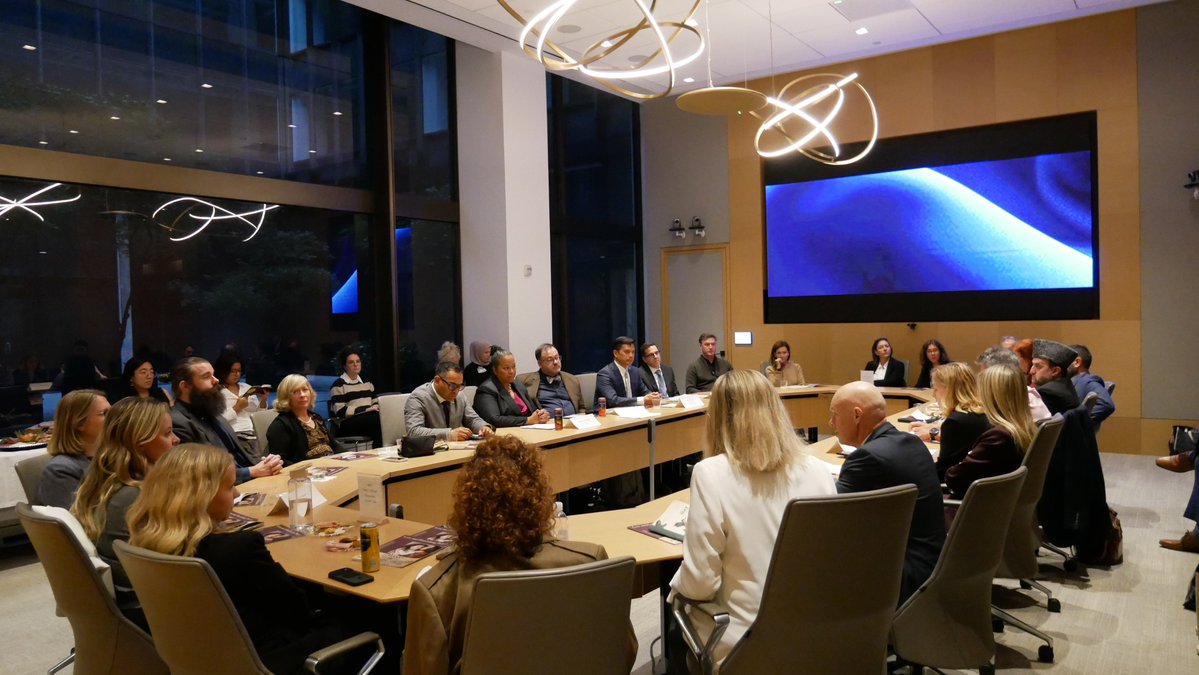
Drawing from roundtable discussions hosted by our Office and experiences from across the continent, the statement explores how more inclusive patterns of governance can emerge through cooperation, consultation, and collective learning.
Read the full statement here: https://t.co/TQ3ShtA6lZ
#GenderEquality #Governance #Africa #BIC #Agenda2063 #PanAfricanWomensDay
Last week, the Bahá'í International Community attended the #OneWorldOneGameOneGoal event organized by the @UN Youth Office @UNYouthAffairs at the UN Headquarters, on the topic of advancing youth mental health and well-being — exploring the role of football and sports more widely as a tool for young people to build confidence, connection, and community.
Discussions underscored that sport is most powerful when young people are entrusted as protagonists to shape the spaces they're part of, and the culture of those spaces, rather than simply being invited to participate in them.
For the Bahá'í International Community, this speaks to a broader conviction: that well-being and mental health is not only an individual or clinical concern, but one shaped by the strength of the communities young people belong to. Building that kind of belonging — on the field and beyond — is part of building a more cohesive social fabric that all young people can contribute to.
#RealPeopleRealTalk #YouthLead #UnitedNations #RealAllies #Youth #YouthLead #Protagonists
Nadim Schoot and Shemona Moonilal reflect on their time together in Addis Ababa, where the BIC co-hosted an event together with @FESonline that, in part, challenged old notions of development — instead highlighting the role and agency all people and nations play in advancing the commitments of the Africa-Europe Partnership.
#AUEU
#africaeurope
To move beyond a model of regional collaboration anchored primarily in relentless growth and competition, it’s important to interrogate the assumptions that underpin this model, chief among them is the belief that one region must be economically competitive over another.
What would it mean to instead articulate a shared vision for peace, prosperity and collective well-being for all, grounded in collaboration, rather than competition? And can this vision exist when grappling with two seemingly opposing ideas: competition and partnership? Can these two forces coexist meaningfully, or does the desire of one region to be ‘competitive’ over the other inevitably reassert hierarchies of power that challenge the very notion of ‘partnership’ itself? These are some questions the BIC has been exploring in conversation with others on the Africa-Europe Partnership.
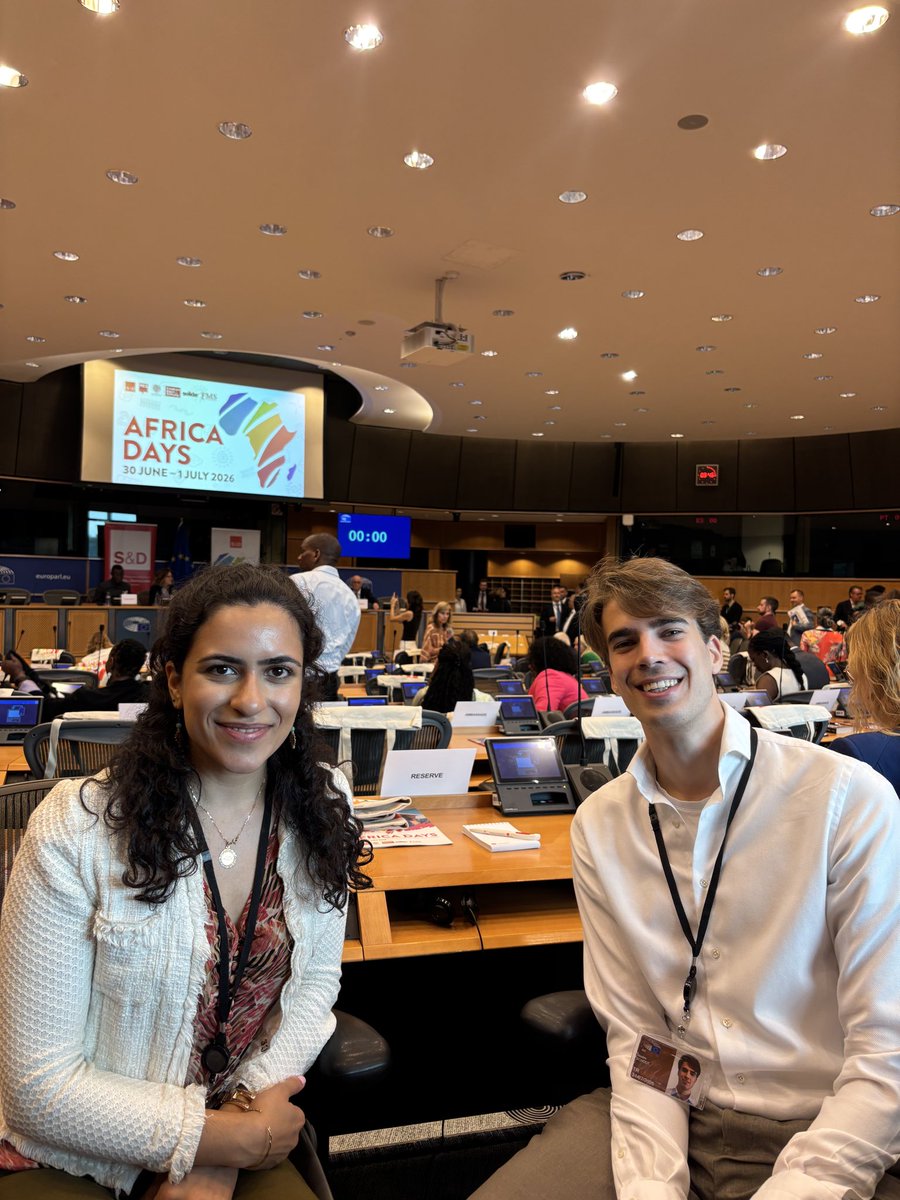
Last week, we were very happy to participate in the @TheProgressives #AfricaDays, a series of spaces organised in Parliament that offered an opportunity to delve into these ideas further. The event aimed to envision an Africa-Europe Partnership shaped by equality, solidarity, social justice and shared progress, themes which have also defined much of BIC’s work on the #AUEUpartnership.
In the face of growing restrictions on the functioning of civic space, and the dangers posed by rising global conflict, how can civil society continue to play a valuable role in building peace?
As part of UN Peacebuilding Week, the @AfPeacebuilding , the @network_tap: Transparency, Accountability & Participation for the 2030 Agenda, @Saferworld, and the Bahá’í International Community convened a side event, "Pursuing Peace and Protecting Civic Space,” gathering more than 100 representatives from civil society to discuss this question.
Participants shared experiences in carrying out peacebuilding work despite rising political threats. Some highlighted the need for long-term, flexible funding, while others emphasized the need for better protection of civic groups from threats of violence.
"Peace is not simply the absence of violence, not the outcome of formal agreements," one participant said. "Peace is not something static or lifeless—it is an ecosystem built and sustained by relationships that are always growing and transforming for the better. Civil society is a critical part of that ecosystem: without it then the whole starts to fail.”