More from the same 14 Ahrefs studies, on Google's AI answers:
→ AI Overviews cut clicks to the #1 result by 58%, up from 34.5% ten months earlier
→ 99.9% of them appear on informational queries. Shopping queries: 3.2%
→ AI Mode and AI Overviews agree 86% of the time but share only 13.7% of citations
→ Schema markup had no measurable effect on AI citations
→ YouTube mentions had the strongest link to AI brand visibility (0.737)
Google didn't ignore these cheap links.
A home service business bought Fiverr backlinks. After the August spam update and the December core update, its rankings fell below where they started.
What @JoyanneHawkins's team found:
→ Better links didn't fix it
→ A competitor listed real error codes on its pages
→ They tested that on one page. Rankings and traffic rose, then they rolled it out
Ahrefs ran 14 studies on AI search, over 1 billion data points. What ChatGPT cites (@timsoulo):
→ "Best X" listicles: 43.8% of cited page types
→ 67% of its top 1,000 citations come from sources you can't influence: Wikipedia 29.7%, homepages 23.8%, app stores 6.6%
→ 28.3% of its most-cited pages have no Google organic visibility
→ It cites only about half of the pages it fetches
During a core update, Ahrefs and Semrush can show very different numbers for the same site. @glenngabe saw it across ~1,000 sites this month.
Which number do you trust?
→ Search Console
→ Ahrefs
→ Semrush
→ Your own revenue
Ahrefs ran 14 studies on AI search, over 1 billion data points. What ChatGPT cites (@timsoulo):
→ "Best X" listicles: 43.8% of cited page types
→ 67% of its top 1,000 citations come from sources you can't influence: Wikipedia 29.7%, homepages 23.8%, app stores 6.6%
→ 28.3% of its most-cited pages have no Google organic visibility
→ It cites only about half of the pages it fetches
Pessimists are always right. Optimists keep moving forward.
That feels especially true right now.
Focus on AI-driven job losses, see yourself as powerless, and take a pessimistic view of humanity’s future, and you’ll probably work in anger, resignation, and despair.
Focus on the new paradigm AI brings, join the wave, and take an optimistic view of humanity’s future, and you’ll probably work with energy, passion, and an eye on what’s next.
We all need to eat, so we all need to work.
Either work happily or happily don’t work. Don’t work in despair.
Unfortunately, most of us can’t afford not to work. So we might as well let go of the negativity and get to work with optimism!
Google has a free tool that shows how it reads your page: the Cloud Natural Language API demo.
1. Paste your page text into "Try the API"
2. See every entity it finds, with a salience score (how central it is to the page)
3. See the category it assigns
4. Run the #1 result for your keyword and compare
@Charles_SEO: if their main entity scores 0.85 and yours 0.3, name your topic earlier and more clearly.
Which SEO posts get saved? I counted 38,023 X posts from 82 SEOs (Jan 2024 to Nov 2026, 1,000+ views each).
Bookmarks per 1,000 views, median:
→ Step-by-step how-to: 6.6
→ Thread: 5.2
→ List: 4.9
→ 1,000+ characters: 4.1
→ All posts: 0.8
→ Question: 0.5
→ Short take: 0.4
More URLs can mean less ranking power. @KorayGubur calls it ranking signal distribution: PageRank and crawl attention get split across every URL you have.
His fix:
→ Revise pages that still deserve to rank
→ Redirect or merge the ones that don't come back
→ Open a new URL only if the query deserves its own page
One site that had lost a core update, last 28 days vs the 28 before: clicks 12.2K → 24.2K.
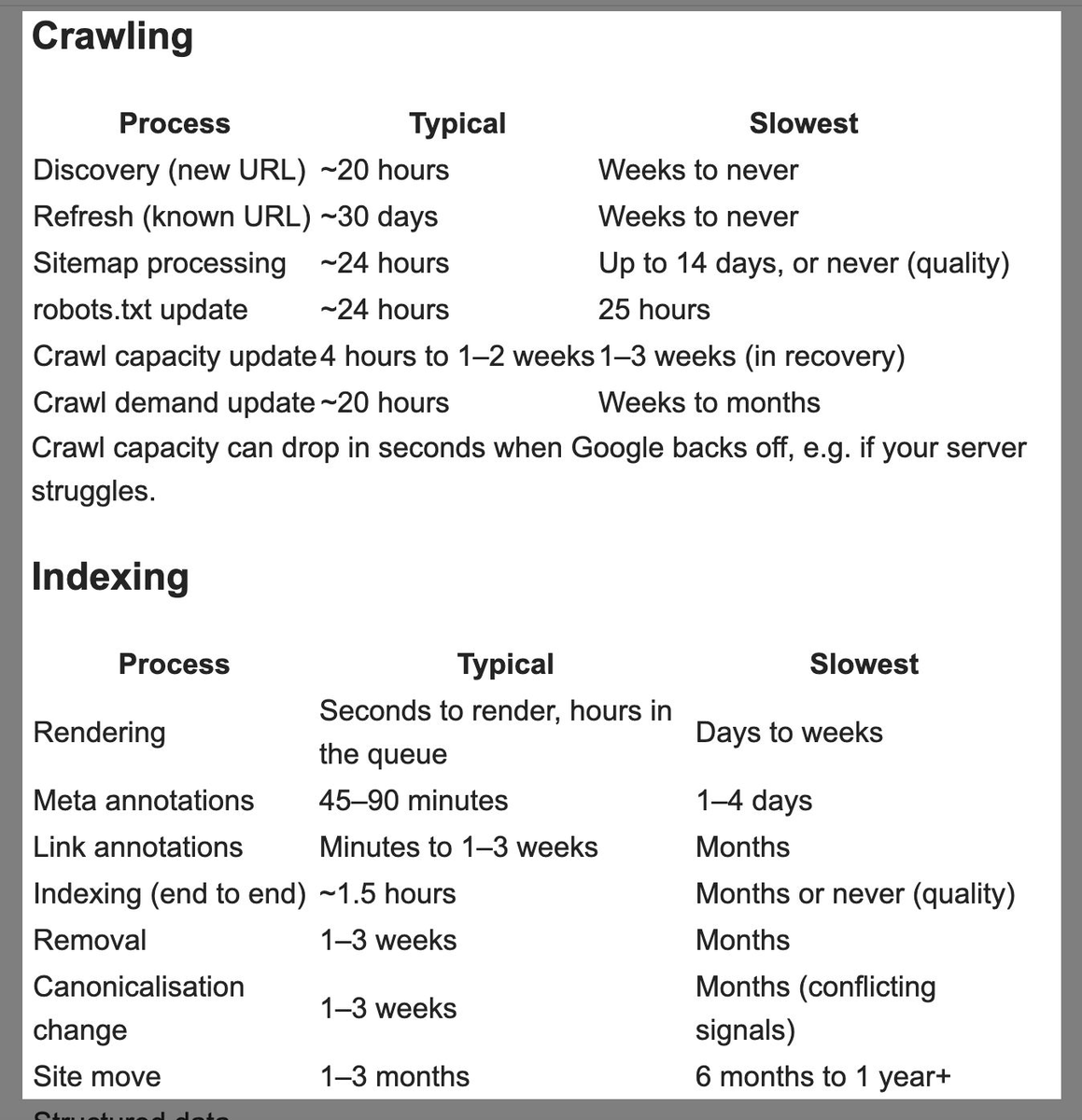
How long does Google actually take? It shared real numbers.
From a Search Central event (screenshots by John Campbell, reported by @rustybrick):
→ Finds a new URL: ~20 hours
→ Indexes it after crawling: ~1.5 hours
→ Reads your sitemap: ~24 hours
→ Recrawls an old page: ~30 days
→ Site migration: 1–3 months, sometimes over a year
Ahrefs switches to a new Domain Rating on December 1.
Also this month: Google's core update (Nov 10), and ChatGPT showing businesses their mentions and clicks.
Some good preps:
→ Export Search Console
→ Claim your ChatGPT business profile
→ Screenshot your DR
2 Search Console oddities from November:
→ A click spike on Nov 2 with flat impressions, mostly on desktop. Likely agents or bugs, not people
→ An important URL that returns 4xx can stay in Google's index for a while. Gary Illyes confirmed it. It loses snippets and favicons
Ahrefs published an AI search benchmark: 800M+ data points, 8 studies, 7 authors.
3 findings @ViperChill picked out:
→ After AI Overviews launched in France, the most exposed sites lost 23.1% of their CTR
→ Gemini and Perplexity share more top-cited domains than any other pair of platforms: 565
→ Self-promotional content can backfire in AI search. They tested it on their own conference
3 numbers from search this month:
→ ~20%: ChatGPT's search volume compared with Google's, per OpenAI. If true, that's more than Bing
→ ~37%: how much Ziff Davis says its organic Google referrals fell. It isn't planning on a recovery
→ 3 in 4: homepages that lost organic traffic year over year, in a study of 110 homepages. SaaS and education sites fell most
Is GEO worth your time? Two big data sets say opposite things.
Against: @Marie_Haynes, 100 sites, 145M sessions
→ ChatGPT sent 0.62% of the traffic Google organic did
→ Its visitors converted better: 13.8% vs 3.02%
→ Google still drove 27x more conversions than all AI chatbots combined
For: @CyrusShepard switched off Google AI search on his own site
→ AI citations got only ~1% CTR
→ But they touched 20%+ of his traffic
→ And they lifted his regular clicks too
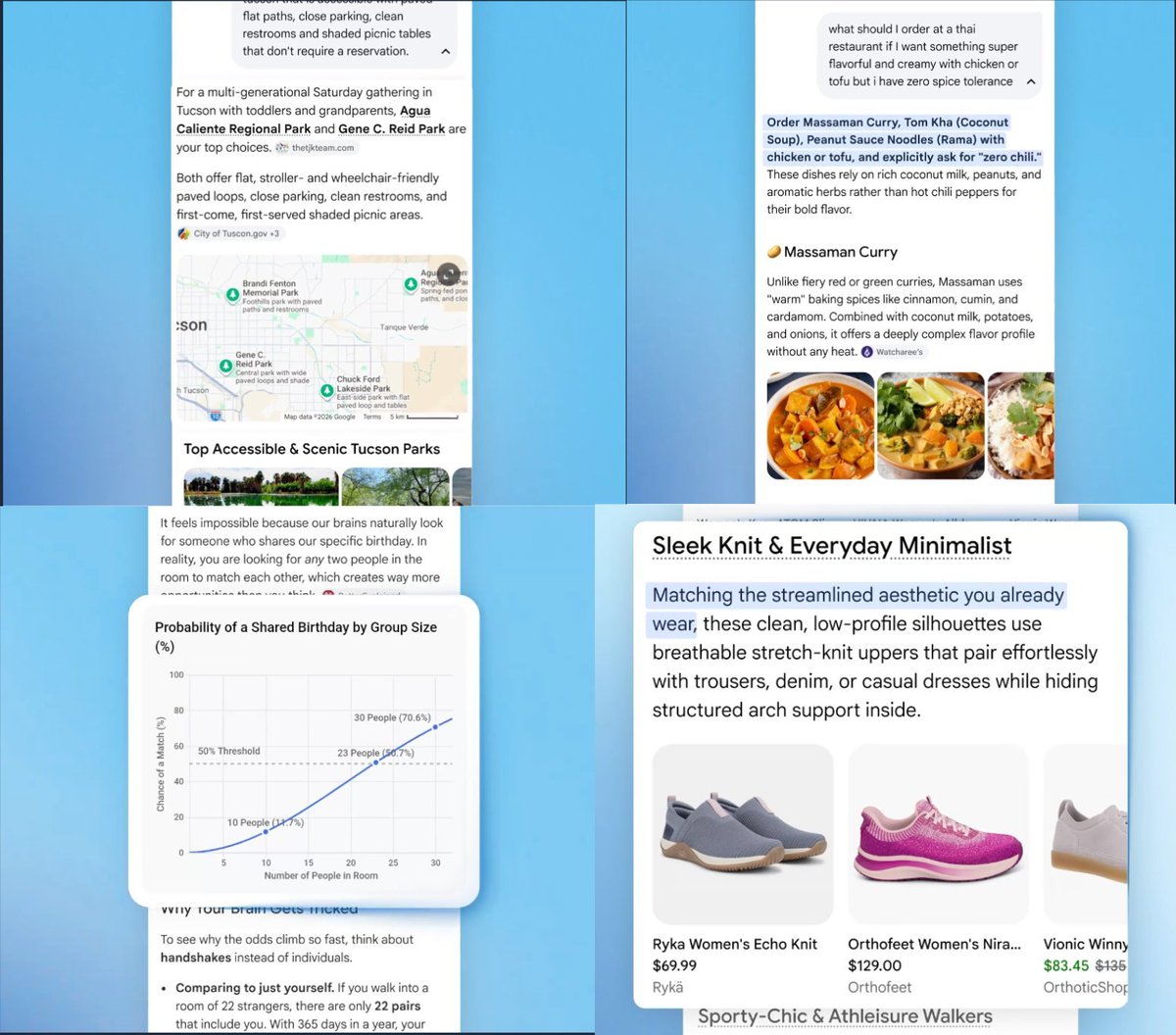
Google Search now runs on a new model, Gemini 4 Hydrogen. Google calls it "the biggest model improvement to Search yet."
What changed, per @Marie_Haynes:
→ Better at reading what the searcher means
→ Wider query fan-out, with more links out to the web
→ More visual answers: it can make images, charts and graphs
It's on for everyone, not only paid Gemini users.