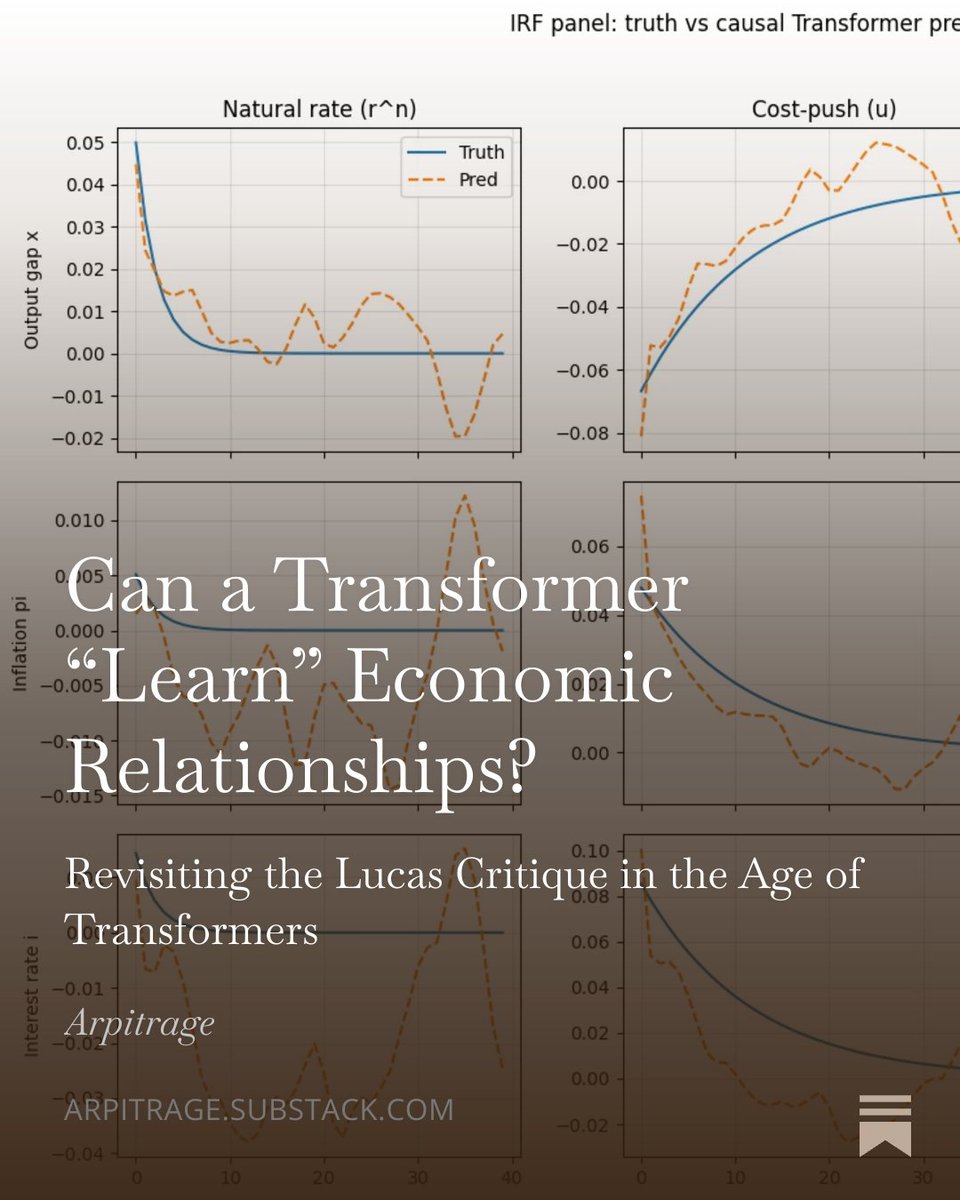
Can AI "learn" economic states, addressing the Lucas Critique?
With @alexolegimas we simulated data from an NK model, fit a transformer, and tested out of sample fit
It generalizes surprisingly well. We hope this stimulates discussion and future agendas
https://t.co/lXcJh9IkE9
My understanding of the "Moll Critique" of rational expectations (RE) with heterogeneous agents (HA).
With rep-agent, RE=we look for the key under the lamp-post. Luckily, the key really is there: the simplification both makes the problem tractable and gives the right answer. 1/n
I have just posted my survey paper “Deep Learning for Solving Economic Models” on my webpage:
https://t.co/VntBsPcBLS
In one or two weeks, it will also circulate as a working paper at the NBER and CEPR. Still, I wanted to let people know already, since I am quite happy with the outcome, largely thanks to some fantastic early feedback I got.
As I have often argued, the ongoing revolution in deep learning is transforming how we solve dynamic equilibrium economic models. At its core, solving a model amounts to approximating unknown target functions (such as the value function of agents, a decision rule, or a best response function). Deep learning frequently does a fantastic job at that task.
In the paper, I emphasize that this success is not “magic,” but rather the direct consequence of deep learning’s ability to discover better representations of the relevant variables of a model (for example, the state variables). The layers of a neural network transform the input variables into informationally efficient representations that can be more easily approximated. Tom Sargent loves to say that finding the state is an art. Deep learning tries to automatize that art as much as possible.
This is why, in many cases, we can now solve high-dimensional problems that were computationally infeasible only a few years ago.
Furthermore, the structure of deep networks designed for solving these models, largely linear apart from the non-linearity encapsulated in the activation function, permits massive parallelization.
The survey paper is designed to start from the ground up. My intended audience is a first-year graduate student with only a very basic knowledge of solution methods, or even a motivated senior undergraduate.
I would very much appreciate feedback. Can you follow the arguments throughout? Are there steps that remain unclear? I have taught courses based on this material at Penn, the Bank of Spain, Cambridge, the ECB, Harvard, Johns Hopkins, Northwestern, Oxford, Princeton, UC Santa Barbara, and Stanford, but I am always looking for fresh eyes to suggest improvements.
All the slide decks, with links to the code, are available here:
https://t.co/aIOVy4gbFM
under “Machine Learning for Economists.”
Eventually, I may use this survey paper and the slide decks as the kernel for something longer, but first, I need to clear my desk of too many ongoing projects.
Москва 2025 — сон сумасшедшего, ты идешь по центру там ягодные сезоны, за ними вакансии оператора БПЛА, идут куклы на ходулях, рядом — вечер военной поэзии, экспозиция СЕМЬЯ СКВОЗЬ ВЕК��, огромный самовар (???), следом выставка эпизоды финской русофобии
An old Soviet joke. The Russians arrest a Jew for studying Hebrew.
“Why are you studying Hebrew in Russia? You will die before being allowed to go to Israel.”
“When I die, I will go to heaven and everyone there will speak Hebrew.”
“Ha! And what if you go to hell?”
“I already speak Russian.”
This morning, I posted about how misguided the idea of using AI to run a centrally planned economy is:
🔗 https://t.co/EXkPMBEWKc
One of my (not-so-secret) secrets is that over the years, I’ve read as many books on central planning as I could find, including digging in obscure libraries.
I genuinely wanted to understand both how it was supposed to work in theory and how it failed in practice. I’m even writing a paper on the topic with @ASvorencik 🖋️📚
For those curious (especially from the AI side), an accessible entry point to some of these ideas is Cybernetic Revolutionaries by @edenmedina 📡🇨🇱
It explores an ambitious attempt to fuse cybernetics and socialism in Allende’s Chile in the early 1970s.
What struck me most about the book was how naive and pie-in-the-sky the whole project was. Even the Soviets, at the time, had a more grounded sense of the limits of networked control 🧮⚙️
If you’re interested in this latter history, I highly recommend:
📘 How Not to Network a Nation: The Uneasy History of the Soviet Internet by @bjpeters. Fascinating, subtle, and unexpectedly relevant.
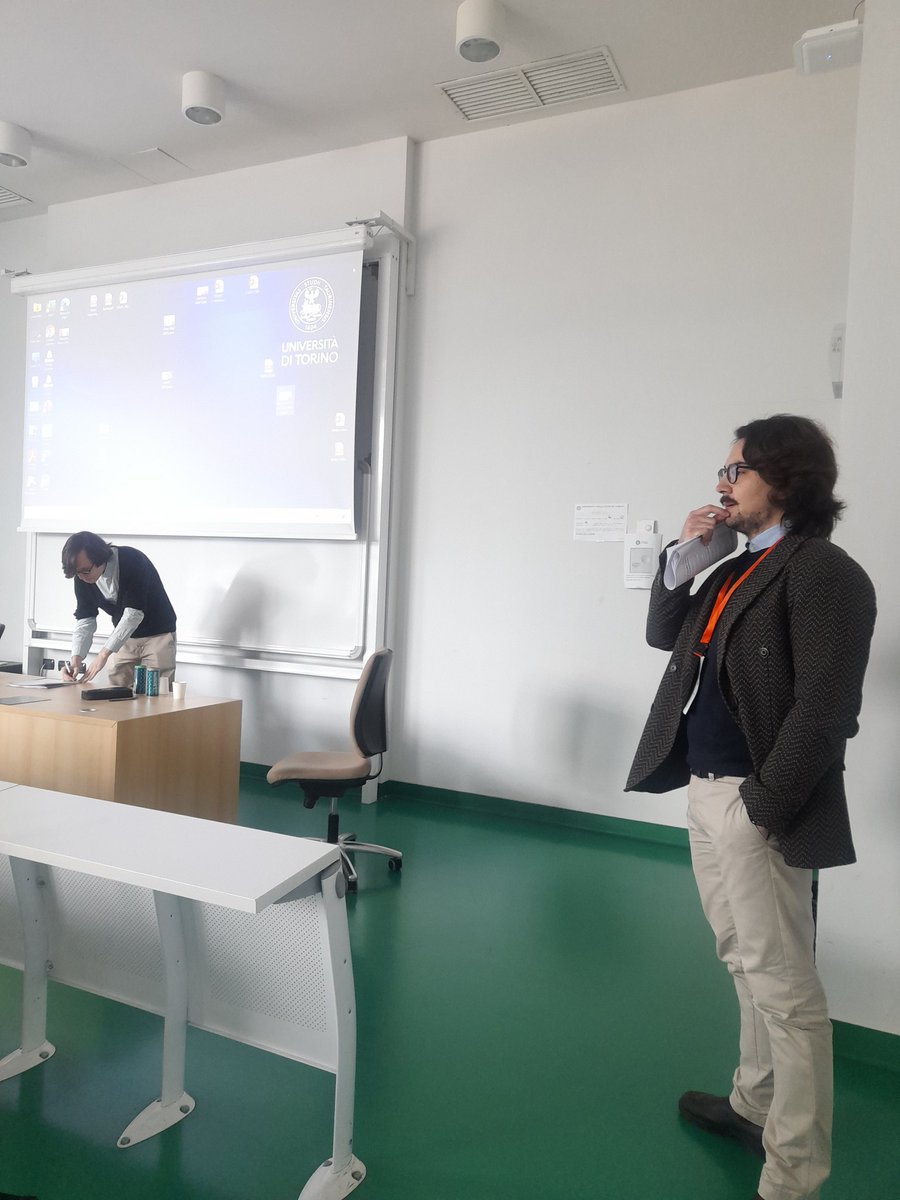
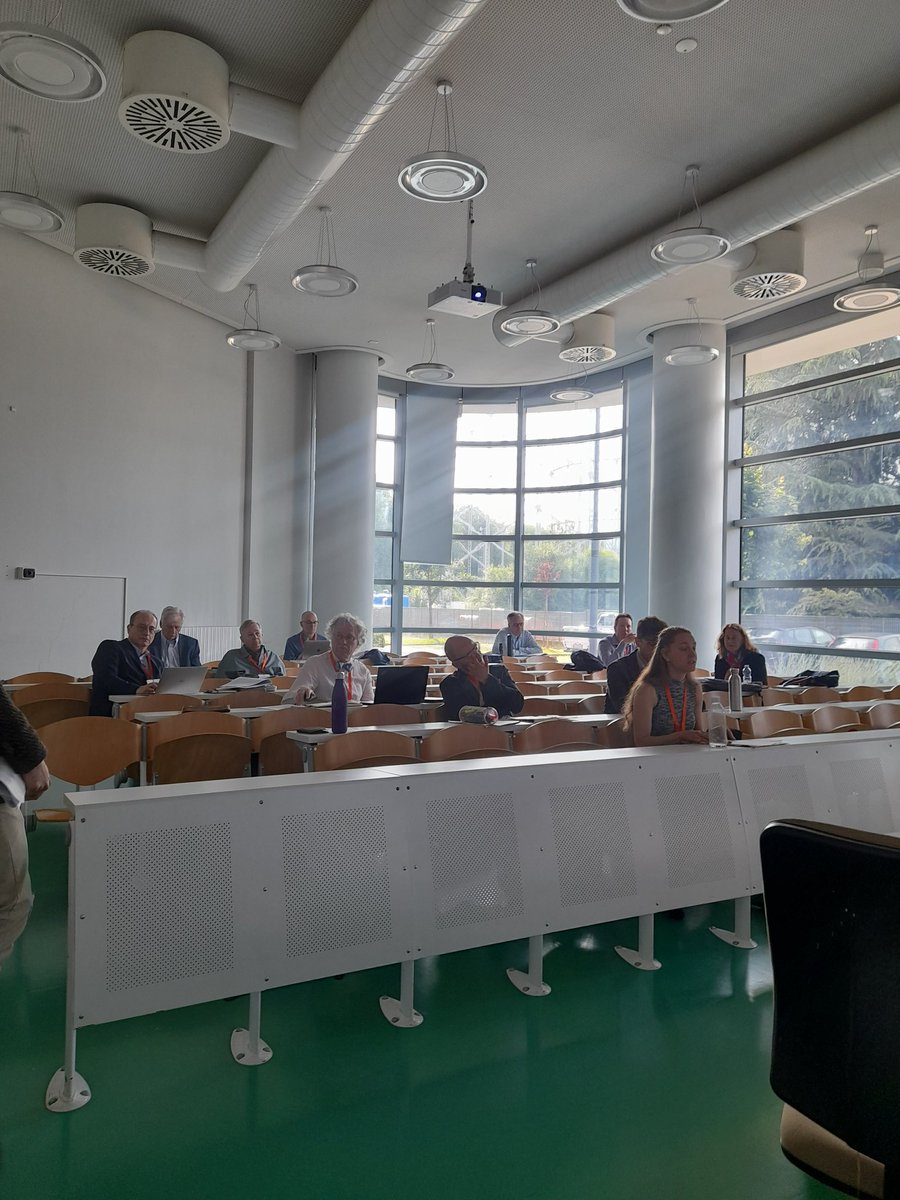
#ESHET2025 just began in Turin. I'll be presenting in the symposium on 'Model Transfer in the History of Economics' on Saturday, May 24 at 8:45 AM (together with my hermano @Bakeeff and Elizaveta Burina). Hope to see many friends and colleagues! @Societies_HET
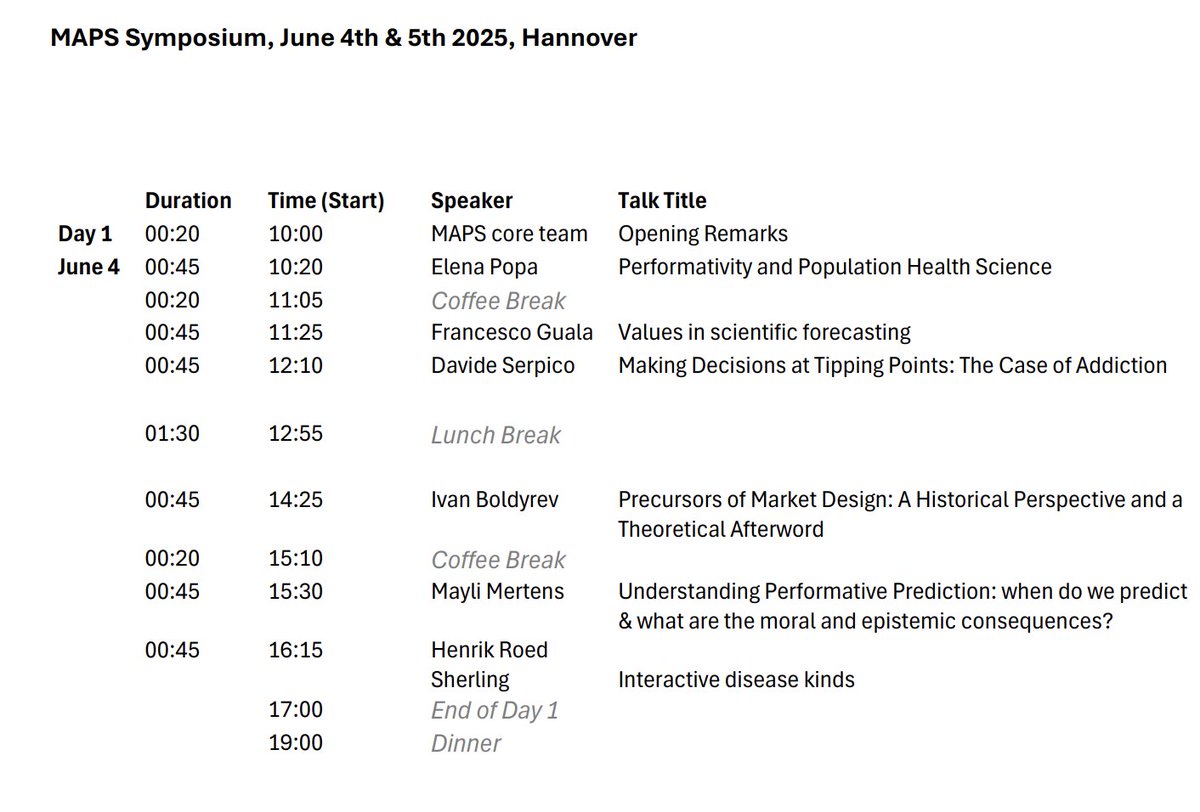
We are pleased to invite you to the MAPS Symposium, taking place on June 4 and 5, 2025, at Koniglicher Pferdestall. Attendance is free and open to all. We have a great lineup! Join us for two days of engaging discussions and critical reflections.
Oral history: an interview with Robert Axtell (George Mason University) on the Sugarscape project and the early use of ABMs in economics
https://t.co/9CmqnRH6a2
What people fear about entering Russia is already the new normal in the USA. My colleague in PolSci entered the USA from Europe recently to attend ISA Convention. Her colleagues, all Germans, were forced to open their laptops and show content of their research presentations. 1/