UC Berkeley’s world-class economics department (@berkeleyecon) is celebrating Nobels won by two scholars: Robert E. Hall, a 1964 graduate and early-career faculty member, and Michael Woodford, a visiting scholar in the 2025-26 academic year.
https://t.co/AMdRlyQPGS
Brazil reserved half its federal college seats for disadvantaged students. Berkeley's @NanoBarahona and co-authors find benefited students gained more than displaced ones lost, but there were 30% more displaced than benefited, leaving a modest net gain. https://t.co/apCmC7Gek0
“They're probably hoping I'll cancel the exam.”
New laureate Michael Woodford was scheduled to be setting his economics students an exam today, when he was woken by a call from Stockholm at 4:30am. Woodford spoke to us about his feelings for his prize – and praised his co-laureate Robert E. Hall.
Listen to his first reactions.
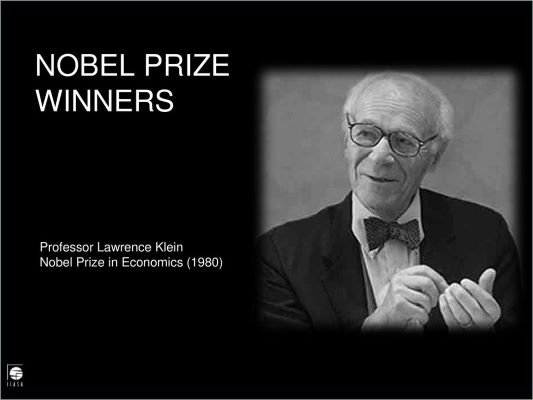
Lawrence Klein, Class of 1942, was born September 14, 1920. In 1980, Klein became the first Cal alum to win a Nobel Prize in Economics, for creating computer models to forecast macroeconomic trends - tools still used by the Federal Reserve. @berkeleyecon
📌 Recap | Investigación aplicada en Guatemala
Del 22 al 25/8, Rodrigo Nicolau Blanchet, estudiante de PhD en @berkeleyecon y co-investigador del estudio de la Beca de Capacitación Productiva de @Midesgt, participó en Construyendo Futuros, iniciativa de J-PAL LAC y @uvggt.
23 September 17:00 CEST International Macro History Online Seminar #IMHOS
🗣️@B_Eichengreen (@berkeleyecon & CEPR) presents 'Money Beyond Borders'
Chair: Rui Esteves (@GVAGrad & CEPR)
✍️ https://t.co/hxs6aO7eMb
"If they have an option to move, that means that they have leverage." UC Berkeley economist Enrico Moretti tells @FortuneMagazine why corporate relocation threats work on states. #Economics#UCBerkeley https://t.co/bG5o9D1N67
Berkeley Economics is hiring an Assistant Teaching Professor this year. This teaching-track position is eligible for security of employment, which is equivalent to tenure.
Applications are due November 6, 2026. Details and the application link are here: https://t.co/WqcpYZsETx
🎉 Berkeley Economics is celebrating! Pierre-Olivier Gourinchas has won the 2026 Bernhard Harms Prize from the Kiel Institute. The prize honors his research on how money flows between countries and why some run large surpluses or deficits. https://t.co/vU9PDWieqK #UCBerkeley
UC Berkeley has once again been named the top public university in North America in the 2027 Times Higher Education World University Rankings.
This adds to the growing list of #1 rankings Berkeley has earned this year, including ones from PitchBook, Forbes and U.S. News & World Report. https://t.co/ucLi6P56SO
UC Berkeley Economics continues to lead globally! 🏆 In the latest U.S. News 2027 Best Colleges rankings, three of our programs landed at No. 1 nationwide: Public Finance, Labor Economics, and International Economics. 🥇
Read more: https://t.co/Qp2VdgnHk7
@UCBerkeley#GoBears
Once again, U.S. News & World Report (@usnews) has named UC Berkeley the #1 public university (tied). Berkeley has topped the rankings for much of the 21st century. 🥇 https://t.co/ZMIeeEpCbE
ON AIR NOW: @gabriel_zucman live on @KQEDnews Forum discussing Proposition 40 and breaking down the debate over California’s proposed billionaire tax.
Tune in live: https://t.co/OpB7g5pwge
AI in a fragmenting world: Why ‘connector’ economies can still gain
Barry Eichengreen @B_Eichengreen@berkeleyecon, Jingyuan Cui, Asmaa El-Ganainy, Yevgeniya Korniyenko, Elyad Shojaei, Li Zeng, Shihangyin Zhang @IMFNews
https://t.co/n8KzoE65oq