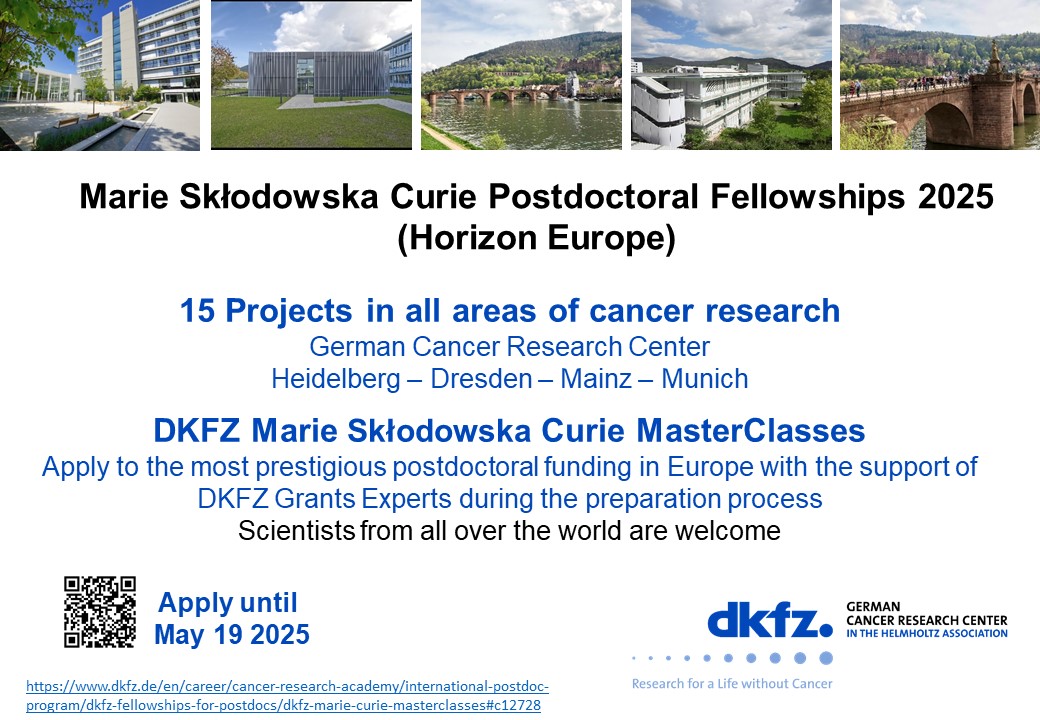
Our team at the @DKFZ, Heidelberg is looking for a Technician Assistant to support cutting-edge cancer Immunology research. If you are motivated to contribute to impactful science please apply or share https://t.co/tiyVOLxWjT
Our team at the @DKFZ, Heidelberg is looking for a Technician Assistant to support cutting-edge cancer Immunology research. If you are motivated to contribute to impactful science please apply or share https://t.co/tiyVOLyu9r
Kudos to the international team from 🇨🇳 & 🇺🇸 that conducted this important study published in @Cancer_Cell
Brain metastases are one of most dreaded complications of advanced disease.
Pan-cancer human brain metastases atlas at single-cell resolution
https://t.co/3wHAhlAqH8
Exciting opportunity to work in a highly collaborative environment at the @DKFZ , Heidelberg, to study the interesting aspects of #genderbias#sexdifference in #cancer progression and #therapy response. Please apply or share .#PostDoc in Sex-Differences in Cancer.
Just out in Science (2025)—a landmark study by @Dr_CJackson et al. identifies a previously uncharacterized immune cell population in human glioblastoma (GBM), termed early myeloid-derived suppressor cells (E-MDSCs) (@MichaelLimMD , @BettegowdaMDPHD , @jihk99 , @dpardol1 ).
These E-MDSCs uniquely infiltrate IDH-wild-type GBM, precisely colocalizing with glioma stem-like cells (GSCs) within pseudopalisading regions—distinct zones known for hypoxia, aggressive invasion, and treatment resistance. Strikingly, the authors uncovered a novel bidirectional signaling axis: GSCs recruit E-MDSCs by secreting specific chemokines, while E-MDSCs reciprocate by releasing potent growth factors (notably FGF11) that drive tumor proliferation via the FGF11-FGFR1 signaling pathway.
Importantly, this critical tumor–immune interaction is entirely absent in IDH-mutant gliomas, due to epigenetic silencing of essential chemokine genes. This discovery not only advances our fundamental understanding of glioblastoma biology but also highlights promising new therapeutic targets specifically tailored for IDH-WT GBM—opening a vital new chapter in treating this notoriously aggressive and therapy-resistant cancer.
New therapeutic approach for malignant brain tumors: Researchers at the DKFZ and the @unimedizinma developed T-cells with a receptor that recognizes a glioblastoma-specific protein. In lab and mouse experiments, these T-cells destroyed the tumor cells. https://t.co/Cf6wMr9tS3
Interested in single cell genomics but need help getting started? Check out my lab's Single Cell Genomics Day on April 25. Talks will feature recent exciting computational and experimental advances and will be live-streamed at https://t.co/zG98gkckMU. Please RT/spread the word!
Very proud to see our immune-mediated gene therapy strategy for malignant brain cancer #GBM published @TheLancetOncol thank you Pedro Lowenstein for not giving up in spite of all the “almost” insurmountable challenges! To our patients, always! https://t.co/WvoDiqRN4L
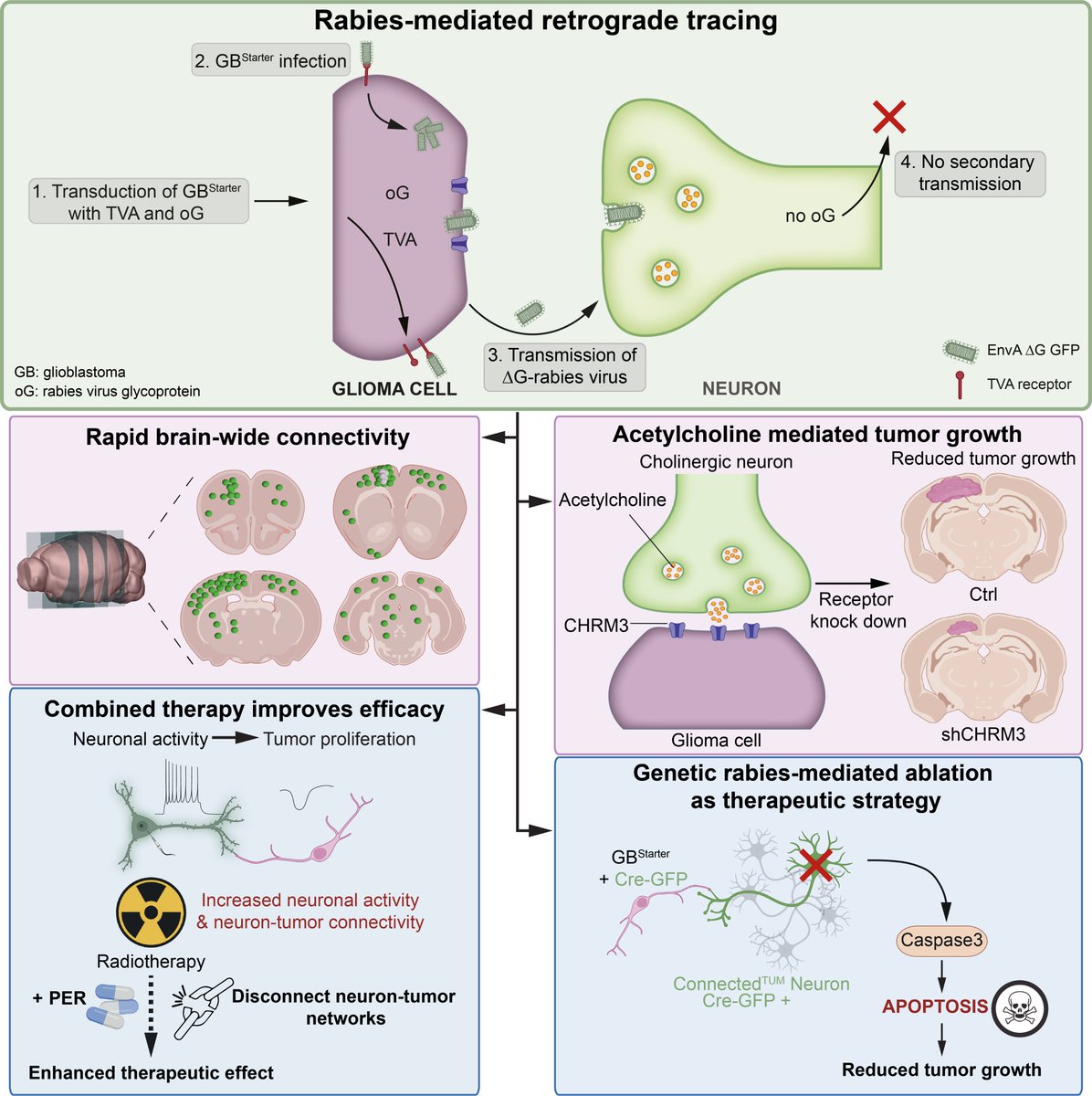
🧵Just in time for #FluorescenceFriday: New research from the Venkataramani lab @CellCellPress maps how brain tumor cells create extensive neural networks in glioblastoma. Check out our paper here: https://t.co/5VFr7BjeJ7 @ekinreyhann@SvenjaKTetzlaff 1/15
Congrats #CancerGrandChallenges team eDyNAmiC on its paper in @NatureGenet ⭐️
By studying > 8000 cancer genomes, the team highlighted ecDNA's role in providing a competitive advantage during cancer progression, treatment response & metastasis.
Read 👇
https://t.co/mVMit2iEvz
We are recruiting a postdoc!
Have expertise in RNA biology and want to apply it to neuro and neurodev disorders? Then apply 👇🏼
📌 $73,588 💰
📌 access to postdoc housing 🏠
📌 Support for internationals 🌍
📌 Awesome view 😅
🙏 RT
https://t.co/vt7vREDrSx
Our postdoc colleagues voted to form their union two years ago - since then, they've won a contract that has set industry standards on pay and workplace rights, and enlarged the voice of researchers @IcahnMountSinai. Check out this message of support from our colleagues @spocuaw!
New AI-enhanced advanced microscopy method offers promise in better understanding glioblastomas, one of the deadliest brain cancers.
Scientists developed a microscope to penetrate deep brain tissue to observe live brain cells with unprecedented clarity.
https://t.co/EB9QD5PClW
We tragically lost our wonderful colleague Sidhanta Nanda, PhD, unexpectedly due to medical condition. He will always be remembered as an incredibly kind friend and co-worker.
A memorial service will be on Sep-24. You can help support his family here:
https://t.co/gfvOwV2BAO
For anyone interested in RNA and cancer (basic and translational research), please consider submitting an abstract for this exciting meeting! We will be choosing lots of talks from abstracts. Should be a great event! #aacrRNA24
Thank you @GenesDev for sharing our comprehensive review of the role of the glioma microenvironment 🧠in shaping tumor heterogeneity, progression, and therapeutic responses with the broader research community! Awesome collaboration with rockstars @HambardzumyanL1 @NeuroOncDoc 🤩