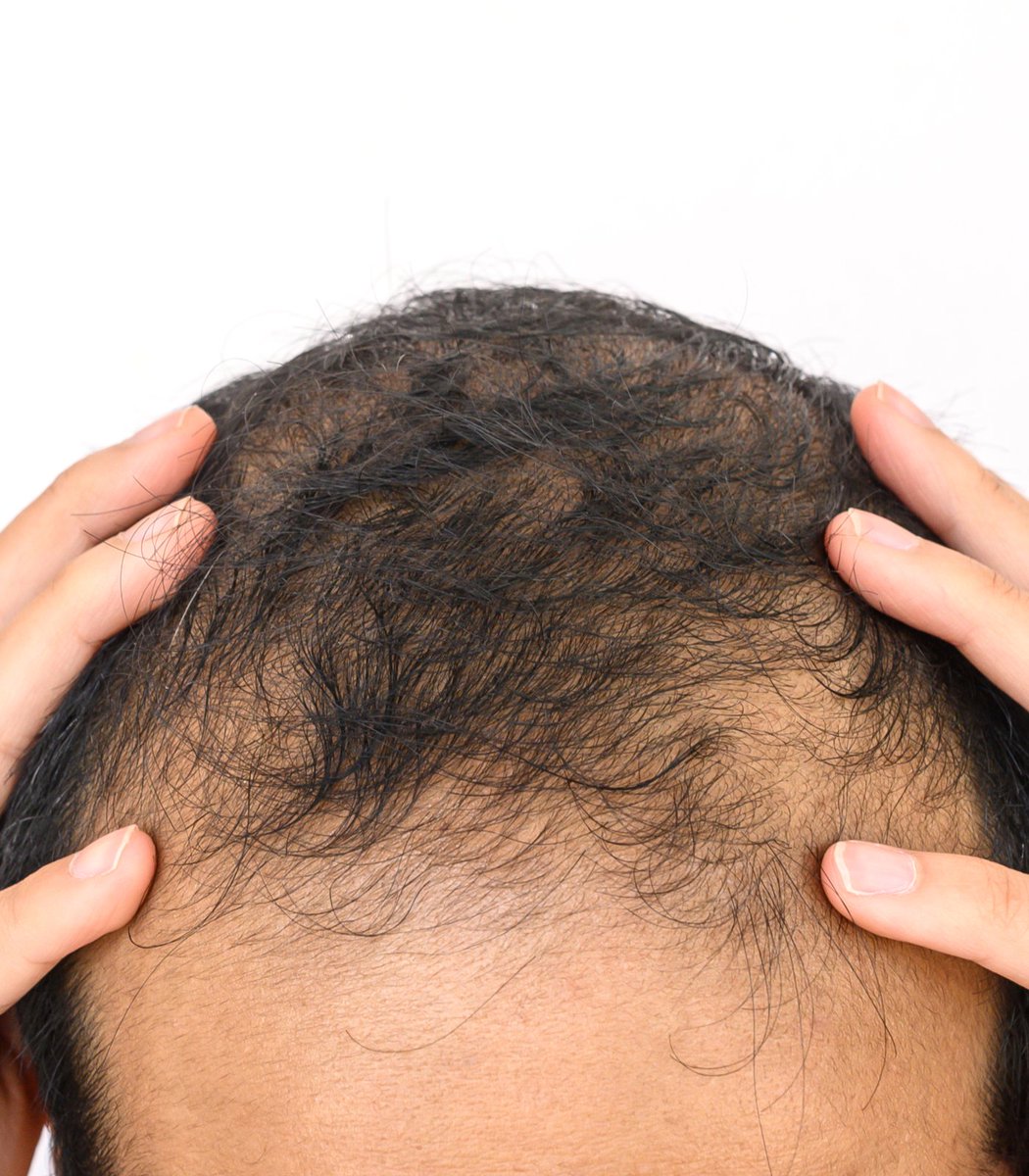
99% of guys notice hair loss 2 years too late.
the president is pushing for public health care to cover treatments because it is a "matter of survival" for young men.
he is right.
if you are waiting for a visible bald spot to act, you already lost the war.
2/ hair is capital.
in a high performance society, losing your hairline is like losing your credit score.
but most guys f*ck this up by looking at the wrong signals.
here is how to detect it before the margin is gone:
3/ the first mistake is sink watching.
counting hairs in the drain is low-iq slop. everyone sheds.
real male pattern baldness is about miniaturization.
your hair does not just fall out. it gets thinner, shorter, and loses pigment until the follicle dies.
4/ the 3 signals that actually matter:
temple recession: if the "v" is deepening, dht is winning.
styling limpness: when your hair will not stand up like it used to, that is vellus hair replacing terminal hair.
monthly delta: you need a data baseline to spot the shift.
5/ stop the wet hair panic.
wet hair is optical noise. it clumps and makes everyone look like a norwood 3.
diagnosing yourself in the shower is a b*tch move that leads to bad data.
ignore the mirror until you are bone dry.
6/ here is the point: do not touch a single pill or bottle of minoxidil until you have a history.
if you start meds without a "before" log, you will never know if they are working.
you will spend 6 months guessing while your follicles continue to die.
7/ most guys have zero consistency.
they change the lighting or the distance and then panic because they "look thinner." it is embarrassing.
BaldingAI kills that mirror gaslighting. it handles the 4 angles so the delta is undeniable.
8/ take a baseline today. then compare in 30 days inside BaldingAI.
stop being a victim of your own eyes.
either you have a data protocol or you have a skill issue.
that's it. thank me later.
South Korea's president wants public health care to cover hair loss treatment for male pattern baldness, claiming it's a "matter of survival" for young men.
minoxidil alone yielded 22 hairs, but adding a weekly microneedling session grew 91.
in a 12 week trial on 100 men with pattern hair loss, adding a weekly 1.5mm microneedling session to daily 5% minoxidil yielded a mean increase of 91 hairs per targeted area compared to just 22 hairs for minoxidil alone (dhurat 2013, Int J Trichology).
puncturing the scalp creates micro injuries that trigger a natural wound healing cascade. your skin floods the tissue with platelet derived growth factor and vascular endothelial growth factor while activating WNT signaling pathways in the dermal papilla, the specialized cells at the base of your follicle that control hair growth. this signal pushes dormant follicles out of the resting phase and back into active growth.
• needle depth dictates the biological signal: 1.5mm reaches the follicle bulge where stem cells sit, whereas needles under 0.5mm only increase topical absorption without activating stem cells
• timing is a major safety threshold: the study required pausing topical minoxidil for 24 hours after needling, as applying topical actives to open wounds drives the drug straight into your bloodstream and risks blood pressure drops or rapid heart rate
• frequency has a hard ceiling: once per week gives the skin 5 to 7 days to complete collagen remodeling, while daily rolling interrupts healing and causes chronic inflammation
• over-needling creates permanent damage: puncturing too aggressively produces dense scar tissue around the dermal papilla, which smothers the follicle instead of stimulating it
the objective is controlled micro inflammation, not bleeding or structural scarring. if you already use a roller, what needle depth and rest interval do you use?
vitamin d stops hair shedding, but it cannot save a receding hairline.
vitamin D receptors in hair follicles regulate the restart of active growth. when serum 25(OH)D drops below 20 ng/mL, follicles stall in the resting phase, causing diffuse shedding across the scalp rather than temple recession.
• deficiency triggers telogen effluvium, shifting up to 30% of follicles into shedding mode
• restoring serum levels above 30 ng/mL stops deficiency shedding in 3 to 6 months
• vitamin D does not inhibit DHT, so it cannot stop genetic hairline miniaturization
• taking over 4000 IU daily without a blood test does not speed growth and risks calcium toxicity
if your hairline is receding, vitamin D will not save it. if you are shedding diffuse hair daily, test 25(OH)D before buying supplements.
drop your last 25(OH)D blood test result below.
is your hair thinning evenly across your whole scalp instead of at your temples?
hair follicles are metabolically demanding structures that your body starves first whenever key resources drop. hair is biologically optional. organs are not. that makes your hairline a leading indicator for quiet deficiencies years before other symptoms show up.
the tell is the pattern. DHT loss follows a specific shape at your temples, crown, and horseshoe. deficiency loss is shapeless. it thins your whole scalp evenly because every single follicle loses access to nutrients at once.
if your shedding arrived with fatigue, cold hands, or a hard diet, run blood work before touching topicals. four markers matter most:
• ferritin: your iron storage protein, where levels considered technically normal still trigger shedding, and specialists want it well above the lab minimum.
• vitamin D: low levels link to pattern loss and diffuse shedding, which most northern office workers hit by february.
• thyroid TSH: both an overactive and underactive thyroid cause diffuse loss across your whole head instead of a pattern.
• zinc: the keratin production mineral that hard training, heavy sweat, and low calorie diets drain fast.
no oil regrows hair that a ferritin of 15 is deleting. a basic blood test outranks an expensive protocol every time it comes back low.
if your scalp is thinning everywhere at once, have you checked your ferritin or thyroid levels yet?
unwashed oil makes thin hair look visually thicker, but it creates a destructive environment for your hair follicles.
sebum buildup coats the hair fiber in lipids making thin hair look visually thicker for the first few weeks. under the surface that unwashed oil creates a destructive environment for your hair follicles.
sebaceous glands produce scalp oil that carries active androgen metabolites including DHT. when sebum sits unwashed on the scalp, oxidized squalene and free fatty acids trigger chronic perifollicular inflammation.
• scalp biopsies published in international journal of dermatology show perifollicular microinflammation in up to 70% of men with pattern hair loss
• unwashed sebum fuels malassezia yeast proliferation which breaks down lipids into inflammatory irritants that stress dermal papilla cells
• active 5AR enzymes in scalp sebaceous glands continuously secrete DHT directly into the sebum layer at the follicle opening
• research on scalp hygiene shows infrequent washing increases scalp surface lipid peroxidation and elevates inflammatory markers like IL-1 alpha
• lipid accumulation at the follicular infundibulum creates a microenvironment that accelerates follicle miniaturization
• washing your scalp 3 to 4 times per week removes oxidized surface lipids and reduces inflammatory pressure on the follicle
avoiding shampoo sacrifices long-term follicle health for a temporary illusion of hair thickness. keep the scalp clean to protect the follicle environment.
reply with how many times a week you wash your scalp.
waiting until you see visible scalp costs over 50% of your hair shaft diameter before density changes.
you do not wake up with fewer hair follicles. DHT shortens the growth phase from 5 years down to a few months while shrinking the dermal papilla underneath. every hair cycle produces a shaft that is thinner and shorter than the one before it. terminal hair above 60 microns thick slowly degrades into vellus hair under 30 microns thick.
whiting 2001 in the journal of the american academy of dermatology showed that miniaturized follicles retain their vascular structure for several cycles before fibrous tissue replaces the dermal papilla. the timeline is not a few weeks. it is a sequence of 2 to 6 year growth cycles.
reversing the process requires two distinct signals: stopping the shrinkage signal and restoring the papilla size.
• kaufman 1998 in the journal of the american academy of dermatology tracked 1mg daily finasteride over 5 years, where blocking serum DHT by 70% halted miniaturization in 86% of men and restored hair count above baseline
• dhurat 2013 in the international journal of trichology tested 1.5mm weekly microneedling alongside 5% minoxidil, yielding a 91.4 hair per square centimetre increase compared to 22.2 with minoxidil alone
• 5AR inhibition stops future cycle shrinkage while mechanical micro-injury activates growth factors like PDGF and Wnt in the follicle bulge to widen the dermal papilla
• topical minoxidil prolongs the anagen phase directly by opening potassium channels, giving the widened follicle time to produce a thicker keratin shaft
if you catch a thinning area while the hair shaft still carries pigment, the underlying structure is intact enough to respond to intervention. waiting until the scalp is smooth means the dermal papilla has fibrosed.
reply with how many years passed between when you noticed thinning and when you started tracking shaft thickness.
taking high dose vitamin e alongside k2 is meant to protect your cardiovascular system. it actually degrades vitamin k before your body can use it.
this pairing is actively counterproductive because high alpha-tocopherol intake triggers hepatic cyp4f2 enzymes that break down vitamin k. high dose fat-soluble vitamins do not work in isolation and compete for the exact same cellular pathways.
when you take mega-doses of vitamin e, your body attempts to flush the excess through hepatic pathways. this process turns on cyp4f2, a specialized liver enzyme that breaks down fat-soluble molecules. the problem is that cyp4f2 degrades vitamin k far more aggressively than it degrades vitamin e. as liver cyp4f2 activity increases, your circulating and tissue levels of vitamin k plummet.
at the same time, high levels of alpha-tocopherol produce a byproduct called alpha-tocopheryl quinone. this compound directly blocks gamma-glutamyl carboxylase, which is the enzyme responsible for turning on vitamin k-dependent proteins. without active gamma-glutamyl carboxylase, vitamin k cannot activate osteocalcin to build bone or matrix gla protein to protect arteries.
• human trials show that daily supplemental doses between 800 iu and 1000 iu of alpha-tocopherol reduce functional vitamin k carboxylase activity within 4 to 8 weeks.
• vitamin a at supplemental doses above 10000 iu competes for micellar transport in the digestive tract, lowering vitamin k absorption efficiency by over 30 percent during digestion.
• spacing vitamin e and vitamin k2 six hours apart avoids absorption competition in the gut but completely fails to stop cyp4f2 enzyme induction in the liver, which stays elevated for over 24 hours after a large vitamin e dose.
• the failure mode of high dose vitamin e supplementation is elevated uncarboxylated osteocalcin, which leaves calcium floating in blood plasma rather than directing it into skeletal tissue.
• standard dietary intake of vitamin e sits between 15 mg and 30 mg daily from natural food sources and causes zero inhibition of vitamin k enzymes or liver transport.
• taking more than 400 iu of synthetic alpha-tocopherol per day while relying on a standard k2 dose neutralizes the arterial protection you are supplementing for in the first place.
the supplement industry sells high dose isolated vitamin e as an antioxidant, while ignoring that excessive levels displace the very nutrient protecting your blood vessels. logical daily doses below 200 iu maintain antioxidant status without disturbing vitamin k carboxylase activity.
keep vitamin e doses within standard dietary ranges if you take vitamin k2. reply with the supplement stack you currently take and whether you separate fat-soluble vitamins.
standard care relies on a single repurposed compound, but single agent protocols fail against the multiple drivers of hair loss.
the clinical numbers exist in peer reviewed journals if you look beyond standard pharmaceutical summaries.
• dhurat 2013, int j trichology tested weekly 1.5 mm microneedling combined with 5% minoxidil against 5% minoxidil alone over 12 weeks. the combination group gained an average of 91 hairs per square centimeter compared to 22 hairs in the minoxidil alone group. physical micro-injury triggers growth factors like PDGF and Wnt signaling that reactivate resting follicles.
• cho 2014, evid based complement alternat med tested 400 mg daily oral pumpkin seed oil against placebo in 76 men over 24 weeks. mean hair count increased by 40% in the active group compared to 10% in the placebo group. delta 7 sterols in the oil inhibit 5AR without severe systemic hormonal shifts.
• caserini 2014, int j clin pharmacol ther showed topical finasteride at 0.25% concentration reduced scalp DHT by 68 to 75% while reducing serum DHT by only 25 to 30%. oral 1 mg finasteride drops serum DHT by 60 to 70%.
• panahi 2015, skinmed showed rosemary oil applied twice daily matched 2% minoxidil in hair count increase at 6 months, though both fell short of modern 5% minoxidil concentrations.
single agent protocols fail because follicle miniaturization is not a single problem. DHT causes progressive shaft thinning, chronic perifollicular inflammation restricts nutrient delivery, and shortened anagen growth phases prevent hairs from reaching full length. relying entirely on a single repurposed compound leaves secondary drivers completely unaddressed. but every alternative has explicit failure modes you must account for before starting. microneedling without strict alcohol sterilization introduces bacterial folliculitis that accelerates shedding. botanical 5AR inhibitors like pumpkin seed oil take 24 weeks of daily dosing before baseline density shifts become visible. topical finasteride still carries systemic exposure risks if applied to an inflamed or compromised scalp barrier.
combining a targeted 5AR inhibitor with growth stimulation and physical micro-injury outperforms monotherapy because it attacks miniaturization across multiple biological mechanisms. evaluate treatment success by measuring scalp density at fixed scalp points under consistent lighting every 90 days to verify shaft diameter changes rather than guessing in a bathroom mirror. reply with the exact multi-compound stack you are running right now and how many months you gave it before measuring density changes.
topicals treat your scalp, but your inflammation is coming from your gut.
short-chain fatty acids, specifically butyrate produced by gut bacteria fermenting dietary fiber, repair the epithelial tight junctions that prevent this leakage. increasing daily fiber intake to 30g raises butyrate production and lowers circulating endotoxin levels within weeks. while mouse data indicates that specific probiotic strains like Lactobacillus reuteri increased follicle density and anagen percentage without topical treatment, human trial data on specific strains remains limited. if you are dealing with chronic scalp redness or shedding after broad-spectrum antibiotics, the inflammatory signal may be coming from compromised intestinal integrity rather than scalp-level pathogens alone.
have you noticed an increase in hair shedding or scalp inflammation after taking antibiotics or changing your diet?
if you are tracking whether dietary or topical changes actually impact your scalp, https://t.co/fig6Hw1Y8Z lets you photograph your scalp on a schedule to measure hair density and miniaturization over time so you know what works.
sources:
Levkovich 2013, PLoS One
Lousada 2021, Exp Dermatol
how does taking 100 mg of zinc daily for 2 to 4 months turn a simple supplement routine into a mineral depletion engine?
the dose is completely safe on its own, until you ignore the one mineral it wipes out from your body.
zinc and copper share the exact same transport proteins in your gut lining. when you flood your digestive tract with heavy doses of zinc, zinc occupies all the available pathways and locks copper out completely. your body cannot absorb the copper from your food or supplements because zinc is crowding the doors. over a few months your internal copper stores drop even if your diet is full of rich copper sources.
• taking up to 100 mg of zinc daily has been shown to be safe for 2 to 4 months at a time
• heavy zinc intake causes your body to shed copper by blocking its pathway in the gut
• running high zinc without adding copper steadily lowers your total copper reserves
• you can stop this depletion entirely by using a fixed 10 to 1 ratio of zinc to copper
• every 10 mg of zinc you take must be matched with 1 mg of copper to protect your system
• a full 100 mg daily zinc dose requires 10 mg of copper to keep your mineral balance even
• matching the ratio keeps your copper levels stable while you run higher zinc protocols
megadosing zinc works for months without issue as long as you respect the math. ignoring the ratio is the only reason a high zinc routine fails.
reply with the zinc dosage you currently take.
an 8 dollar shampoo beats prescription medicine. almost every post claiming this leaves out how the lab test was actually performed.
in petri dishes, isolated human hair follicles do grow faster when exposed to caffeine than when exposed to minoxidil.
in 2007, dermatologists led by fischer published a study in the international journal of dermatology testing isolated male scalp follicles in laboratory organ culture. caffeine at concentrations of 0.001% to 0.005% directly stimulated hair shaft elongation and counteracted the growth suppression caused by testosterone. inside a glass dish, caffeine triggered faster initial growth stimulation than minoxidil. inside a glass dish, there is no skin barrier, no microvascular clearance, and no sebum layer blocking penetration.
the biological mechanism behind topical caffeine is phosphodiesterase inhibition. caffeine blocks PDE enzymes inside skin cells, which prevents the breakdown of cAMP. elevated cAMP acts as an intracellular signal for cell division, driving the dermal papilla cells at the base of the follicle to stay active.
follicular absorption research by otberg in 2007 proved that caffeine from a shampoo vehicle penetrates the hair follicle sheath within 2 minutes of scalp contact. blood sampling showed the compound remains localized in scalp tissue for up to 24 hours, giving you target stimulation without systemic side effects like elevated cortisol, blood pressure spikes, or sleep disruption.
the main gap in the claim comes from confusing continuous lab exposure with a quick morning shower. isolated follicles in the 2007 trial were submerged in caffeine solution for days at a time. a shampoo sits on your scalp for 120 to 180 seconds before getting rinsed away.
when researchers tested topical caffeine on living human scalps in a 2017 trial by dhurat in skin pharmacology and physiology, they used a 0.2% leave-on liquid applied twice daily, not a wash-off shampoo. over 24 weeks, 5% minoxidil solution increased the proportion of hairs in the growth phase by roughly 14%, while the 0.2% leave-on caffeine liquid increased it by roughly 10%. the leave-on liquid passed a statistical non-inferiority test, but it still produced less raw growth than standard minoxidil.
caffeine does not block 5AR, the enzyme responsible for converting testosterone into DHT. it offers a temporary metabolic stimulant effect that counters androgen damage downstream, but it does not stop DHT from binding to follicle receptors.
using caffeine shampoo as a low-cost secondary step in your shower routine adds mild stimulation and cleans the scalp. relying on an 8 dollar wash as a standalone replacement for finasteride or minoxidil means relying on petri dish math for a living scalp problem.
measure your scalp hair density with standardized high-resolution photos every 3 months so you know whether a product is holding density or just washing off.
reply with the hair loss product you bought based on early lab claims that turned out to perform differently in real life.